
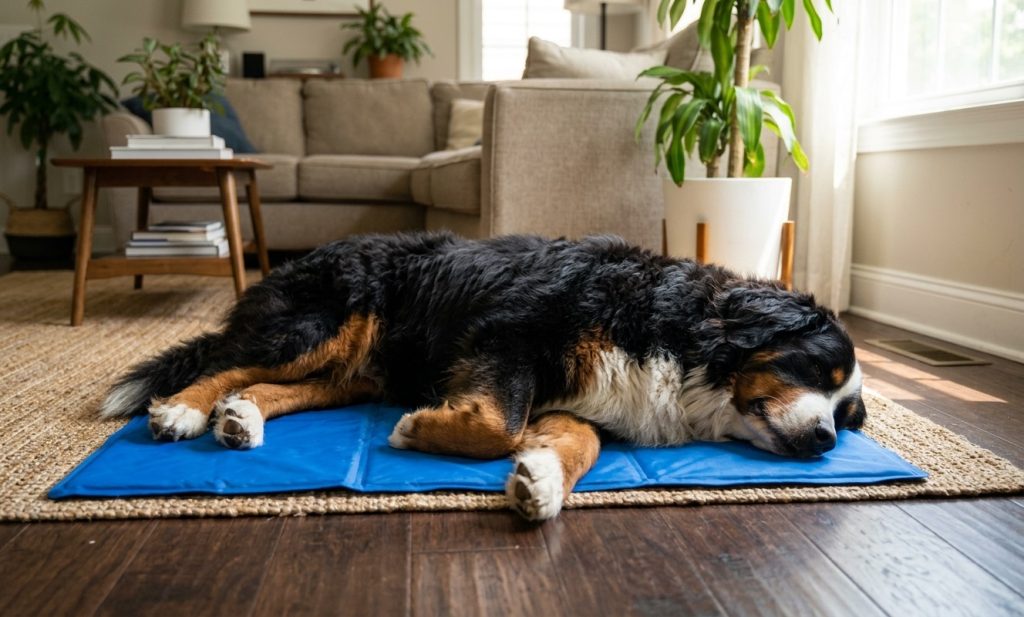
July in the US can feel like walking through a sauna, and if you think you’re hot, imagine wearing a permanent fur coat. The other day, I watched my Golden Retriever practically melt onto the tile floor, panting heavily while the AC struggled to keep up. It is a universal truth among pet parents: when the summer heat hits, our electric bills skyrocket just to keep our furry friends comfortable.
You’ve probably seen those fancy gel pads and water beds for dogs and wondered if they actually work. Finding the best dog cooling mat for summer can be a game-changer for your household. But once you bring one home, a big question pops up: how often should you use or replace dog cooling mat for summer?
Let’s skip the fluff and get into the reality of using, maintaining, and eventually tossing out these summer lifesavers.
Definition & Signs: What Is a Cooling Mat and Does Your Dog Need One?
A cooling mat is essentially a portable, heat-absorbing pad designed to draw warmth away from your dog’s body, lowering their core temperature. The most popular ones are pressure-activated gel mats, which require no refrigeration, water, or electricity. As soon as your 60-pound dog plops down, the gel activates and absorbs their body heat.
But how do you know your dog actually needs one? Watch for the signs of heat stress. If your dog is excessively panting, seeking out the darkest, coolest corners of the basement, or exhibiting lethargy after a simple walk around the block, they are struggling with the heat. Some breeds, like Bulldogs or Pugs, have a much harder time regulating their temperature. Providing a dedicated cool spot is essential for their well-being.
How Often Should You Use or Replace Dog Cooling Mat for Summer?
This is the big question every pet owner asks once they realize their dog loves their new bed.
Frequency of Use
When it comes to daily use, the answer to how often should you use or replace dog cooling mat for summer is pretty straightforward: use it as much as your dog wants during the hot months. These mats are completely safe for continuous daily use. I usually leave ours out in the living room from late May through September.
However, pressure-activated gel mats typically provide cooling relief for about two to four hours. After that, they absorb so much body heat that they need to “recharge.” All your dog has to do is get off the mat for about 15 to 30 minutes, and the gel will naturally cool down again. IMO, it’s a brilliant zero-effort system.
Knowing When to Replace It
So, how often should you use or replace dog cooling mat for summer before it becomes a hazard or simply stops working? On average, a high-quality cooling mat will last between two to five years. But this depends heavily on your dog’s habits and your maintenance routine.
You should replace the mat immediately if you notice any of the following:
-
Punctures or Leaks: If your dog is a digger or you forget to trim those sharp nails, the vinyl or nylon exterior can tear. Even though most modern gels are non-toxic, a leaking mat is a ruined mat.
-
Foul Odors: Sometimes moisture gets trapped under the mat, leading to mildew. If a good scrub with mild soap doesn’t kill the smell, throw it out.
-
Lumpy Gel: Over the years, the gel can degrade and separate, creating an uncomfortable, uneven surface. If it feels like a bag of chunky rocks rather than a smooth cushion, its lifespan is over.
-
Loss of Cooling Efficiency: If you notice your dog abandoning the mat after just 10 minutes because it’s already warm, the thermal properties of the gel have likely broken down.
What to Look for in Dog Cooling Mat for Summer
Not all mats are created equal. When navigating the market, what to look for in dog cooling mat for summer boils down to materials, sizing, and safety.
First, consider the cooling mechanism.
-
Pressure-activated gel mats: Great for portability and convenience.
-
Water-filled mats: Excellent cooling power, but they weigh a ton once filled (often over 30 pounds) and can be a disaster if a chew-happy puppy gets to them.
-
Ice-pack mats: Require freezer space and can be too cold for direct contact, requiring a blanket barrier.
Durability is your next priority. Look for puncture-resistant exteriors like ripstop nylon. A few summers ago, I bought a cheap vinyl mat for my terrier. He did his little “nesting” spin, scratched the surface twice, and blue gel oozed all over the rug. Lesson learned :/
How to Choose the Right Dog Cooling Mat for Summer
Choosing the right fit requires knowing your dog’s measurements. How to choose the right dog cooling mat for summer starts with a tape measure.
Measure your dog from the tip of their nose to the base of their tail in inches. You want a mat that accommodates their entire body when they are fully stretched out. A 90-pound German Shepherd isn’t going to get much relief if their back half is hanging off onto the warm carpet.
Also, consider where you will use it. If you plan to put it in the back of your SUV after hiking trips, ensure you buy a foldable design that fits the dimensions of your trunk. If it’s for their crate, measure the interior tray carefully. A mat that bunches up at the edges will frustrate your dog and they simply won’t use it.
Impact, Reason, and Solution: Beating the Heat
The impact of summer heat on a dog’s body is profound. Unlike humans, dogs cannot sweat through their skin to cool off; they only sweat a tiny bit through their paw pads. Their primary cooling mechanism is panting, which exchanges hot internal air for cooler outside air. But when the outside air is 95 degrees with 80% humidity, panting loses its effectiveness.
This is the exact reason why surface cooling is so vital. When a dog lies on a cool surface, heat transfers from their warm belly (where there is less fur) to the colder surface through conduction.
The solution, therefore, is proactive temperature management. Knowing how often should you use or replace dog cooling mat for summer ensures your dog always has a reliable, safe spot to lower their core temperature. Keep the mat in a shaded area, preferably away from direct sunlight through windows, to maximize its efficiency.
Prevention & Recovery
Heat exhaustion can sneak up on you. Prevention always beats recovery. A cooling mat is an excellent tool, but it shouldn’t be your only line of defense.
Provide unlimited access to fresh, cool water—tossing a few ice cubes into the bowl is always a hit. Limit walks to early mornings or late evenings. If the asphalt is too hot for the back of your hand after five seconds, it will burn your dog’s paw pads.
When to Visit a Vet
Never rely on a cooling mat to treat an emergency. If your dog exhibits signs of heatstroke, you need a professional, not a pet product. Watch for:
-
Excessive, frantic panting
-
Thick, sticky saliva
-
Bright red or pale blue gums
-
Vomiting or diarrhea
-
Staggering or collapsing
If you see these symptoms, immediately move your dog to a cool area, apply cool (not freezing cold) water to their belly and paws, and rush to the nearest veterinary clinic. Heatstroke is fatal if ignored.
Addressing the Nuances: More on Maintenance
People often ask me, how often should you use or replace dog cooling mat for summer if they only use it outdoors? If you use the mat on concrete patios or wooden decks, its lifespan drops significantly. The rough surfaces create micro-abrasions on the bottom of the mat. For outdoor use, I highly recommend placing a thin towel underneath it to act as a buffer.
Cleaning is another major factor. FYI, most of these mats are not machine washable. Tossing a gel mat into your washing machine is a fast track to ruining both the mat and the appliance. A simple wipe-down with a damp cloth and mild dish soap is all it takes. Let it air dry completely before folding it up for winter storage.
Frequently Asked Questions
Can my dog use a cooling mat outside?
Yes, but with caveats. Keep it entirely in the shade. If a gel mat sits in direct sunlight, it will absorb the sun’s heat and actually become a heating pad, which entirely defeats the purpose.
Do cooling mats require electricity?
Most standard gel mats do not require electricity, water, or refrigeration. They rely purely on thermodynamics and pressure-activated chemical gels. This makes them incredibly safe since there are no cords for a bored dog to chew on.
How often should you use or replace dog cooling mat for summer if it’s used by a heavy dog?
Heavy dogs (over 80 pounds) compress the gel much faster and put more strain on the seams. While the daily use remains the same, you might find yourself answering the how often should you use or replace dog cooling mat for summer question a bit sooner—usually around the 2-year mark—due to seam blowouts.
Are the gels inside the mats toxic?
Most modern, high-quality mats use a non-toxic gel (often a mix of water and a polymer). However, “non-toxic” does not mean “edible.” If your dog ingests the gel, it can cause severe gastrointestinal blockages. If your dog is a heavy chewer, a gel mat might not be safe for them unless strictly supervised.
Can puppies use cooling mats?
Absolutely, puppies get hot too! But remember that puppies explore the world with their teeth. You must monitor them closely. If they start digging at it or chewing the corners, take it away immediately.
Final Words
Keeping our dogs comfortable during the dog days of summer takes a bit of planning, but seeing them sleep soundly instead of pacing and panting is worth every penny.
To recap the main question: how often should you use or replace dog cooling mat for summer? Use it every single day the temperature demands it, and be prepared to replace it every two to five years, or the moment you spot a leak or foul odor.
By taking the time to measure your dog, understanding their chewing habits, and doing routine inspections, you can confidently invest in the best dog cooling mat for summer. Keep them cool, keep them hydrated, and enjoy a safe, happy summer with your best friend! 🙂









