
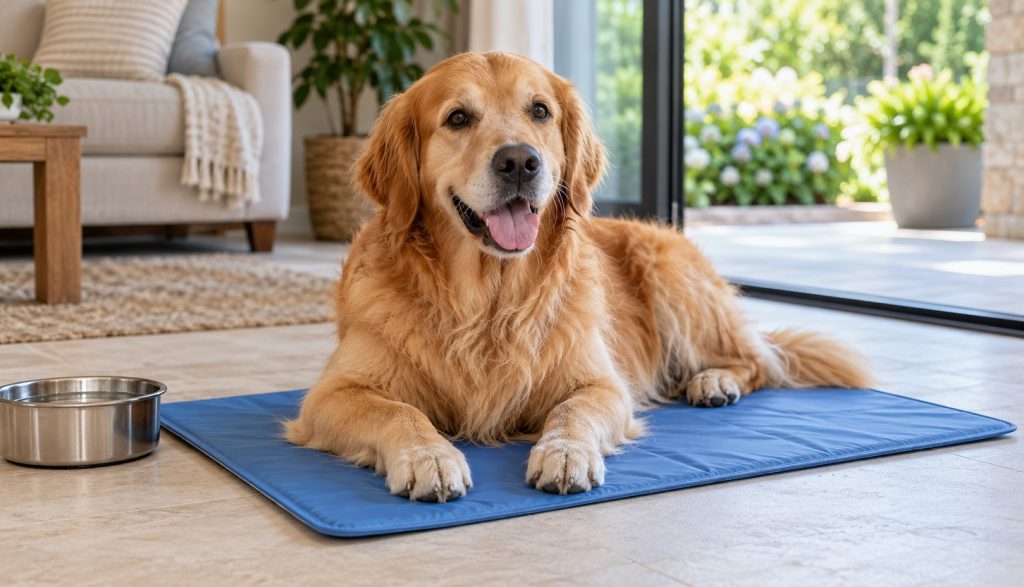
Summer is supposed to be about lazy afternoons, sprinkler runs, and long evening walks. But when the mercury pushes past 85°F, our dogs start feeling the heat long before we do. If you have ever watched your heavily panting Golden Retriever desperately shuffling across the house to find the one square foot of cold tile left in the kitchen, you know the struggle.
Finding the best dog cooling mat for summer can transform your dog’s sweltering afternoons into comfortable, restful naps. But with so many options out there—from squishy gels to elevated mesh frames—the choices can feel overwhelming. If you are wondering how to choose the right dog cooling mat for summer, you are definitely not alone.
Let’s cut through the marketing noise and look at what actually works, what is safe, and how to keep your furry best friend cool when the sun is blazing.
Signs of Overheating in Dogs (And Why You Need a Plan)
Dogs do not sweat like we do. They rely almost entirely on panting and releasing heat through their paw pads to regulate their internal temperature. When the ambient temperature gets too high, their natural cooling system simply cannot keep up.
Before we discuss how to choose the right dog cooling mat for summer, it is crucial to recognize when your dog is actively overheating. Keep an eye out for these red flags:
-
Excessive, frantic panting that does not slow down when they rest.
-
Thick, ropey drool pooling around their mouth.
-
Bright red or pale gums instead of their normal healthy pink.
-
Lethargy or clumsiness, almost like they are dizzy.
-
Skin that feels unusually hot to the touch, especially around the ears and belly.
A good cooling mat provides a safe haven to help bring their core temperature down gradually before these severe symptoms kick in.
How Do Dog Cooling Mats Actually Work?
At their core, dog cooling mats pull heat away from your dog’s body and dissipate it into the surrounding air. Depending on the design, they use thermal conductivity (like a cold tile floor) or airflow to achieve this. They aren’t a magical substitute for air conditioning or shade, but they offer localized, immediate relief for a dog looking to escape their own body heat.
Understanding how to choose the right dog cooling mat for summer starts with knowing how these different mechanisms interact with your dog’s specific needs.
What to look for in dog cooling mat for summer
When you walk into a pet store or browse online, every box claims to be a miracle worker. But if you want to know how to choose the right dog cooling mat for summer, you need to evaluate a few practical criteria based on your dog’s unique lifestyle.
1. Durability and Chewing Habits
This is arguably the most critical factor. If you have a bored Labrador puppy who treats every soft object like a chew toy, a flimsy gel mat is a disaster waiting to happen. While the gel inside most modern mats is labeled non-toxic, swallowing a bunch of plastic casing and synthetic gel will absolutely result in an emergency vet visit. For chewers, look for rip-stop nylon covers, reinforced edges, or skip the gel entirely in favor of an aluminum or heavy-duty elevated mesh bed.
2. Size and Weight Capacity
When asking how to choose the right dog cooling mat for summer, size is often overlooked. Your dog needs to be able to stretch out completely. If only half of their body fits on the mat, the cooling effect is severely compromised.
-
Small (under 25 lbs): Usually around 20 x 15 inches.
-
Medium (25–50 lbs): Around 30 x 20 inches.
-
Large (50–80 lbs): Typically 35 x 23 inches.
-
Extra Large (80+ lbs): Look for mats stretching over 40 inches long.
Measure your dog from nose to tail base while they are sleeping, and buy a mat that exceeds that length. IMO, it is always better to size up.
3. Ease of Cleaning
Dogs track in mud, drool in their sleep, and occasionally have accidents. You want a mat that can be easily wiped down with a damp cloth and mild soap. Fabric-based mats should ideally have a machine-washable removable cover.
Types of Dog Cooling Mats: Finding the Perfect Match
The secret to how to choose the right dog cooling mat for summer lies in understanding the different cooling technologies available. There is no single “best” option—only the best option for your specific pet.
Pressure-Activated Gel Mats
These are the most popular mats on the market, and for good reason. They are filled with a specialized polymer gel that absorbs heat. When your dog lies down, the pressure activates the cooling effect, which typically lasts for 2 to 3 hours. Once your dog gets up, the mat naturally “recharges” itself in about 20 minutes.
-
Pros: No electricity, water, or freezing required. Great for travel and easy to fold.
-
Cons: Heavy chewers can puncture them. They become ineffective if left in a hot car or direct sunlight.
Water-Filled Cooling Mats
These function a bit like a mini waterbed. You fill them with cold tap water, which acts as a heat sink to pull warmth away from your dog. Some models can be placed in the refrigerator for an extra chill.
-
Pros: Completely non-toxic (it’s just water). They stay consistently cool for a long time.
-
Cons: Heavy and awkward to move once filled. Susceptible to leaks if a dog’s nails are too sharp.
Elevated Mesh Beds (Cot Style)
If your dog loves being outside, elevated beds are fantastic. They raise your dog about 7 to 8 inches off the hot ground, and the breathable mesh fabric allows ambient air to circulate freely under their belly.
-
Pros: Indestructible for most chewers, great for outdoor use, and excellent for senior dogs who struggle to stand up from the floor.
-
Cons: Does not provide the “ice cold” shock of a gel mat.
How often should you use or replace dog cooling mat for summer
Once you buy one, how often should you use or replace dog cooling mat for summer?
Usage: You can leave pressure-activated and elevated mats out 24/7 during the hot months. However, always give your dog a choice. Place the cooling mat next to their regular bed or a carpeted area. Dogs are excellent at self-regulating; they will move onto the cooling mat when they feel hot and move off when they are sufficiently chilled. Never force a dog to stay on a cooling mat, and never lock them in a crate where the cooling mat is the only surface they can stand on.
Replacement: A high-quality elevated mesh bed can last for years, perhaps only requiring a replacement fabric cover every few seasons. Gel mats, on the other hand, have a finite lifespan. You should replace a gel mat immediately if you notice:
-
The seams are fraying or leaking.
-
The gel inside has dried up, hardened, or bunched awkwardly into corners.
-
The mat no longer feels cool to the touch after a 30-minute resting period.
Typically, heavily used gel mats need replacing every 1 to 2 summers.
Safety and Prevention: When to Visit a Vet
A major part of how to choose the right dog cooling mat for summer involves safety and realistic expectations. A cooling mat is a comfort tool, not a medical device. It cannot save a dog suffering from severe heatstroke.
If your dog has been outside in the heat and exhibits vomiting, diarrhea, uncoordinated stumbling, or a dark purple tongue, do not just toss them on a cooling mat. These are signs of a life-threatening emergency. Move them to an air-conditioned room, apply cool (not freezing cold) water to their paws and belly, and call your veterinarian or an emergency animal clinic immediately.
FYI: Never use ice-cold water to cool an overheated dog, as it can cause their blood vessels to constrict, trapping the heat in their internal organs.
Other Related Options to Keep Your Dog Cool
If your dog absolutely hates the texture of a cooling mat (some dogs are just picky like that :/ ), you have other options to keep them comfortable:
-
Cooling Vests and Bandanas: These use evaporative cooling. You soak the fabric in cold water, wring it out, and put it on your dog. As the water evaporates, it pulls heat away from their body. These are excellent for walks.
-
Kiddie Pools: A cheap, hard-plastic wading pool filled with a few inches of water in a shaded yard is paradise for a water-loving breed like a Labrador or Newfoundland.
-
Frozen Treats: Stuffing a heavy-duty rubber toy with wet food, peanut butter, or plain yogurt and freezing it gives your dog a cooling, engaging summer activity.
Frequently Asked Questions
Do cooling mats actually work?
Yes. Studies and practical experience show they effectively draw heat away from a pet’s body, providing noticeable relief on hot days. However, they work best indoors or in the shade; they cannot compete with direct, blistering sunlight.
Are gel cooling mats toxic to dogs?
Most modern mats use a non-toxic, pressure-activated polymer gel. However, “non-toxic” does not mean “digestible.” If a dog ingests the plastic casing or a large amount of gel, it can cause severe gastrointestinal blockages. Always monitor chewers.
How do I clean a dog cooling mat?
For gel and water mats, use a damp cloth with mild soap to wipe down the surface. Do not use bleach or harsh chemicals, and do not put gel mats in a washing machine unless the manufacturer explicitly states you can.
Can I put a cooling mat in the freezer?
Check the specific instructions for your mat. Some water-filled or specialized ice mats are designed to be frozen. Standard pressure-activated gel mats should not be frozen, as freezing can permanently ruin the gel’s chemical structure.
How long does a pressure-activated mat stay cold?
Generally, they provide continuous cooling for 2 to 3 hours. After that, they absorb too much body heat. The dog needs to step off the mat for 15 to 20 minutes to allow the gel to release the heat back into the air and recharge.
Final Words
Figuring out how to choose the right dog cooling mat for summer doesn’t have to be a headache. Just remember to prioritize your dog’s safety and habits. If you have a gnarly chewer, go with a chew-proof elevated mesh bed. If you have a senior dog who needs joint support and loves napping on the living room floor, a thick, pressure-activated gel pad is a beautiful thing.
Summer with your pets should be filled with joy, not constant anxiety over the temperature. By paying attention to their body language, avoiding the midday sun, and investing in the best dog cooling mat for summer for their specific needs, you can both get back to enjoying the lazy days of the season. Stay cool out there!









