If your cat leans low over meals, spills food, or seems uncomfortable at the dish, you may wonder whether raising the bowl would help. How to choose the right elevated cat food bowl starts with your cat’s posture and comfort, not a standard height printed on a package. Some cats eat happily from a floor-level dish. Others may find a modest lift easier, especially when movement or neck position is a concern. A raised feeder can also change how the food sits and how easy the setup is to clean. This guide explains what to look for in elevated cat food bowl options, how to introduce a height change, and when to ask your veterinarian. If you are comparing bowl styles, our best elevated cat food bowl guide covers the separate shopping roundup.
What an elevated cat food bowl does
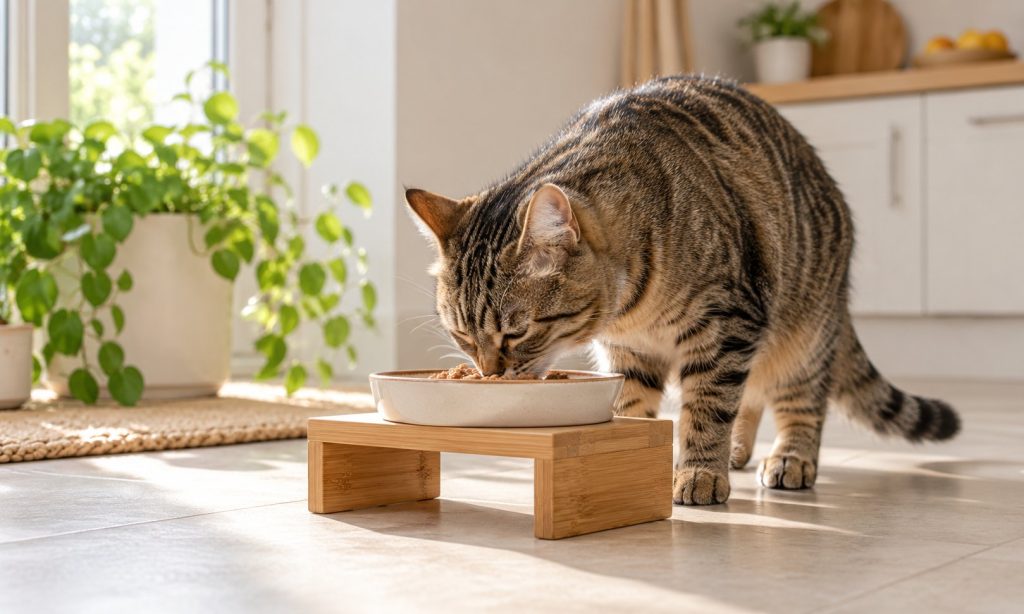
An elevated cat food bowl places the eating dish above floor level. The lift may come from a built-in pedestal, a short stand, or a feeding station with a removable bowl. Some dishes also tilt, but tilt and height are different features. A cat can use a raised, level bowl or a tilted bowl that stays close to the floor.
Raising a dish changes the reach your cat uses while eating. It does not automatically improve digestion, stop vomiting, prevent illness, or suit every body shape. A peer-reviewed veterinary nursing overview notes that cats commonly eat in a crouch and that raised platforms tend to sit around stifle level. That is a general reference point, not a prescription for every cat. A veterinarian may recommend a different position for a specific health condition.
The primary question in how to choose the right elevated cat food bowl is whether your cat can approach, eat, and leave comfortably. A taller feeder is not automatically more ergonomic. A small lift may be enough, while another cat may prefer the floor. Let your cat’s behavior guide the choice.
Is a raised bowl right for every cat?
No. How to choose the right elevated cat food bowl depends on your cat’s posture and health, not age or a trend. Some cats prefer eating from a low dish or flat plate. Others accept a small lift without difficulty. Cats with osteoarthritis or other mobility challenges may benefit from accessible feeding arrangements. Veterinary guidance describes raised bowls as one possible home adjustment for cats with osteoarthritis, with placement based on the individual cat’s comfort.
A bowl alone cannot diagnose or treat joint pain. A cat that has suddenly changed its eating posture may be avoiding discomfort for several reasons. Dental pain, nausea, weakness, or another health problem can also affect mealtimes. If your cat has trouble chewing, swallowing, standing, or reaching the dish, discuss the change with a veterinarian before choosing a new setup.
Owner accounts about elevated dishes are mixed. Some people describe a more comfortable meal, while others report that their cats ignored the feeder or moved food onto the floor. These reports are personal anecdotes, not clinical evidence. They support a practical point: observe your own cat rather than relying on a universal claim.
How to choose the right elevated cat food bowl
A useful setup should be comfortable, stable, easy to clean, and suited to your cat’s normal meal. Compare the bowl and stand together. A good height cannot compensate for a dish that slides, crowds the whiskers, or is difficult to wash.
Choose a modest height your cat can use
Start by watching your cat eat from the current dish. Notice whether the cat crouches naturally, stretches toward the food, braces on the stand, or shifts weight from one leg to another. Look for repeated pauses, awkward reaching, or reluctance to approach. One meal does not prove a problem, so watch the usual routine across several meals.
If you are trying a raised position, begin with a low, stable platform. A temporary test can help you see whether a small lift feels acceptable before you commit to a permanent setup. Keep the dish level and prevent rocking. Avoid stacks of books, loose boxes, or improvised stands that may tip when bumped.
A veterinary nursing review describes cat platforms as tending to sit around the stifles, or knee area. Individual proportions and health needs differ, so treat this as a rough reference only. When you decide how to choose the right elevated cat food bowl, prioritize your cat’s natural posture over a number on a label. Ask your veterinarian to advise on height if your cat has arthritis, a neck or back problem, weakness, or a prescribed feeding position. The best elevated cat food bowl is the one your cat can use without strain.
Check bowl width, depth, and angle
A broad, shallow dish can make food easier to reach and may give whiskers more room. Some cats prefer plates or saucers. Evidence for “whisker fatigue” remains limited, so avoid treating the term as a diagnosis. If you are considering what to look for in an elevated cat food bowl, start with a dish your cat can reach comfortably. If your cat leaves food around the edges or pulls pieces out, try a wider, lower-sided dish and observe the response. For a separate roundup, read our guide on what to look for in an elevated cat food bowl.
The dish should hold the portion you serve without forcing your cat to reach deep inside. A narrow bowl can make access awkward, especially for a flat-faced cat. A deep dish may be practical for some meals, but its rim should not press against the face. Choose a surface that lets your cat eat at a natural pace.
Tilted bowls direct food toward one side. That shape may help a cat reach food near the front, but it is not necessary for every pet. Check that the dish does not wobble or shift as your cat eats. If the cat paws food out or avoids one side, return to a stable, level bowl and reassess.
Pick a safe, practical material
Stainless steel is durable, lightweight, and commonly easy to wash. Look for a smooth surface without rust, sharp edges, or a loose base ring. A rubberized bottom can reduce sliding, but remove and clean it according to the maker’s care instructions. Check the bowl after drops or heavy use.
Ceramic and stoneware dishes are heavier and may stay put during meals. They can chip or crack if dropped. Inspect them regularly and stop using a dish with damaged glaze or exposed edges. Choose one intended for food use and follow its cleaning directions. Do not assume every decorative ceramic dish is suitable for feeding.
Plastic bowls are light and easy to move, but scratches can trap residue and make cleaning harder. Replace a scratched, cracked, warped, or chewed plastic dish. Glass can be smooth and washable, but it may break or chip if knocked off a stand. For any material, favor an intact bowl with a smooth food-contact surface.
Evaluate the stand and feeding area
Check that the stand has a broad, stable base and holds the bowl securely. Press lightly on each side before offering food. The dish should not slide out when your cat nudges it. A non-slip mat may help protect the floor, but it should lie flat and stay clean.
Measure the floor space, bowl opening, and the bowl’s outer diameter. A stand that is too narrow can catch the rim or leave the dish unstable. Make sure the setup leaves room for your cat to approach from the front and turn away. Keep the feeding station away from busy foot traffic, loud appliances, and the litter box.
If food and water sit together, leave enough room for each dish to be used without crowding. Keep water fresh and easy to reach. In a multi-cat home, how to choose the right elevated cat food bowl also means checking that each cat can approach without competition. Provide enough separate feeding places to reduce pressure at mealtimes. A raised feeder should not make it harder for a small, senior, or mobility-limited cat to access meals.
How to introduce a new feeding height
Keep the familiar dish available while your cat explores the new setup. Place the raised dish beside the old one at first, using the same food and meal routine. Let your cat approach without being lifted or pushed toward it. Reward calm investigation with praise or a small portion of the normal meal.
If your cat eats from the new bowl comfortably, gradually make it the usual option. If the cat hesitates, paws food out, walks away, or eats less, lower the height or return to the previous dish. A cat that stops eating should not be made to wait for hunger to force acceptance. Restore the familiar bowl and contact your veterinarian if appetite does not return.
During the first week, watch whether your cat can reach every part of the meal and leave the area normally. Check for wobbling, slipping, or food spilling between the bowl and stand. Change one feature at a time. If both the dish shape and height change at once, it is harder to tell what your cat likes.
How often should you use or replace an elevated cat food bowl?
Use the raised bowl at the meals when your cat is comfortable with it. When considering how to choose the right elevated cat food bowl for daily use, let comfort and access guide the routine. There is no requirement to elevate every cat’s food, and there is no set schedule for alternating between raised and floor-level dishes. If your veterinarian recommends a particular position, follow that plan. Otherwise, use the setup only while your cat continues to eat and move comfortably.
Wash and dry the food bowl after each use, as the FDA advises for pet food bowls. Wash water bowls daily. Removable dishes make this routine easier. Clean the stand and mat when food, saliva, dust, or moisture collects on them. Dry all parts before reassembling to limit trapped moisture and residue.
There is no universal replacement interval. Replace the bowl when it develops cracks, chips, rust, sharp edges, deep scratches, a loose coating, or a persistent odor after cleaning. Replace plastic dishes when their surface is badly scratched or chewed. Replace a stand when it rocks, bends, breaks, or can no longer secure the dish.
Check the feeder during regular cleaning rather than waiting for a calendar date. A clean bowl that remains intact may continue to serve well. Follow the cleaning and dishwasher guidance for the specific material. If cleaning instructions are missing, wash it by hand with hot, soapy water, rinse thoroughly, and dry it fully.
When to ask a veterinarian
Ask a veterinarian before changing bowl height if your cat has diagnosed arthritis, a neck or spinal condition, weakness, balance problems, or a feeding plan. For an older cat, how to choose the right elevated cat food bowl should begin with the veterinarian’s advice when mobility has changed. Your veterinarian can help decide whether a raised dish is appropriate and what position to try. Cats with specific swallowing or esophageal disorders may need a medically directed feeding setup that differs from an ordinary riser.
Seek veterinary advice if your cat repeatedly regurgitates, coughs during meals, drools, struggles to swallow, drops food, or eats less than usual. Do not assume an elevated dish will solve these signs. Sudden appetite changes, unexplained weight loss, or pain while eating deserve prompt attention. A bowl adjustment can support comfort, but it cannot replace an examination or treatment plan.
Frequently asked questions
1. How high should an elevated cat food bowl be?
There is no single height for every cat. How to choose the right elevated cat food bowl depends on the individual cat’s build, comfort, and medical needs. A veterinary nursing overview describes cat platforms as tending to sit around stifle level. Start with a modest, stable lift and ask your veterinarian for tailored guidance.
2. Do elevated bowls improve digestion or prevent vomiting?
An elevated bowl is not a proven treatment for digestive problems. Some owners report fewer messes or more comfortable meals, but personal reports cannot establish a medical effect. Repeated vomiting or regurgitation should be discussed with a veterinarian.
3. Should kittens use a raised food bowl?
Healthy kittens do not automatically need an elevated bowl. A low, stable dish that is easy to enter may be simpler as a kitten grows. Ask your veterinarian if the kitten has a medical or mobility concern.
4. How often should I wash the bowl and stand?
Wash and dry the food dish after each use, following FDA pet-food handling guidance. Wash water bowls daily. Clean the stand and mat whenever they collect food or moisture, and follow material-specific care instructions.
5. When should I replace an elevated cat food bowl?
Replace it when the dish is cracked, chipped, rusted, deeply scratched, or difficult to clean. Replace the stand if it wobbles or no longer holds the dish securely. An intact, clean bowl does not need replacement just because it has reached a certain age.
Final words
How to choose the right elevated cat food bowl comes down to safe construction, easy cleaning, and your cat’s actual comfort. Start with a low, stable position, watch how your cat eats, and keep the familiar dish available during the change. A raised feeder may help some cats, while others do better at floor level. Follow your veterinarian’s advice when a health condition affects feeding posture. For the separate shopping roundup, read our best elevated cat food bowl guide. If your cat develops new pain, swallowing trouble, repeated regurgitation, or appetite changes, contact a veterinarian rather than relying on bowl height alone.
Reference
- U.S. Food and Drug Administration: Proper Storage of Pet Food and Treats
- VCA Animal Hospitals: Helping Your Cat with Osteoarthritis
- Cornell Feline Health Center: The Special Needs of the Senior Cat
- Today’s Veterinary Nurse: “The Importance of Clean Bowls”
- Anecdotal owner discussion: “Do elevated bowls actually help cats?”