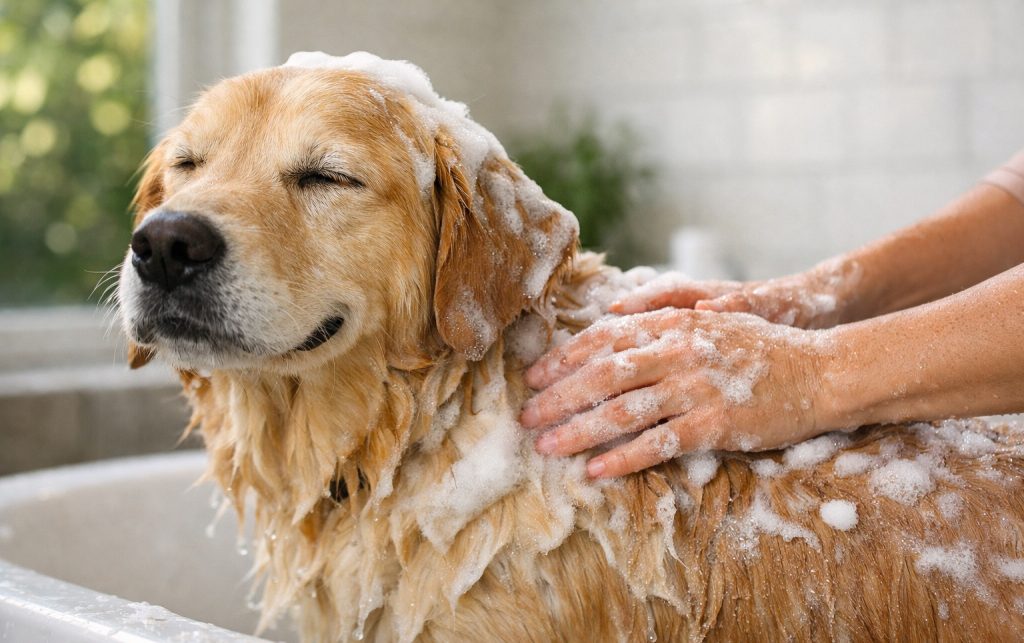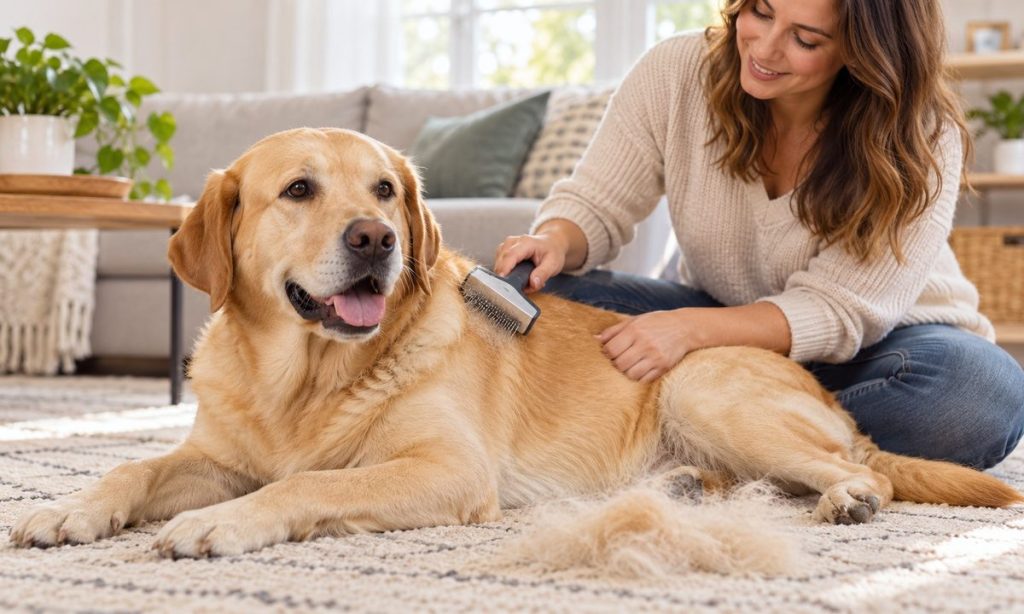
When your dog leaves hair on the sofa, car seats, and your clothes, the right brush can make seasonal shedding easier to manage. The best brush for a moulting dog depends on coat length, undercoat density, skin sensitivity, and how your dog feels about grooming. This guide compares seven verified brushes and grooming tools, from soft palm brushes to slickers, silicone bath brushes, and a double-sided rake. You can see which tools are designed for loose surface hair, which reach into longer coats, and where each choice has limits. We use “shedding” in the US text while keeping your moulting search term in mind. No brush works for every coat, and more pressure is not more effective. Use this comparison to select a tool that matches your dog, then brush gently and stop if skin or behavior shows discomfort.
As an Amazon Associate, PetAdvisorPro earns from qualifying purchases.
Quick Picks
| Product | Best For | Key Advantage | Buy | |
|---|---|---|---|---|
| SleekEZ Dog Brush for Shedding | Short and mixed coat types | Compact shedding tool for loose hair | View on Amazon | Jump to Review |
| Swihauk Self-Cleaning Slicker Brush | Quick cleanup between grooming sessions | Self-cleaning button and rounded bristle tips | View on Amazon | Jump to Review |
| Maxpower Planet Double-Sided Undercoat Rake | Long coats and dense undercoats | Two tooth counts for different tasks | View on Amazon | Jump to Review |
| Paw Brothers Extra Long Pin Slicker Brush | Longer coat sections and professional-style brushing | One-inch pins reach into coat layers | View on Amazon | Jump to Review |
| Soft Boar Bristle Palm Brush | Short-haired dogs and gentle finishing | Soft natural bristles in a palm grip | View on Amazon | Jump to Review |
| 2-Piece Double-Sided Grooming Brush Set | Owners wanting two grooming tools | Pin brush plus bath brush in listing | View on Amazon | Jump to Review |
| BRILLIRARE Silicone Bath Brushes | Bath-time loose hair removal | Two soft silicone brushes for wet or dry use | View on Amazon | Jump to Review |
How We Chose These Brushes
We verified seven distinct product identities through Amazon’s authorized product data and compared the tool type, coat fit, listed design details, and practical limitations. A shedding tool should match the dog’s coat and tolerate gentle use. We do not claim personal testing or clinical results.
1. SleekEZ Dog Brush for Shedding

What We Like
- Works across listed coat lengths
- Compact 5-inch tool
- Designed to gather loose hair
- Can also lift hair from fabrics
What We Don’t Like
- Requires short, controlled strokes
- Not a universal tool for every skin type
SleekEZ is a compact deshedding tool listed for short, medium, and long coats. Its five-inch size is easier to store than a large rake, and the product description says the design gathers loose hair from the coat and household fabrics. That broad coat claim should be treated as a starting point, not a reason to use the same pressure on every dog. A short-haired dog may tolerate a few gentle passes, while a dense coat may need a different tool that reaches the undercoat. Use short strokes in the direction of hair growth and check the skin as you work. Stop if your dog flinches, turns away, or develops redness. This is a grooming tool, not a substitute for a veterinary exam when shedding changes suddenly or comes with bald patches, sores, or persistent itching.
The listing presents the tool as a simple way to gather loose fur and clean up hair on fabric, which may be useful during seasonal coat changes. It does not provide a complicated adjustment system, but that also means you should test it cautiously before a longer session. Make a few passes on a small area and inspect what comes away. Avoid scraping repeatedly over one spot. The compact format may be convenient for travel or quick touch-ups, while owners of thick double coats may want an undercoat rake too. Clean the tool between uses and keep it dry. This pick suits owners who want a straightforward loose-hair tool and are willing to match their technique to the dog’s coat and comfort.
My Recommendation
Choose SleekEZ if you want a compact tool for collecting loose surface hair across several coat lengths. Its tradeoff is limited undercoat reach. Use light strokes, test a small area, and stop if your dog shows discomfort. This works best when paired with a coat-specific routine and regular skin checks.
2. Swihauk Self-Cleaning Slicker Brush

What We Like
- Self-cleaning button
- Rounded bristle tips
- Stainless-steel construction
- Lightweight TPR handle
What We Don’t Like
- May not reach through a dense undercoat
- Slicker pins need gentle pressure
Swihauk’s slicker brush is listed with a self-cleaning button, rounded protective tips, stainless-steel construction, and a lightweight TPR handle. Pressing the release button is intended to lift collected hair away from the bristles, so cleanup may be faster after a short grooming session. The product is described for short and long coats, but a slicker is usually most useful for loose surface hair and light tangles rather than heavy undercoat removal. Work gently and avoid pushing the pins into skin. A small section at a time makes it easier to notice discomfort and prevent repeated scraping. The brush may be a practical choice if you prefer a familiar handle-and-head design with a quick-release feature.
The brush’s main strength is routine maintenance: it is simple to store, easy to clear, and can fit into short grooming sessions between baths or professional appointments. A dense double coat may still need a rake or another tool designed to reach loose undercoat. Some dogs dislike the sensation of metal pins, even when the tips are rounded, so introduce the brush slowly and pair brief sessions with praise or rewards. Clean the bristle pad after each use and check for bent pins. This pick fits owners who want a self-cleaning slicker for light shedding and coat tidying. Choose a different tool if your main need is a deep undercoat pass or a gentle rubber massage mitt.
My Recommendation
This self-cleaning slicker is useful for routine grooming and quick cleanup. It may not reach through a dense undercoat, so pair it with a coat-specific tool only when needed. Keep pressure light on the skin. Use it for short sessions and inspect the skin after each grooming pass.
3. Maxpower Planet Double-Sided Undercoat Rake

What We Like
- 9-tooth and 17-tooth sides
- Detangling and undercoat functions
- Extra-wide rake design
- Non-slip handle base
What We Don’t Like
- Not the first pick for short coats
- Rake teeth need careful use
Maxpower Planet’s rake has two sides with different tooth counts. The listing describes a nine-tooth side for tackling tangles and a 17-tooth side for thinning and removing loose undercoat. That makes the tool easier to adapt to different grooming tasks than a single-row comb, especially on longer coats. It is not the first choice for a short, smooth coat with little undercoat. Move carefully through small sections and detangle from the ends when needed rather than pulling through a knot. The product also lists an extra-wide head and a handle with a non-slip base. These design details matter when working through a larger dog’s coat, but safe technique and the dog’s tolerance remain more important than speed.
A dual-sided rake can help separate light dematting work from undercoat grooming, which may reduce the need to switch tools during a session. Its teeth can still catch or irritate skin if you press too hard or move quickly through mats. Do not use it to force out tight mats; a professional groomer or veterinarian can advise on safe removal. Check the skin after each pass and stop if the dog shows discomfort. The broad head may cover more coat, though it may be less precise around legs and smaller areas. This brush is best for owners of long-haired or dense-coated dogs who want two combing options in one handle. For a short-haired dog, a rubber curry brush or soft bristle tool may be gentler.
My Recommendation
Pick this rake for long coats or dense undercoats where two tooth counts offer different grooming tasks. It needs careful handling around mats and sensitive areas. Avoid forcing the rake through knots. Reserve this tool for coats suited to undercoat grooming and detangle slowly.
4. Paw Brothers Extra Long Pin Slicker Brush
What We Like
- One-inch stainless-steel pins
- 4.5-by-3-inch head
- Ergonomic handle
- Suitable for dogs and cats
What We Don’t Like
- Flat head may be broad for small areas
- Long pins require light pressure
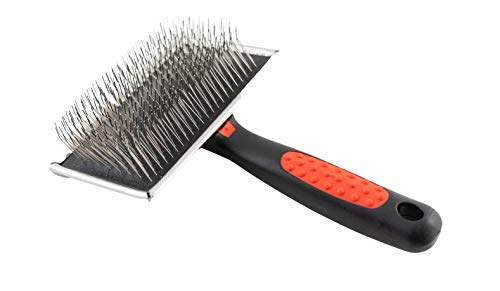
Paw Brothers’ flat slicker has one-inch stainless-steel pins and a head listed at 4.5 by 3 inches. The handle is described as ergonomic, and the product is intended for dogs and cats. Longer pins can reach further into coat layers than short-pin slickers, which may help with loose hair and light tangles on longer coats. That does not make the brush suitable for every coat or every dog. Use a light touch and brush in small sections so the pins do not scrape the skin. The broad head can be useful across the body, while careful positioning is needed near the face, ears, belly, and legs. A slicker can tidy coat and lift loose hair, but it is not a substitute for trimming or mat removal.
The stainless pins and flat head give this brush a straightforward design that may suit owners who want a longer-pin option for routine grooming. The tradeoff is that the pins can feel sharp if you press into the skin or brush repeatedly over one place. Check for bent or damaged pins and clean out trapped hair after each use. The listed size may be less convenient for very small dogs or detailed areas. For a dog that sheds heavily from a thick undercoat, pair it with a coat-specific rake only if the dog tolerates both tools. This pick is best for owners who want a larger slicker surface and are comfortable using gentle, controlled strokes.
My Recommendation
Consider this slicker when longer stainless pins and a broad head suit your dog’s coat. Its pins need a gentle touch. Choose a different tool for small detail areas or heavy mat removal. Use it with a light touch, especially over bony or sensitive areas.
5. Soft Boar Bristle Palm Brush

What We Like
- Natural boar bristles
- Beechwood body
- Palm strap for grip
- Gentle finishing for short coats
What We Don’t Like
- Best for short coats, not deep undercoats
- Initial bristle shedding is noted
This palm-style brush uses natural boar bristles and a beechwood body, according to the product listing. A cotton band helps secure the brush in your hand, which can make slow, light strokes easier than gripping a long handle. The listing positions it for short-haired dogs and cats, including sensitive pets. Soft bristles can collect some loose surface hair and smooth the coat, but they will not reach deep into a dense undercoat. That makes this a finishing or everyday grooming option rather than a heavy deshedding rake. The product notes that some bristles may shed at first, so check the brush before use and remove loose bristles. Keep the natural materials dry and clean them gently after brushing.
A soft palm brush can be a good fit for dogs that enjoy petting-like grooming and for owners who want better control around the body. It is not the right choice if you need to remove packed undercoat or work through tangles. Begin with a few passes and watch the dog’s body language. Even a soft brush can irritate skin if it is used repeatedly or on an inflamed area. The wrist strap may help steady the tool, though fit and hand comfort vary. This choice suits short-coated dogs and gentle finishing. If your dog has a dense double coat or seasonal coat blow, compare a rake or a rubber grooming mitt instead.
My Recommendation
This soft palm brush is a good match for short-haired dogs and gentle finishing. It will not remove deep undercoat. Check for initial bristle shedding and keep the wooden brush dry. It works best as a finishing tool rather than a deep-shedding solution.
6. 2-Piece Double-Sided Grooming Brush Set

What We Like
- Double-sided pin brush
- Air-cushioned design
- Separate bath brush listed
- Ergonomic handle
What We Don’t Like
- Exact tool count should be confirmed on packaging
- May be less specialized than a coat rake
This two-piece set is described as a double-sided pin brush and a bath brush. The pin brush has stainless-steel pins and an air-cushioned design, while the second brush is intended for bathing. That gives the set more than one role: dry brushing, smoothing, and loosening surface hair during a wash. The listing’s title and feature text should be checked against the package contents before purchase, since set descriptions can change. The pin brush may suit routine coat maintenance, while the bath brush offers a separate wet-use tool. Neither item replaces a rake for a packed undercoat or careful dematting. Choose a brush based on your dog’s coat type, and do not assume a multi-tool set is automatically the best fit.
The main advantage is convenience if you want a pair of tools for brushing and bath-time grooming. The air cushion may add some give, but pressure still matters, especially around bony areas and sensitive skin. Rinse the bath brush after use and allow it to dry fully. Remove hair from the pin brush so it does not pull on the next session. The product is less specialized than a dedicated undercoat rake or short-coat mitt, which may matter during heavy shedding season. This set is a reasonable option for owners who want basic grooming tools and will confirm the included items. Select a more targeted brush if your dog has a dense double coat, mats, or strong sensitivity to pins.
My Recommendation
Choose this set if you want a basic pin brush plus a bath brush in one purchase. Confirm the package contents. It is not as targeted as a dedicated undercoat rake for heavy shedding. Check that the package matches the set contents described in the current listing.
7. BRILLIRARE Silicone Bath Brushes

What We Like
- Two soft silicone brushes
- Adjustable ring handle
- Wet or dry use
- Rinse-clean surface
What We Don’t Like
- Not a detangling rake
- Silicone brushing may not suit every dog
BRILLIRARE’s set contains two soft silicone bath brushes with adjustable ring handles, according to the listing. They can be used wet or dry and are described for dogs and cats with different coat lengths. Soft silicone teeth may help lift loose surface hair during a bath and can be rinsed clean afterward. The flexible material also makes the tool different from a metal rake or slicker brush. It is not designed to detangle mats or reach deeply into a thick undercoat. Use gentle circular or short strokes, and check that the ring handle fits your hand securely. If your dog dislikes brushing, introduce the tool outside bath time first so the sound and water do not add stress.
The two-brush format can be useful for owners who bathe dogs at home and want a rinse-clean tool. It may also gather loose fur from short coats without metal pins. The limitation is that silicone bath brushes are not a universal replacement for coat-specific grooming tools. A double-coated dog may still need a separate rake, and long-haired dogs may need a pin brush for tangles. Check the package’s exact materials and instructions, then let the brush dry fully after use. This option is best for light surface grooming and bath-time use. Choose another tool if your primary goal is removing dense undercoat or working through knots. Let the tool dry fully before putting it away.
My Recommendation
This silicone pair works best for light surface grooming and bath-time use. It rinses clean and avoids metal pins, but it will not detangle mats or remove packed undercoat. Pair it with another tool if your dog has a thick double coat.
How to Choose Best Brush for Moulting Dog
The right brush depends on what kind of hair you need to remove and how your dog responds to grooming. Start with coat type, then choose a tool with a suitable contact surface.
Match the tool to the coat
Short, smooth coats often do well with a soft bristle brush or rubber mitt that collects loose surface hair. Long coats may need a pin brush or slicker for light tangles, while dense double coats can benefit from an undercoat rake. A brush designed to thin or remove loose undercoat may be too harsh for a short coat. Read the product’s intended coat type and use small sections. If you are unsure whether your dog has a double coat, ask a groomer or veterinarian before using a rake or stripping-style tool.
Prioritize skin comfort and safe technique
Use light pressure and brush in the direction of hair growth. Do not repeatedly scrape the same spot, pull through a tight mat, or use a tool with bent teeth. Check the skin as you groom and stop if your dog flinches, turns away, or develops redness. Introduce a new brush for a few minutes at a time and reward calm behavior. For sensitive dogs, a soft rubber brush or palm brush may feel less intense than metal pins, though every dog has a preference.
Choose a routine you can maintain
Seasonal shedding can increase the amount of loose hair, but brushing frequency should fit the coat and skin. A quick weekly session may be enough for some dogs, while a long coat may need more regular attention to prevent tangles. Clean the brush after each use and store it dry. A bath brush can loosen surface hair during bathing but will not replace a rake for a dense undercoat. If shedding changes suddenly or appears with bald patches, sores, or persistent itching, seek veterinary advice rather than brushing harder.
Grooming should be comfortable and predictable. Start with a few passes, give your dog a break, and build duration slowly. Keep a towel or lint roller nearby for the hair you collect, and vacuum after grooming instead of trying to remove every loose hair in one session. If mats are tight or close to the skin, have a professional groomer assess them. The safest brush is the one that suits the coat and your handling, not simply the one with the most teeth.
Final Verdict
For short coats, a soft palm brush or silicone tool can collect loose surface hair gently. Long coats and dense undercoats may call for a pin brush or rake, used in small sections and with light pressure. SleekEZ offers a compact broad-coat option, while the slickers and multi-tool sets bring different tradeoffs. Match the tool to your dog’s coat, inspect the skin, and ask a groomer or veterinarian when shedding changes or matting becomes difficult.
FAQs
What brush works best for a moulting dog?
It depends on coat type. Short coats may suit a rubber or soft bristle brush, while dense undercoats may need a rake. Use light pressure.
How often should I brush a shedding dog?
Frequency depends on coat length, shedding pattern, and skin tolerance. Start with brief sessions and adjust based on the coat and your dog’s comfort.
Can I use an undercoat rake on every dog?
No. Rakes are meant for certain longer or double coats. Ask a groomer if you are unsure of your dog’s coat type.
Should I brush my dog while bathing?
A bath brush can lift surface hair for some dogs, but follow the tool instructions and rinse it afterward. It does not replace detangling or undercoat care.
When is shedding a reason to call a veterinarian?
Seek advice for sudden shedding changes, bald patches, sores, redness, or persistent itching. A brush cannot diagnose skin problems.