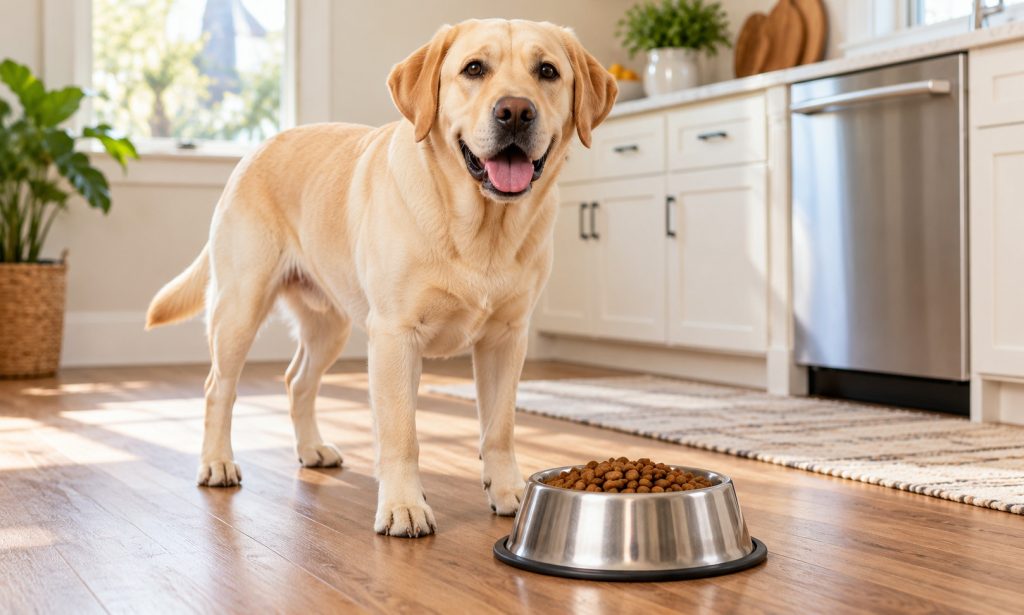
A Labrador’s appetite can make choosing food feel harder than it should. The best dog food for Labrador Retrievers depends on life stage, body condition, activity, and any veterinary advice your dog needs. This guide compares seven verified choices, including Labrador-specific puppy, adult, and wet formulas alongside general large-breed and healthy-weight foods. You can quickly see how the options differ in kibble shape, texture, age range, and listed nutrition features. That makes it easier to shortlist a food without assuming every Lab needs the same recipe. We focus on label details you can verify, practical package tradeoffs, and questions worth asking your veterinarian. Before buying, check the exact package’s nutritional adequacy statement, calories, and feeding directions. Use your dog’s weight trend and body condition—not a front-of-bag claim—to decide whether a food is a sensible fit.
As an Amazon Associate, PetAdvisorPro earns from qualifying purchases.
Quick Picks
| Product | Best For | Key Advantage | Buy | |
|---|---|---|---|---|
| Royal Canin Labrador Retriever Adult Dry Dog Food | Adult breed-specific kibble | Donut-shaped kibble; joint support nutrients | View on Amazon | Jump to Review |
| Royal Canin Labrador Retriever Puppy Dry Dog Food | Labrador puppies | Puppy-stage recipe; donut kibble | View on Amazon | Jump to Review |
| Royal Canin Labrador Retriever Adult Wet Dog Food | Adult wet food | Complete-and-balanced wet food | View on Amazon | Jump to Review |
| Purina Pro Plan Weight Management Large Breed | Large adult Labs managing calories | Large-breed weight formula | View on Amazon | Jump to Review |
| Hill’s Science Diet Perfect Weight & Joint Support Large Breed | Large adult Labs needing weight support | Weight and joint support positioning | View on Amazon | Jump to Review |
| Purina ONE Plus Healthy Weight | Adult healthy-weight feeding | Turkey-first recipe; tender morsels | View on Amazon | Jump to Review |
| Hill’s Science Diet Adult Perfect Weight | Small-bag weight-management trial | Adult weight formula in a 4-lb bag | View on Amazon | Jump to Review |
How We Chose These Foods
We verified seven distinct product identities through Amazon’s authorized product data. The roundup includes Labrador-labeled foods for different life stages and broader large-breed or healthy-weight formulas. We compare listed features without treating marketing claims as a guarantee or a veterinary recommendation.
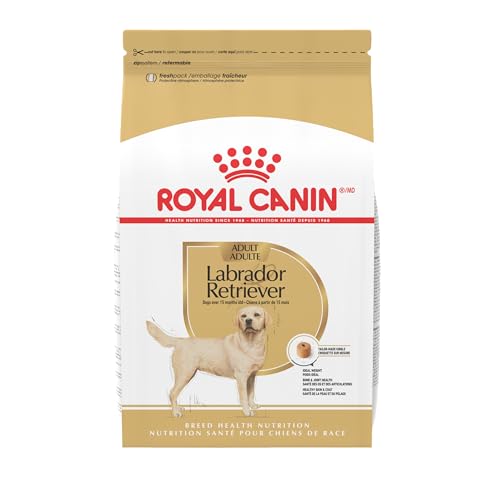
1. Royal Canin Labrador Retriever Adult Dry Dog Food
What We Like
- Made for adult Labradors
- Donut-shaped kibble
- Calorie and fat positioning
- EPA, DHA, and glucosamine
What We Don’t Like
- Not a puppy formula
- Large bag may need sealed storage
Adult Labrador food should be chosen around life stage, body condition, activity, and your dog’s individual health needs. This Royal Canin dry formula is specifically listed for purebred Labradors from 15 months onward. The product information describes a donut-shaped kibble intended for the breed’s fast-eating habits. It also lists a controlled calorie and fat profile, EPA and DHA, glucosamine, and skin-support nutrients. These features may help you compare it with general large-breed adult foods, but they do not guarantee weight control or prevent joint disease. Check the current package for the complete nutritional adequacy statement, calories per cup, and feeding chart. The brand’s breed-specific shape is a point of difference, not proof that every Labrador needs a specialized kibble. Consider your dog’s chewing style and measure meals carefully, especially if your veterinarian has advised weight management.
The 30-pound bag can suit a large dog that already eats this recipe, though storage and freshness matter once opened. Use an airtight container or keep food in its original bag inside a sealed bin. A donut-shaped piece may encourage some dogs to chew, but it cannot replace supervision or a slow-feeding plan when one is needed. Keep treats within the daily calorie budget. For a Lab with a medical diagnosis, ask your veterinarian whether a nonprescription breed diet is appropriate. The formula is best viewed as an adult breed-specific option with listed weight and joint-support features. Compare its cost per day with other complete adult foods, then track your dog’s body condition rather than relying on the bag’s front panel.
My Recommendation
For an adult Labrador, this is the most breed-specific dry option in the roundup. Its shaped kibble and listed weight and joint features are useful comparison points. Confirm calories and portion size with your dog’s needs; the specialized label does not replace veterinary guidance.
2. Royal Canin Labrador Retriever Puppy Dry Dog Food

What We Like
- Made for Lab puppies
- Puppy-stage age window
- Donut-shaped kibble
- Calcium and phosphorus listed
What We Don’t Like
- For puppies only
- Age transition needs monitoring
Labrador puppies grow into large adult dogs, so their food should be labeled for growth and used for the correct age window. This Royal Canin dry recipe is listed for purebred Lab puppies from 8 weeks to 15 months. Its donut-shaped kibble is designed around the breed’s eating habits. The product description also lists antioxidants and vitamin E, calcium and phosphorus, and prebiotics for digestive support. These are formulation details, not a promise to prevent orthopedic problems or digestive upset. The puppy-specific age range is useful when comparing it with general large-breed puppy foods. Verify the current package’s nutritional adequacy statement and feeding directions, since growing puppies need a suitable growth formula and measured portions. Your veterinarian can help monitor growth rate and body condition during routine visits.
The clear puppy stage is this food’s main advantage, while the transition to adult nutrition is its key planning point. Do not continue puppy food indefinitely simply because your dog accepts it. Check the label’s age guidance and discuss the switch with your veterinarian. The large bag can be practical for an active puppy, but keep it sealed and use it within a sensible freshness period. If your puppy has a medical condition or needs a therapeutic diet, get veterinary guidance before choosing a breed-specific retail formula. This pick is for owners who want a Labrador-focused dry puppy recipe and a kibble designed for the breed. It is not intended for adult maintenance, weight loss, or all dogs regardless of age.
My Recommendation
This is the clear puppy-stage choice among these picks. Its age window and breed-focused kibble distinguish it from adult foods. Plan to transition when your puppy reaches the label’s adult stage, and use regular veterinary growth checks. Keep routine growth checks with your veterinary team.
3. Royal Canin Labrador Retriever Adult Wet Dog Food

What We Like
- Breed-specific adult wet food
- Loaf-in-sauce texture
- Can be fed alone or mixed
- Weight and joint support features
What We Don’t Like
- Wet food needs careful storage
- Mixing changes total calories
This Labrador Retriever adult wet food is a loaf-in-sauce recipe listed for dogs 15 months and older. The product details position it as complete and balanced for feeding alone or mixing with the matching dry food. It also describes weight-management and joint-support features, including EPA, DHA, and glucosamine. Wet texture can be useful for dogs that prefer softer food, or for owners who want to add moisture to a meal. It does not automatically provide fewer calories once mixed with kibble; count the total portion from both foods. Confirm the current can label, calorie content, and nutritional adequacy statement before using it as the only diet. The breed-specific label and adult age range make the product easy to compare with general canned foods.
The 13.5-ounce can size may work for a large dog’s meal, but opened wet food needs prompt refrigeration and careful portioning. If you mix it with dry food, reduce the kibble amount so the combined meal stays within your dog’s calorie target. A moist texture can help with acceptance, but it does not replace dental care or a veterinary feeding plan. This option suits adult Labrador owners who want a breed-labeled wet food and the flexibility to feed it alone or alongside kibble. It is not a puppy recipe. Compare the daily cost with dry options, and check whether your dog tolerates the formula before buying a case.
My Recommendation
Choose this when your adult Lab prefers wet food or you want a complete wet option to feed alone or mix. The key tradeoff is portion management: count every calorie when combining it with dry food. Check serving size against your Lab’s calorie target.
4. Purina Pro Plan Weight Management Large Breed

What We Like
- Large-breed adult formula
- Chicken-first listing
- Protein-to-fat positioning
- Live probiotics and prebiotic fiber
What We Don’t Like
- Weight changes need veterinary guidance
- Large bag can be bulky
Purina Pro Plan Weight Management Large Breed is presented for large dogs over 50 pounds. The listing identifies chicken as the first ingredient and describes a protein-to-fat balance intended to help maintain muscle during weight reduction. It also mentions live probiotics and prebiotic fiber. Those features make it a candidate for Labs whose veterinarian has recommended a calorie-conscious diet, but food alone does not create a safe weight plan. Ask your veterinary team to set a target weight and calorie amount. The large-breed focus is more relevant to a Lab than a small-breed recipe, although this product is not Labrador-specific. Check the package for the complete life-stage statement, calorie density, and feeding guide. Monitor body condition and adjust portions with professional advice rather than relying on a product claim.
The 34-pound bag may be economical for a multi-dog home or a large Labrador that is already doing well on the recipe, but it takes space and needs sealed storage. The chicken-based formula may not suit every dog’s individual dietary restrictions. If your Lab is gaining weight, measure all food and treats before switching diets. Sudden food changes can upset digestion, so transition gradually unless your veterinarian says otherwise. This pick is best for adult large-breed owners who want a formula marketed for weight management and understand that portion control and activity remain essential. It is not a substitute for veterinary evaluation when weight gain is sudden or accompanied by other symptoms. Also compare the package’s calorie density before purchase.
My Recommendation
This is a large-breed weight-management candidate with chicken, probiotics, and prebiotic fiber in its listing. It suits adult Labs only when the calorie plan fits. Work with your veterinarian to set portions and monitor progress. Use this only within an agreed veterinary feeding plan.
5. Hill’s Science Diet Perfect Weight & Joint Support Large Breed

What We Like
- Large-breed positioning
- Weight support focus
- Omega-3 fish oil
- Joint-support positioning
What We Don’t Like
- Not a Labrador-specific formula
- Not a substitute for a weight plan
Hill’s Science Diet Perfect Weight and Joint Support Large Breed is a dry adult formula aimed at large dogs needing weight and mobility support. The product listing describes a chicken recipe, metabolism and body-weight positioning, and omega-3-rich fish oil for joint support. These are product features, not a guarantee of weight loss or a treatment for arthritis. Labrador owners often compare calories and portion size carefully because an individual Lab’s needs can differ widely. Review the calorie information and nutritional adequacy statement on the current package. If your veterinarian has recommended a particular weight target, ask whether this food fits that plan. The large-breed positioning and joint-support emphasis may be useful when you want one formula to compare across those priorities.
This option combines weight-oriented messaging with large-breed and joint-support features, which can simplify comparison for some owners. Its main limitation is that it is not Labrador-specific, and the product title alone does not tell you whether it matches your dog’s exact calorie needs. Ask your veterinary team to assess body condition and set a feeding amount. Avoid reducing food sharply without guidance, especially for a dog with a health condition. The 25-pound bag is a substantial purchase, so consider a smaller package or confirm your Lab accepts the food before stocking up. This is a comparison candidate for adult large dogs, not an automatic choice for every Labrador. The exact calories depend on the current package label.
My Recommendation
Consider this large-breed adult formula if weight and joint support are both part of your comparison. It is not Lab-specific, and claims do not guarantee an outcome. Confirm the diet fits your dog’s weight plan. Reassess the plan as body condition changes over time.
6. Purina ONE Plus Healthy Weight

What We Like
- Turkey-first recipe
- Adult complete nutrition
- Crunchy and tender textures
- Glucosamine sources listed
What We Don’t Like
- Not Labrador-specific
- Adult-only positioning
Purina ONE Plus Healthy Weight is a dry adult recipe with turkey named as its first ingredient. Product information describes crunchy kibble with tender meaty morsels, protein for lean muscle, and complete adult nutrition. It also lists omega-6 fatty acids and natural glucosamine sources. Those details give you label points to compare when a Labrador needs a calorie-aware food, but the product is not specifically formulated for Labradors or for every medical weight-loss plan. Check calories per cup and feeding directions on the current bag. A large-breed dog may need a different total daily amount than another dog of the same weight due to activity and body condition. Measure servings rather than estimating by eye, and include treats in the daily total.
The turkey-forward recipe and mixed texture may appeal to dogs that prefer meaty pieces with kibble. The 31-pound bag can be convenient for a large household but needs dry, sealed storage. If your dog has a protein restriction or diagnosed condition, ask your veterinarian before switching. Weight management depends on total calories and a realistic plan, not the package wording alone. This is a general adult healthy-weight option for Labrador owners comparing familiar dry formulas. It is not a puppy food or a breed-specific recipe. If you need a veterinary weight-loss diet or a precise therapeutic plan, follow the clinician’s recommendation instead of selecting by marketing claims. Store the opened bag sealed and dry.
My Recommendation
This general adult healthy-weight food may suit a Labrador that tolerates turkey and does well on standard kibble. Its large bag and non-breed-specific formula are tradeoffs. Verify calories and ask your veterinarian before using it for weight reduction. Keep all treats included in the daily calorie amount.
7. Hill’s Science Diet Adult Perfect Weight

What We Like
- Adult weight formula
- Small 4-lb bag
- Chicken and brown rice
- Weight-management focus
What We Don’t Like
- Not breed-specific
- Weight loss is not guaranteed
Hill’s Science Diet Adult Perfect Weight is a chicken-and-brown-rice dry food listed for adult dogs. The product information positions the formula for weight management and metabolism support. The four-pound package can be a lower-commitment way to assess acceptance before buying a larger bag, though cost per pound may be higher. This is not a Labrador-specific formula, and the product listing does not establish that it is appropriate for every overweight dog. Compare the current bag’s calories per cup, nutritional adequacy statement, and feeding directions. For a Labrador, portion measurement matters because small differences in daily servings can add up. If your dog is already at a healthy weight, ask whether a weight-management recipe is necessary.
The small bag is practical for a first purchase or limited storage, and the adult weight-management focus is clear. The main tradeoff is that this option is not specifically large-breed or breed-formulated. If joint support or a large-breed calorie profile is a priority, compare it with the other large-dog choices in this guide. Consult your veterinarian before putting an overweight Lab on a calorie-restricted diet, especially if the dog has another medical issue. Track weight regularly and adjust servings based on professional advice. This is a reasonable product to compare for adult Labs when package size matters, but a small bag does not make it a better nutritional fit by itself. Measure servings with a standard cup or kitchen scale.
My Recommendation
Pick this if you want a small bag of adult weight-management food to compare for acceptance. It is not Lab-specific or large-breed focused. Use it only if its label and calories fit your dog’s plan. It should fit the label and your veterinarian’s guidance.
How to Choose Best Dog Food for Labrador Retrievers
Start with your Labrador’s life stage and body condition. Compare calories, feeding directions, and the complete nutritional adequacy statement before choosing a product.
Choose for the right life stage
Puppies need food labeled for growth, while most adult Labs need an adult-maintenance formula. Senior dogs may have individual health or calorie needs that call for veterinary input. A breed-labeled food can make the age window clear, but the package statement still matters. Look for a food described as complete and balanced for the intended life stage. Check the feeding chart as a starting point and measure portions. If your puppy is growing quickly or your adult dog’s weight is changing, discuss the trend at a routine veterinary appointment.
Manage calories and body condition
A Lab’s appetite does not reveal how much food its body needs. Compare calories per cup or can and include treats, chews, and table food in the daily total. A weight-management label cannot guarantee weight loss. Your veterinarian can help set a target, calculate a suitable amount, and decide how to monitor progress. Make changes gradually and avoid severe calorie restriction without professional guidance. Keep a weekly record of servings and weight so adjustments are based on a trend rather than a single reading.
Compare texture, kibble, and practical fit
Kibble shape, wet-food texture, and bag size affect the feeding routine, but none is automatically best for every dog. A Lab that eats quickly may benefit from supervised slow-feeding tools, while a wet recipe requires refrigeration after opening. If you mix wet and dry foods, count the combined calories and maintain balanced portions. Consider storage space, freshness, cost per day, and whether the recipe matches any dietary restriction your veterinarian has identified. Change food gradually when possible and contact your veterinarian if the change causes persistent digestive signs.
When comparing two similar formulas, write down the life stage, calories, daily cost, and the reason you are considering each one. This keeps the decision tied to your Lab’s actual needs. If weight management is the goal, ask the clinic to recheck body condition after a few weeks. For a healthy Lab with no special dietary needs, a complete adult food your dog tolerates can be a sound choice, even if it is not labeled for the breed.
Final Verdict
The Royal Canin puppy and adult formulas are the clearest breed-specific choices, while the wet option adds texture flexibility for adult Labs. The broader weight-management foods give you alternatives to compare by calories and large-breed positioning. No product replaces portion measurement or veterinary guidance. Choose a life-stage-appropriate food, check its current label, and monitor your dog’s body condition.
FAQs
Do Labradors need breed-specific food?
No. A complete food appropriate for the dog’s life stage can work. Breed-specific formulas are options, not a universal requirement.
Should a Labrador puppy eat adult food?
Puppies need food labeled for growth. Follow the product’s age guidance and ask your veterinarian when to transition to adult food.
Is weight-management food right for every Lab?
No. Compare calories and ask your veterinarian to assess body condition and set a plan before restricting calories.
Can I mix wet and dry dog food?
Often, but count calories from both foods and confirm they fit your dog’s daily amount. Refrigerate opened wet food as directed.
How much should I feed my Labrador?
Use the package guide as a starting point, then adjust with veterinary guidance based on weight, activity, age, and body condition.