A food dish can look like a small choice, until it slides across the floor, holds more food than your cat needs, or becomes awkward to clean. If you are figuring out how to choose the right stainless steel cat food bowl, start with your cat’s eating posture, meal size, and daily routine. Stainless steel is often chosen because it is durable and easy to wash, but the material alone does not make a bowl comfortable or practical. Width, depth, weight, base design, and cleaning instructions all matter. This guide explains what to check, how to introduce a new dish, and when a feeding change deserves veterinary advice. For a product-focused look, read the Best Stainless Steel Cat Food Bowl guide while choosing for your cat’s fit.
Why consider a stainless steel bowl?
Stainless steel is a nonporous, durable material when the bowl is well made and kept in good condition. It does not chip like some ceramics, and many stainless bowls can be washed in a dishwasher, though you should confirm the maker’s care instructions. The surface can still scratch, dent, or develop rust spots if the finish is poor or damaged, so inspect it during routine cleaning.
A stainless dish is not automatically safer or more comfortable than every alternative. Cats have individual preferences. A cat may eat readily from steel but avoid a particular bowl because it is narrow, noisy, slippery, or placed in a busy area. The question is how the whole feeding setup works for your cat.
How to choose the right stainless steel cat food bowl
Compare the bowl’s usable dimensions with your cat’s meal, not just the product name or advertised capacity. Think about where the dish will sit, whether it stays put, and how easily you can wash it. These checks help you decide how to choose the right stainless steel cat food bowl for everyday use.
Choose a comfortable width and depth
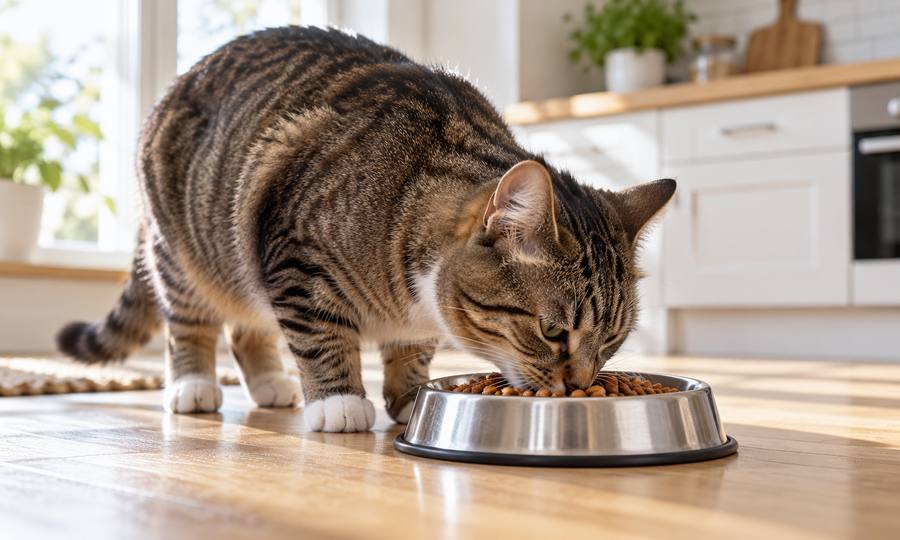
For many households, how to choose the right stainless steel cat food bowl starts with the interior width. A wide, shallow dish can make food easier to reach and may suit cats that dislike brushing their whiskers against tall sides. Whisker fatigue is often used as a catchall label, but a cat’s behavior around a bowl does not prove a medical condition. Treat it as a comfort clue: if your cat pulls food onto the floor, eats from the edge, or hesitates at a deep dish, try a wider, lower shape and observe.
Measure the inside diameter and depth where food will sit. When learning how to choose the right stainless steel cat food bowl, compare those numbers with the dish your cat already uses. A bowl can have a wide rim but a small feeding area. For wet food, a shallow dish may also make it easier to spread a meal across the bottom. For dry food, choose a size that holds the usual portion without requiring a tall, narrow container.
Match capacity to the meal
Capacity describes how much a bowl can hold, but it does not tell you how much your cat should eat. Follow the feeding plan on the food label or advice from your veterinarian. A large bowl can make portions look smaller than they are, while a tiny dish can crowd food and make serving messy. If you feed measured meals, check whether the bowl fits the portion with room for your cat to eat comfortably.
For households with more than one cat, separate bowls can help you notice how much each cat eats. Place them far enough apart to reduce competition. A stainless steel bowl should not be used to encourage one cat to finish another cat’s food.
Check weight, base, and stability
If you are deciding how to choose the right stainless steel cat food bowl, check how firmly it stays put during a normal meal. A very light dish may skid when your cat noses food around. Look for a broad base, a stable shape, or a removable nonslip ring that can be cleaned separately. Rubber or silicone parts should be intact and should not trap food residue underneath. If the bowl has a stand, check that it does not wobble and that the dish can be removed easily for washing.
Stability matters for older cats and cats with limited mobility, but elevation is not necessary for every cat. If your cat has pain, trouble swallowing, frequent regurgitation, or a new change in posture, ask your veterinarian before relying on a raised dish. For height and placement considerations, see this elevated cat food bowl guide.
What to look for in stainless steel cat food bowl
When you compare options, focus on the parts you can verify. Look for a smooth food-contact surface, clear care instructions, and construction that feels solid rather than sharp or flimsy. The phrase what to look for in stainless steel cat food bowl should lead to practical checks, not unsupported claims about a particular grade or coating.
- Finish: Check the inside and rim for rough seams, burrs, deep scratches, peeling coating, or sharp edges.
- Material details: Prefer a listing that identifies stainless steel clearly and avoids vague claims that cannot be checked.
- Shape: Compare interior width and depth with your cat’s current dish and eating style.
- Care: Confirm whether the bowl is dishwasher safe and whether any base or insert must be removed first.
- Replacement parts: If the bowl uses a rubber ring or elevated holder, check that parts can be cleaned and replaced.
- Noise: A metal bowl can clink on tile or a metal stand. A stable mat may reduce movement, but keep it clean and dry.
Avoid assuming that a high price, polished finish, or “whisker-friendly” label proves a bowl is better. The best test is whether your cat uses it comfortably and whether you can keep it clean. If you want to compare common bowl designs, our stainless steel cat food bowl review covers shapes, capacity, and stability. For water placement and hydration routines, see how to choose a water fountain for cats that drink little.
Cleaning and everyday care
A simple care routine is part of how to choose the right stainless steel cat food bowl, since a hard-to-clean design may become inconvenient. Wash food bowls regularly with hot, soapy water, rinse them well, and let them dry. Remove leftover wet food promptly rather than letting it sit for hours. If the bowl is dishwasher safe, use the manufacturer’s directions. Clean nonslip rings, stands, and feeding mats separately because residue can collect where parts touch.
Use separate dishes for food and water, and keep feeding equipment away from litter areas. Wash your hands after handling pet food and dishes. If your cat is sick or has a condition that affects infection risk, ask your veterinarian whether you should follow additional cleaning steps.
Inspect the bowl for damage. Replace it if the interior is deeply scratched, the rim is bent or sharp, rust appears, a coating is coming loose, or the bowl cannot be cleaned thoroughly. Surface wear is more important than a set calendar date. A well-kept stainless steel dish does not need replacement simply because it has reached a certain age.
Introducing a new bowl
A gradual change makes how to choose the right stainless steel cat food bowl easier to assess because you can see whether shape or material affects acceptance. Set the new dish beside the familiar one and let your cat investigate. For a few meals, you can offer the usual food in both bowls, then gradually make the new one the main dish if your cat is comfortable. Keep food and feeding times familiar while you change the equipment. Sudden changes to both the bowl and diet make it harder to tell what your cat dislikes.
Watch for repeated hesitation, pawing, pulling food out, or refusing a meal. A single skipped bite can happen for many reasons, but a persistent appetite change deserves attention. Do not force a cat to eat from a new dish. Clean and reposition it, then try a different width or a quiet feeding location.
When to ask a veterinarian
A bowl choice cannot diagnose or treat eating problems. Contact your veterinarian if your cat repeatedly drops food, chews on one side, drools, paws at the mouth, appears painful while eating, or has a sudden change in appetite or weight. These signs can have causes unrelated to the dish. Seek prompt veterinary guidance if your cat stops eating, especially if the refusal continues or other symptoms appear.
If your cat has a medical condition or a prescribed feeding routine, ask the veterinary team before changing food texture, meal frequency, or bowl height. The bowl can support a comfortable routine, but it cannot replace an exam or an individualized feeding plan.
Frequently Asked Questions
1. Is stainless steel a good material for a cat food bowl?
It can be a practical choice because it is durable and usually easy to wash. Check for damage, smooth edges, and clear care instructions. Your cat’s comfort and the bowl’s condition matter as much as the material.
2. What size stainless steel bowl should I get?
Choose a bowl that comfortably holds your cat’s normal portion while leaving space to eat. Compare the interior dimensions rather than relying on capacity alone. Use your veterinarian’s feeding plan to determine portions.
3. Should a cat bowl be wide and shallow?
A wide, shallow dish may suit a cat that avoids deep bowls or pulls food onto the floor. Cats vary, so observe your own cat rather than assuming every cat needs the same shape. When deciding how to choose the right stainless steel cat food bowl, let your cat’s eating habits guide the final size.
4. How often should I wash a stainless steel cat bowl?
Wash food bowls regularly, especially after wet food, and remove leftovers promptly. Clean attached rings, stands, and mats too. Follow the bowl maker’s dishwasher instructions when applicable.
5. When should I replace a stainless steel cat bowl?
Replace it if it has deep scratches, rust, sharp damage, a loose coating, or parts that cannot be cleaned. There is no universal replacement schedule for an intact, well-maintained bowl. The right stainless steel cat food bowl is the one your cat uses comfortably and you can keep clean.
Final Words
To choose a stainless steel dish, match its width, depth, and stability to your cat’s habits, then make sure it is easy to wash and remains in good condition. How to choose the right stainless steel cat food bowl comes down to the full setup: the dish, the portion, the location, and your cat’s response. Introduce changes gradually and watch for comfort. If eating behavior changes or your cat shows pain, involve your veterinarian rather than expecting a new bowl to solve the problem. For a related guide, see Best Stainless Steel Cat Food Bowl.