
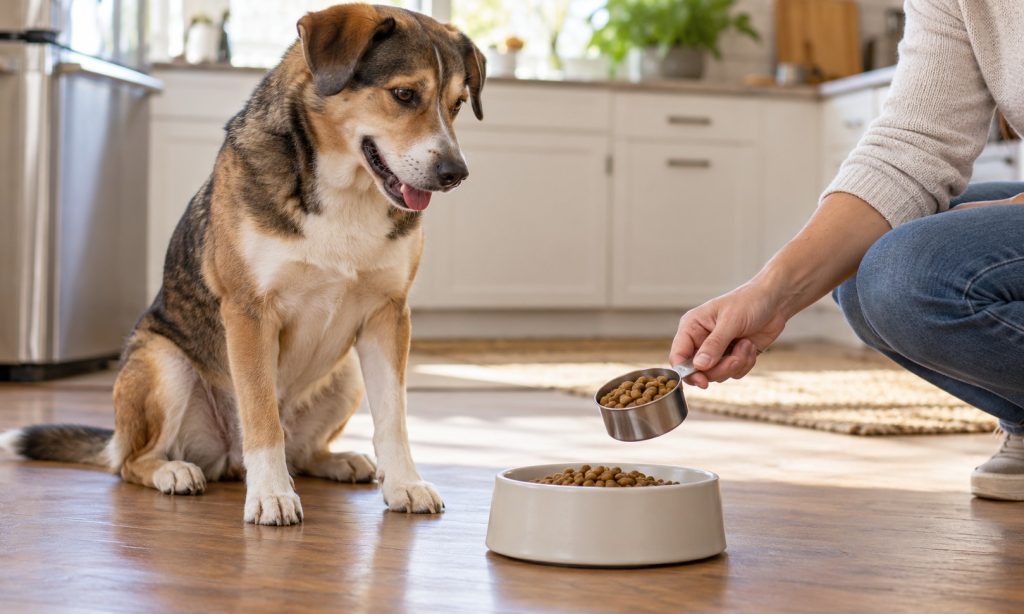
Choosing how much to feed can feel confusing when bags, cups, calories, and body shape all seem to say something different. A practical Dog Feeding Guide starts with a complete and balanced diet for the dog’s life stage, then adjusts portions based on weight, body condition, activity, and veterinary advice. If you are learning how to take care of a dog, feeding is more than filling a bowl: it also includes fresh water, measured meals, treat portions, safe storage, and noticing changes in appetite. This guide explains how to read the label, set a routine, transition foods, and know when a veterinarian should help. It does not recommend a brand or replace an individualized nutrition plan. Measure portions consistently and ask your veterinarian about individual needs.
Choose food suited to the dog’s life stage
Look for a nutritional adequacy statement on the package. It should indicate whether the food is complete and balanced for a particular life stage, such as growth, adult maintenance, or all life stages. Treats and supplemental foods are not usually intended to provide a complete diet. AAFCO explains that life stage and feeding directions matter when evaluating food labels.
Some dogs need a therapeutic diet or a nutrition plan for a health condition. If your dog has allergies, kidney disease, diabetes, digestive problems, or another diagnosis, ask the veterinarian before changing food or adding supplements. A Dog Feeding Guide can help you prepare questions, but it cannot determine the right medical diet for an individual dog.
How much should you feed?
Start with the food label’s feeding directions as a starting estimate, not a precise prescription. Needs vary with age, size, activity, neuter status, health, metabolism, and the food’s calorie density. Use a measuring cup or kitchen scale to portion meals consistently. Free-pouring makes it harder to know how much the dog eats.
Monitor body condition and weight over time. Your veterinarian can show you how to assess body condition and muscle mass. If weight changes, adjust portions with veterinary guidance rather than making a drastic cut. For a weight-loss plan, the clinic can set a safe calorie target and monitor progress.
Keep a note of meals, treats, chews, and table scraps. Extras contribute calories and can make a carefully measured main meal less useful. Many veterinary nutrition guidelines suggest keeping treats and other extras to a small share of daily calories; ask your veterinarian what target suits your dog. A Dog Feeding Guide works best when it includes the whole day’s intake, not just the food in the bowl.
Set a feeding routine
Many households feed adult dogs on a regular schedule, often dividing the daily amount into two meals. Puppies generally need more frequent meals, with timing changing as they grow. The best schedule depends on age, health, household routine, and any medications. Follow your veterinarian’s instructions for dogs with conditions that affect meal timing.
Offer meals in a calm area and allow the dog to eat without competition. Keep fresh, clean water available. If you have multiple pets, separate feeding spaces can reduce stress and help you track how much each dog eats. Wash bowls regularly and store food according to package instructions.
If your dog suddenly stops eating, eats much more than usual, vomits repeatedly, or develops diarrhea, contact your veterinarian. Persistent appetite or weight changes should not be dismissed as pickiness or age alone.
Transition foods gradually
When changing diets, ask whether a gradual transition is appropriate. Mixing increasing amounts of the new food with the current food over several days may help some dogs adjust, but sensitive dogs or dogs on a therapeutic diet may need a different plan. Follow the veterinarian’s directions if the change is related to illness.
Watch stool quality, appetite, and comfort during the transition. If vomiting, diarrhea, itching, or refusal to eat occurs, pause and call the clinic for advice. Do not keep switching foods repeatedly without a plan; it can make it harder to identify what is causing symptoms.
Understand treats, toppers, and supplements
Use treats in small, measured portions and include them in the daily calorie picture. Choose treats that are safe for dogs and appropriate for the dog’s size and chewing style. Avoid foods known to be harmful, including chocolate, grapes and raisins, onions, garlic, and xylitol-containing products. If your dog eats something unsafe, contact a veterinarian or animal poison-control service.
Toppers and supplements can change the balance of a diet. A dog already eating a complete and balanced food may not need added vitamins or minerals. Ask a veterinarian before using supplements, especially if your dog takes medication or has a health condition. A Dog Feeding Guide should focus on the dog’s full diet rather than a single ingredient or trend.
Food safety and storage
Keep pet food in its original packaging or a clean, sealed container, and follow storage instructions. Wash hands after handling food and clean feeding tools and surfaces. Refrigerate opened wet food as directed on its label. Avoid leaving moist food out for long periods.
Raw diets carry risks from bacteria and can be nutritionally unbalanced if not formulated carefully. Ask your veterinarian about food safety before feeding raw meat or homemade recipes. If you want to prepare food at home, work with a board-certified veterinary nutritionist so the recipe meets the dog’s needs.
When to ask a veterinarian for help
Seek guidance if your dog is gaining or losing weight, has a poor appetite, is excessively hungry or thirsty, has recurring digestive signs, or needs a diet for a diagnosed condition. Bring the current food label, approximate daily portion, treat list, and recent weight history. This makes the discussion more useful.
For broad routines beyond meals, our existing dog grooming basics guide and dog parasite-prevention guide cover other parts of everyday care. A general dog care guide should treat nutrition, grooming, preventive care, and veterinary visits as related but distinct routines.
Read the label with a plan
Check the nutritional adequacy statement, intended life stage, calorie content, and feeding directions. AAFCO notes that feeding directions are based on an animal’s weight and life stage, but individual needs can differ. Dog Feeding Guide amounts should be adjusted through body-condition monitoring, not by assuming the label is exact for every dog.
Use a consistent measuring method. If you use a scoop, keep the same scoop for each meal and level it rather than heaping it. For a dog with weight concerns, ask the veterinarian whether weighing food in grams would be more accurate. Dog Feeding Guide tracking can be helpful when several household members share feeding duties.
Account for treats and extras
Count training rewards, dental chews, table scraps, toppers, and food used in puzzles. If you use part of the daily ration for training, set it aside at the start of the day. Ask your veterinarian what portion of calories may come from treats for your dog, especially if the dog is overweight or has a medical diet.
Avoid giving unfamiliar foods without checking safety. Dog Feeding Guide choices should not include toxic ingredients such as chocolate, grapes, raisins, onions, garlic, or xylitol-containing products. If you suspect ingestion, call a veterinarian or poison-control resource rather than waiting for symptoms.
Feeding puppies, adults, and seniors
Puppies grow quickly and need a diet formulated for growth and a schedule suited to their age. Large-breed puppies may have specific nutrient considerations, so ask the veterinarian which food statement fits their expected adult size. Adult dogs generally need a maintenance diet suited to body condition and activity. Older dogs may need adjustments based on muscle, appetite, dental comfort, or disease.
Dog Feeding Guide choices for pregnant or nursing dogs, working dogs, or dogs with chronic illness should be discussed with a veterinarian. These needs can differ from routine adult maintenance. Do not make a major diet change during illness without instructions from the clinical team.
Make food changes carefully
Plan a gradual transition when changing foods unless the veterinarian provides different directions. A common approach is to mix increasing amounts of the new diet with decreasing amounts of the old over several days. Sensitive dogs may need a slower transition. If the dog develops vomiting, diarrhea, or refuses meals, call the clinic before continuing the change.
Dog Feeding Guide routines should also account for safe storage and household consistency. Keep food sealed as directed, use clean bowls, and write down who fed each meal if multiple people are involved. These simple steps prevent accidental double portions and help you notice a missed meal or appetite change.
Make portions measurable and consistent
A Dog Feeding Guide is more useful when everyone in the household uses the same measure. Decide who serves each meal, use a kitchen scale or consistent scoop, and record treats given during the day. This can prevent accidental double meals and make weight changes easier to interpret. If multiple people feed the dog, keep a simple check-off chart.
Food labels use different calorie densities, so the same volume can contain different amounts of energy. When changing foods, compare the feeding directions and calories per serving rather than matching cups one-for-one. Ask your veterinarian for help if your dog needs a weight change, has a medical condition, or is growing. Adjust gradually according to the plan.
Set a safe treat and water routine
Fresh water should be available unless your veterinarian has given a specific medical instruction. Wash the bowl regularly and check that it is easy for the dog to reach. Treats can support training, but measure them and account for their calories. For frequent training, use part of the dog’s daily meal when appropriate.
A Dog Feeding Guide should also cover safe handling. Keep foods known to be toxic out of reach, supervise children around meals, and avoid sudden diet changes. If your dog eats an unknown food or packaging, contact a veterinarian with the product details. When appetite, thirst, stool, or weight changes persist, bring your notes and food label to the clinic.
Frequently Asked Questions
These answers explain portions, schedules, treats, and veterinary guidance.
How do I know if a dog food is complete and balanced?
Review the nutritional adequacy statement on the label and confirm it matches your dog’s life stage. Ask your veterinarian if the dog has special needs.
Should I follow the feeding amount on the bag exactly?
Use it as a starting point. Adjustments may be needed based on body condition, weight trends, activity, and veterinary advice.
How often should I feed my dog?
Many adult dogs eat on a regular schedule, while puppies often need more frequent meals. Follow a schedule suited to age and health.
Can I add supplements to my dog’s food?
Ask your veterinarian first. Supplements can affect nutrient balance or interact with a health condition or medication.
What if my dog suddenly refuses food?
Contact your veterinarian if the change persists or occurs with vomiting, diarrhea, weakness, pain, or other unusual signs.
Final Words
A useful Dog Feeding Guide begins with a complete and balanced diet for the right life stage, measured portions, fresh water, and steady monitoring. Include treats in the daily plan and ask your veterinarian about weight changes, special diets, or supplements. These habits are practical parts of how to take care of a dog and support a consistent feeding routine.
Reference
These selected sources support the health and safety information in this article.









