
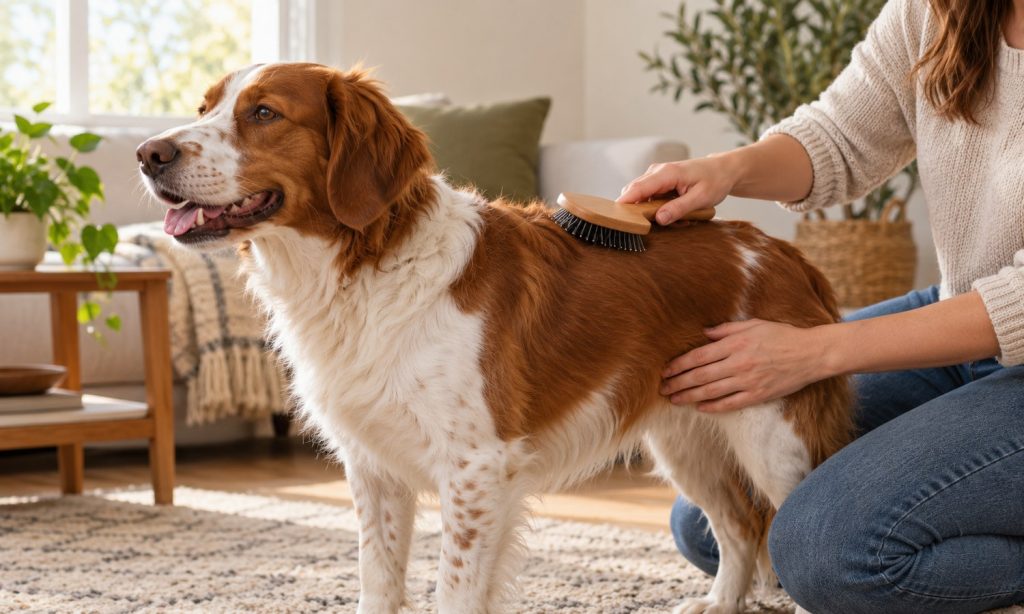
Dog grooming is more than keeping a coat tidy. Regular care gives you a chance to check your dog’s skin, ears, paws, nails, and teeth while helping prevent tangles and discomfort. The right routine depends on coat type, age, health, activity, and how comfortable your dog is with handling. These dog grooming basics explain what to do at home, what can wait for a professional, and when a change needs veterinary attention. If you are learning how to take care of a dog, build grooming into ordinary calm moments instead of saving every task for one stressful session. Puppies benefit from the same gentle introduction. Knowing how to take care of a puppy includes brief, positive practice with paws, ears, brushing, and gentle mouth handling.
What do dog grooming basics include?
Dog grooming basics include brushing or combing, bathing when needed, nail care, ear checks, dental care, and simple inspection of the skin and paws. Grooming needs are not identical for every dog. A short, smooth coat may need less detangling than a long or curly coat, while a dog that swims or spends time outdoors may need more frequent checks.
The aim is comfort and cleanliness, not a show-ring finish. A gentle dog grooming basics routine can help you notice a new lump, sore spot, parasite, broken nail, or change in the coat. Grooming does not replace veterinary care, and a dog who suddenly resists a familiar task may be uncomfortable.
How to build a grooming routine
Start with short sessions in a quiet place where your dog can stand or lie comfortably. Let your dog sniff a brush or towel before you use it. Touch one body area gently, pause, and reward calm behavior. Stop before your dog becomes overwhelmed. If your dog growls, snaps, trembles, or tries repeatedly to escape, do not force the session. A veterinarian or qualified trainer can help you make handling safer.
Dog grooming basics work best when they fit your dog’s actual coat and tolerance. Keep the supplies simple and appropriate: a brush or comb suited to the coat, a nonslip surface for bathing, towels, and dog-safe nail equipment if you have been shown how to use it. You do not need to complete every task at once. A brief brush today and a paw check tomorrow can be more successful than a long wrestling match.
Brushing and coat care
Brushing removes loose hair and surface debris, distributes natural oils, and helps reveal tangles or skin changes. Brush gently in the direction of hair growth, working in small sections. Pay attention to friction areas such as behind the ears, under the collar, armpits, and the backs of the legs. Long, curly, or double coats may need more frequent brushing than short coats, but frequency depends on the individual dog.
If you find a tight mat close to the skin, do not pull hard or cut it out with household scissors. Dog skin can lift into a mat and be cut accidentally. Ask a professional groomer or veterinarian to remove severe matting. A sudden patch of hair loss, persistent itching, redness, odor, or sores is a health concern, not simply a coat problem. For coat-specific grooming, see guidance on choosing clippers for thick coats.
Bathing without irritating the skin
Many dogs do not need frequent baths, but the right interval depends on their coat, activities, skin, and veterinary plan. Bathe a dog when the coat is dirty or has an odor, or when a veterinarian recommends a schedule. Use lukewarm water and a dog-appropriate cleanser. Keep water and soap out of the eyes and ear canals, rinse thoroughly, and dry the coat well, especially in dense fur.
Frequent bathing or harsh products can dry or irritate skin. If your dog has a rash, open sore, recurring odor, or intense itching, consult a veterinarian before bathing or applying a medicated product. The ASPCA notes that regular brushing helps remove dirt and tangles, while grooming needs vary among dogs. These dog grooming basics should remain gentle and adapted to your pet.
Nail, paw, and ear care
Long nails can catch, split, or change how a dog places its feet. Check nails regularly and trim small amounts if you know how to avoid the quick, the sensitive tissue inside each nail. If nails are dark, your dog is uneasy, or you are not confident, ask a groomer or veterinary team to demonstrate. Some dogs do better with gradual practice across several sessions.
Look between the toes and around the pads for debris, cracks, redness, or trapped material after walks. Keep fur around the pads neat only if you can do so safely. A sore, swollen, bleeding, or repeatedly licked paw deserves attention. For cold-weather paw concerns, read this guide to winter paw care.
Check the visible part of the ears for redness, odor, unusual discharge, or frequent head shaking. Healthy ears do not need deep routine cleaning. Never push cotton swabs into the ear canal or pour a cleaner into a painful ear without veterinary advice. Ear infections and mites need the right diagnosis and treatment.
Dental care belongs in grooming
A dog’s mouth is part of routine care. Gradually get your dog comfortable with gentle lip lifting and mouth handling. If tolerated, brush with a dog toothbrush and toothpaste. Human toothpaste is not intended for dogs. If your dog has bleeding gums, broken teeth, strong mouth odor, or difficulty eating, ask a veterinarian to check the mouth instead of trying to scrape deposits at home.
Short practice sessions matter. Let a puppy investigate the toothbrush, then build toward touching the lips and teeth. This is one practical part of how to take care of a puppy, along with calm paw handling and gentle brushing. Cornell’s veterinary behavior guidance recommends practicing handling and pairing it with positive rewards; dogs can learn at different ages.
Grooming puppies and older dogs
Puppies are learning what normal handling feels like. Begin with a few seconds at a time and make the experience predictable. Touch paws, ears, and shoulders gently, then pause. Introduce a brush before the coat needs a long session. Avoid restraint or repeated handling when the puppy is frightened. If a task is urgent, a veterinary professional can advise on a safe approach.
Older dogs may have arthritis, reduced balance, sensitive skin, or trouble standing. Use a stable, comfortable surface and allow breaks. Support the body without pulling on joints. Grooming can reveal changes in lumps, coat, or skin, but do not assume every new change is caused by age. A sudden change in tolerance can signal pain and should be discussed with your veterinarian.
Food, water, and grooming are connected parts of care
Grooming is only one piece of daily care. A balanced diet, access to fresh water, exercise, sleep, preventive veterinary visits, and a safe home all matter. If you are organizing the broader routine of how to take care of a dog, use a feeding plan based on your dog’s life stage, body condition, and veterinary advice. This dog feeding guide and nutrition overview can help you understand the basics without treating grooming as a substitute for nutrition.
Coat condition can change with health, season, stress, and diet, but a dull coat alone cannot identify a nutritional deficiency. Ask a veterinarian before changing food or adding supplements. Dog grooming basics help you notice changes; they do not tell you what caused them.
When should you use a professional groomer or veterinarian?
A professional groomer may be useful for complex coats, full haircuts, severe tangles, or tasks your dog cannot tolerate safely at home. Ask how the groomer handles nervous dogs and whether they will pause if the dog shows distress. A groomer can help with coat maintenance but cannot diagnose skin disease or replace veterinary care.
Contact a veterinarian for painful skin, persistent itching, new hair loss, repeated ear problems, bleeding or broken nails, sores, lumps, or sudden resistance to touch. Seek urgent care for severe bleeding, a deep wound, chemical exposure, or sudden swelling. If a grooming task repeatedly causes fear or pain, stop and get professional guidance.
A simple weekly grooming check
A weekly check can keep dog grooming basics manageable without making every week identical. Run your hands gently over the coat and look for tangles, flakes, redness, or small lumps. Check paws and nails, glance at the ears, and notice whether your dog is chewing or licking one area more than usual. This quick review helps you decide which routine tasks need attention and which can wait.
Some tasks need a different rhythm. Brush more often if the coat mats easily, bathe based on dirt and skin needs, and trim nails when they approach the floor or begin catching. Dental care is most useful when practiced regularly, even if you begin with only a few seconds. Dog grooming basics are easier when you track what your own dog needs rather than copying a schedule made for another coat.
Keep a note of changes such as new odor, increased scratching, a limp after nail trimming, or an ear that looks different from the other. These details can help a veterinarian distinguish routine maintenance from a health concern. Grooming is a practical chance to observe your dog, not a reason to delay an appointment.
Frequently Asked Questions
These quick answers can help you shape a routine, but your dog’s coat and health may call for individual advice.
How often should I brush my dog?
It depends on coat length, texture, shedding, and matting risk. Short coats may need occasional brushing, while long, curly, or dense coats often need more frequent sessions. Check the coat regularly and ask a groomer or veterinarian about breed-specific needs.
How often does a dog need a bath?
There is no single schedule for every dog. Activity, coat, skin condition, and veterinary instructions matter. Bathe when needed, use a suitable dog cleanser, rinse well, and avoid repeated washing that leaves the skin dry or irritated.
Can I cut a mat out with scissors?
Avoid cutting a tight mat close to the skin. The skin can be pulled into the tangle and injured. Ask a professional groomer or veterinary team to remove severe mats safely.
What should I do if my puppy is afraid of grooming?
Make each introduction brief and positive. Let your puppy inspect tools, reward relaxed behavior, and stop before fear grows. If the puppy panics or shows defensive behavior, ask a veterinarian or qualified trainer for help.
Do dogs need their ears cleaned every week?
Not necessarily. Check the visible ear for changes, but avoid deep cleaning unless your veterinarian recommends it. Redness, odor, discharge, head shaking, or pain should be checked by a veterinarian.
Final Words
Good dog grooming basics are steady, gentle, and suited to your dog rather than a rigid calendar. Brush the coat, check nails and paws, bathe when needed, look at the ears, and build dental care gradually. Keep sessions short, especially for puppies and older dogs, and ask for help when a task feels unsafe. If you are learning how to take care of a dog, remember that grooming works alongside nutrition, water, exercise, and veterinary care. The same calm approach helps you learn how to take care of a puppy without turning routine handling into a struggle.









