A cat tree can add climbing, scratching, and resting space without taking over a small home, but a narrow footprint alone does not guarantee a useful setup. If you are figuring out how to choose the right cat tree for small apartments, measure the available floor area, consider your cat’s size and activity, and check how the tree stays stable. A compact model may fit beside a window yet offer platforms too small for your cat to turn around. People looking for the Best Cat Tree for Small Apartments should compare usable levels and stability alongside footprint. A taller tower may use less floor space but wobble if its base is too light. This guide explains how to compare height, footprint, materials, access, and maintenance before you bring a tree home. It also covers wall-mounted alternatives and simple ways to make a small space more engaging. Knowing how to choose the right cat tree for small apartments helps you create a stable, usable cat area that fits both your home and your cat.
What a cat tree adds to a small home
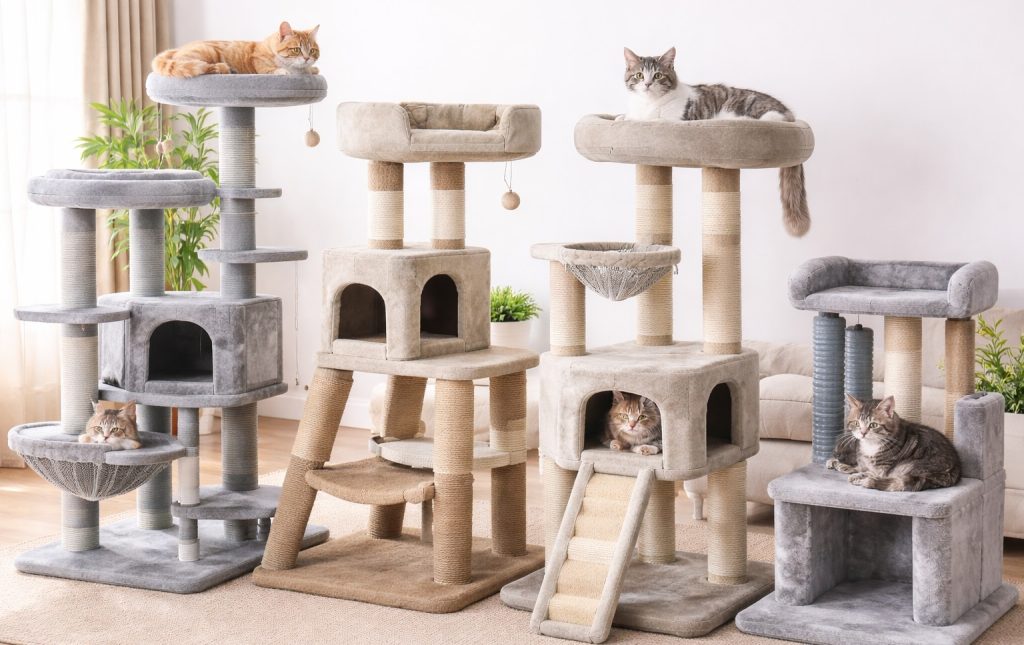
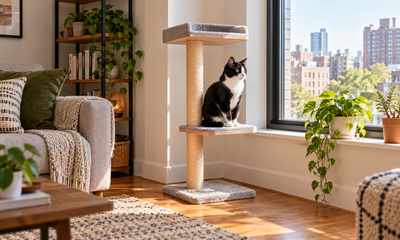
A cat tree combines one or more elevated resting platforms with places to scratch or climb. In an apartment, vertical space can add another route through the room without needing a large floor footprint. A tree may also create a familiar perch near a window, away from foot traffic, or in a room where the cat already spends time.
It does not need to replace play, hiding places, or access to comfortable resting areas. Cats differ in whether they like high perches, enclosed cubbies, or scratching surfaces. Watch where your cat already climbs and which materials it scratches. Those habits give you a better starting point than choosing a tree by appearance alone.
How to choose the right cat tree for small apartments
Measure the space before comparing models. How to choose the right cat tree for small apartments depends on the full footprint, the cat’s movement, and the stability of the structure, not simply the advertised height or platform count. Leave room for people to walk around it and for the cat to approach or leave without getting trapped.
Measure the footprint and usable height
An important step in how to choose the right cat tree for small apartments is measuring the floor area where the tree will stand, including clearance for doors, drawers, vents, and nearby furniture. Check the widest part of the base rather than the narrowest post. Consider the height of ceilings, shelves, window sills, and ceiling fans. A tall tree should not block a walkway or press against blinds and curtains.
When deciding how to choose the right cat tree for small apartments, compare the dimensions of every platform and cubby. A tree may be tall but have small resting areas. If your cat likes to stretch, look for a platform wide enough for its body. In a multi-cat household, consider whether cats can pass one another safely without crowding on a narrow step.
Prioritize stability and anchoring
Safety is central to how to choose the right cat tree for small apartments. A cat tree should not tip or rock when your cat jumps onto it. A broad, heavy base can help, but the whole structure matters: check post connections, screws, platform support, and assembly instructions. After assembly, test for movement gently before allowing your cat to climb. Retighten hardware as directed and inspect it regularly.
Some apartment owners describe small towers wobbling or tipping, while others find compact models stable when assembled and placed carefully. These individual reports are not a guarantee about any model. They highlight why stability is worth checking directly. If the instructions offer a wall anchor, confirm that your lease and wall type allow it before installation.
Choose platforms that suit your cat
How to choose the right cat tree for small apartments also means thinking about how your cat climbs. A young, agile cat may use staggered platforms, while an older or less mobile cat may need low steps and a clear route. Check that platforms are not too far apart and that the top perch is reachable without a difficult leap. A cat tree should allow a comfortable turn and rest, not only a quick climb.
A covered cubby can be useful for a cat that likes enclosed spaces, but some cats prefer open shelves where they can see the room. If your cat is large, compare the stated platform dimensions and load guidance carefully. Our guide to cat trees for large cats discusses wider platforms and sturdier support.
Check scratching surfaces and materials
Another consideration in how to choose the right cat tree for small apartments is the scratch texture. Many trees combine carpet, fabric, sisal rope, sisal fabric, or cardboard. Cats may prefer one texture or scratching direction over another. Notice whether your cat scratches vertical posts, horizontal mats, or furniture edges, then choose a design that offers a similar surface. A stable post should not flex or spin when the cat pulls against it.
Inspect edges and seams for loose threads, exposed staples, sharp corners, or small pieces a cat could chew. Covering materials should stay attached during ordinary use. Ask whether replacement parts are available if a favorite scratching post wears out before the rest of the tree.
What to look for in cat tree for small apartments
The phrase what to look for in cat tree for small apartments can be turned into a short checklist. When deciding how to choose the right cat tree for small apartments, compare these details: Compare the details that affect safety, daily use, and room fit.
- Actual footprint: Measure the base and any parts that extend beyond it.
- Stability: Check weight, post joints, fasteners, and any approved anchoring method.
- Platform size: Make sure resting areas suit your cat’s body and preferred position.
- Climb route: Look for reachable steps and a way down that does not require a risky leap.
- Scratch material: Match the surface and direction to your cat’s habits.
- Cleaning: Check whether fabric can be vacuumed or removed and whether parts can be replaced.
- Assembly: Review the tools, space, and maintenance required before installation.
How to choose the right cat tree for small apartments includes being selective about features. A compact tree should still have a clear purpose. One stable scratching post and a perch your cat likes may be more useful than a crowded tower with many small platforms. For more indoor climbing and scratching options, see our guide to cat trees for indoor cats. If mobility is a concern, cat trees for senior cats can help you consider lower access points.
Placement ideas that save space
For many homes, how to choose the right cat tree for small apartments includes finding an unused corner near a window, which can use space that might otherwise remain empty, but avoid blocking a heater, air vent, or door. Place the tree on a flat, nonslip surface. If it sits near a window, secure cords and blinds so they do not dangle within reach. Avoid placing it beside fragile items that could fall during active play.
If you are deciding how to choose the right cat tree for small apartments, consider the room’s existing layout. A perch beside a bookcase or sturdy cabinet may create a connected route, provided the furniture cannot tip and the cat has a safe way down. Before settling on how to choose the right cat tree for small apartments, check any adjacent shelves and furniture. Do not assume shelves are secure because they hold books. Check the mounting hardware and weight limits before allowing a cat to jump on them.
Alternatives to a freestanding tower
If floor space is tight, consider a single scratching post, a window perch, a compact wall shelf, or a cardboard scratcher. Each option has different installation and stability needs. A wall-mounted system can free floor area but may require drilling and approval from a landlord. A window perch must be attached securely and placed where the cat cannot access an unsafe open window.
You can rotate toys and play sessions to add variety without adding more furniture. Simple enrichment such as a box, a paper bag with handles removed, or a food puzzle can complement a tree. Cornell’s feline behavior guidance notes that scratching preferences differ by orientation and material, so observe your cat before buying extra equipment.
Assembly and regular checks
Follow the assembly directions in order and use the recommended fasteners. Do not skip a support piece because the tree looks stable at first. Place it on a level surface, then check for rocking before introducing it to your cat. If the design uses wall attachment, use the specified hardware and confirm that the wall construction can support it.
Check the tree periodically for loose screws, fraying rope, torn fabric, exposed staples, cracked platforms, or wobbling posts. How to choose the right cat tree for small apartments should include a plan for upkeep. Tighten or replace parts according to the instructions. Remove the tree from use if it becomes unstable or develops a sharp edge. Clean fabric and scratching surfaces as directed, and remove accumulated fur and debris.
Frequently Asked Questions
1. How much floor space does a cat tree need?
It depends on the base and how the tree is used. Measure the widest point, leave walking clearance, and choose a stable spot where the cat can approach and leave safely.
2. Are tall cat trees safe in small apartments?
They can be, if the base, connections, and any anchoring are appropriate and the tree stays stable. Assemble it as directed and check for rocking before use.
3. Is a wall-mounted cat tree better for a small apartment?
It can save floor space, but it requires secure installation and may need landlord approval. Use suitable hardware and follow weight limits.
4. What material should a cat tree use?
Choose scratching and resting surfaces that suit your cat’s preferences. Check that materials are securely attached and that seams and edges do not expose sharp or loose parts.
5. How often should I inspect a cat tree?
Give it a quick stability and damage check during routine cleaning, and inspect it more closely if it wobbles, shifts, or gets heavy use. Tighten hardware as directed.
Final Words
A good apartment cat tree uses space efficiently while giving your cat stable places to scratch, climb, and rest. How to choose the right cat tree for small apartments comes down to accurate measurements, a secure build, suitable platform sizes, and surfaces your cat may use. Introduce the tree gradually and check it after assembly. The phrase Best Cat Tree for Small Apartments can point you toward options, but fit and stability in your own home matter most.