A catnip toy can spark a burst of rolling, batting, or chewing, but adult cats do not all respond to catnip. Some ignore it, some enjoy a brief play session, and others prefer a different texture or movement. If you are deciding what to look for in catnip toy for adult cats, start with the toy’s construction, size, and your cat’s play style. Check whether seams hold, whether any parts can come loose, and how easily you can supervise play and store the toy afterward. The phrase Best Catnip Toy for Adult Cats may sound like a single answer, but the right choice depends on your individual cat. This guide explains what to inspect, how to introduce a new toy, and when to replace it. It also separates safe toy selection from assumptions about every cat’s reaction to catnip.
How adult cats may respond to catnip toys
What to look for in catnip toy for adult cats may depend on whether your cat even notices the scent. Cats show different reactions to catnip. One cat may rub against a toy or toss it around; another may sniff and walk away. Some cats seem more interested in the toy’s shape, texture, or movement than in the plant filling. Personal reports from cat owners reflect this variety, but they do not predict how an individual cat will respond.
Offer a catnip toy as one optional activity, alongside other safe forms of play. Avoid treating a lack of interest as a problem. If your cat is playful, you can rotate toys to keep familiar objects from becoming background clutter. For general toy safety, Cornell’s feline health guidance recommends avoiding small parts and strands that could detach and be swallowed.
What to look for in catnip toy for adult cats
When comparing what to look for in catnip toy for adult cats, pay more attention to construction and supervised use than claims about how strongly a toy will attract cats. A well-made toy should suit your cat’s size and play style, stay intact during normal play, and be easy to inspect.
Choose a size your cat can handle
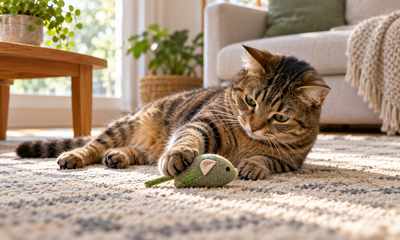
When deciding what to look for in catnip toy for adult cats, compare the toy size with the objects your cat already carries. A small soft toy may be easy for a cat to bat and carry, while a larger kicker can suit a cat that grabs and bunny-kicks with its hind legs. Check the toy dimensions and compare them with objects your cat already carries or wrestles. Avoid pieces small enough to swallow, especially if your cat chews toys rather than batting them.
A toy should also be easy to pick up without putting fingers near a cat’s teeth or claws. If your cat becomes overexcited, pause play and give it space. The toy is for the cat to engage with, not a reason to handle or tease it when it is overstimulated.
Inspect seams, fabric, and attachments
One answer to what to look for in catnip toy for adult cats is durable stitching. Check seams and fabric for loose threads, holes, or exposed filling. Look closely at tails, ribbons, feathers, bells, and tags. Any feature that can detach may become a choking or ingestion risk. Remove a damaged toy from the play area rather than sewing it while the cat is nearby.
Some catnip toys contain dried plant material inside a fabric pouch. The filling should stay enclosed. If a toy uses a refill opening, confirm that it closes securely and inspect it after play. Do not let a cat chew on loose string, ribbon, or packaging. Put wand toys away when interactive play ends.
Consider texture and play style
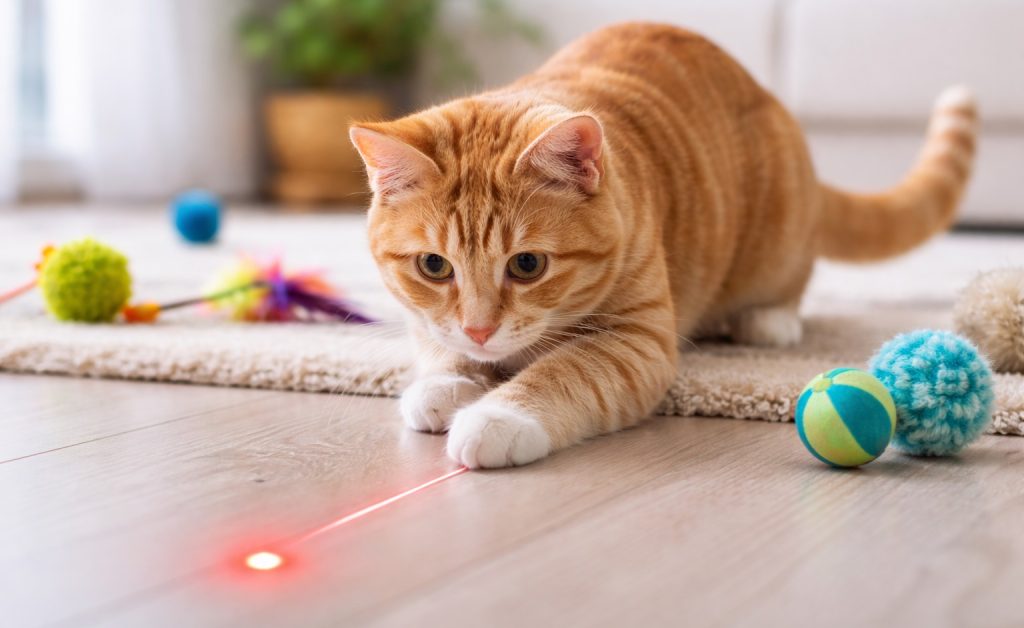
Texture is part of what to look for in catnip toy for adult cats. Cats may prefer crinkly fabric, soft plush, woven material, or a firm shape. Think about whether your cat likes to chase, paw, carry, chew, or wrestle. A toy that rolls unpredictably may interest a chaser, while a soft kicker may suit a cat that grabs objects. You do not need every style at once; start with one that resembles play your cat already enjoys.
If your cat mainly plays with non-catnip objects, that preference is useful information. Our guide to self-play cat toys covers other ways to keep a cat occupied. For toys designed for chewing, see chew toys for cats. These links do not mean a cat needs more toys; choose only what fits its behavior and your supervision routine.
Check care and storage needs
Care details are another part of what to look for in catnip toy for adult cats. Look for washing or spot-cleaning directions. Some toys cannot be submerged because their filling needs to stay dry. A removable cover can be convenient, but only if the closure remains secure. Let washed toys dry fully before returning them to the play area.
Store catnip toys in a closed container if you want to keep them fresh and limit constant access. Rotate toys occasionally rather than leaving every item on the floor. Check the toy whenever you put it away, and discard it if seams are open or filling is exposed.
How to choose the right catnip toy for adult cats
To choose a safe option, observe what your cat does with toys it already has. How to choose the right catnip toy for adult cats depends on whether your cat bats, carries, chews, or wrestles. Choose a size and texture that suit that behavior, then check that the toy is intact and manageable.
- Size: Make sure the toy is large enough not to be swallowed and small enough for your cat to play with comfortably.
- Seams: Look for strong stitching and enclosed filling.
- Loose parts: Avoid detachable feathers, string, plastic pieces, or other small attachments.
- Play style: Match the shape to chasing, batting, carrying, or wrestling.
- Care directions: Confirm whether it can be washed and how it should dry.
- Supervision: If your cat bites through fabric or tears toys apart, what to look for in catnip toy for adult cats should include stronger construction and supervised use.
The best catnip toy for adult cats is not necessarily the one with the strongest scent or the most features. A simple, intact toy that your cat chooses to play with may be a better fit. If you want a catnip-specific comparison, read our guide to Best Catnip Toy for Adult Cats. For active play that involves movement and interaction, see exercise toys for cats.
Introducing a catnip toy
A calm introduction helps you evaluate what to look for in catnip toy for adult cats. Place the toy near a familiar play area and let your cat approach it. You can roll or move it gently to invite interest, but do not push it into the cat’s face or force contact. If the cat sniffs and leaves, put it away and try again another day. Some cats respond to the motion or feel of a toy without showing much interest in its catnip scent.
Keep the first play session short and supervised. Watch how your cat uses the toy. If it bites hard, pulls at a seam, or begins tearing off parts, remove it. Do not leave a damaged toy out simply because the cat likes it.
How often should you use or replace catnip toy for adult cats
For owners asking how to choose or use a catnip toy, inspect it at each session. There is no fixed schedule for offering a catnip toy. Use it when your cat is interested and you can supervise, then store it if you want to rotate play items. If a cat becomes too excited or starts chewing pieces off, end the session and switch to a safer activity. Follow any care limits supplied with the toy.
Replace the toy when it has torn seams, loose threads, exposed stuffing, missing attachments, or a closure that no longer stays shut. There is no universal age at which an intact toy must be discarded. Inspect it before and after play, and retire it as soon as damage could create a risk.
When to choose another kind of toy
A catnip toy may not suit a cat that ignores catnip, prefers movement, or is likely to shred fabric. That does not mean the cat is difficult. Try another safe toy shape or interactive play with a wand toy, using it under supervision and storing it afterward.
Contact a veterinarian if your cat swallows part of a toy or shows signs of choking, repeated vomiting, or distress after chewing an object. Do not wait for a toy to pass if you are concerned about a swallowed item. Keep the toy or a photo of it available to describe what may have been ingested.
Frequently Asked Questions
1. Do all adult cats like catnip toys?
No. Cats respond differently, and some show little interest. Offer the toy without pressure and observe your cat’s individual preferences.
2. Are catnip toys safe to leave out all day?
Use your judgment based on how your cat plays. Supervise a cat that chews or tears toys, and put away damaged or string-like toys after play.
3. How often can I offer a catnip toy?
There is no universal schedule. Offer it when your cat is interested and you can supervise, then store or rotate it if constant access reduces interest.
4. How do I clean a catnip toy?
Follow its care instructions. Some toys can be spot-cleaned, while others have removable covers. Dry the toy fully before use.
5. When should I replace a catnip toy?
Replace it if seams open, filling is exposed, or parts can come loose. Inspect the toy regularly, especially if your cat chews it.
Final Words
Choose an intact catnip toy that matches your adult cat’s size and play style, and supervise any chewing or rough play. What to look for in catnip toy for adult cats includes secure seams, enclosed filling, manageable size, and simple care. The phrase Best Catnip Toy for Adult Cats points to a category, not a guarantee that every cat will respond. Start with a short introduction, follow your cat’s cues, and replace damaged toys promptly. If catnip is not interesting, another safe play style may be a better match.