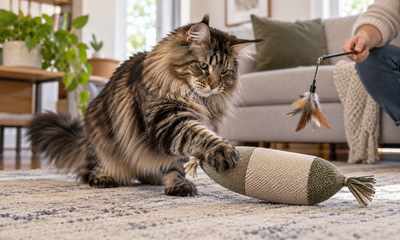
Large cats can play with the same kinds of toys as other cats, but a toy that is small, flimsy, or easy to tear may not hold up to vigorous batting and wrestling. If you are learning how to choose the right durable toy for large cats, start with your cat’s play style and chewing habits, then check size, seams, materials, and replaceable parts. No toy is indestructible, and a strong build does not make unsupervised play risk-free. People searching for the Best Durable Toy for Large Cats often want something that lasts, but durability depends on how the cat plays. Some cat owners report that toys with strings, bells, or feathers wear out quickly, while others find that a simple kicker or ball lasts longer for their cat. These experiences vary by toy and cat. This guide helps you inspect construction and choose an appropriate play format without assuming that the heaviest or most expensive toy is automatically the safest fit.
What “durable” means for a cat toy
A durable toy is one that remains intact during the way your cat actually plays. A toy may survive gentle batting but not repeated biting, clawing, or kicking. When considering how to choose the right durable toy for large cats, test the design against your cat’s actual play habits, not just the label. Materials, stitching, size, and moving parts all affect how quickly wear appears. Regular inspection matters more than a promise that a toy is indestructible.
Large size alone does not tell you how strong a toy needs to be. Some large cats are gentle players; some smaller cats chew through fabric. Watch whether your cat chases, carries, bites, or wrestles toys and choose accordingly.
How to choose the right durable toy for large cats
When you decide how to choose the right durable toy for large cats, first separate supervised interactive toys from solo-play toys. Wand toys can encourage chasing while you hold them, but their strings and attachments should be stored afterward. A sturdy ball or kicker may suit independent play, provided it has no parts your cat can chew off or swallow.
Match the toy to your cat’s play style
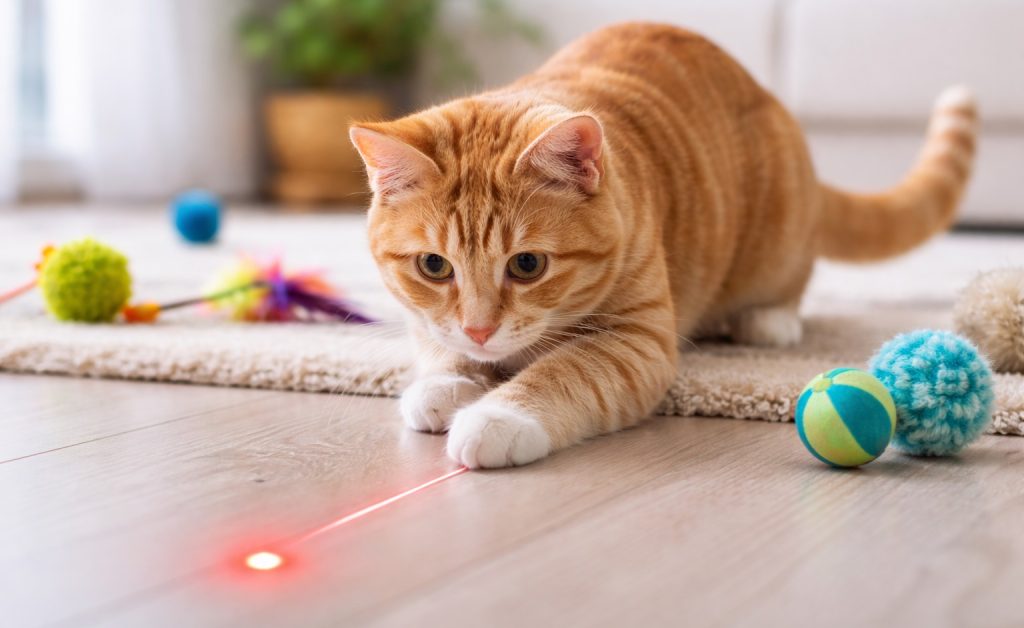
How to choose the right durable toy for large cats starts with the activity your cat already enjoys. A cat that stalks and chases may enjoy a rolling ball or a wand toy used interactively. A cat that grabs and kicks may prefer a longer plush kicker that is large enough to hold. A cat that chews needs a toy with secure seams and no exposed string, foam, or small detachable parts. Consider the activity your cat already chooses instead of buying a toy based only on its appearance.
If your cat loses interest quickly, movement or short play sessions may matter more than toughness. Rotate a few safe toys and vary how you use them. Cornell’s feline health guidance emphasizes safe toy construction and warns against small pieces and string-like parts that may detach and be swallowed.
Check size and weight
An important part of how to choose the right durable toy for large cats is checking both size and weight. Choose a toy that is large enough to avoid accidental swallowing but light enough for your cat to move. A heavy object can injure a cat if it falls from furniture or is thrown hard. A small toy can disappear under appliances or be carried into a tight space. Watch the first session to see whether your cat can pick it up, bat it, and release it comfortably.
For multi-cat households, offer enough space and more than one play option. If cats compete over one toy, supervise the session and pause if play becomes tense. Toys should not be used to encourage rough interaction between cats.
Inspect materials and seams
When deciding how to choose the right durable toy for large cats, look for tightly stitched seams and enclosed filling, and edges that do not fray easily. Pull gently on attached parts before play, and inspect the toy after each session. Avoid exposed foam, sharp plastic, loose bells, long strings, or any piece that could detach. Remove a toy at the first sign of damage.
Read care instructions before washing. A toy that contains electronics or internal filling may not be washable. If a toy gets wet or dirty, clean it as directed and let it dry completely. Do not repair a torn toy with tape, loose thread, or a knot that creates new chewable parts.
What to look for in durable toy for large cats
A practical checklist for what to look for in durable toy for large cats includes both construction and how you plan to use it. A strong surface is useful only if the toy is sized and shaped for your cat.
- Appropriate size: Large enough not to be swallowed and manageable for batting or carrying.
- Secure stitching: Check seams and closures for weak spots or exposed filling.
- Few detachable parts: Avoid small decorations, loose bells, and long strings.
- Clear use directions: Know whether the toy is interactive or suitable for independent play.
- Cleaning guidance: Confirm how to remove fur or wash the toy safely.
- Replaceable components: For electronic toys, check whether batteries or attachments can be replaced without exposing hazards.
No toy remains safe forever. Knowing how to choose the right durable toy for large cats also means planning to inspect it after use. A cat can chew through even sturdy fabric, and mechanical parts can wear out. For a broader comparison by play style, see our Best Durable Toy for Large Cats guide. Our articles on self-play cat toys and exercise toys for cats cover other ways to plan playtime.
Interactive toys and independent play
Interactive toys let you control the movement and stop when your cat becomes too excited. Move a wand toy along the floor or behind a safe obstacle so your cat can stalk and pounce. Keep your hands away from teeth and claws, and put the toy away after play. Long strings and dangling attachments can be hazardous if left unattended.
Solo-play toys should be simple to inspect and large enough for your cat’s mouth and paws. If your cat chews through toys or tears off pieces, do not leave plush or string-based toys out while you are away. Use a safe, supervised option instead. A toy marketed for independent use still needs regular checks.
How to introduce a new toy
To see how to choose the right durable toy for large cats in practice, start by letting your cat inspect the toy. Move it gently or place it near a familiar play area. Keep the first session brief and observe how your cat bites, paws, and carries it. If it chews aggressively, remove the toy and choose a different format.
Some owners share stories of toys breaking within days, while other cats use the same basic toy for months. Those accounts are personal experiences, not a durability guarantee. Use them as a reason to inspect construction and adjust play to your cat rather than assuming a particular material will last.
When to replace a toy
A useful part of how to choose the right durable toy for large cats is knowing when wear makes continued play unsafe. Replace a toy if seams split, filling becomes exposed, strings fray, parts loosen, or a motor or battery compartment opens. If a piece is missing, check the play area and consider whether your cat could have swallowed it. Contact a veterinarian if you suspect ingestion or your cat shows distress after chewing a toy.
How to choose the right durable toy for large cats also depends on the toy’s condition over time. There is no set replacement date for every toy. A well-kept ball may remain usable for a long time, while a fabric toy used for daily wrestling may need frequent inspection. Let the condition of the toy and your cat’s behavior guide replacement.
Frequently Asked Questions
1. Are large cats harder on toys?
Some large cats play vigorously, but size alone does not predict how a cat uses toys. Watch for chewing, clawing, or hard kicking and choose accordingly.
2. What toy is safest for a cat that chews?
Choose an intact toy without loose parts or exposed filling, and supervise play. Remove it if your cat tears or bites pieces off.
3. Can I leave a wand toy out for independent play?
It is safer to put away wand toys after interactive play because strings and attachments can tangle or detach when unsupervised.
4. How often should I inspect cat toys?
Check toys before and after play, especially if your cat chews them. Inspect more closely when you notice fraying, loose parts, or unusual wear.
5. When should I replace a cat toy?
Replace it when seams open, parts loosen, strings fray, or filling becomes exposed. Discard damaged toys rather than trying to patch them with loose materials.
Final Words
How to choose the right durable toy for large cats starts with your cat’s play habits, then checks size, construction, and supervision. The phrase Best Durable Toy for Large Cats does not guarantee one toy will suit every cat or last forever. Choose an intact toy that your cat can handle comfortably, store interactive toys after play, and inspect all toys regularly. Replace damaged items promptly, and ask a veterinarian if you suspect your cat swallowed a piece.