
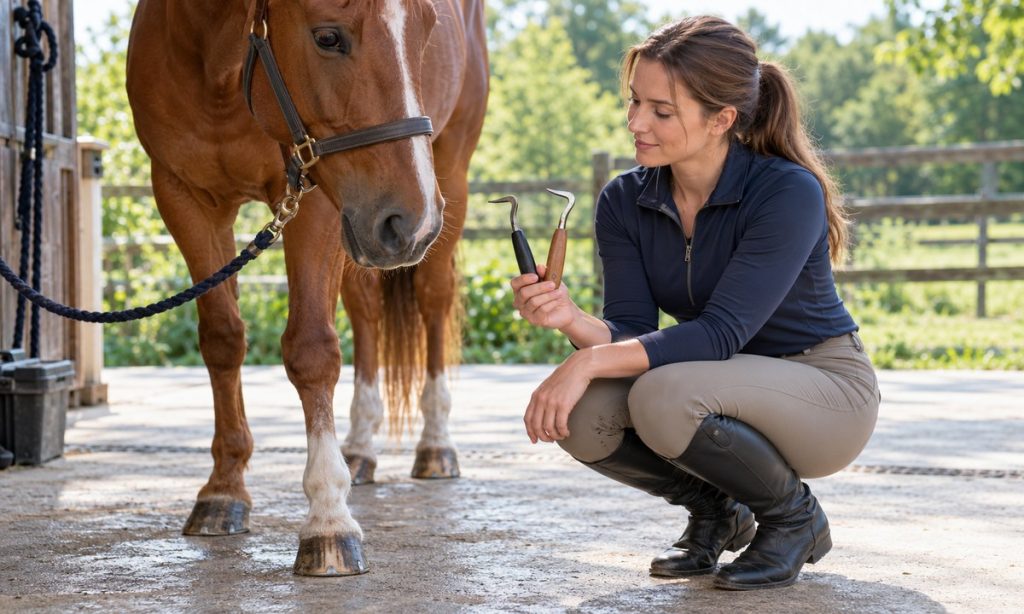
A hoof pick should help you clear ordinary mud, bedding, and small stones while keeping your hand steady. A hoof pick for horses may be a simple metal hook, a hook with a brush, or a model with a shaped grip. The right choice depends on your horse’s routine, your hand comfort, and how much control you need. This guide explains the parts of a hoof pick, how to use one carefully, and when to replace it. It also covers how often you should check the feet and what signs call for professional help. A tool cannot diagnose a hoof problem. Your farrier and veterinarian remain important partners in your horse’s care. Good lighting and a steady stance make routine inspection easier for both horse and handler.
What a horse hoof pick does
A hoof pick loosens debris from the sole and the grooves beside the frog. A brush can then sweep away loose dirt. This makes the tool useful for routine inspection before riding, after turnout, or during daily care. It also helps you notice a loose shoe, a new crack, or a change in odor.
A pick is not a trimming tool or a treatment device. Avoid digging at an embedded object, scraping a tender area, or probing a painful hoof. If debris appears stuck or your horse reacts sharply, stop and ask a farrier or veterinarian for help. Do not assume that removing the visible material will solve the cause of pain.
How to choose the right hoof pick for horses
Start with control and safety. The best hoof pick is one you can hold securely and guide with small, deliberate movements. A complicated tool does not improve care if it is uncomfortable or hard to clean.
Choose a handle that fits your hand
Handles may be plain metal, wood, rubber-coated, or shaped with a broader grip. A contoured handle can feel easier to hold during repeated use. A textured surface may help if your hands or gloves are damp. A narrow handle may store easily, but can feel less secure for some people.
Check the listed length and overall shape when those details are available. If you can handle the pick in person, see whether your fingers can wrap around it without strain. A comfortable grip supports better control; it does not make unsafe handling safe. Stand close to the horse and follow a method shown by an experienced handler. Ask for instruction if you are new to lifting feet.
Select the pick shape for routine cleaning
Most picks have a curved metal hook. A narrow tip can reach compacted dirt, while a broader curve may feel easier to control. Avoid treating a sharp point as an advantage. Your goal is to lift debris away with measured strokes, not to scrape the sole aggressively.
A basic hook suits owners who prefer a separate brush. A pick-and-brush combination saves space and keeps the two steps together. The brush is for loose surface dirt after the packed material has been loosened. It does not need to be wire. If a model has wire bristles, use only as intended and keep them away from soft or sore tissue. When details about metal grade or bristle material are missing, do not assume the tool is rustproof or suitable for every task.
Consider storage, cleaning, and durability
A hanging hole can keep a hoof pick easy to find. A compact model fits a grooming tote, while a longer grip may feel more comfortable to some users. Choose a size that works with your storage and hand control. Check the connection between the hook and handle. Avoid a tool with a loose, bent, cracked, or badly corroded part.
After use, remove mud and hair. Rinse the pick when needed, clean the brush, and let the tool dry before storing it. Shared tools need particular attention: clean visible debris between horses and follow barn biosecurity procedures. If a brush has been used on a horse with a diagnosed hoof infection, ask your veterinarian or farrier how to clean or separate it.
How to use a hoof pick carefully
Work in a quiet, uncluttered area with secure footing. Use a safe, familiar method to ask the horse to lift a foot. Stay close to the horse rather than reaching from a distance, and keep your body positioned as your instructor or experienced handler has shown you. Never put yourself where a sudden movement could trap you.
With the hoof supported, remove debris in controlled strokes, moving the tool away from your body. Work around the sole and grooves without pressing into the frog. Sweep away loosened particles with a brush. Release the foot calmly if the horse becomes unsteady. Do not force a frightened or painful horse through the task. Ask a qualified professional to help teach safe handling.
A horse that repeatedly refuses to lift a foot may be uncomfortable, untrained, or worried. Do not punish the horse or keep escalating pressure. Note when the response began and whether it affects one foot or all four. Ask your veterinarian or farrier to assess a new or worsening problem.
How often should you use or replace a hoof pick for horses?
How often should you clean the hooves?
Many equine extension programs recommend checking or picking hooves daily. Check before riding and after work when debris or footing could have changed. Snow, mud, stones, and packed bedding can make more frequent checks useful. Your horse’s environment and individual needs matter, so follow guidance from your farrier and veterinarian.
Daily checks also give you a chance to look for a loose shoe, a new chip, heat, swelling, discharge, or an unusual smell. That observation is useful, but it is not a diagnosis. A scheduled farrier visit remains necessary even when the feet look clean.
When should you replace the tool?
There is no universal replacement schedule. Replace a hoof pick when the hook is bent, cracked, loose, deeply rusted, or too worn to control. Replace a brush when bristles fall out, splay so widely that they no longer sweep effectively, or remain dirty after cleaning. A damaged tool is harder to guide and may scratch the hoof or your hand.
Store the pick dry and check it as part of your grooming routine. If the handle becomes slippery, cracked, or unstable, stop using it. A simple tool that remains intact is preferable to a feature-heavy tool that cannot be cleaned or controlled.
When to contact a farrier or veterinarian
Seek professional advice if you notice lameness, heat, swelling, discharge, a strong persistent odor, a deep crack, or a painful reaction. An object embedded in the hoof needs prompt professional guidance. Avoid pulling out a deeply lodged object unless a veterinarian directs you; its position may help the veterinarian assess the injury.
For general handling and hoof-care context, read our guide to a hoof brush for horses and our article on hoof protection for muddy ground. These pages cover related care choices, while your own farrier can advise on your horse’s feet.
A practical hoof-picking routine
How to choose the right hoof pick for horses also depends on when you use it. Before a ride, look for stones or packed debris that could cause discomfort under saddle. After a ride, check whether footing has lodged material in the grooves. For a horse turned out all day, a daily check helps you notice changes even when you do not ride. Adjust the routine to weather, turnout, and advice from your farrier.
How to choose the right hoof pick for horses includes deciding whether a brush belongs on the same handle. If your stable has a separate brush you like, a basic hook may be easier to rinse and inspect. If you travel with a compact grooming kit, a combination tool can reduce loose items. Either style should be simple to control around the sole. Choose the arrangement that encourages careful, regular checks.
When thinking about how to choose the right hoof pick for horses, consider how the tool feels after several minutes of barn work. A slippery or tiny handle can be frustrating when gloves are damp. A thick grip may feel more secure but take extra room in a grooming bag. Handle preferences vary, so compare dimensions and use the one you can steady without squeezing hard.
How to choose the right hoof pick for horses should include cleaning between uses. Mud packed around a brush head can hide wear and make the tool unpleasant to handle. Clear debris with a separate brush or rinse the tool when needed, then let it dry fully. Do not share a dirty tool between horses when a hoof condition is suspected. Ask your veterinarian or farrier for specific sanitation instructions.
How to choose the right hoof pick for horses also means knowing when not to use it. If you see an object deeply lodged in the hoof, avoid probing around it. If the horse suddenly becomes lame or guards one foot, stop routine cleaning and contact a professional. A pick can help reveal that something has changed, but repeated scraping may worsen pain or complicate examination.
Use how to choose the right hoof pick for horses as a reminder to favor control over force. A tool should let you lift loose debris with small movements and keep the hook away from soft tissue. If you are new to hoof care, ask a knowledgeable handler to demonstrate safe positioning. Practice calmly and end the task before either you or the horse becomes frustrated.
How to choose the right hoof pick for horses can depend on the horse’s size and the handler’s hand comfort. A pick is not sized to the hoof in the same way as a shoe, but a very small or awkward grip may reduce control. Compare the handle shape with your hand and glove thickness. The hook should stay steady without forcing you to twist your wrist.
How to choose the right hoof pick for horses also involves considering where you store it. A pick carried in a grooming tote should have a secure place so the hook does not catch on other equipment. A hanging hole can help in a barn, but it does not replace drying the tool. Keep the hook covered or stored safely when children or visitors can reach the grooming area.
How to choose the right hoof pick for horses is ultimately a practical decision. Choose one that is easy to inspect, clean, and use with small controlled movements. Then check the hoof regularly and keep professional farrier care on schedule. The tool’s shape matters less than safe technique and knowing when a hoof needs expert attention.
Frequently Asked Questions
Should a hoof pick have a brush?
A combined tool saves space. A separate brush lets you choose its size and stiffness.
Can I use a hoof pick on the frog?
Do not dig into or scrape sensitive tissue. Use gentle strokes around debris and stop if your horse reacts.
How often should I clean my horse’s hooves?
Daily checks are a common care routine. Check before and after riding when conditions may add debris.
How do I know when a hoof pick is worn out?
Replace it if the hook bends, parts loosen, corrosion becomes severe, or the brush no longer cleans effectively.
Can a hoof pick treat thrush or an abscess?
No. A pick removes debris but cannot diagnose or treat disease. Contact a veterinarian or farrier about concerning signs.
Final Words
Choose a grip and hook shape you can control, then decide whether an attached brush suits your routine. Clean and dry the tool after use, and replace it when parts become damaged. Check hooves regularly and ask a professional about changes or pain. For a closer look at a hoof pick for horses, see our related guide, but let comfort and safe use guide your choice.









