
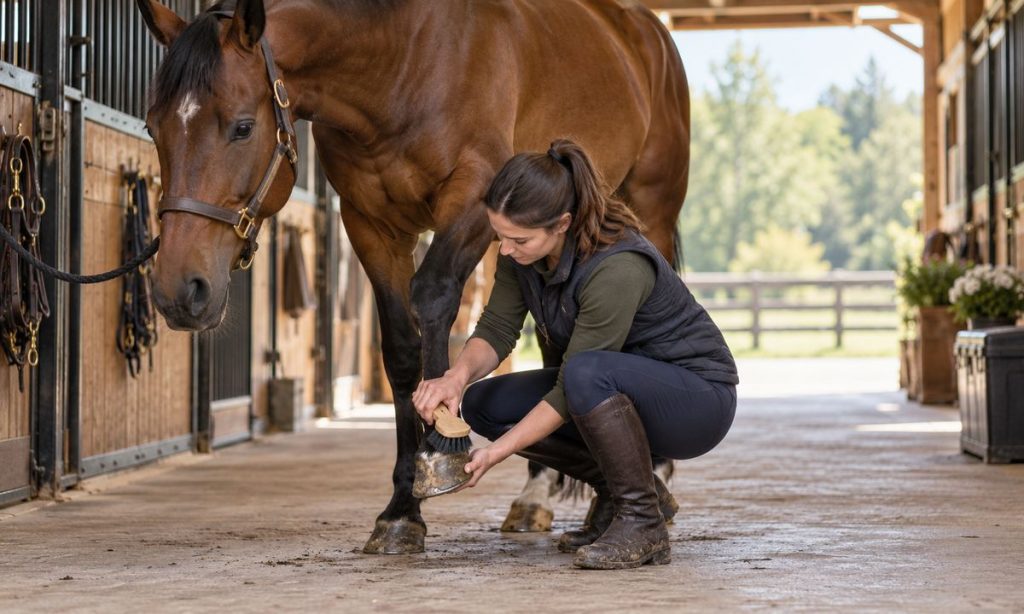
A hoof brush has a simple job: sweep away loose dirt after you loosen packed debris with a hoof pick. A hoof brush for horses may have short stiff bristles, a softer head, a compact grip, or a shape made for applying a hoof dressing. This guide explains how to match the brush to its task, clean it, and spot when it needs replacement. It also covers safe handling and the limits of routine cleaning. A brush cannot diagnose or treat hoof disease. Check the feet regularly and ask your farrier or veterinarian about pain, odor, discharge, or sudden changes in movement. The brush should leave the hoof clean enough to inspect without scraping or irritating sensitive areas during routine care.
What a hoof brush is used for
A hoof brush sweeps loose dirt from the hoof surface after a pick has loosened packed material. Some brushes are also used to apply a product to the hoof wall, if a farrier recommends that routine. These are different jobs. A brush used for dressing should be clean and kept separate from a brush used to remove mud.
How to choose the right hoof brush for horses starts with defining the job. If you want to remove ordinary surface dirt, look for a brush you can guide with light strokes. If you need an applicator, choose a brush designed for that purpose and follow the product and professional directions. A brush cannot replace trimming, shoeing, or veterinary care.
How to choose the right hoof brush for horses
Match the bristles to the task
Short, firm bristles can sweep away loose grit from a durable hoof surface. Softer bristles may be more appropriate for a lighter finishing pass. Wire bristles are not a default choice for every hoof. They can be too harsh around sensitive tissue, so avoid them unless a qualified professional has explained their safe use. How to choose the right hoof brush for horses depends on cleaning the intended area without scrubbing or causing discomfort.
Read the description for material and stiffness. If those details are missing, do not assume that “stiff” means safe for every part of the hoof. For a horse with a sore foot, infection, or a special farrier plan, ask before changing tools or technique. If a brush causes a sudden reaction, stop rather than pressing harder.
Choose a handle that gives you control
Handle shape matters when you work close to a horse. A contoured or textured grip may feel secure, while a short handle may fit in a grooming tote. A longer handle can provide more space between your hand and a muddy hoof, but may be awkward in a small kit. Compare stated dimensions when available. How to choose the right hoof brush for horses also depends on whether you can keep it steady with your usual gloves.
The brush should not twist in your hand or have a loose head. Avoid cracked handles, exposed fasteners, or bristles that fall out. If you can handle it before buying, check that your fingers fit comfortably and the tool feels balanced. A simple brush that is easy to control is usually more useful than extra features you will not use.
Decide whether one brush or separate brushes work better
A combination hoof pick and brush can save space. A standalone brush gives you more choice in head size and bristle stiffness. Separate brushes also make it easier to keep a cleaning brush apart from an applicator. If several horses share grooming tools, label or separate brushes as your barn’s biosecurity plan requires. How to choose the right hoof brush for horses includes deciding whether convenience or task separation matters more in your routine.
Check cleaning and storage needs
Mud and hair can collect at the base of the bristles. Choose a design you can rinse and inspect. Let it dry fully before storage, especially if the handle is wood or the brush has metal parts. Replace a brush if its bristles stay matted, fall out, or no longer sweep effectively. How to choose the right hoof brush for horses includes thinking about how you will maintain it, not just how it looks new.
Safe brushing steps
Use a calm, level work area and a safe method for lifting the hoof. Ask an experienced horse handler to demonstrate if you are learning. Remove packed debris with the appropriate pick first. Then use the brush in controlled strokes to sweep loose dirt away. Keep the brush on the intended surface and do not force it into the frog, a crack, or a sore area.
If a horse pulls away, becomes unbalanced, or seems painful, stop and lower the foot safely. A new refusal to stand for hoof care can reflect discomfort or a handling issue. Do not punish the horse or keep escalating pressure. Ask a veterinarian or qualified trainer for help. How to choose the right hoof brush for horses is only part of the routine; calm handling and good positioning matter just as much.
Cleaning and replacing a hoof brush
Remove visible dirt after every use. Rinse the head when needed and let it dry in an open, clean place. Do not put a wet brush in a closed grooming tote. If a horse has a diagnosed hoof condition, ask your veterinarian or farrier whether the brush should be dedicated to that horse or disinfected between uses. Follow professional advice for disinfectants, since some chemicals may damage a brush or irritate tissue.
Replace a brush when the head loosens, the handle cracks, bristles shed, or cleaning no longer restores it. There is no universal calendar interval. How to choose the right hoof brush for horses should include a realistic look at durability and hygiene. Regular inspection helps you retire damaged tools before they become difficult to control.
When to call a farrier or veterinarian
Contact a professional for lameness, heat, swelling, discharge, persistent strong odor, deep cracks, or a painful reaction. A brush only cleans visible debris. It cannot determine why a hoof is sore. Keep scheduled farrier appointments and ask for a routine that fits your horse’s workload, footing, and hoof condition.
For related care, see our guide to choosing a hoof pick and our information on hoof boots for muddy conditions. The latter may help you understand one type of equipment discussion; your farrier can advise whether it fits your horse.
Using a hoof brush as part of regular care
A hoof brush is most useful after a hoof pick has lifted packed dirt. How to choose the right hoof brush for horses starts with treating these tools as separate steps. A pick loosens debris; a brush sweeps away the material that is already loose. Avoid using the brush to force mud from a narrow groove. If a stone or compacted material will not lift easily, stop and seek advice instead of pressing harder.
Before each use, look at the brush head and handle. How to choose the right hoof brush for horses includes checking whether the head stays firmly attached under normal pressure. Look for cracked wood, sharp edges, loose staples, and bristles that are bent or missing. A damaged brush may scratch the hoof or make your hand slip. Keep the brush dry and separate from tools used for other tasks when your barn’s care plan calls for separation.
A brush can make daily inspection more consistent because it gives you a quick finishing step. How to choose the right hoof brush for horses should account for the horse’s tolerance, too. Some horses are sensitive to stiff bristles, especially near an irritated area. Use a light touch. If the horse flinches, pulls away, or shows a change in behavior, pause and check for a cause. Do not use the brush to test whether a painful hoof can tolerate pressure.
After cleaning, tap loose debris into a waste bin, rinse only as needed, and let the brush dry with airflow around the bristles. How to choose the right hoof brush for horses includes planning for that drying time. A wet brush left in a closed bag can stay dirty and unpleasant. For several horses, label shared brushes or follow the stable’s tool-cleaning plan. Ask a veterinarian or farrier about disinfection if a hoof disease is present.
Keep track of how the brush performs rather than replacing it on an arbitrary date. How to choose the right hoof brush for horses means retiring it when bristles no longer sweep, the head is loose, or the handle is damaged. Inspect after muddy days and before trips. A clean, intact tool should feel predictable in the hand. If the design is awkward or difficult to clean, a simpler brush may suit your routine better.
How to choose the right hoof brush for horses may also depend on whether your horse is shod or barefoot, but the brush itself should not be used to alter the hoof. Use it only to sweep loose dirt. If you see a loose shoe or a change in the hoof wall, contact your farrier. A grooming brush cannot repair a crack or correct hoof balance.
Consider the brush’s visibility and storage. A brightly colored handle may be easier to find in a busy grooming space, while a hanging hole keeps it off a damp floor. How to choose the right hoof brush for horses includes noticing these small practical details. They may make a regular care routine easier to maintain, but they do not replace clean storage or inspection.
When comparing designs, think about who else will use the brush. A youth handler may need a lighter, shorter grip than an adult with larger hands. How to choose the right hoof brush for horses means ensuring each handler can steady the tool and work calmly. Demonstrate the routine before a less experienced person cleans a horse’s feet.
Matching a Brush to the Job
A hoof brush for horses does not need to remove every trace of packed dirt. Its main role is to sweep away loose material after picking and to help you inspect the hoof more clearly. Choose bristles that move debris without bending flat at the first pass. If they feel too harsh against your hand, they may also be uncomfortable near sensitive skin.
Think about where you will use the brush. A stall-side brush can have a fuller handle and a larger head. A grooming kit for travel may benefit from a compact brush that fits beside the hoof pick. Some brushes have a narrow edge that reaches the collateral grooves, while a broad head covers the sole quickly. A shape is useful only if you can guide it without pressing hard.
Cleaning matters, especially when the brush is used around several horses. Shake or tap out loose material after use, then wash the head when mud or manure remains between the bristles. Let it dry fully before storing it in a closed grooming tote. Keep tools assigned to one horse when skin or hoof infections are a concern, and follow your veterinarian’s or farrier’s advice about disinfection.
If bristles become matted, shed heavily, or hold dirt that will not rinse out, replace the brush. A damaged handle can also make a simple grooming task less controlled. Store it where it stays dry and easy to find; a clean brush is more useful than an elaborate one buried under tack.
Frequently Asked Questions
Can I use a body brush on a horse’s hoof?
Use a brush intended for hoof care. Body brushes may not have the stiffness or shape needed for that task.
Should a hoof brush be stiff?
It depends on the task and the horse. Use controlled strokes and avoid harsh bristles on sensitive or sore tissue.
Can one brush be used for multiple horses?
Follow your barn’s biosecurity practices. Ask a veterinarian about cleaning tools used on a horse with a hoof infection.
How often should I clean a hoof brush?
Remove dirt after each use, rinse when needed, and dry it before storage.
When should I replace it?
Replace a brush with a loose head, cracked handle, shedding bristles, or a head that stays dirty after cleaning.
Final Words
Pick a hoof brush with bristles suited to its task, a handle you can control, and a head that is easy to clean. Separate cleaning brushes from applicators when useful, and replace damaged tools. For more detail about a hoof brush for horses, see our related guide. Daily observation and professional hoof care remain essential.









