A muzzle may be considered when grooming could expose a dog or handler to a bite risk, but it is not a shortcut for forcing a frightened dog through care. A dog muzzle for grooming should fit securely while allowing safe breathing and the movement needed for its intended use. This guide explains what to check, how to prepare a dog gradually, and when grooming should pause for veterinary or behavior support. A muzzle does not treat fear or pain. If grooming has become difficult suddenly, arrange a veterinary check before assuming the problem is behavioral. Safety, comfort, and an individualized plan come before convenience. The right equipment supports a safety plan, while calm handling and training protect the dog’s welfare.
When a grooming muzzle may be considered
A veterinarian or grooming professional may discuss a muzzle as one part of a safety plan for a dog that is uncomfortable during handling. It should not replace gentle handling, breaks, cooperative-care training, or appropriate veterinary treatment for pain. A dog that is panicking, struggling to breathe, overheating, or repeatedly trying to escape should not be restrained in a way that increases distress.
How to choose a dog muzzle for grooming starts with the exact task and the dog’s health. Nail care, face trimming, bathing, and brushing involve different movements. Ask the groomer and veterinarian what style is safe for the dog’s shape and the planned procedure. Some dogs need care in a veterinary setting, where staff can assess pain and stress.
What to look for in dog muzzle for grooming
Choose a style that allows safe panting
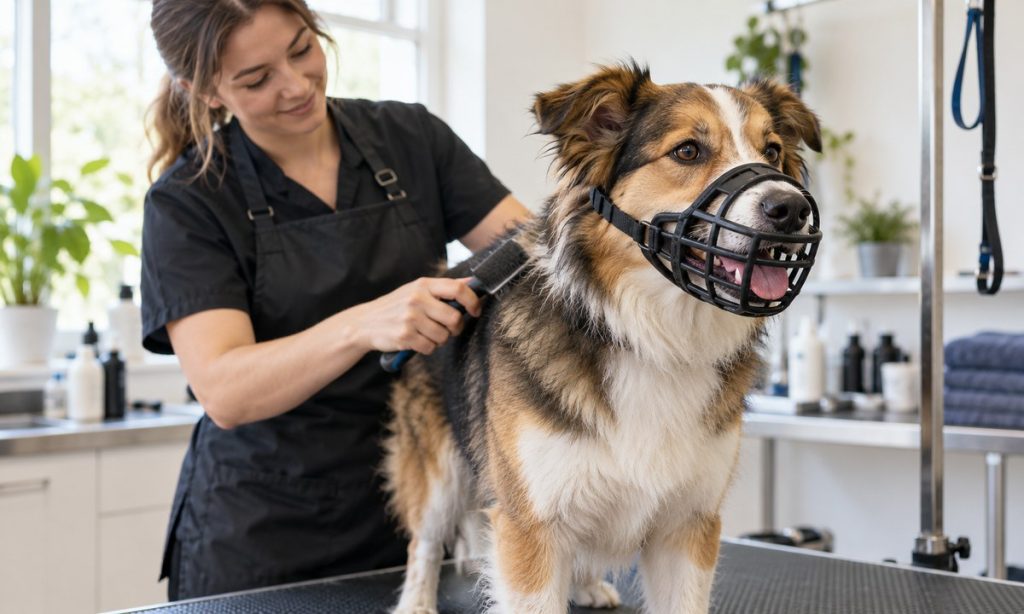
Basket muzzles are often preferred for longer wear because a well-fitted design can allow a dog to open the mouth, pant, drink, and take treats. A fabric sleeve that holds the mouth closed is intended only for brief situations under professional direction, and may prevent panting. Dogs rely on panting to regulate body temperature. Never use a restrictive style for a prolonged grooming session.
What to look for in dog muzzle for grooming includes enough room for the dog to open its mouth and pant fully. The nose should not be pressed against the front, and the muzzle should not rub the eyes or nostrils. Check the manufacturer’s measuring instructions and consult a professional if the fit is uncertain.
Check shape, material, and attachment
A muzzle should match the dog’s snout length and circumference. Short-faced dogs may not fit standard designs safely. Look for smooth edges, secure straps, and a construction sturdy enough for its safety purpose. The muzzle should remain in place without pressing painfully behind the ears or under the jaw. Materials should be easy to clean and suitable for the grooming environment.
Do not assume that a muzzle is bite-proof simply because it looks sturdy. Follow the maker’s fit guidance and ask a veterinarian or qualified behavior professional to assess it. A badly fitted muzzle can shift, rub, restrict breathing, or come off when needed.
Make room for gradual introduction
Introduce the muzzle before the grooming appointment. Let the dog investigate it, pair brief voluntary nose placement with rewards, and build duration gradually. Do not force the muzzle over the dog’s face or fasten it while the dog is struggling. If the dog shows escalating distress, pause and seek help from a reward-based trainer or veterinary behavior professional.
How to choose a dog muzzle for grooming also involves a realistic training plan. A dog should be comfortable wearing the muzzle before it is used for a stressful task. The American Veterinary Society of Animal Behavior recommends gradual positive introduction. Keep sessions short, and give the dog a way to take breaks whenever the situation allows.
Use and supervision during grooming
A muzzle is a safety aid, not a restraint to leave on unattended. Stay with the dog, watch breathing and body language, and keep the session cool and brief. A muzzle can prevent a bite, but it does not stop a dog from pawing, thrashing, or being injured by poor handling. Do not leave a muzzled dog alone in a crate or vehicle.
Stop if the dog struggles to breathe, cannot pant normally, becomes overheated, panics, or shows sudden pain. If a dog has a bite history or severe fear, ask a veterinarian about a behavior plan and safer grooming arrangements. Our muzzle guide for grooming tasks discusses common fit features. For calmer handling routines, see our guide to bathing a dog calmly and dog dental-care guidance.
Measuring and checking the fit
Begin by following the muzzle maker’s measuring diagram. Measure the snout at the specified points, including length and circumference. Measure while the dog’s mouth is relaxed. What to look for in dog muzzle for grooming includes adequate basket depth and width, not only the circumference at the nose. A muzzle that presses against the nose tip or eyes is unsuitable. The dog should be able to open its mouth enough to pant freely.
Check the straps and fastening points as carefully as the basket. What to look for in dog muzzle for grooming includes straps that stay adjusted without rubbing behind the ears. The muzzle should not shift toward the eyes when the dog lowers its head. It should stay secure without tight pressure under the jaw. Ask a veterinarian or credentialed behavior professional to assess the fit when you are unsure.
Account for face shape and coat
Dogs with short, broad faces may not fit a standard muzzle shape. Long hair around the mouth can also catch in straps or obscure whether the basket is positioned correctly. What to look for in dog muzzle for grooming depends on your dog’s individual anatomy. Do not force a generic size to fit. Seek a specialist who can identify a suitable design or recommend a different grooming plan.
A muzzle needs to remain comfortable when the dog moves, pants, and takes a treat. What to look for in dog muzzle for grooming includes the weight of the material and the room around the mouth. Heavy or poorly balanced equipment can make a dog paw at the face. Choose smooth edges and check the inside for seams or fasteners that could rub the skin during a short session.
Build comfort before the appointment
Let the dog see and sniff the muzzle in a calm room. Reward voluntary interest, then offer a treat near the opening. Do not push the muzzle onto the dog. Gradually reward the dog for placing its nose inside, then increase the time before fastening. What to look for in dog muzzle for grooming includes whether the dog can wear it calmly, not only whether the straps close.
Keep each practice brief and stop before the dog becomes distressed. Pair the muzzle with pleasant activities that do not involve grooming at first. Later, practice one small handling step at a time, such as touching a paw or brushing a small area. What to look for in dog muzzle for grooming includes planning sufficient time for training. A rushed introduction can make future handling harder.
Coordinate the grooming plan
Tell the groomer about the dog’s history, triggers, health conditions, and muzzle training. Agree on a stop signal and a plan for breaks. What to look for in dog muzzle for grooming includes whether the groomer can work safely while supervising the dog’s breathing and body language. Some tasks may be better divided across shorter visits. Painful procedures may need veterinary care instead of a routine salon appointment.
Watch for escalating stress, frantic pawing, repeated attempts to remove the muzzle, unusual drooling, weakness, overheating, or breathing difficulty. What to look for in dog muzzle for grooming also means knowing when to stop. Remove the equipment when safe and ask a veterinarian or behavior professional for advice. Never leave a muzzled dog unattended, and do not use a muzzle to silence or punish a dog.
Coordinate with the person doing the grooming
Share the dog’s handling history before the appointment. Explain what areas trigger discomfort, which rewards work, and what signals mean the dog needs a pause. A muzzle may reduce bite risk, but it does not communicate whether a dog feels safe. Agree on a short, manageable session and stop if the dog becomes distressed. For a dog with a bite history, ask a veterinarian or behavior professional to help plan the visit.
Ask whether the groomer has experience fitting and monitoring muzzles. The dog should be supervised throughout use. Confirm that the muzzle does not prevent panting, drinking when appropriate, or taking breaks. If the task requires access to the muzzle area, face, or mouth, ask whether a different approach is safer. Some grooming tasks may be completed in stages rather than all at once.
Keep grooming needs separate from emergency restraint
A muzzle chosen for planned grooming is not automatically suitable for a medical emergency or transport. The safest choice depends on the dog’s condition, face shape, and the task. Do not make a painful dog wear a tight muzzle if breathing or vomiting could be a concern. Call a veterinarian for instructions when a dog is injured or ill. Do not improvise equipment unless a veterinary professional directs you.
Preparing for a Safer Grooming Session
A dog muzzle for grooming works best when the dog already understands how to wear it. Start in a quiet place away from clippers, dryers, or handling that worries the dog. Let the dog investigate the muzzle, reward calm interest, and build toward brief voluntary nose placement. Keep sessions short and stop before the dog becomes distressed.
Once the dog is comfortable placing its nose inside, gradually practice fastening the straps for a few seconds. Reward, remove the muzzle, and let the dog relax. Increase the time in small steps over multiple sessions. Do not use the muzzle to pin the dog down or continue a procedure through escalating fear. A muzzle limits biting; it does not make grooming emotionally safe.
Plan the grooming appointment around what the dog can comfortably tolerate. A quiet room, non-slip surface, breaks, and gentle handling can reduce stress. Tell the groomer about the dog’s triggers, medical concerns, and muzzle training. If the dog needs extensive clipping, painful mat removal, or nail work that causes panic, ask a veterinarian about safer options, including medical evaluation or referral to a qualified behavior professional.
Inspect the muzzle after each use. Wash away saliva and debris, then let it dry completely. Check straps, buckles, and seams for wear. Replace equipment if it cracks, stretches, or no longer stays positioned correctly. Keep the muzzle associated with calm rewards rather than bringing it out only when something unpleasant is about to happen.
Frequently Asked Questions
Can a dog wear a muzzle while being groomed?
It may be part of a professional safety plan if it fits properly and the dog can breathe and pant safely.
Which muzzle lets a dog pant?
A properly fitted basket muzzle generally allows more mouth movement than a restrictive fabric sleeve.
Can I put a muzzle on for the first time at the groomer?
It is better to introduce it gradually beforehand with rewards and professional guidance.
Should a muzzled dog be left alone?
No. Supervise the dog and remove the muzzle when the safety plan allows.
What if grooming suddenly becomes difficult?
Ask your veterinarian to check for pain or illness before treating the change as a training problem.
Final Words
Choose a muzzle that matches your dog’s face, permits safe panting, and can be introduced gradually. Use it only with supervision and a plan that protects the dog’s comfort as well as people nearby. If grooming distress persists, ask your veterinarian or a qualified behavior professional for help. For comparisons of a dog muzzle for grooming, review the fit and use details with the person caring for your dog.