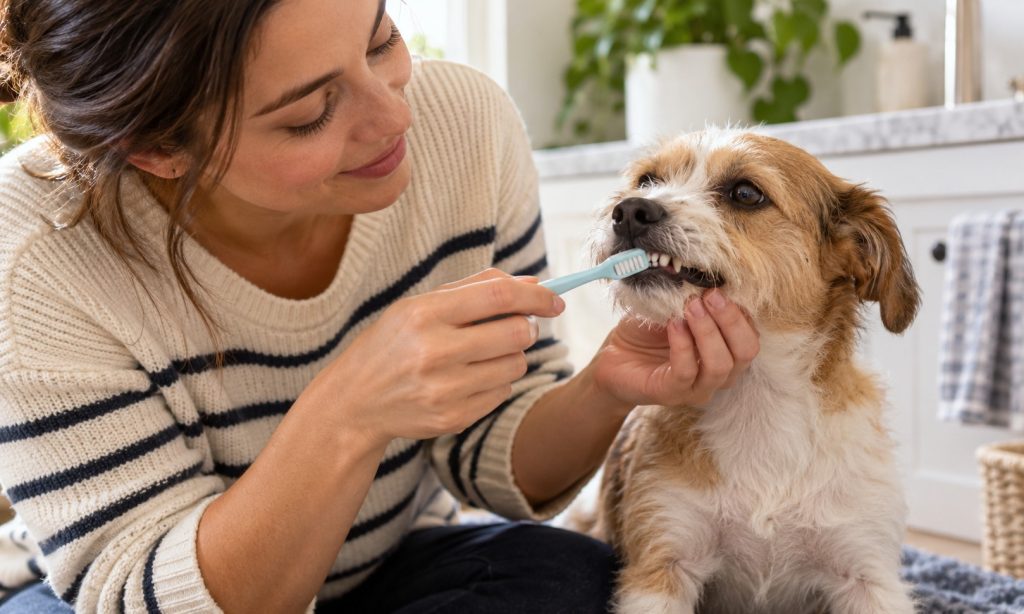
Dog dental care often slips behind walks, meals, and grooming, yet the mouth can affect comfort every day. If you are learning how to take care of a dog or how to care for a dog, an oral-care routine is one practical habit to add. Plaque can build up, gums can become inflamed, and problems may be hard to spot because many dogs continue eating despite discomfort. This guide explains what to check, how to introduce toothbrushing, what a veterinarian does during a dental exam, and which changes deserve a call. It is a home-care overview, not a diagnosis: a veterinary exam is needed for pain, bleeding, or other signs of disease. Regular checks help catch discomfort before it affects eating.
Why dog dental care matters
Plaque is a film of bacteria that forms on teeth. Over time, it can harden into tartar and contribute to gingivitis and periodontal disease. Disease below the gumline may be painful even when the visible part of a tooth looks fairly normal. Dogs may hide discomfort or change how they chew instead of refusing food outright.
Dog dental care combines regular home habits with veterinary evaluation. Brushing helps remove plaque from tooth surfaces, while a veterinarian can assess areas you cannot see and determine whether professional cleaning or treatment is needed. Chews, diets, and water additives may be useful in some routines, but they do not replace brushing or an oral exam.
Signs of a dental problem
Watch for persistent bad breath, red or bleeding gums, yellow or brown buildup, drooling, pawing at the mouth, chewing on one side, dropping food, reluctance to eat hard food, or sensitivity when the face is touched. A broken or loose tooth, swelling around the face, or bleeding from the mouth also needs veterinary advice. Some signs can be subtle, so check the mouth gently during routine handling if your dog accepts it.
Do not force open a painful mouth. Sudden behavior changes, irritability when touched near the face, or reluctance to play with a favorite toy may signal discomfort. Call your veterinarian if you notice these changes or if your dog’s eating pattern shifts.
How to brush a dog’s teeth
Use a toothbrush and toothpaste designed for pets. Human toothpaste is not made to be swallowed and may contain ingredients unsuitable for dogs. Ask your veterinarian which brush or paste is appropriate, especially if your dog has an oral condition or dietary restriction.
- Start with touch. Choose a calm moment. Let your dog sniff your hand, then briefly touch the cheek or lip. Reward calm acceptance.
- Introduce the taste. Let your dog lick a small amount of pet toothpaste from your finger. Keep the experience positive and brief.
- Touch the teeth and gums. Lift the lip gently and rub the outer surface of a few teeth with a finger or soft cloth. Stop if your dog pulls away or appears uncomfortable.
- Add a soft brush. Use small, gentle motions along the outer tooth surfaces, especially where the teeth meet the gums. Work for a few seconds at a time.
- Build the routine gradually. Add more teeth over several sessions. Praise and reward cooperation. Daily brushing is often recommended, but any routine should fit your dog’s comfort and veterinary advice.
Progress at your dog’s pace. Forcing the mouth open can create fear or lead to a bite. If your dog resists, ask your veterinarian to demonstrate handling or suggest a different approach. A professional can also check whether pain is making brushing difficult.
For a step-by-step guide to choosing toothpaste, see how to choose the right dog toothpaste. UC Davis also offers dental home-care instructions.
Veterinary dental exams and cleanings
Routine veterinary exams give the care team a chance to inspect the teeth, gums, tongue, and oral tissues. Ask how often your dog should have an oral evaluation; age, breed, medical history, and prior dental findings can affect the schedule. Small dogs and dogs with crowded teeth may need closer monitoring.
A professional dental cleaning may require anesthesia so the veterinarian can examine and clean below the gumline safely. The clinic may recommend blood work or other checks before anesthesia based on your dog’s health. If an exam finds disease, the treatment plan could involve cleaning, dental imaging, or treatment for a damaged tooth. Your veterinarian can explain the reasons, expected benefits, and risks for your dog.
Dog dental care at home cannot remove hardened tartar under the gums or diagnose a painful tooth. Avoid scraping teeth with metal tools or using non-anesthetic cosmetic scaling as a substitute for veterinary care. These approaches can injure the mouth or leave disease below the gumline unaddressed.
Chews, diets, and other oral-care tools
Some dental chews, diets, and oral-care products may help reduce plaque or tartar as part of a veterinarian-approved plan. Look for products supported by the Veterinary Oral Health Council and ask whether the item suits your dog’s size, chewing style, and health. Monitor chewing and remove items that become small enough to swallow.
Avoid very hard objects such as antlers, hooves, and bones. These can fracture teeth or cause other injuries. A chew that feels hard to your thumbnail may also be too hard for a dog’s teeth. If your dog has a history of swallowing objects or digestive problems, discuss alternatives with the veterinarian first.
Make oral care part of everyday dog care
Choose a predictable time, such as after the evening walk, and keep supplies together. Short, positive sessions are more useful than an occasional struggle. If a brushing day is missed, restart at the next opportunity rather than giving up on the routine. Note any changes in breath, eating, chewing, or tolerance of face handling.
How to take care of a dog includes watching for small changes as well as meeting daily needs. Pair toothbrushing with routine veterinary exams, and share your observations at appointments. If brushing cannot be done comfortably, ask about other supports while the veterinarian checks for pain or disease.
Getting a reluctant dog comfortable with brushing
Dog dental care can begin with a low-pressure routine that does not require opening the mouth wide. Let your dog sniff the brush, then reward calm interest. Touch the outside of the cheek briefly and stop. Over later sessions, lift the lip for a moment, touch one tooth with a finger, and eventually add a soft brush. Progress only while the dog remains relaxed.
Keep each session short and end before your dog struggles. If the dog turns away, freezes, growls, or snaps, stop and ask your veterinarian for help. A dog may resist because of fear, past handling, or pain. Dog dental care should not become a daily battle that increases stress or risks injury.
What a home mouth check can and cannot tell you
When your dog is comfortable, look for changes in gum color, visible tartar, broken teeth, swelling, sores, or food caught around the teeth. Do not pry the mouth open or probe below the gumline. A normal-looking surface does not rule out disease under the gums, and an at-home check cannot replace a veterinary oral exam.
Dog dental care includes watching behavior as well as appearance. Reluctance to chew, dropping kibble, chewing on one side, pawing at the face, or sensitivity to touch can signal discomfort. Contact your veterinarian if these signs are new or persistent.
Make a plan with your veterinary team
Ask the veterinarian how often your dog should have an oral assessment and whether professional cleaning is recommended. Discuss anesthesia questions, pre-procedure testing, and what the clinic expects after a cleaning. The plan may differ for a puppy, a small-breed dog, a dog with chronic illness, or a dog with existing periodontal disease.
Dog dental care products vary in purpose. Some are designed to support daily home care, while others are treats or chews. Avoid hard objects that can fracture teeth, and ask whether a product is appropriate for your dog’s chewing style. Do not treat a dental chew or water additive as a substitute for brushing unless the veterinarian has advised you to use it as part of a broader plan.
Keep a routine realistic
Place the brush and pet toothpaste near a regular care area so supplies are easy to find. Choose a consistent time when your dog is calm. If a full brushing is not possible at first, practice one small step and build from there. Reward cooperation rather than restraining the dog to finish a task.
Dog dental care is easier to maintain when the household agrees on what the dog may chew and what signs should be reported. Track brushing, veterinary cleanings, and any changes in breath or eating. This simple record helps you and the veterinary team notice trends.
Make tooth brushing easier
Introduce brushing in small steps. Let your dog sniff the brush, then reward calm handling around the muzzle. Touch the lips briefly, lift them, and practice touching a few teeth before attempting a full session. Use a dog-safe toothbrush and toothpaste, and follow the veterinary team’s guidance. Do not use human toothpaste, which may contain ingredients dogs should not swallow.
Dog Dental Care is easier to maintain when the routine is predictable and brief. Focus on the outer surfaces of the teeth near the gumline, where plaque often accumulates. Stop if your dog shows pain or fear and ask your veterinarian for help adapting the approach. Brushing is useful, but it cannot remove every hardened deposit or treat disease below the gumline.
Recognize signs that need an exam
Bad breath can be a sign of oral disease, especially when paired with red or bleeding gums, drooling, pawing at the mouth, chewing on one side, dropping food, or reluctance to eat. Dogs may hide discomfort, so a normal appetite does not rule out pain. A loose, fractured, discolored, or missing tooth also deserves veterinary attention.
Dog Dental Care includes professional assessment, not just home cleaning. If your dog has facial swelling, bleeding, severe pain, or cannot eat, contact a veterinarian promptly. Bring a list of changes you have noticed and any medications. Ask how often your dog needs oral exams and whether a dental cleaning or treatment is appropriate. Early attention can prevent a small problem from becoming more difficult to manage.
Oral care is part of a wider routine; see our published dog grooming basics guide for other at-home care habits.
Frequently Asked Questions
These answers cover daily oral care and when a veterinary exam is needed.
How often should I brush my dog’s teeth?
Daily brushing is commonly recommended to help remove plaque. Ask your veterinarian for a routine that fits your dog’s mouth and tolerance.
Can I use human toothpaste on a dog?
No. Use toothpaste made for pets, since dogs may swallow it and human formulas are not designed for that use.
Does bad breath mean my dog has dental disease?
Persistent bad breath can be a sign of dental or other health problems. Arrange a veterinary exam rather than masking the odor.
Are dental chews enough?
They may support an oral-care plan, but they do not replace brushing or a veterinary exam. Ask which products are suitable for your dog.
When should I call the veterinarian?
Contact the clinic for bleeding gums, facial swelling, broken teeth, trouble eating, persistent bad breath, or sensitivity around the mouth.
Final Words
Dog dental care works best as a steady routine: brush gently with pet toothpaste, check for changes, and keep veterinary oral exams on schedule. Start with small steps if your dog is new to brushing, and stop if the mouth seems painful. For anyone learning how to care for a dog, noticing oral changes early is a useful part of everyday care.
Reference
These selected sources support the health and safety information in this article.