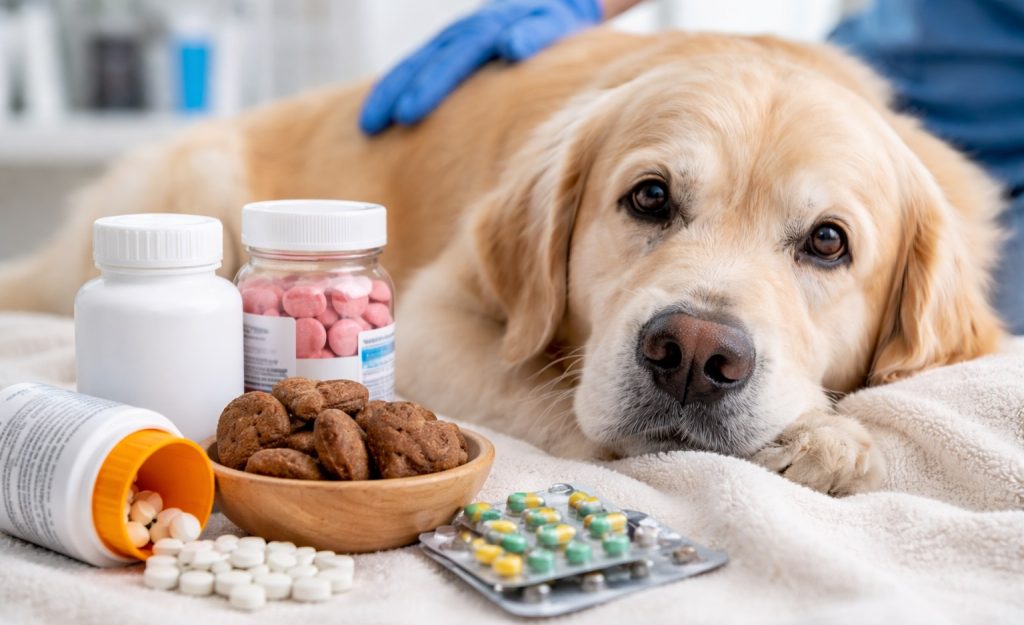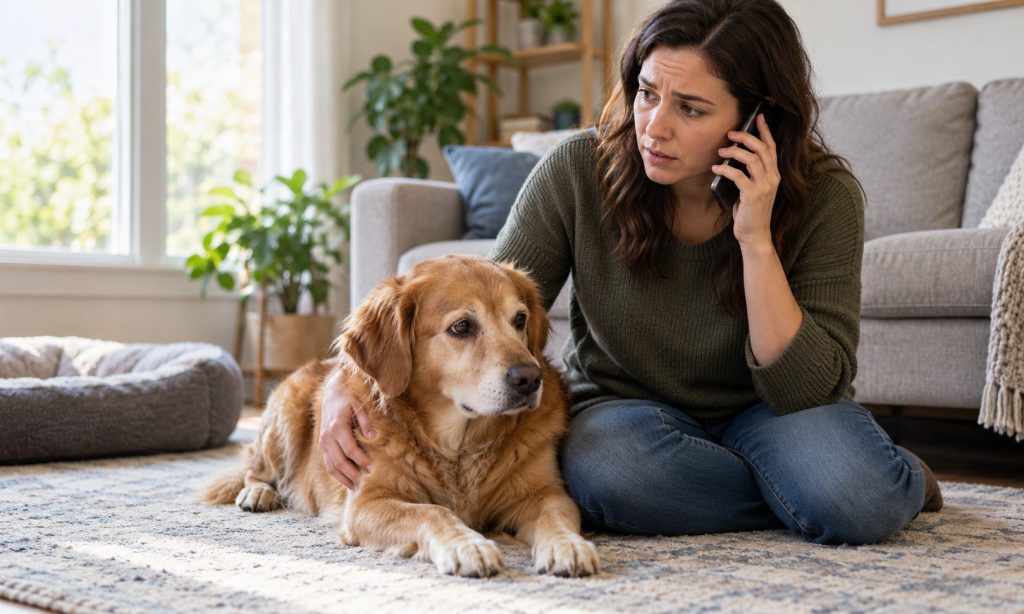
When a dog eats an edible, the package may contain more than cannabis. THC can affect a dog’s nervous system, while chocolate, xylitol, raisins, or a high-fat filling may create additional hazards. Dog ate an edible: what to do first? Call a veterinarian or emergency clinic now, and do not wait for symptoms. Keep the package, estimate how much is missing, and share the ingredient list. Do not make your dog vomit or give a home remedy unless a veterinary professional tells you to. This guide focuses on edible exposure, including what information to gather and why a quick call matters. For the broader question “can dogs get high,” our linked guide provides general background. Call promptly, even if your dog looks normal after the exposure.
Dog ate an edible: what to do now
- Call a veterinarian or emergency clinic immediately. Say that your dog may have eaten a cannabis edible. If you cannot reach a clinic, contact the ASPCA Animal Poison Control Center at 888-426-4435; a consultation fee may apply.
- Keep the wrapper or take clear photos. Include the front label, ingredient list, THC amount, serving size, and any warnings. Bring the package if you travel to a clinic.
- Estimate what is missing. Note the product type, number of pieces, approximate amount, and the time it may have happened. Do not delay your call to calculate a precise dose.
- Keep your dog in a quiet, secure place. Prevent access to stairs, pools, balconies, and other hazards if your dog becomes uncoordinated.
- Do not induce vomiting or give food, milk, oil, or medication on your own. Ask a veterinary professional before doing anything beyond keeping your dog safe and arranging care.
If the dog is collapsed, having trouble breathing, difficult to wake, repeatedly vomiting, trembling severely, or having seizure-like activity, go to an emergency clinic immediately and call ahead if possible.
Why cannabis edibles can be especially risky
Edibles are appealing to dogs because they often smell like brownies, cookies, candy, or other familiar foods. Some contain concentrated THC, and one serving meant for a person may not be appropriate for a dog. The amount in a product can vary, so a small piece does not automatically mean a small exposure.
Other ingredients may be dangerous too. Chocolate can cause a separate toxic reaction. Sugar-free products may contain xylitol. Raisins or other ingredients may pose additional risks. Oils and high-fat foods can also complicate the assessment. Dog ate an edible containing multiple ingredients? Tell the veterinarian the complete label, not just the cannabis content.
Some products labeled CBD may still contain THC or other ingredients. Do not assume that a CBD label makes a product harmless to dogs. Keep the package and describe whether the edible was homemade, packaged, sugar-free, or an unknown product.
Signs that may follow ingestion
Signs can include wobbliness, sleepiness, confusion, dilated pupils, sensitivity to sound or touch, excessive salivation, vomiting, urinary dribbling, changes in heart rate or temperature, tremors, or difficulty standing. The combination and severity vary. Signs may not be obvious immediately, and another ingredient may create a different pattern.
Dog ate an edible and seems normal? Call anyway. Early advice can help the veterinary team decide whether the dog should be examined and what signs to watch for. Do not rely on waiting for a symptom to decide whether the ingestion mattered.
What the veterinary team needs to know
Share your dog’s weight, age, health conditions, product name, estimated amount, time of ingestion, and any symptoms. Mention the THC amount if listed and read the ingredient panel. Be honest if the product was cannabis. Accurate information helps the team assess the exposure; delaying or withholding details can make the situation harder to evaluate.
Veterinary care depends on the product, timing, and condition of the dog. The clinic may monitor your dog and provide supportive care. There is no home antidote. Do not give activated charcoal or another treatment unless the veterinary team instructs you to do so.
How to prevent another edible exposure
Store cannabis edibles in their original, child-resistant package inside a locked cabinet. Keep them separate from ordinary snacks and dog treats. Remind guests to secure bags and personal items, and throw wrappers into a covered trash container. After cooking, clean counters and floors so crumbs do not remain within reach.
If the exposure happens outdoors, supervise sniffing and prevent your dog from eating discarded food or unknown objects. Keep emergency clinic and poison-control contact information accessible. A prepared response helps you act quickly if a future incident occurs.
Read the package before you leave
If your dog ate an edible, the label may help the veterinary team estimate which hazards matter. Photograph the brand, ingredient list, serving size, THC amount, and warnings. Keep the wrapper or container in a bag so crumbs do not spill in the car. If the edible was homemade, write down what went into it and whether any sugar substitute, chocolate, raisins, nuts, or alcohol were used.
Dog ate an edible with unknown ingredients? Tell the clinic that the recipe or dose is uncertain. Do not wait to find a label if the dog has symptoms. A veterinarian can give advice based on the information you have and update the plan if more details become available.
What not to do at home
Do not induce vomiting unless directed by a veterinarian. A dog affected by THC may be sleepy or uncoordinated and could inhale vomit. Do not give salt, hydrogen peroxide, milk, oil, activated charcoal, or human medication without veterinary instructions. These actions can cause harm or complicate treatment.
Dog ate an edible and is wobbling? Keep the dog on the floor in a quiet room, block stairs, and supervise closely while you contact a professional. If the dog is severely sedated, having trouble breathing, collapsing, or having seizure-like activity, go to an emergency clinic immediately.
Why co-ingredients matter
Chocolate contains compounds that can affect a dog’s nervous system and heart. Xylitol in sugar-free candy or baked goods can trigger dangerous problems, and raisins can be harmful to some dogs. A fatty dessert can also be relevant to the veterinary assessment. Dog ate an edible that was chocolate-covered or sugar-free? Mention that detail at the start of the call, not after the cannabis discussion.
Do not assume the product contains only THC because the package emphasizes cannabis. Read the whole label, including the serving information. When homemade, tell the veterinary team that the amount of each ingredient is uncertain rather than guessing.
After a clinic visit
Follow the clinic’s observation and follow-up instructions. Keep the dog in a quiet space and prevent unsupervised access to stairs, furniture, pools, and other hazards while signs are present. Ask what changes should prompt an immediate return visit and when normal walks or meals can resume.
Dog ate an edible can be a frightening event, but clear information and prompt professional guidance are practical steps you can take. After the immediate concern is addressed, store products in locked cabinets, separate from snacks, and discard wrappers in a closed bin. Ask guests to secure personal belongings as well.
Edibles can contain more than cannabis
A dog ate an edible may have been exposed to THC plus other ingredients that create separate emergencies. Chocolate can be toxic, and some sugar-free products contain xylitol. Raisins, coffee, or high-fat ingredients may also change the clinical concern. Read the full label, including serving size and ingredient list, and bring the package or a photograph to the clinic.
Do not estimate safety from the word “small.” Products vary in concentration, and a dog’s risk depends on body size, amount, timing, and other ingredients. Call a veterinarian or animal poison-control service promptly with the details. If the dog is already showing signs, go to an emergency veterinary clinic as directed rather than waiting for a callback.
Make the home safer after the incident
Once your dog is receiving appropriate care, look for how access happened. Was a package left in a bag, on a low table, or in an open trash can? Move products to a secure, elevated, closed location and remind household members and visitors that dogs can reach items that appear out of the way. Use a covered bin for wrappers and leftovers.
If your dog ate weed or an edible, keep the packaging until the veterinary team says it is no longer needed. Save the clinic’s instructions and note the time symptoms began and improved. This can help with follow-up. Do not give cannabis or CBD to a pet as a home treatment; discuss any supplement or medication with a veterinarian first.
For background on cannabis exposure, read our published guide answering “Can Dogs Get High?”.
Keep a clear timeline for the veterinary team
Record the time you found the package, when your dog may have eaten it, and when any signs began. If more than one person was home, ask what each person saw. This can help distinguish a single exposure from repeated access. Note whether the dog has urinated, vomited, eaten, or been able to walk normally, but do not delay a call to collect every detail.
Follow the clinic’s directions about transport, food, water, and monitoring. Do not force food or water into a sleepy or uncoordinated dog. Keep the dog away from stairs and other fall risks while arranging care. If signs change while you are on the way, call the clinic so the team can prepare. Bring the packaging and any remaining product in a closed container.
Frequently Asked Questions
These answers explain what to do after a dog may have eaten an edible.
Should I wait until my dog shows signs?
No. Call a veterinarian or poison-control resource as soon as you suspect ingestion. The amount, THC concentration, and other ingredients matter even before symptoms appear.
What if the edible was sugar-free?
Check the ingredient label for xylitol and tell the veterinarian. Suspected xylitol ingestion requires immediate professional advice.
Can I make my dog vomit?
Do not induce vomiting unless a veterinarian specifically directs you. A sedated or poorly coordinated dog could inhale vomit.
Can a dog eat a cannabis edible and recover?
Many dogs recover with appropriate care, but exposure can be serious, especially when the product contains other toxic ingredients. Contact a veterinarian promptly.
What if I do not know how much was eaten?
Tell the clinic the amount is unknown. Bring the package or photos and report when you last saw the product intact.
Final Words
Dog ate an edible: what to do? Call a veterinarian or emergency clinic immediately, keep the package, and avoid home treatments. Edibles can contain concentrated THC and other ingredients that create separate risks. Share what you know, even if the amount is uncertain. When people ask whether dogs can get high, the safer action after exposure is always to contact a veterinary professional rather than wait and see.
Reference
These public health and veterinary resources informed the ingestion and emergency guidance above.