Choosing a probiotic for a cat with a sensitive stomach can feel difficult when labels promise broad digestive support. Strains, live culture counts, storage, and serving directions vary, and a product name alone tells you little. Start by identifying the digestive changes you have noticed and discussing them with your veterinarian. A probiotic may be one part of a plan. Persistent vomiting, diarrhea, appetite loss, or weight change can have other causes. This guide explains how to compare labels and product quality. It also lists questions to ask before starting anything. What to look for in probiotic for cats with sensitive digestion depends on the cat and the reason for use. Use the information to prepare for a veterinary conversation, not to diagnose a condition.
Start With the Digestive Pattern
Before shopping, record what you have observed. Note stool consistency, frequency, vomiting, appetite, energy, and any recent food or medication changes. A short diary can reveal whether signs are occasional or recurring. Take a photo of unusual stool if it may help your veterinary team. These details are more useful than a vague description such as “sensitive digestion.” What to look for in probiotic for cats with sensitive digestion starts with that symptom history.
A cat may have soft stool after a diet transition. Ongoing signs can also arise from parasites, infection, food intolerance, inflammatory disease, medication effects, or other problems. A probiotic cannot identify the cause. Contact your veterinarian for recurring or worsening signs, especially if your cat stops eating, becomes lethargic, loses weight, or has repeated vomiting. Young kittens, older cats, and cats with existing disease may need prompt attention.
If stool appearance concerns you, see our guide to what healthy cat stool can look like. It explains common changes to observe. It is still not a substitute for a veterinary exam. The aim is to describe the pattern clearly so a clinician can decide whether testing, a diet plan, or supportive care is appropriate.
Understand What a Probiotic Is
Probiotics contain live microorganisms that may support the balance of microbes in the digestive tract. Common groups on veterinary products include Lactobacillus, Bifidobacterium, and Enterococcus. Different strains can have different properties. A label listing only a broad species or “probiotic blend” may leave details unclear. Ask which specific strains are included and why they may fit your cat’s situation.
Products may also contain prebiotics, which are ingredients intended to nourish certain microbes, or other added components such as fiber. A synbiotic combines a probiotic with a prebiotic. These terms describe different formulations; they do not guarantee a product will help every cat. Check all ingredients, especially when your cat has food sensitivities or follows a therapeutic diet.
Evidence for probiotics can vary by condition, strain, and product. Veterinary sources describe their use in some digestive situations, while also noting that evidence is not equally strong for every use. Treat claims such as “restores gut health” or “stops diarrhea” cautiously. Ask your veterinarian what outcome would be meaningful and how long to evaluate the product before revisiting the plan. What to look for in probiotic for cats with sensitive digestion also includes a strain that fits the veterinary goal.
Check Strain and Live Culture Information
Look for the microorganism names and strain identifiers on the label. A strain identifier is more specific than a general bacterial species. If the product does not list the strains, contact the manufacturer and ask for the complete formulation. Your veterinary team can help determine whether the information matters for the goal being considered.
Some labels list colony-forming units, or CFUs, which estimate viable microorganisms. Check whether the amount is guaranteed through the expiration date or only at manufacture. A high CFU number by itself does not establish quality or clinical suitability. Compare the guarantee with the directions and the strain information, then ask your veterinarian to interpret it. Do not assume that a larger count means a better choice for your cat. What to look for in probiotic for cats with sensitive digestion includes checking the stated CFU guarantee.
Check the expiration date and lot number. Products with live organisms can be sensitive to heat and moisture, so packaging and storage instructions matter. Look for a clear statement about whether refrigeration is required. Avoid buying a product that has been stored in conditions that conflict with its label. If you are unsure how a shipment was handled, ask the seller or manufacturer before giving it to your cat.
Review Manufacturing and Label Clarity
A dependable label should name the species, ingredients, directions, storage conditions, expiration date, and company contact information. It should make the amount of each relevant ingredient understandable. Avoid relying on a front-label phrase such as “advanced gut blend” when the supplement facts panel provides little detail. Clear labeling makes it easier to share the exact product with your veterinary team. What to look for in probiotic for cats with sensitive digestion includes a clear quality record.
Ask whether the manufacturer tests finished batches for identity, purity, and viable organism count. Some companies provide quality-control information or a certificate of analysis. These documents can help assess transparency, but they do not prove that a product treats a condition or suits an individual cat. If the company cannot answer basic questions about strains, storage, and testing, select an option with clearer documentation.
Be careful with broad claims, especially promises to cure chronic disease, replace veterinary care, or work for every digestive complaint. A supplement is not a diagnostic test or a substitute for treatment. Choose a clearly labeled product after the vet reviews symptoms and other health factors.
Choose a Form Your Cat Can Take
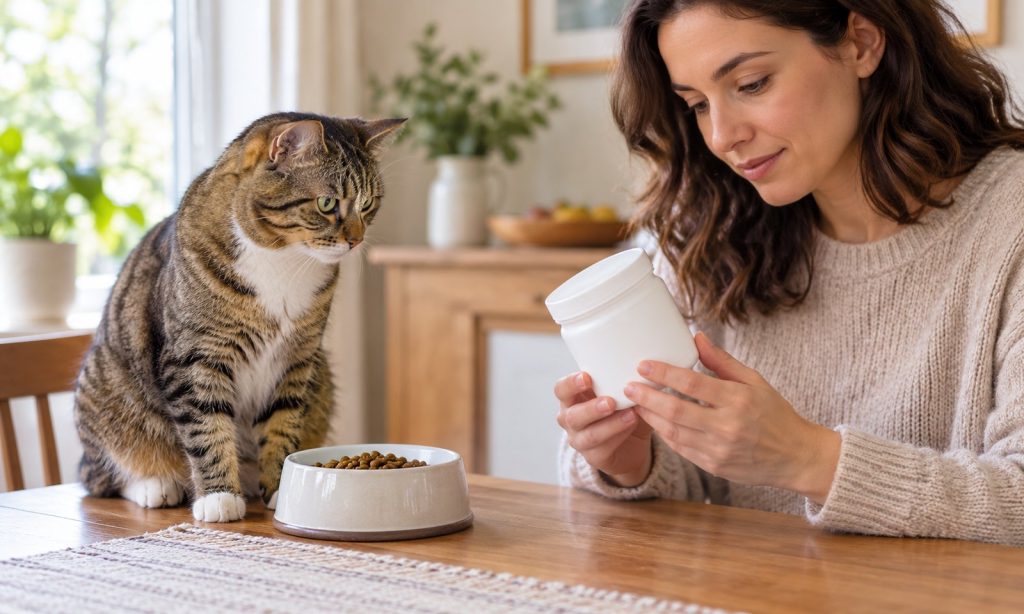
Probiotics for cats may come as powders, capsules, pastes, chews, or ingredients in a veterinary diet. Consider what your cat will accept and how you can give the product consistently. Powder can be easy to mix into a small portion of food, but a strong smell may put some cats off. Capsules may be more convenient for storage, while a paste can be easier to administer for certain households.
Ask whether the product can be mixed with food or opened. Some formulations have handling directions that are important for keeping live organisms viable. Do not crush or combine a product with hot food unless its label or your veterinarian says this is acceptable. If your cat refuses the product, check with the clinic about another form instead of forcing it. What to look for in probiotic for cats with sensitive digestion includes a form your cat can take.
Measure the amount carefully and use the tool supplied with the product when available. A scoop from another container may not hold the same volume. Keep the label and package so you can confirm which formula you are using. Product names sometimes cover multiple versions, and a change in formulation can alter the instructions.
How to Choose the Right Probiotic for Cats With Sensitive Digestion
How to choose the right probiotic for cats with sensitive digestion begins with a clear veterinary goal. Ask whether the plan is meant to support stool consistency during a short-term disruption, complement a diet trial, or serve another purpose. The reason guides which strain details, formulation, and monitoring plan matter. A single supplement should not be expected to address every cause of digestive upset.
Bring the full product label to your appointment. Tell the vet about medications, recent antibiotics, other supplements, food changes, and previous digestive diagnoses. Ask if the formula contains ingredients that could conflict with your cat’s diet or known sensitivities. If a product is recommended, confirm how much to give, how often, when to stop, and what signs require follow-up.
Keep a simple record while trying a veterinarian-approved product. Write down the start date, amount, meals, stool changes, and any new signs. This helps distinguish a possible response from normal variation. Do not introduce several supplements or switch foods at the same time unless the vet specifically recommends doing so. Changing one variable makes the follow-up easier to interpret. What to look for in probiotic for cats with sensitive digestion includes a way to monitor response.
Storage and Daily Use
Follow the package storage directions carefully. Some products need refrigeration after opening; others should be kept in a cool, dry place. Keep the lid closed and avoid leaving the container near a stove, sunny window, or damp area. Exposure to heat or moisture can affect product stability. If the packaging is damaged or the powder appears wet or discolored, contact the manufacturer before use.
Track the expiration date and discard the product as directed after opening. A large container may be poor value if your cat needs only a short course or a small amount. Choose a size you can use within the recommended period. Do not transfer the contents to another jar unless the manufacturer specifically allows it, because the original packaging may help protect the formula.
Keep supplements out of reach of children and pets. Store them separately from human medications to avoid mix-ups. If a cat eats a large quantity or gets into multiple products, call your veterinarian or an animal poison service for guidance. Have the label and approximate amount available when you call.
When Digestive Signs Need Veterinary Care
Do not rely on a probiotic for persistent diarrhea, repeated vomiting, blood in the stool, pain, dehydration, or a sudden decline in energy. Cats can become unwell quickly when they stop eating or lose fluids. Call a veterinarian if digestive signs last more than a day or two, recur, or appear with poor appetite, lethargy, or vomiting. Seek urgent care for severe symptoms or a very young, elderly, or medically fragile cat.
Weight loss, frequent straining, repeated trips to the litter box, or changes in stool can have different causes. If your cat seems constipated or is straining, see our guide to cat constipation signs and causes for observations to discuss with your vet. Straining can be difficult to interpret at home, and urinary problems can also look like litter-box trouble. When uncertain, contact the clinic.
Your veterinarian may recommend an exam, stool testing, diet trial, fluids, medication, or another intervention based on the signs. A probiotic might be included in that plan, but it should not delay evaluation. If a product appears to worsen symptoms or your cat develops a new reaction, stop and contact the clinic for instructions.
Questions to Ask Before Starting
- What may be causing my cat’s digestive changes, and does an exam or testing make sense?
- Which probiotic strains or product features matter for the goal we discussed?
- Can this formula be used with my cat’s food, medication, and current supplements?
- How should I measure, store, and give it?
- What changes should I monitor, and when should we check back?
- Which symptoms mean I should stop the product or seek care promptly?
Write the answers down and keep them with the package. If the product is changed or the symptoms return, that record can help your veterinarian make the next decision. The plan should include a point for reassessment rather than an open-ended trial with no clear outcome. What to look for in probiotic for cats with sensitive digestion includes a follow-up date.
Frequently Asked Questions
Can I give my cat a human probiotic?
Ask your veterinarian before using a human product. It may contain different strains, additives, or serving directions, and it may not have been evaluated for cats. Share the exact label so the clinic can review the ingredients.
Do probiotics stop diarrhea in cats?
They may be considered in some veterinary plans, but they do not work for every cause of diarrhea. Persistent or severe diarrhea needs veterinary attention because treatment depends on the underlying problem.
Should a cat probiotic be refrigerated?
It depends on the specific formula. Follow the package instructions and ask the manufacturer if they are unclear. Proper storage helps preserve the product’s stated quality. What to look for in probiotic for cats with sensitive digestion also includes practical storage directions.
How long should I try a probiotic?
Use it for the period your veterinarian recommends. Ask what improvement to watch for and when to check back. Do not continue indefinitely if there is no clear benefit or if signs worsen.
Can probiotics cause side effects?
A cat may refuse a product or show digestive changes after starting it. Stop and contact your veterinarian if you notice worsening signs or another concerning reaction. Severe symptoms warrant prompt care.
Final Words
What to look for in probiotic for cats with sensitive digestion includes clear strain and CFU information, suitable storage directions, practical serving form, and a reasoned veterinary plan. A label cannot explain why your cat has digestive symptoms, so persistent changes deserve professional attention. Keep notes, follow the recommended directions, and agree on a time to reassess. For a product comparison, see our published guide to probiotics for cats with sensitive digestion, then review the exact label with your veterinarian. A careful choice starts with your cat’s health history and a clear follow-up plan.