
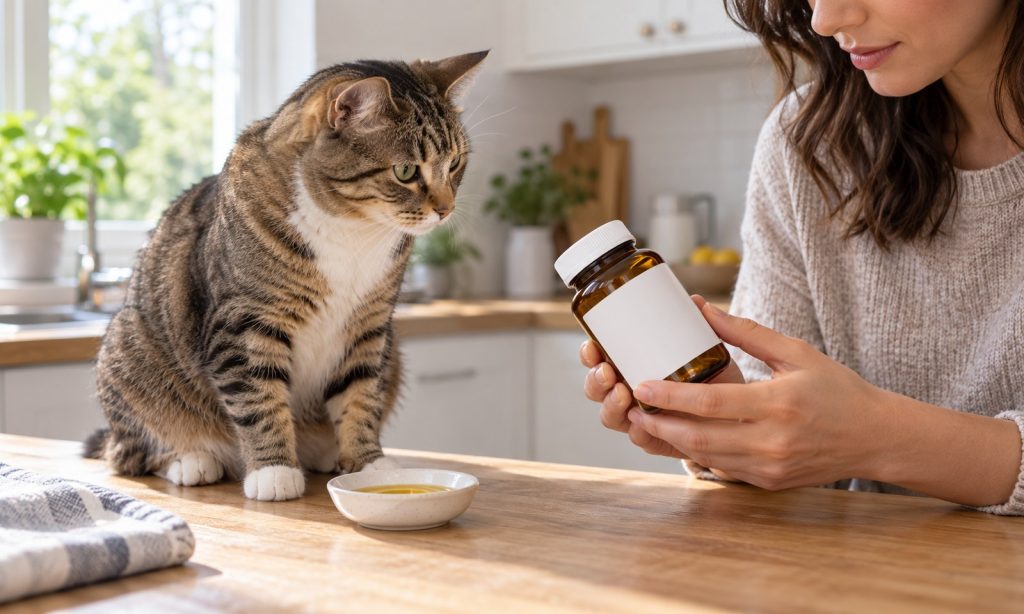
Choosing an omega 3 supplement for cats can feel confusing when labels emphasize bottle size, fish source, or broad wellness claims. The useful comparison starts with the actual omega-3 fatty acids, especially EPA and DHA, and the amount supplied in a measured serving. Your cat’s diet, health conditions, medications, and appetite matter too. A supplement that suits one cat may not suit another. This guide explains how to read labels, compare forms, and check storage details before buying. It also covers questions to ask your veterinarian and signs that warrant a call. The question of how to choose the right omega 3 supplement for cats deserves careful label reading. If you are comparing products, see our overview of omega-3 supplements for cats. Use this article as a preparation guide, not a dosing plan.
Start With the Reason for Considering Omega-3
Before comparing bottles, write down what prompted your search. Perhaps your veterinarian mentioned a fatty acid supplement, your cat has a diagnosed condition, or you are trying to understand a diet label. The purpose affects which information matters. A product intended to complement a complete diet may have a different concentration and serving size from a product used in a veterinary nutrition plan. If you are learning how to choose the right omega 3 supplement for cats, begin by stating the goal.
Omega-3 is a family of fats, not one single ingredient. Fish oils commonly provide EPA, or eicosapentaenoic acid, and DHA, or docosahexaenoic acid. Plant oils may supply alpha-linolenic acid, or ALA. These are not interchangeable amounts on a label. Cats also have specific nutritional needs, so do not assume a human supplement or a general “omega” blend is appropriate. Ask your veterinarian which fatty acids are relevant to your cat’s situation.
A supplement should not delay evaluation of a new symptom. Changes in coat, skin, movement, appetite, or energy can have many causes. If you are searching because of a health concern, describe the symptom and its timing to your clinic. The vet can decide whether an exam, diet change, medication review, or supplement discussion makes sense. That context is more useful than choosing a bottle based on a broad claim.
Read the EPA and DHA Amounts
The first label detail to find is the amount of EPA and DHA per serving. Some front labels display the total amount of fish oil, which is not the same as the EPA plus DHA amount. For example, a capsule might contain hundreds of milligrams of oil but a much smaller combined amount of these fatty acids. Compare the guaranteed amount per measured serving, not only the total oil in the container. This is a central step in how to choose the right omega 3 supplement for cats.
Check whether the serving is expressed as a pump, a teaspoon, a capsule, or a soft chew. A pump is only helpful if it dispenses consistently and the directions match the concentration. A capsule may be convenient for some households, while other cats refuse the texture or smell. Look for a clear product label that states the active fatty acids and the amount per serving in units you can understand.
Do not convert a label into a dose by guessing from your cat’s weight. The right amount can depend on the diet, product concentration, reason for use, and health history. Too much of a supplement may upset a cat’s routine or create other problems. Have your veterinarian interpret the label and write down the amount and frequency if they recommend use. This also prevents confusion when products have different concentrations.
Compare Oil Sources and Formulations
Marine oils can come from different fish species or other marine sources. A label may name salmon, anchovy, sardine, cod liver, or a mixed fish source. The source alone does not tell you how much EPA and DHA the serving contains. It also does not prove that a product is better for your cat. Use the ingredient and nutrient information together, and ask the company for clarification if the source or amount is unclear.
Cod liver oil deserves special attention because it can contain vitamins A and D as well as fatty acids. Cats can be harmed by excessive amounts of certain vitamins. If a product includes added vitamins, make sure your veterinarian knows about them and can consider your cat’s full diet. Avoid stacking multiple oils or supplements with overlapping ingredients unless a veterinary professional has reviewed them. This caution matters when you are deciding how to choose the right omega 3 supplement for cats with other dietary additions.
Products may be liquids, capsules, powders, or soft chews. Choose the form your cat can actually take and that you can measure accurately. Liquids can be mixed with food if the label permits, but a cat may notice a strong odor or taste. Capsules can help limit smell and simplify storage, yet opening or puncturing them can alter handling instructions. Follow the manufacturer’s directions and the vet’s instructions for the specific product.
Look for Quality and Clear Labeling
A good label identifies the intended species, ingredients, serving size, storage instructions, and company contact details. Look for a lot number and an expiration or best-by date. Be cautious if the label uses vague language such as “proprietary blend” without showing the relevant fatty acid amounts. Clear information makes it easier for a veterinarian to evaluate the supplement and for you to use it consistently. It is one of the simplest checks in how to choose the right omega 3 supplement for cats.
Ask whether the manufacturer tests finished batches for identity, purity, and contaminants. A company may explain its quality controls or provide a certificate of analysis for a specific lot. These details can help assess transparency, but they do not guarantee that a supplement is suitable for your cat. If the seller cannot explain what is in the bottle or how it is tested, choose a product with more complete documentation.
Be skeptical of claims that promise to cure disease, replace prescribed care, or work for every cat. Dietary supplements are not a substitute for a balanced diet or a veterinary diagnosis. A product may support a nutrition plan without treating the underlying cause of a symptom. Look for restrained wording and realistic directions. Your veterinarian can help separate a plausible nutrition discussion from marketing language.
Check Freshness, Packaging, and Storage
Oils can become rancid when exposed to air, heat, or light. Check whether the bottle is opaque or otherwise designed to limit light, whether the cap closes tightly, and whether it needs refrigeration after opening. Follow the stated storage directions and note when you first open the container. If the oil develops an unusual or sharply stale odor, stop using it and contact the manufacturer or your veterinarian. Storage is part of how to choose the right omega 3 supplement for cats because freshness affects usability.
Choose a package size that you can finish within the product’s recommended period after opening. A large bottle may appear economical but can sit open too long in a household with one cat. Small containers or individually sealed capsules may reduce exposure after opening. Compare the serving volume and shelf-life information, not just the price per bottle.
Keep supplements away from children and pets. Secure the cap and store the container where a curious cat cannot chew or spill it. If the product leaks, clean the area promptly because oily residue can make floors slippery. Do not transfer the oil to a different container unless the manufacturer provides a specific safe method.
Consider Your Cat’s Diet and Health
A complete and balanced cat food may already contain omega-3 fats. The amount and type can vary across foods, and some therapeutic diets are formulated for specific needs. Bring the food label, treat list, and any supplements to your veterinary appointment. That gives the clinician a clearer picture of total nutrient intake and potential overlap. For many households, this review is the first step in how to choose the right omega 3 supplement for cats. If you are discussing skin or coat support, our cat skin and coat supplement guide covers that related category.
Mention chronic conditions, past pancreatitis, digestive sensitivity, bleeding disorders, upcoming surgery, allergies, pregnancy, and every medication your cat receives. These details may influence whether a supplement is appropriate or how carefully it should be monitored. Do not stop a prescription or change a therapeutic diet to make room for an over-the-counter oil without veterinary guidance.
A veterinarian may recommend a specific product, a measured amount, or no supplement at all. The recommendation should consider why you are using it and how your cat will be followed. Ask when to expect a check-in and which changes should prompt a call. Keep a simple record of the product, amount, start date, and any observed effects. That record can make follow-up more reliable.
Make the Routine Practical
A supplement only helps a plan if it can be given consistently and safely. Think about whether your cat eats wet food, dry food, or several small meals. If mixing the oil into a full bowl, be sure the cat reliably eats the portion. Otherwise, you may not know how much was consumed. Ask the vet whether a small amount of food is a suitable way to administer the product. Practicality belongs in how to choose the right omega 3 supplement for cats.
Introduce a new product only as directed and avoid changing several foods or supplements at once. This makes it easier to notice a reaction. Some cats reject a new flavor immediately. Others may develop digestive changes. Contact your clinic if you see repeated vomiting, diarrhea, appetite loss, unusual bruising, or another concerning change after starting a supplement. Seek urgent veterinary guidance for severe symptoms.
Never force oil into a cat’s mouth or use a syringe unless your veterinarian has taught you a safe technique for that specific product. A stressed cat can struggle or inhale liquid. If administration becomes difficult, ask about a different form or another approach. Your cat’s comfort and safety matter more than using a particular product format.
Questions to Ask Before You Buy
- Does my cat have a reason to receive supplemental omega-3, or is the current diet enough?
- Which fatty acids and amount should I look for on the label?
- Does this product fit with my cat’s diagnosis, medications, and other supplements?
- How should I measure and give it, and should it be given with food?
- How should the product be stored, and how long is it usable after opening?
- What effects or side effects should I monitor, and when should we follow up?
Bring a photo of the front and supplement facts panel if you are comparing products online. That helps the veterinary team check the exact formula rather than relying on a product name that may have multiple versions. Ask before you order if the label leaves out EPA or DHA amounts, uses unclear serving directions, or contains added vitamins that are not part of the plan.
Common Mistakes to Avoid
One common mistake is comparing only total fish oil. A larger number on the front may not mean more EPA and DHA per serving. Another is assuming all omega-3 oils work the same way. The source, formulation, concentration, serving method, and intended use all matter. Read the full panel and ask for help interpreting it.
Avoid using a human product based on convenience. Human formulations may contain flavors, sweeteners, added vitamins, or serving sizes that are not appropriate for cats. Do not rely on internet dosing charts for a medical condition. If the product was not clearly intended for cats, confirm its ingredients and safe use with your veterinarian before giving it.
Do not assume a natural label means risk-free. Oils still add calories and can affect a cat’s diet. A supplement may not be suitable for every health condition. Keep the goal realistic and review the plan if your cat’s condition changes. The product should be one part of a veterinary-informed decision, not a substitute for follow-up care.
Frequently Asked Questions
Can I give my cat fish oil made for people?
Ask your veterinarian before using a human product. Its ingredients, concentration, flavorings, and serving directions may differ from a cat-specific product. The clinician can review the exact label and decide whether it is appropriate.
Is salmon oil the same as omega-3?
Salmon oil is one possible source of omega-3 fatty acids, but products vary in their EPA and DHA concentrations. Check the amounts per serving rather than assuming every salmon oil has the same composition.
Should I choose liquid or capsules?
Choose a form that your cat accepts and that you can measure correctly. Liquids may mix with food, while capsules can simplify storage. Follow the label and your veterinarian’s directions for the exact product.
How long does it take to notice a difference?
There is no single timeline that applies to every cat or reason for use. Ask your veterinarian what change, if any, you should monitor and when to schedule a review. Do not increase the amount because you do not see an immediate effect.
Can omega-3 supplements cause side effects?
Some cats may develop digestive upset or refuse food with a new oil. Other risks depend on the cat’s health, product, and amount. Stop and contact your clinic if you notice a concerning change, and seek urgent care for severe symptoms. For this reason, how to choose the right omega 3 supplement for cats should be a veterinarian-guided choice.
Final Words
How to choose the right omega 3 supplement for cats starts with a clear reason and a veterinary conversation. Compare EPA and DHA per serving, read the full ingredient panel, and check measuring and storage instructions. Consider your cat’s diet, health history, and ability to take the chosen form. Avoid guessing at a dose or substituting a human supplement without label review. If you are weighing available options, revisit our cat omega-3 supplement overview and bring the product details to your veterinarian. A careful label check and follow-up plan can help you make a more informed choice for your cat.









