When a training session is going well, the reward should be ready when your dog earns it. A pouch that is hard to open, tips over, or rubs as you walk can interrupt that moment and distract you both. This guide to how to choose the right treat pouch for dog training focuses on fit, access, capacity, closure, and care, so you can match the design to the way you actually train. You will also learn how to carry treats safely, keep sessions comfortable, and decide when a pocket or another reward may work just as well. If you are comparing specific options, our guide to the treat pouch for dog training covers the product-review side. Here, the goal is to help you understand what features matter and why.
What a training pouch should help you do
A treat pouch is a small container that keeps food rewards within easy reach during training. Its main job is practical: you can reward a behavior promptly without searching through a pocket or carrying an open bag. Quick access can make a session smoother, especially when you are practicing short repetitions, walking in a distracting place, or handling a leash and clicker at the same time.
A pouch does not train a dog by itself. It is a piece of organization gear that can support reward-based teaching. The useful setup is one that lets you notice the behavior, mark it clearly if you use a marker, and deliver the reward without a long pause. A clicker is optional; a consistent verbal marker can also be used. For a refresher on marker choice and timing, see our guide to choosing a dog training clicker.
Think about the training you do most often before choosing a design. A pouch for a few minutes of practice in the kitchen has different needs from one used on a long walk or in a class. Your clothing, the size of your dog’s rewards, and whether you carry a clicker or waste bags also affect the best fit.
Start with fit and how you carry it
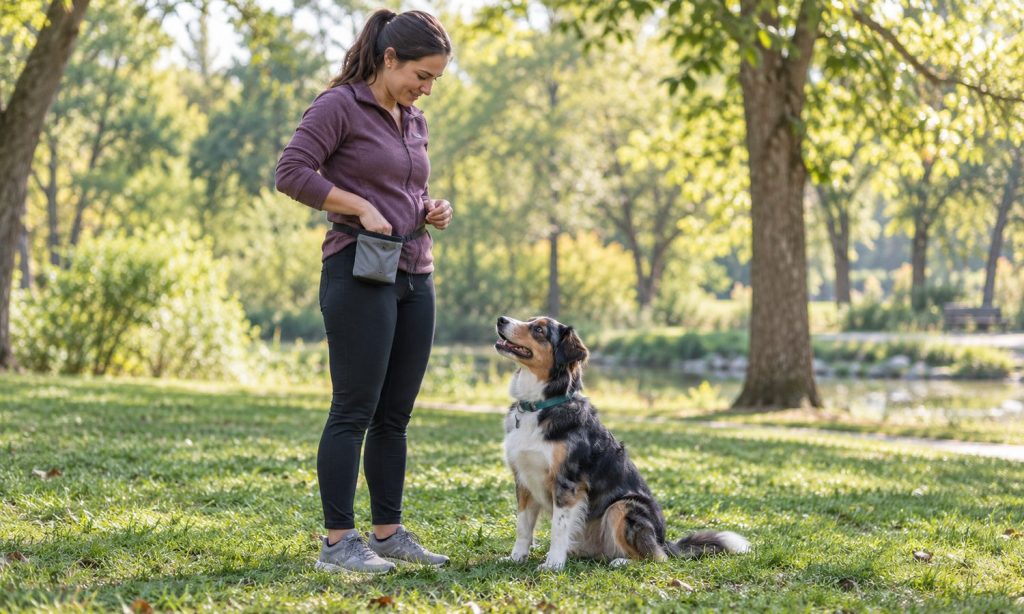
A pouch should stay in place while you bend, turn, walk, or reach for a treat. Common carry styles include a belt, waistband clip, waist strap, or a pocket-like design. A belt or adjustable strap can feel stable during movement, while a clip is quicker to attach to clothing. Clips may shift or pull on thin fabric, so test them with the clothes you usually wear.
Check where the pouch sits when you stand naturally. You should be able to reach into it with your usual hand without twisting your wrist or looking down for long. If you lead with your left hand, a pouch positioned on the left or slightly forward may be easier to reach. Try both sides if you are unsure. The pouch should not swing into your dog, bump your leg, or interfere with a leash, jacket, or seat belt.
Fit also includes comfort. A wide strap spreads pressure more evenly than a narrow cord, and an adjustable waist belt can accommodate different layers of clothing. If you walk in warm weather, a bulky pouch against your body may feel hot. For a short indoor session, a waistband clip or pocket insert may be enough. Choose the least cumbersome setup that still keeps rewards secure and accessible.
Balance capacity with quick access
A large pouch can hold more rewards, but extra capacity is useful only if you need it. For a brief practice session, a small handful may be plenty. A class, a longer walk, or practice with more than one dog may call for additional room. Consider the size and shape of the rewards, not just the pouch’s advertised volume. Soft treats may compress, while larger pieces take up more space.
The opening should let your hand move in and out comfortably. A wide, structured opening can be easier to use one-handed than a narrow soft rim. Some designs stay open while you reach inside; others use a flexible mouth or drawstring. If you can, mimic the motion you will use during training: open, take one reward, close or release, then resume handling your leash. A design that requires two hands may be inconvenient outdoors.
Separate pockets can help keep a clicker, keys, or waste bags apart from food. Avoid overloading the main compartment with hard objects that make it difficult to find a treat. A compact pouch may be more practical if you only need rewards, while multiple compartments can suit handlers who already carry several small items. The aim is an organized reach, not a wearable storage bin.
Choose a closure that matches the setting
Training pouches may use zippers, magnetic closures, drawstrings, flaps, or an open-top design. A zipper can help keep treats contained when the pouch is in a bag, but opening and closing it repeatedly may slow down a session. A magnetic or flexible opening can offer faster access, though it may not seal as tightly. Drawstrings can reduce spills, but check whether they are easy to operate with one hand.
Think about where you train. Indoors, an open-top pouch may be convenient. Outside, a closure can keep treats from spilling when you sit, bend, or move through brush. A secure top is also useful when you carry the pouch between sessions. Test whether the opening stays accessible while you walk and whether it closes without catching fabric or fur.
No closure is completely spill-proof in every position. Before filling it, turn the empty pouch gently and check how the opening behaves. If you use moist or strongly scented food, look for a removable liner or a compartment that can be cleaned thoroughly. A sealed plastic container inside a pouch may be more suitable for some foods, but it can add bulk and slow access.
Consider materials, cleaning, and treat freshness
Common pouch materials include nylon, polyester, canvas, and coated fabrics. A washable liner or removable insert makes cleanup easier after crumbs, oils, or soft treats collect inside. Check the care label before washing; some straps or closures may need to be removed or hand-cleaned. Let the pouch dry fully before storing it to reduce lingering odors and moisture.
Treat freshness depends on what you carry and how long it stays there. Dry kibble or firm treats may tolerate a short session in a pouch, while moist foods can spoil more quickly, especially in warm conditions. Follow the food’s storage directions and avoid leaving perishable treats in a pouch or vehicle. Clean out crumbs after each use and wash the contact surfaces as needed.
If your dog has dietary needs, allergies, or a sensitive stomach, use treats that already fit the dog’s feeding plan. Keep portions small and count training rewards as part of the day’s food intake. Our guide to training treats for dogs with sensitive stomachs discusses food selection for that specific concern. Ask your veterinarian for individualized advice if you are unsure which foods are appropriate.
Match the pouch to your training routine
For indoor skills such as settling on a mat or practicing a short cue, you may not need a dedicated pouch at all. A small bowl placed out of reach or a pocket can work if it keeps rewards handy and prevents your dog from helping themselves. For outdoor leash practice, a pouch that stays secure while you move can be more convenient. In a class, a washable liner and enough room for the planned session may matter most.
If you use a clicker, choose a carry arrangement that leaves your clicking hand free or lets you attach the clicker securely. If you also manage a leash, prioritize a stable position and a simple opening. Some people carry waste bags in a separate pocket. Keeping food away from used bags, keys, and other items makes cleanup and handling easier.
A pouch should support a calm training setup, not encourage you to keep asking for repetitions when your dog is tired or distracted. Keep sessions brief enough for your dog to stay engaged, pause when either of you needs a break, and reward the behavior you meant to reinforce. Reward-based methods are recommended by veterinary behavior professionals; the pouch is simply there to make the reward easier to deliver.
How to test a pouch before relying on it
Before a class or busy walk, try the pouch at home. Attach it where you plan to wear it, add a few treats, and practice taking one out while holding a leash or clicker. Walk, bend, sit, and turn. Notice whether the pouch shifts, rubs, catches on clothing, or opens unexpectedly. Make small adjustments before adding more gear.
Check that the opening is large enough for your hand but not so loose that treats fall out when you move. Test the closure several times. If the pouch has a liner, remove and replace it once. If washing is important to you, confirm that you understand how to clean the materials and whether they need to air dry.
Then use it for a short, easy training session. If you find yourself fumbling, switch sides or change the carry style. If your dog is more interested in the pouch than the training, keep it closed between rewards and avoid letting the dog nose into it. The best choice is the one you can use consistently and comfortably, not the one with the most features.
Common mistakes to avoid
- Choosing capacity before fit: A roomy pouch that swings or rubs may be less useful than a smaller, stable one.
- Ignoring the opening: Test access with the hand you will use and with the leash in your other hand.
- Leaving food inside: Remove leftovers and follow storage guidance, especially for moist or perishable treats.
- Overfilling every pocket: Too much gear can make rewards harder to reach and the pouch uncomfortable.
- Treating the pouch as the training plan: Good timing, clear cues, suitable rewards, and manageable sessions still matter.
Frequently Asked Questions
Do I need a special pouch to train my dog?
No. A pocket, small bowl, or other clean container may work for short sessions. A dedicated pouch is useful when you want hands-free carrying and quick access while moving.
Should a dog training pouch have a zipper?
It depends on your routine. A zipper can help contain treats during storage or travel, while a flexible or magnetic opening may be faster during practice. Test the closure with one hand.
How many treats should I carry?
Carry only what you expect to use in that session, with a small reserve if needed. Keep pieces small and account for reward calories in your dog’s daily food.
Can I leave soft treats in the pouch all day?
Follow the treat’s storage directions. Moist or perishable foods should not be left for long periods in a warm pouch or vehicle. Empty and clean the pouch after use.
Where should I wear the pouch?
Wear it where your hand can reach it easily without twisting or looking down. Try the left and right sides, then walk and bend to check that it stays secure.
Final Words
The right pouch fits your body, opens easily, holds enough for the session, and cleans up without fuss. Start with how and where you train, then test comfort, access, closure, and capacity with a few treats before depending on it outdoors. Food safety and sensible portions matter as much as convenience. If you are ready to compare specific designs, our guide to the treat pouch for dog training reviews options. Use that review alongside these criteria to decide what suits your routine.