
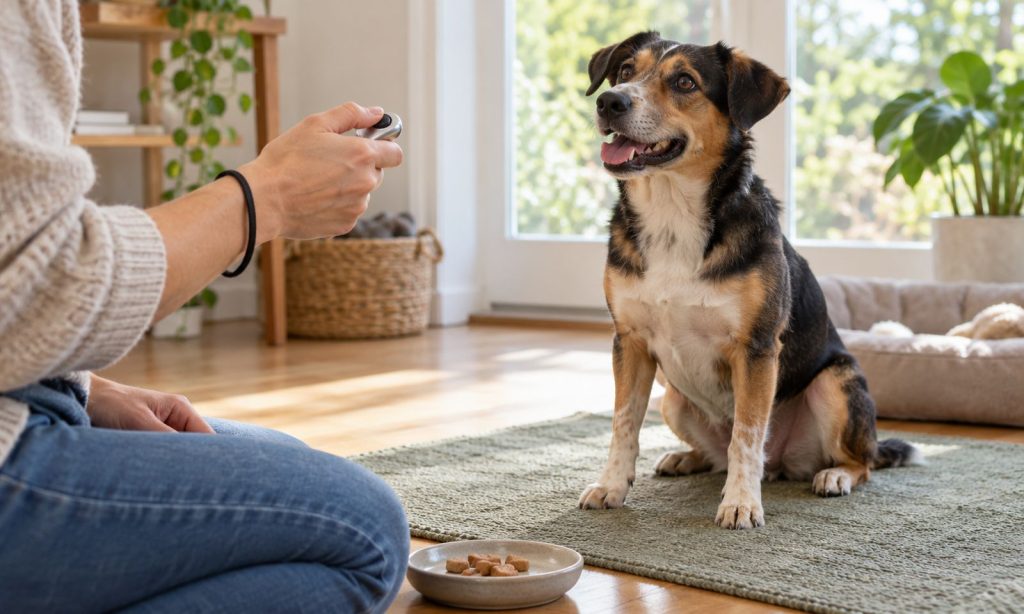
A clicker can make reward-based training easier to understand. It marks a moment when your dog does something you want to encourage. The device is simple, but beginners still need to choose a sound and shape they can use consistently. This guide explains how to choose the right dog training clicker for beginners. You will learn to test the sound and pair each click with a reward. You will learn to introduce the marker without startling your dog. The guide also covers short sessions and timing mistakes. A clicker is optional; a clear verbal marker can work too. The goal is a calm, repeatable signal that helps your dog connect behavior with a reward. Start with a design you can use easily.
What a clicker does in training
One part of how to choose the right dog training clicker for beginners is understanding the marker’s job. A clicker makes a brief sound that can mark the exact behavior you want to reinforce. The sound tells your dog, “That moment earned a reward.” It is followed by a treat, toy, or another reward your dog values. At first, the click has no special meaning, so you teach the association before using it to shape new behaviors.
The click does not replace a reward, a cue, or a training plan. It marks a moment; the reward gives your dog a reason to repeat the behavior. Use it within a reward-based approach. Veterinary behavior guidance recommends reward-based methods for teaching and behavior modification, and clickers are one possible marker within that approach.
A dog training clicker for beginners should be easy for you to operate and pleasant enough for your dog to hear. If the sound worries your dog, use a quieter option or a spoken word such as “yes.” The tool should support communication, not stress.
Choose a sound your dog can tolerate
Clickers vary in how sharp, loud, or distinct they sound. A louder click may be easy to hear outdoors, but a sensitive dog may find it startling. A softer click can be a better fit indoors or for dogs that react to sudden noises. Test the sound from a distance before training close to your dog.
Watch your dog’s body language. A relaxed dog may glance toward you and then take the reward. A dog that flinches, leaves, pins their ears, or avoids the device may need more distance or a quieter marker. Do not repeatedly click to “get them used to it” if they appear distressed. Gradual, reward-based exposure can help, and a qualified trainer can guide you if the reaction persists.
If you are uncertain how to choose the right dog training clicker for beginners, start with sound tolerance. A device that feels simple to the handler may still be too abrupt for a particular dog. You can also use a consistent spoken marker, which avoids a mechanical sound altogether.
Compare the button and shape
When considering how to choose the right dog training clicker for beginners, compare how the button feels under your thumb. Some clickers have a small raised button, while others use a broad flexible panel. Consider which is easier to press without looking. A click should happen quickly and intentionally, not after several fumbled attempts. If your hands are small, stiff, or occupied with a leash, test whether you can use the button comfortably.
A wrist strap or finger loop may help you keep track of the device, but it should not restrict your hand. A key ring can make a clicker easy to carry, though dangling accessories may swing or make extra noise. A compact design can fit in a pocket, but check that it will not press accidentally when you bend or sit.
When choosing a dog training clicker for beginners, think about where your sessions happen. A clicker used in the backyard may need a strap, while an indoor device might be easier to keep beside your treat container. The best design is the one you can reach without breaking your dog’s focus.
Check volume and consistency
How to choose the right dog training clicker for beginners also means finding a sound your dog can notice calmly. A consistent sound helps your dog recognize the marker. Some devices make a sharper click each time; others vary with how hard you press. Practice several presses while the dog is elsewhere and listen for whether the sound stays similar. A click that is unpredictable can make timing less clear.
Some designs allow you to dampen or adjust volume. That can be useful if a dog is noise-sensitive or if you train in a quiet room. Do not assume a volume feature is necessary for every dog. A verbal marker is also an option when a clicker sound is uncomfortable or impractical.
If you plan to train around traffic or in a busy class, make sure the click remains audible to you but does not cause your dog to startle. You should not have to click repeatedly or raise your voice to be heard. Start in a quiet space and build distractions slowly.
Pair the click with a reward first
A key step in how to choose the right dog training clicker for beginners is making sure it pairs smoothly with rewards. Begin in a quiet room with small, easy-to-eat rewards ready. Press the clicker once, then immediately give a reward. Repeat a few times with pauses. You are teaching that the sound predicts something good, not asking your dog to perform a behavior yet.
Keep the click-to-reward gap short. If the reward comes much later, the marker may become less clear. Deliver the treat after the click even if you pressed at the wrong moment; the click should reliably predict a reward. Reset and try again rather than withholding the reward because the timing was imperfect.
Practice until your dog responds to the sound by looking for the reward without showing fear. Keep sessions brief and end while your dog is still comfortable. If you are unsure how to choose the right dog training clicker for beginners, a comfortable sound and reliable reward delivery matter more than extra features.
Learn timing before teaching a new behavior
If you are deciding how to choose the right dog training clicker for beginners, include timing practice in your plan. The click should mark the instant your dog performs the desired action. If you are teaching a sit, click as the dog’s bottom reaches the floor, then give the reward. If you wait until the dog stands again, you may accidentally mark standing instead.
Start with easy actions you can recognize clearly. You might mark a nose touch to your hand, a calm look at you, or one step onto a mat. Avoid asking for complicated behavior while you are still learning to click on time. Clear, small goals make your practice easier to evaluate.
A useful exercise is to watch your dog perform a familiar action without clicking. Decide in advance which moment you want to mark. Then practice once the dog is ready. The clicker helps with precision, but your timing still comes from observation and planning.
Use consistent cues and short sessions
A marker and a cue do different jobs. A cue asks the dog to do something; the click marks the correct response. Say a cue once, wait briefly, mark the behavior, and reward it. Avoid repeating the cue many times while the dog is still deciding what it means.
For a beginner, a few short sessions are often easier to manage than one long session. Set a simple goal, such as clicking five times for a nose touch. Pause if your dog loses interest, becomes frustrated, or seems tired. Training should remain manageable for both of you.
Keep rewards ready before you begin. A small treat pouch can help you deliver them promptly; our guide to choosing a treat pouch for dog training explains the practical features that keep rewards close at hand.
Pick a clicker that fits your routine
When weighing how to choose the right dog training clicker for beginners, consider portability, cleaning, and how often you train. A pocket-sized clicker may be convenient, but make sure it is easy to retrieve. A larger button may be simpler to operate, though it can take more room. Avoid small pieces that could come loose around a dog that chews equipment.
If you train in classes, check whether the sound will be distinguishable in a room with several dogs. You do not need the loudest click; you need a consistent marker your dog can notice and you can use without stress. If the device rattles or clicks accidentally, choose another way to carry it.
The right dog training clicker for beginners is one you can press at the right moment, carry safely, and use at a comfortable volume. Price or novelty does not guarantee a better learning experience. A simple tool used consistently is usually easier to learn than a complicated one.
Common beginner mistakes to avoid
One common mistake is clicking without delivering a reward. Another is clicking too late, after the behavior has ended. Both can make the marker confusing. Slow down, simplify the task, and make the reward easy to reach.
Avoid using the click to interrupt barking, scold your dog, or call them away from something. It is intended to mark behavior you want to reinforce. If you need to manage a safety problem or serious behavior concern, use distance and environmental management and seek help from a qualified, reward-based trainer or veterinary behavior professional.
Do not click repeatedly to get your dog’s attention. A marker works best when it is meaningful and predictable. If your dog seems afraid of the sound, pause and use a softer sound or spoken marker instead.
When a spoken marker may work better
A clicker is not mandatory for clear reward-based training. Some dogs are sensitive to sharp sounds, while some handlers find it easier to say a short word consistently. Choose one marker and use it the same way each time. A spoken word can be useful when you do not have a free hand or when the clicker is packed away. It may be less consistent if your tone changes, so practice saying it calmly and briefly.
The marker should not become a cue that your dog must obey. It identifies the moment a behavior earns reinforcement. Use a separate cue when you want to ask for a behavior, and keep the marker paired with a reward. If the dog appears anxious, lower the difficulty and create more distance from distractions.
When training behavior concerns such as fear, aggression, or intense reactivity, get professional guidance. Look for someone who explains a reward-based plan and respects the dog’s comfort. A clicker can support communication, but it cannot replace a thoughtful training plan.
Frequently Asked Questions
Do I need a clicker to train my dog?
No. A clicker is optional. A consistent spoken marker can also identify the moment your dog does the desired behavior, followed by a reward.
How loud should a dog clicker be?
Choose a sound your dog notices without startling. Test it from a distance and watch your dog’s response before beginning a close training session.
Do I click before or after giving a treat?
Click immediately when the desired behavior happens, then give the reward. The click marks the moment; the treat follows it.
Can I clicker train an older dog?
Yes, many adult and older dogs can learn with reward-based training. Adjust session length, reward type, sound level, and physical demands to your dog’s needs.
What should I do if the click scares my dog?
Stop clicking close to your dog. Increase distance, try a quieter sound, or switch to a spoken marker. Seek qualified help if fear continues.
Final Words
Choose a clicker that is comfortable to press, easy to carry, and gentle enough for your dog. Pair each click with a reward, practice precise timing, and keep sessions short and positive. How to choose the right dog training clicker for beginners comes down to dependable use, not extra features. If your dog dislikes the sound, a spoken marker can serve the same basic role. Stay consistent, adjust to your dog’s comfort, and ask a qualified trainer for help with difficult behavior or training goals.









