A long line gives your dog room to explore while you keep a physical connection during recall practice. That extra distance can help you train around mild distractions, but the wrong line may tangle, burn your hands, or become hard to manage. This guide to what to look for in a long line leash for recall training explains how to compare length, width, material, hardware, and handling features. It also covers how to use the line as a safety backup rather than a tool for pulling your dog toward you. Start with the place you will train, your dog’s size and movement, and your own comfort holding the line. If you want to compare specific styles, our review of the long line leash for recall training covers product options. This article focuses on the selection criteria and safe setup.
What a long line can and cannot do
A long line is an extended leash that lets a dog move farther from the handler while remaining attached. During recall practice, it can reduce the chance that a dog runs out of reach if a cue is ignored. It is a management aid, not proof that a dog is ready to be off leash. Dogs may still reach hazards if the line is too long for the space or if the handler cannot control it.
The purpose is to give room for safe practice while you teach the recall cue in gradually more distracting situations. Veterinary behavior guidance advises keeping dogs leashed where hazards such as traffic are present, since no recall is perfect. Check local leash rules and choose a permitted, open training area away from roads, crowded paths, and places where a long line could interfere with others.
Use the line as a backup connection. Avoid snapping it, jerking it, or hauling your dog toward you. Instead, make the recall rewarding and practice at a distance where your dog can succeed. For a related overview of movement and activity planning, see the site’s dog exercise guide.
Choose a length that fits the training space
Long lines are sold in many lengths, and there is no single best length for every dog or location. A shorter line is easier to gather and may suit a small yard or an early practice session. A longer line offers more distance in a spacious, open area, but it also creates more line to manage and more opportunity for tangles. Consider how much room you have and how quickly you can collect slack.
Think about the dog’s pace as well as the available space. A fast dog may reach the end before you can react if the line is too long for your skill or the surroundings. A small dog or a dog that is just learning may do better with a shorter working distance. You can start with less length and expand gradually as your handling and the dog’s response improve.
A line should not stretch into a path, road, or nearby group of people. Before practice, look around for trees, benches, brush, bicycles, and other objects that could snag the line. Keep the working distance short enough that you can manage the line without letting it cross another person’s route. Length is useful only when the environment leaves room to use it safely.
Match width, material, and weight to your dog
Line width affects grip, weight, and how easily the line moves through your hands. A narrow line may be lighter, but it can be harder to hold comfortably if a dog moves suddenly. A wider line may be easier to see and grip, though it can feel heavy for a small dog. Choose a line that your dog can move naturally and that you can handle without tightly winding it around your fingers.
Common materials include nylon webbing, coated webbing, and rope-like lines. Webbing may be flexible and widely available, while coated materials can be easier to wipe clean. A rope line may be easier to grip for some handlers but can hold moisture or dirt. Check the product’s care instructions and inspect the material for fraying, cuts, rough edges, or damage before each use.
Weight matters at both ends. A heavy line can drag on a small dog or make it less comfortable to wear. A very light line may be harder for you to see on the ground. Aim for a balance: visible enough to track, light enough for your dog, and comfortable enough for you to manage. If your dog has a history of sudden lunging or pulling, ask a qualified, reward-based trainer to help you choose and introduce appropriate equipment.
Inspect the clip and connection point
The clip should attach securely to a well-fitted harness or other equipment suited to your dog. Check that the gate closes completely and that the metal is free from cracks, sharp edges, or heavy rust. The clip should be easy for you to operate but not so loose that it can open when brushed against clothing or equipment. A swivel may reduce twisting, but it does not prevent every knot.
The connection should suit the dog’s size and movement. A line that is too heavy can pull on a small dog, while hardware that is too small or damaged may not hold up to normal use. Inspect stitching near the clip and the handle, since those are points that experience repeated stress. Replace the line if a seam begins to separate or the clip no longer closes reliably.
Long lines can create sudden forces if a dog reaches the end at speed. Do not use a long line as a high-speed restraint. Start with short distances and slack, supervise closely, and avoid clipping a long line to gear that is uncomfortable or poorly fitted. Do not tie the line to a fixed object or wrap it around your hand, wrist, waist, or legs.
Consider the handle, grip, and line management
Some long lines have a handle loop; others have a simple end or a handle that can catch on branches. A handle can give you a familiar grip, but a loop may snag if it drags. Think about whether you will hold the end continuously or gather sections as your dog moves. Choose the arrangement you can manage safely, then practice handling it in a quiet area before using it near distractions.
Avoid wrapping the line around your fingers or gripping it in a way that could tighten if your dog moves suddenly. Gloves may help protect your hands when handling a longer line, but they do not replace careful spacing and control. Keep enough slack for comfortable movement without allowing the line to form large loops around your dog’s legs.
Do not let the line trail unattended where it can catch on furniture, brush, or another dog. Keep children and bystanders clear of the line. If you need to shorten the distance, gather the excess in loose, manageable sections rather than winding it tightly around your hand. Stop and reset if the line becomes tangled or you lose a clear view of your dog.
A harness and fit check before training
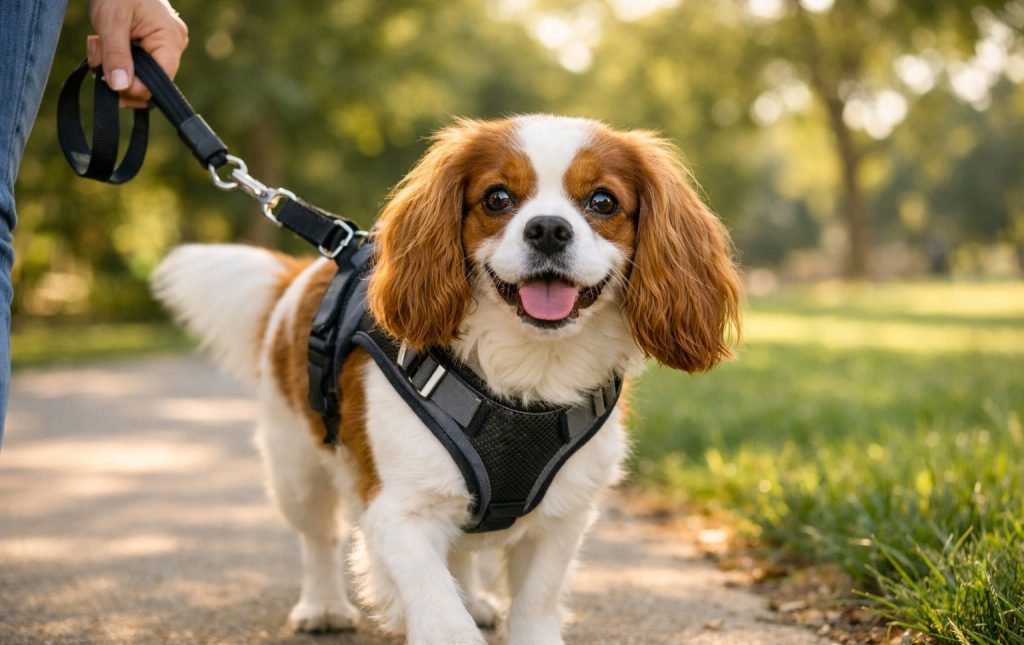
A long line works only as well as its attachment. A well-fitted harness may distribute pressure across the body more comfortably than a collar during movement, but fit and suitability vary. Introduce any harness gradually in a quiet place and make sure it does not rub, restrict movement, or allow your dog to back out. Check the manufacturer’s fit instructions and adjust the gear before attaching a longer line.
Practice clipping and unclipping the line while your dog is calm. Look for twisted straps, loose buckles, and areas where the line might rub against your dog. Do not leave a dog unattended while wearing a long line. For an active dog, close supervision helps you notice entanglements and respond before the line becomes taut.
If your dog freezes, pulls hard, or shows distress when wearing the equipment, stop and make the setup easier. Pairing new gear with calm, brief practice can help the dog become comfortable. A trainer can assess fit and handling if you are unsure or if the dog has a pattern of bolting, chasing, or reacting strongly to nearby distractions.
How to use a long line during recall practice
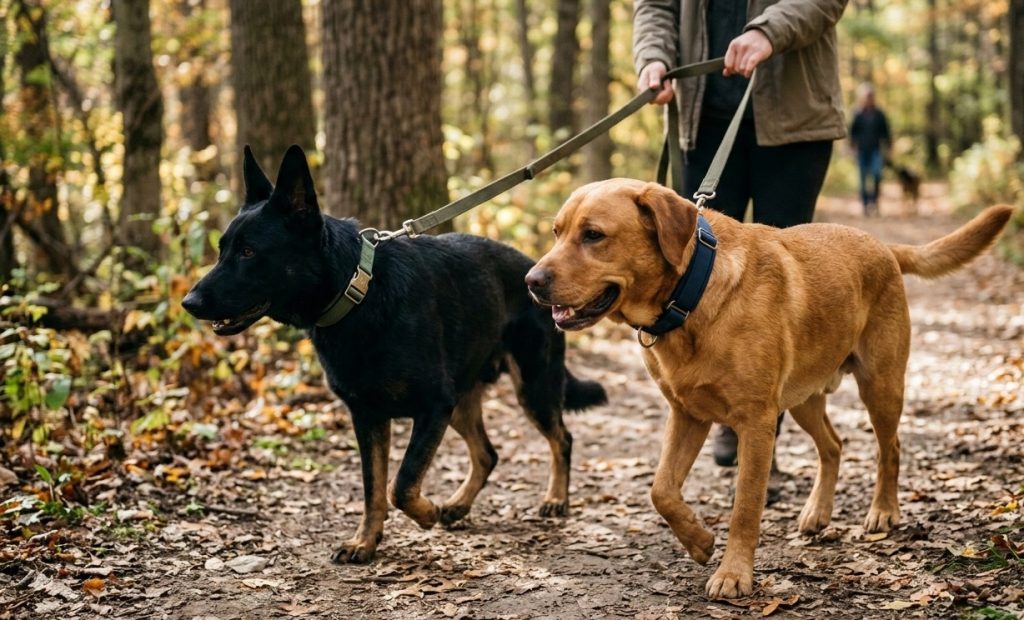
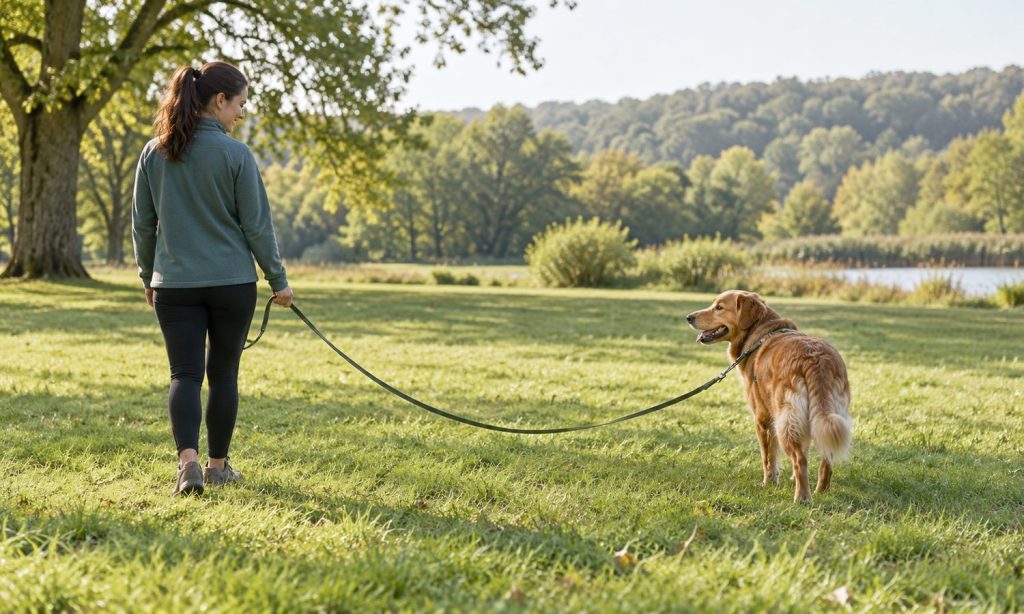
Begin in a quiet, permitted space with enough room to move and few distractions. Let your dog explore while you hold the line in loose sections. Say the recall cue once when your dog is likely to respond, then reward the dog warmly when they come to you. Keep the first repetitions easy and brief. The line is there to prevent an unsafe departure, not to make the dog come by force.
Gradually practice in new settings and around manageable distractions. If your dog does not respond, avoid repeating the cue over and over or pulling the dog in. Move closer, reduce the difficulty, and reward a successful return. A clicker or consistent verbal marker can help mark the moment your dog makes the right choice; see the guide to choosing a dog training clicker if you want to learn about that option.
Call your dog for rewards and positive interaction, not only to end play or leave the area. When your dog returns, reward them and sometimes release them to explore again if the setting is safe. If recall is not reliable around a particular distraction, increase distance from it or return to a quieter environment. Do not treat success in one location as a guarantee in every place.
Common selection and handling mistakes
- Choosing the longest line automatically: More length can mean more tangles and less control in a crowded or narrow place.
- Using it near traffic: Keep dogs leashed and choose a safer location; a long line is not a substitute for a barrier near roads.
- Wrapping it around your hand: Hold manageable sections without creating a loop that can tighten around fingers or limbs.
- Jerking or pulling the dog in: Use the line as a safety connection and make returning to you rewarding.
- Skipping inspections: Check clips, seams, webbing, and your dog’s harness fit before each session.
- Assuming recall is finished: Continue using a leash where required or where the surroundings are unsafe, even as skills improve.
Frequently Asked Questions
What length long line should I start with?
Choose a length you can manage in the space available. A shorter line is often easier for early practice or a small area; use more length only when you can keep it clear of hazards and other people.
Should a long line attach to a collar or harness?
Use equipment that fits your dog and is appropriate for their movement. A well-fitted harness is often considered for longer-line practice, but a trainer can help assess what is suitable for your dog.
Can a long line make my dog’s recall reliable?
The line can support practice by limiting distance, but it does not teach the cue on its own. Use gradual, reward-based training and continue managing safety in places where a leash is needed.
Can I let the line drag on the ground?
Only under close supervision in a clear area where it cannot snag or wrap around the dog, people, or objects. Keep the line organized and pick it up if the space becomes crowded or tangled.
Is a long line safe near a road?
No long line should be treated as sufficient protection beside traffic. Choose a secure, permitted area well away from roads, and keep your dog on a standard leash where local rules or conditions require it.
Final Words
The right long line is a manageable length, comfortable weight, secure clip, and material you can inspect and care for. Choose it for the space and dog in front of you, practice handling it before adding distractions, and keep the line slack rather than using it to pull. It can add a safety connection during recall training, but it cannot replace supervision, a good training plan, or local leash rules. For specific designs and features, see our review of the long line leash options for recall training.