
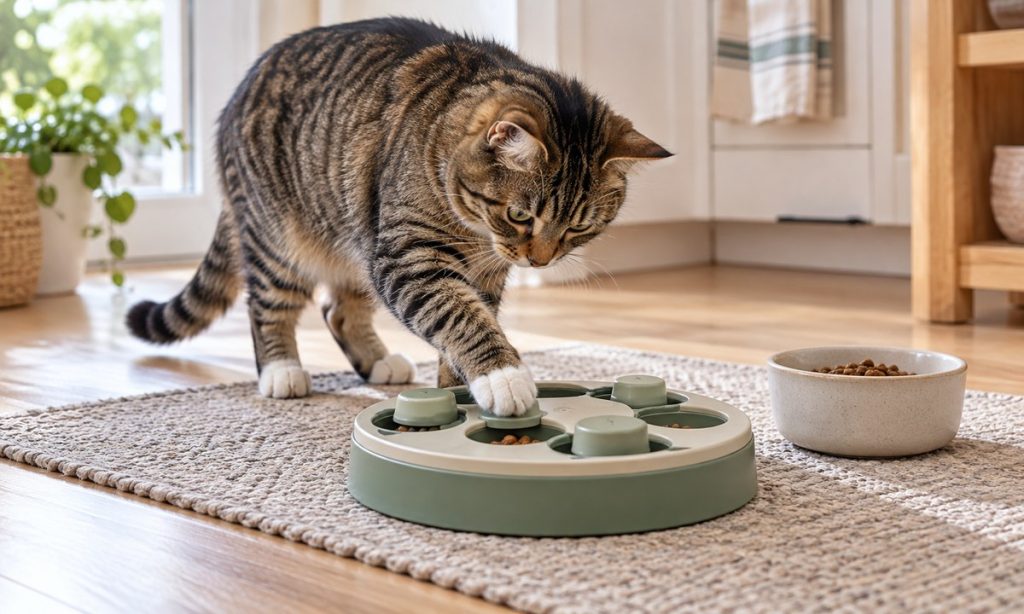
A cat who begs between meals may be hungry, bored, responding to a learned routine, or dealing with a health change. An interactive feeder can turn part of a measured meal into a small foraging activity, but it is not a fix for every kind of begging. The right choice depends on your cat’s eating style, mobility, food, and tolerance for new challenges. A suitable interactive feeder for cats that beg for food should make food easier to earn without making meals frustrating or changing the cat’s daily calories. Start with the feeding plan, then match the feeder’s openings, stability, cleaning needs, and difficulty to your individual cat. Watch how your cat uses it and adjust gradually. Keep sessions brief at first.
First, understand why your cat begs
Cats learn quickly that certain behaviors bring attention or food. If meowing or pawing has sometimes led to a snack, the behavior may continue even when the cat’s nutritional needs are met. Boredom, long gaps between meals, competition with another pet, and an inconsistent schedule can also affect food-seeking behavior.
A sudden increase in appetite deserves a veterinary conversation, especially when paired with weight loss, increased thirst, frequent urination, vomiting, or restlessness. Medical issues can change appetite. Do not use a puzzle feeder to delay care or to restrict food without veterinary guidance. If your cat’s weight or meal plan is a concern, ask the veterinarian to set a daily amount and meal schedule.
What an interactive feeder can and cannot do
An interactive feeder asks a cat to sniff, paw, roll, or move a part to access food. It can add activity and make a meal last longer for some cats. Feeding guidelines from feline veterinary organizations include food puzzles and foraging as possible ways to meet cats’ behavioral needs.
A feeder does not automatically reduce hunger, prevent weight gain, or solve anxiety. Count all food placed in the feeder as part of the daily ration. Keep fresh water available, and make sure every cat can reach its own food without being ambushed or blocked by another animal.
Match the feeder to your cat
Choose an easy starting challenge
If your cat has never used a puzzle, begin with food visible in wide, shallow openings. A simple tray or stationary puzzle is often easier to understand than a rolling toy with hidden compartments. Let the cat investigate it with a few pieces of its regular food. Avoid making the first meal a difficult test.
For a confident problem-solver, a feeder with several routes to the food can offer more engagement. Difficulty should come from the task, not from tiny slots that trap kibble or require uncomfortable paw positions. If your cat gives up, paws frantically, or eats much less than usual, make access easier.
Consider age, mobility, and face shape
A senior cat or one with arthritis may struggle to bend, stand for long periods, or reach into deep compartments. Look for a low-effort design with a stable base and broad openings. Cats with a flat face may do better with shallow spaces that do not press against the muzzle. If your cat has dental pain, weakness, or vision changes, consult a veterinarian before changing how meals are served.
Use a format that suits the food
Dry food works with many rolling and compartment feeders. Wet food is easier to offer on a lickable or shallow puzzle surface that can be washed thoroughly. Do not put wet food into a toy with narrow, hard-to-clean seams. Follow food-safety directions and remove leftovers promptly.
Check safety, stability, and cleaning
Inspect the feeder for sharp edges, loose parts, cracks, and spaces that could catch a claw or jaw. A light feeder may slide across the floor, so a nonslip base can help. The feeder should be large enough that your cat can approach without pushing its face against a wall or another pet.
Wash the feeder as often as needed to remove food residue and saliva. Choose a design you can disassemble and dry fully. For multi-cat homes, consider whether one cat could guard the feeder. Separate feeding areas can reduce tension and let each cat eat at a comfortable pace.
Introduce it without disrupting meals
- Keep the normal meal schedule and measure the full daily ration.
- Place a small portion in an easy puzzle while offering the rest in the usual bowl.
- Show the food at the surface rather than forcing your cat’s paws or nose into the feeder.
- Observe the first few sessions and make sure the cat gets enough to eat.
- Increase difficulty only if your cat approaches willingly and finishes the meal.
If your cat refuses the puzzle, return to the familiar bowl and try a simpler format later. Food access should remain reliable. A feeder is enrichment, not a contest your cat has to win.
Compare common feeder formats
Stationary trays keep food in place and can be easier for a beginner to understand. Rolling dispensers ask a cat to move the feeder, which may suit cats that enjoy batting objects but can be noisy or frustrating for cats that dislike movement. Lickable surfaces work with some wet foods, but their grooves need thorough cleaning. Electronic feeders can control access by time or pet, yet they solve a different problem from an interactive puzzle and still need regular cleaning and reliable power.
Think about where the feeder will sit and who else can reach it. A design that works in a quiet single-cat room may be poor in a busy kitchen or a home with a food-stealing pet. Test a new format with only part of a meal and watch whether your cat can use it calmly.
When begging needs more than a feeder
If begging is persistent, write down meal times, portions, treats, and when the behavior occurs. This can reveal whether the cat is responding to a predictable cue or whether its routine leaves long gaps. Household members should use the same plan. Avoid rewarding begging with extra food, but offer attention or a short play session when that fits the cat’s needs.
Seek veterinary advice for a new or intense appetite, weight change, vomiting, diarrhea, increased thirst, or a sudden shift in behavior. A vet can assess medical causes and help set an appropriate feeding plan. For general meal pacing, a guide to slow-feeder bowls for cats covers another style of food enrichment.
Keep meals and enrichment in balance
An interactive feeder works best as one part of a predictable routine. Decide in advance which meals or portions will use it and keep the daily food amount consistent. If more than one person feeds the cat, use a shared plan so puzzle food, treats, and bowl meals are all counted.
Pair food enrichment with play and attention rather than relying on a feeder to occupy the cat all day. A brief play session before a meal can create a familiar rhythm. If the cat’s appetite seems unsatisfied despite a measured plan, discuss body condition and meal timing with the veterinarian.
Frequently Asked Questions
Will an interactive feeder stop my cat from begging?
It may add activity and structure to meals, but it will not address every cause of begging. Review the feeding routine and consult a veterinarian if appetite changes suddenly.
Can I put my cat’s whole daily ration in a puzzle?
Possibly, if the cat can reliably access the food and the veterinarian approves the plan. Introduce the feeder gradually and monitor intake.
Are puzzle feeders suitable for senior cats?
Some are. Choose a stable, low-effort design with wide openings, and account for arthritis, vision, dental, or mobility issues.
Should I use treats to teach my cat?
You can use a few pieces of the cat’s measured daily food. If you use treats, include them in the day’s total calories.
How often should I clean a food puzzle?
Clean it according to the food used and the manufacturer’s directions. Wet-food surfaces need prompt, thorough washing and drying.
Final Words
Choose a feeder your cat can use comfortably, clean thoroughly, and enjoy without missing meals. Start with an easy design, count its food toward the daily ration, and adjust based on your cat’s response. For additional selection context, see this guide to an interactive feeder for cats that beg for food. If appetite changes or begging comes with other symptoms, ask your veterinarian to check for an underlying cause.









