
A cat anxiety diffuser alternative can mean a different way to support a worried cat, a change to the home, or a treatment plan guided by a veterinarian. The right approach depends on what triggers the anxiety and how strongly it affects the cat. Hiding during a noisy gathering calls for different support than urine marking, conflict between cats, or distress that appears without an obvious trigger. Before choosing an option, look for patterns, rule out pain or illness, and identify the cat’s unmet needs for safety, routine, play, and access to resources. This guide explains how to assess non-diffuser approaches, what limits to expect, and when veterinary help matters. For context about the topic, see the existing guide to a cat anxiety diffuser alternative.
Start by identifying the anxiety trigger
Record when the behavior happens, where the cat is, who or what is nearby, and what changed beforehand. Common signs of distress can include hiding, avoiding people, vigilance, vocalizing, aggression, appetite changes, urine marking, or overgrooming. These signs can also have medical causes, so behavior alone cannot diagnose anxiety.
A veterinarian should assess sudden behavior changes, litter-box problems, appetite loss, repeated vomiting, or signs of pain. Cats may hide illness, and a treatment that changes the environment cannot address an untreated medical problem. Bring notes or short videos to the appointment if they can be gathered safely.
What can replace a diffuser?
Make the environment feel predictable
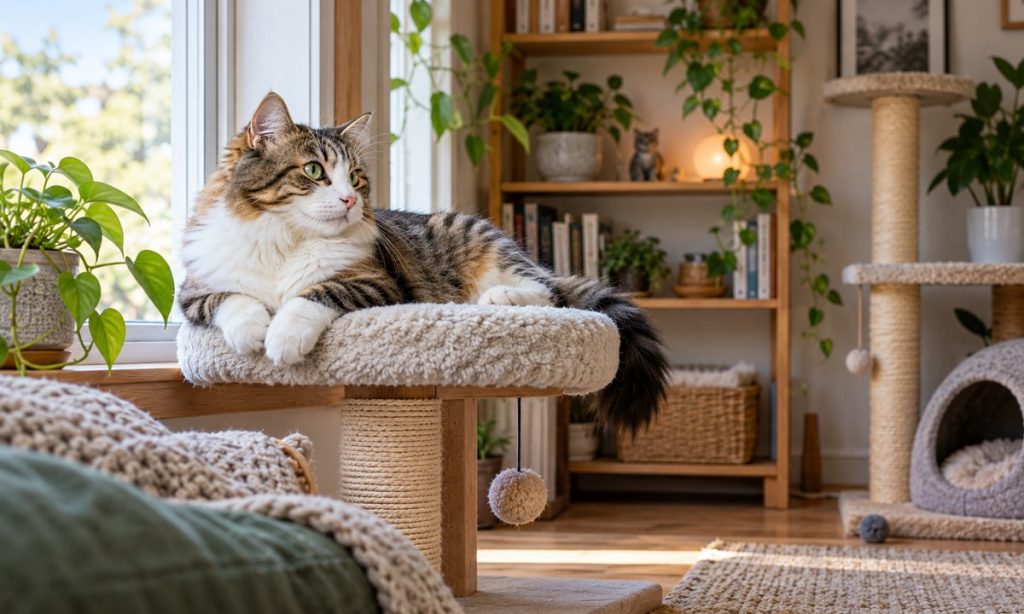
Give the cat quiet hiding places and elevated resting areas. Keep food, water, litter boxes, and resting spots easy to reach. In multi-cat households, provide separate resources in different areas so one cat cannot control access. A predictable daily rhythm for meals, play, and quiet time can help reduce uncertainty.
Use gradual behavior support
When a specific sound, person, carrier, or household event triggers fear, gradual exposure paired with something the cat enjoys may help. Keep the exposure mild enough that the cat can remain relaxed. Do not force contact, corner the cat, or punish fearful behavior. A veterinarian or qualified veterinary behavior professional can tailor a plan when fear is severe or persistent.
Offer appropriate play and foraging
Short, regular play sessions and safe opportunities to climb, scratch, explore, and search for food can support normal feline behavior. Choose activities the cat willingly engages with and allow breaks. Environmental enrichment is supportive care; it is not a substitute for treatment when anxiety is impairing daily life.
How to assess an alternative
Ask what problem the option is meant to address, how success will be measured, and how long it should take to see a change. A useful plan has observable goals, such as fewer stress-related episodes or easier recovery after a trigger. It should not promise to eliminate anxiety in every cat.
Be cautious with non-prescription calming products, essential oils, and scented remedies. Ingredients, evidence, and safety can vary. Cats may be sensitive to substances they inhale, lick, or absorb. Ask the veterinarian before using a supplement, topical product, or medication, especially if the cat has another condition or takes other drugs. Never use a human medication unless a veterinarian specifically prescribes it.
When professional treatment is needed
Contact a veterinarian when anxiety is frequent, worsening, causing injury, affecting eating or elimination, or disrupting sleep and normal activity. Treatment may combine environmental changes, behavior modification, and, for some cats, veterinarian-directed medication. Medication is chosen for the individual cat and should be monitored; it is not a failure of training or care.
If a diffuser was used because a veterinarian recommended it, ask before stopping or replacing it. The goal is to address the cause and protect the cat’s welfare, not simply to swap one device for another. A calming retreat for a nervous cat may be one environmental consideration, alongside quiet hiding places and separated resources.
Track the plan and arrange a recheck
Before changing several things at once, note the cat’s usual behavior and the situations that trigger it. Then make one manageable environmental change and record what happens over the next days or weeks. This helps you and the veterinary team see whether the plan changes the behavior or whether another trigger remains.
Set a time to reassess, especially if the cat is taking a supplement or prescribed medicine. Keep the product name, ingredients, serving directions, and any reactions available for the clinic. Stop and ask for advice if the cat becomes more distressed or develops new symptoms. Severe fear, self-injury, or inability to eat or eliminate should not wait for a routine follow-up.
Make home changes fit the trigger
For noise-related fear, a quiet room with familiar bedding may help the cat retreat during a predictable event. For tension between cats, add separated food, water, litter, and resting spaces rather than asking the cats to share a narrow area. For a new visitor, allow the cat to choose whether to approach and keep an escape route open.
These changes should reduce pressure rather than trap the cat in a new routine. Watch whether the cat still eats, drinks, grooms, and uses the litter box normally. If it hides continuously or avoids essential resources, ask a veterinarian or qualified behavior professional to review the setup.
Frequently Asked Questions
Is there one best cat anxiety diffuser alternative?
No single alternative fits every cat. The best plan depends on the trigger, behavior, health, and home environment.
Can I use essential oils to calm my cat?
Do not assume an essential oil is safe because it is natural. Ask a veterinarian before exposing a cat to oils or scented products.
Do calming supplements work for every cat?
No. Evidence and ingredients vary, and supplements can interact with health conditions or medications. Get veterinary guidance first.
When should anxiety be checked by a vet?
Seek advice for new or severe behavior changes, reduced appetite, litter-box changes, self-injury, or distress that interferes with daily life.
Can environmental changes be enough?
They may help when the trigger is manageable and the cat’s needs are not being met. Persistent or intense anxiety may require a broader veterinary plan.
Final Words
Choose a cat anxiety diffuser alternative by first identifying the trigger and checking for health concerns. Quiet retreats, separated resources, predictable routines, and gradual behavior support can help some cats, while persistent distress needs veterinary care. Review the existing information about a cat anxiety diffuser alternative alongside your veterinarian’s advice, and avoid unverified remedies.
Reference
- Feline Feeding Programs: Addressing Behavioral Needs to Improve Feline Health and Wellbeing, Feline Veterinary Medical Association.
- Understanding Anxiety in Cats, VCA Animal Hospitals.
- Pheromones, VCA Animal Hospitals.
- Setting Up the Environment for Success, Feline Veterinary Medical Association.









