
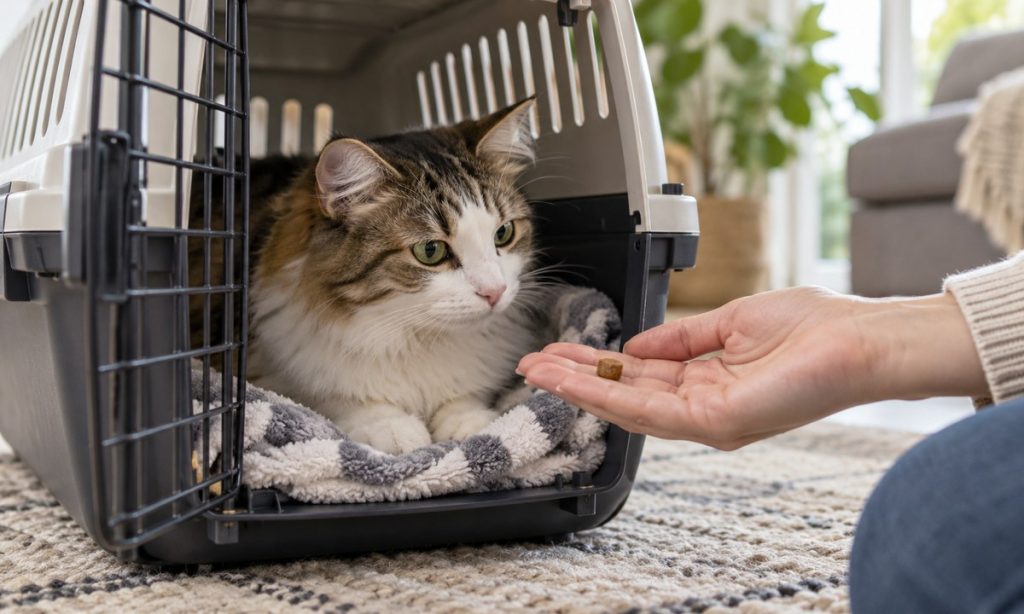
Travel can unsettle cats because carriers, motion, unfamiliar sounds, and changes in routine all arrive together. Some caregivers consider calming treats for cats during travel, but a treat is not a guaranteed anxiety treatment or a substitute for veterinary care. Cats differ in health, appetite, sensitivity, and response to ingredients. Before choosing one, identify whether the problem is fear, motion sickness, or both, and ask your veterinarian whether a nonprescription treat is appropriate. Read the label carefully, consider calories and other ingredients, and test acceptance at home well before departure. This guide explains what to check and how to prepare safely. For an overview of the topic, see the site’s guide to calming treats for cats during travel. Prepare early whenever you can.
Separate travel anxiety from motion sickness
A cat that pants, cries, freezes, hides, drools, vomits, or refuses food during a trip may be distressed, nauseated, or experiencing both. These signs are not specific enough to identify the cause on their own. Note when they begin, how long they last, and whether they occur in the stationary carrier or only once the vehicle moves.
Ask a veterinarian before travel if your cat has vomited, become unusually lethargic, or had severe distress on previous trips. A calming treat may not prevent nausea, and a nausea treatment may not resolve fear. A veterinarian can assess the pattern and discuss safe options for your cat.
What to check on a calming treat label
Ingredients and intended use
Read the complete ingredient list, directions, age limits, and warnings. Be cautious about vague claims such as “works instantly” or “safe for every cat.” A label cannot establish that an ingredient will help a particular cat, and natural ingredients can still cause problems. Do not combine multiple calming products unless your veterinarian approves the plan.
Health conditions and other medicines
Tell your veterinarian about prescription medicines, supplements, allergies, kidney or liver disease, and any history of unusual reactions. This matters especially for kittens, senior cats, pregnant cats, and cats with chronic conditions. Never give a human calming medicine or a dog product to a cat unless a veterinarian specifically directs it.
Calories, portion, and acceptance
Treats contribute calories. Follow the label and include them in the cat’s daily food plan. Check whether the directions allow splitting a serving; do not guess a dose based on the cat’s size. A treat that the cat will not eat is not a useful travel tool, so assess acceptance at home rather than offering it for the first time in a moving vehicle.
Plan a low-stress trial at home
Introduce the carrier as a familiar resting place days or weeks before travel when possible. Let the cat explore it voluntarily and reward calm approaches with a favored food or gentle attention. Offer any proposed treat in a quiet setting first. Observe for vomiting, diarrhea, unusual sleepiness, agitation, itching, or refusal to eat. Stop and contact the veterinarian if a concerning reaction occurs.
On travel day, follow the veterinarian’s instructions and the label exactly. Do not repeat a serving because the cat appears anxious unless the directions and veterinarian permit it. Keep the carrier secured, ventilated, and lined with familiar bedding. For more preparation context, review the published guide to a carrier for car travel with cats.
When treats are not enough
Repeated vomiting, severe panic, escape attempts, self-injury, or distress that lasts after the journey calls for veterinary help. A veterinarian may recommend carrier training, environmental adjustments, or prescription treatment after assessing the cat. Do not delay necessary medical travel while trying several supplements.
If your cat must fast before a procedure, has a special diet, or is prone to motion sickness, ask whether food or treats are appropriate before leaving. Follow clinic and transportation instructions. Keep the cat’s travel plan specific to its medical needs rather than borrowing another pet’s routine.
Prepare a travel-day checklist
Before leaving, confirm the carrier is secure, the route and appointment timing are set, and the cat’s identification and medical records are available. Keep the carrier level and avoid opening it in an unsecured area. Bring familiar bedding and any food or water the veterinary team advises. These steps reduce avoidable surprises but do not guarantee a calm trip.
Ask the clinic when to give any veterinarian-approved product and whether food should be withheld for a particular procedure. Write down what you gave and when. If your cat has a reaction, call the clinic and share the label or ingredient list. Do not redose or combine products based on a guess.
Know what to do if the treat is refused
Do not force a treat into a cat’s mouth or hide a new product in a full meal without testing it first. A cat that refuses food during travel may be anxious or nauseated. Keep the carrier secured and ask the veterinary team for advice rather than repeatedly offering treats in a moving vehicle.
If you see unusual weakness, repeated vomiting, breathing difficulty, collapse, or a severe reaction after any product, contact a veterinary clinic promptly. Keep the package and note the amount and time given. A clear record helps the veterinarian assess what happened.
Frequently Asked Questions
Do calming treats work for every cat?
No. Cats vary in whether they accept a treat and how they respond. A veterinarian can help determine whether one is suitable.
Should I try a calming treat for the first time in the car?
No. Test acceptance and watch for an unwanted reaction at home, with enough time to consult your veterinarian if needed.
Can a calming treat prevent car sickness?
Do not assume it will. Anxiety and motion sickness can overlap, but they may need different approaches. Ask your veterinarian about vomiting or drooling during travel.
Can I combine treats with a prescription medicine?
Only with veterinary guidance. Ingredients can interact with medicines or affect cats with health conditions.
How early should I prepare my cat for travel?
Start carrier familiarization well ahead of the trip when possible. Practice short, calm steps and ask the veterinary team for a plan if travel has been difficult.
Final Words
Choose calming treats for cats during travel only after checking ingredients, directions, calories, and your cat’s health with a veterinarian. Test acceptance at home and prepare the carrier gradually. If your cat has nausea or intense fear, ask about a tailored plan instead of relying on treats alone. The site’s guide to calming treats for cats during travel offers related context, but your veterinarian should guide medical decisions.
Reference
- Motion Sickness in Cats, VCA Animal Hospitals.
- Tips to Reduce Travel Stress for Cats, VCA Animal Hospitals.
- Road Trips and Car Travel With Your Cat, VCA Animal Hospitals.
- Keep Calm: What to Do If Your Pet Gets into Calming Aids or Treats, ASPCA.









