
Hairball gel for cats is meant to help manage swallowed fur, but it should not be treated as a cure for frequent vomiting or a substitute for veterinary evaluation. A cat may swallow loose hair while grooming and bring up an occasional hairball. Repeated retching, appetite changes, constipation, or vomiting without producing a hairball can point to a more serious problem. Before choosing a gel, check its intended use, ingredients, directions, and suitability for your cat’s age and health. Ask a veterinarian whether a lubricant-style product is appropriate, especially if your cat takes medication or has digestive disease. This guide explains what to look for, what the label cannot promise, and when grooming or medical care matters more. For context, see the published guide to hairball gel for cats.
What hairball gel is intended to do
Many hairball gels are oral lubricants. Their ingredients and directions differ, and they are not interchangeable with laxatives or medicines for constipation. A gel may be recommended as one part of a plan, but it cannot diagnose why a cat is vomiting or ingesting excess hair.
The label should identify that the product is for cats, list its ingredients, explain how it is given, and provide clear cautions. Check serving directions and storage instructions. Avoid products with unclear ingredient amounts, vague claims, or directions that do not fit your cat’s age or condition. Do not use a dog product or a human laxative as a substitute.
Questions to ask before choosing a gel
Is a gel appropriate for this cat?
Ask your veterinarian before starting a hairball remedy. This is especially important for kittens, older cats, cats with chronic illness, and cats taking prescription medicines or supplements. Some ingredients may be inappropriate for particular health conditions or may interfere with other treatments.
Are the directions clear and practical?
A useful label gives an exact serving instruction and explains how to administer the product. Follow it only as directed by your veterinarian or the label when the veterinarian has confirmed its use. Do not increase frequency because hairballs continue. Persistent signs need assessment rather than a larger amount.
Will your cat accept the texture?
Cats can reject unfamiliar textures or flavors. If your veterinarian approves the gel, ask how to offer it without force. Do not smear a product on the face or paws unless the label and veterinarian specifically recommend that method. A stressed cat may ingest too little or avoid handling afterward.
Reduce swallowed fur and watch the pattern
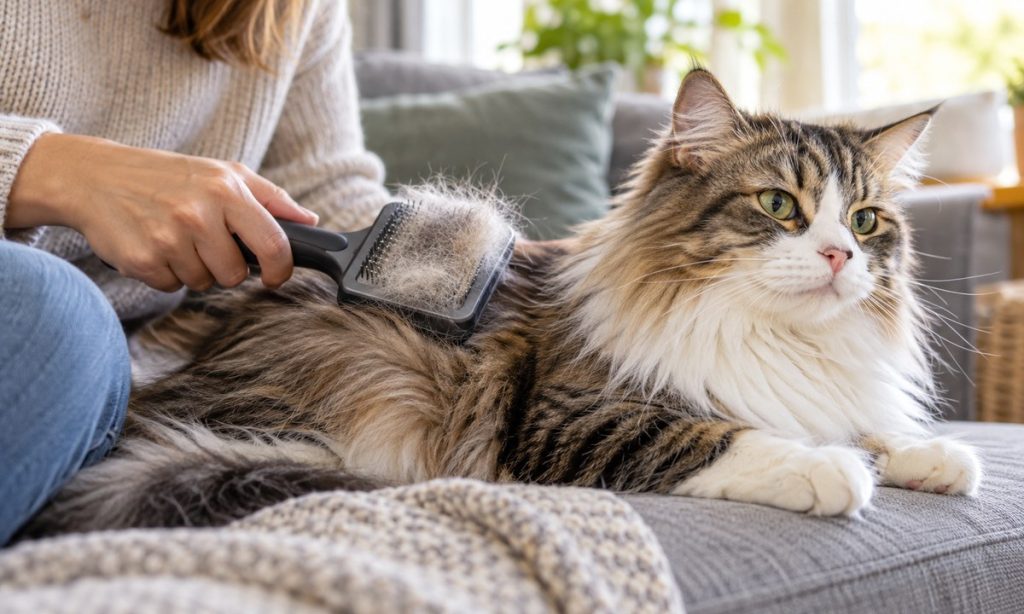
Regular brushing can remove loose fur before a cat swallows it. Match the brush to the coat and keep sessions gentle. If grooming reveals mats, skin irritation, bald areas, or excessive licking, contact a veterinarian. Overgrooming can be associated with skin disease, pain, or stress.
Track how often the cat vomits, whether hair is present, appetite, stool, and any changes in weight or behavior. Occasional hairballs can happen, but frequent episodes should be discussed with a veterinarian. A guide to hairball-focused cat treats covers a separate format; the same caution applies: a product label does not replace a diagnosis.
Know when to call a veterinarian
Seek prompt veterinary advice for repeated vomiting, repeated unproductive retching, loss of appetite, lethargy, abdominal discomfort, or trouble passing stool. If your cat cannot keep food or water down, appears weak, or may have swallowed a foreign object, contact a veterinary clinic urgently. A blockage can be serious, and giving gel may delay needed care.
Hairballs that become more frequent may reflect excessive grooming or another digestive or skin problem. Your veterinarian can determine whether examination, testing, grooming changes, diet adjustments, or treatment is needed. Do not assume every vomit is a hairball just because your cat grooms often.
Reduce loose fur with a grooming routine
Gentle brushing can remove loose hair before it is swallowed. Use a tool that suits the coat, work in short sessions, and stop if your cat resists or the skin looks irritated. Long-haired cats may need more frequent grooming, while an older cat may need help reaching areas it no longer cleans well.
If grooming reveals mats, bald patches, sores, or a sudden increase in licking, arrange a veterinary check. Skin discomfort can increase grooming and hair ingestion. A hairball gel does not address an allergy, parasites, pain, or another cause of overgrooming.
Understand what the label does not tell you
A product described as “hairball control” may be a lubricant, treat, or dietary supplement. These forms have different ingredients and directions. Do not assume that a gel is a laxative for constipation or that it can move a blockage. The package claim does not establish the cause of vomiting.
At a veterinary visit, ask what signs would show the product is helping, how long to use it, and when to stop. Share photos of the label and report any other products being used. If symptoms continue or worsen, seek reassessment rather than switching between gels or adding a second remedy.
Frequently Asked Questions
Can hairball gel stop all hairballs?
No product can guarantee that. Grooming, health, coat type, and individual behavior affect how much fur a cat swallows.
How often should I give hairball gel?
Follow the label and your veterinarian’s directions. Do not guess a schedule or increase use when symptoms continue.
Can I give hairball gel with other medicine?
Ask your veterinarian first. Share the full medication and supplement list so potential interactions or timing issues can be reviewed.
Is vomiting without a hairball normal?
It can have many causes and should not automatically be attributed to hairballs. Repeated vomiting or unproductive retching warrants veterinary advice.
Does brushing help with hairballs?
Regular gentle brushing removes loose fur and may reduce the amount a cat swallows. Ask for help if grooming causes distress or reveals skin problems.
Final Words
Choose hairball gel for cats only after checking the label and discussing your cat’s needs with a veterinarian. Clear directions, appropriate ingredients, and an easy administration method matter, but persistent vomiting or retching needs medical attention. Grooming can help reduce loose fur. For a related overview, read the site’s information about hairball gel for cats.
Reference
- The Danger of Hairballs, Cornell University College of Veterinary Medicine.
- A Hairy Dilemma, Cornell University College of Veterinary Medicine.
- Digestive Lubricants and Hairball Gels, VCA Animal Hospitals.
- Trichobezoars in Cats, VCA Animal Hospitals.









