
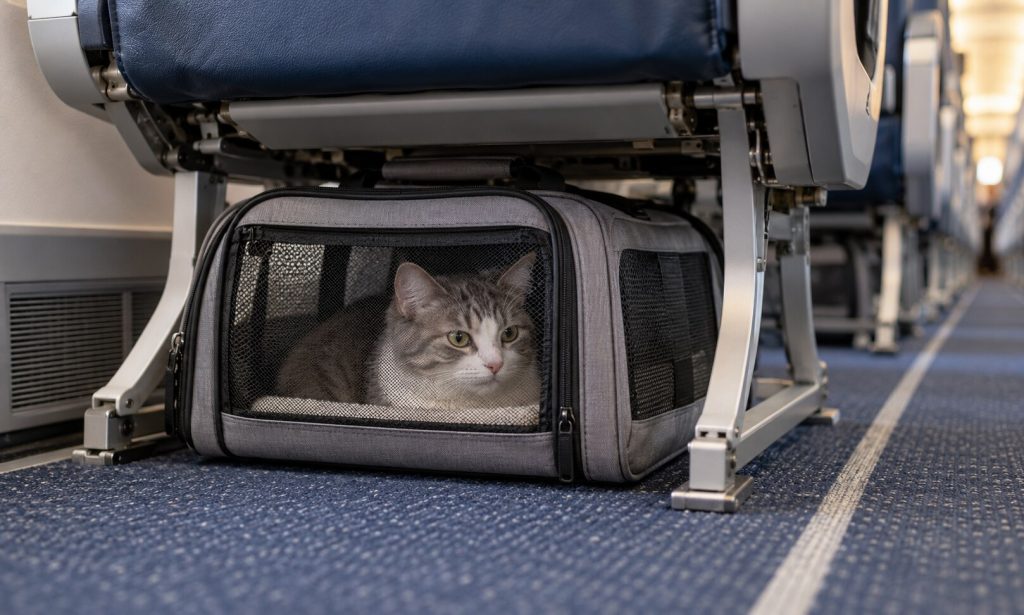
An airline approved cat carrier is not a universal size or certification. Each airline sets its own rules, and requirements can vary by aircraft, route, and whether your cat travels in the cabin or cargo area. Confirm the current policy before buying a carrier or booking a ticket. Then measure the carrier against the airline’s stated limits and consider your cat’s comfort, ventilation, closure security, and ability to fit under the seat. This guide outlines the checks that help you avoid an airport surprise. It also explains why online labels such as “airline approved” do not replace direct confirmation with the airline and your veterinarian. If you need a separate overview, see our guide to airline approved cat carrier.
Confirm the airline’s exact requirements
Call or review the specific airline’s current pet policy before purchasing. Ask about carrier length, width, and height; whether soft-sided bags can compress; cabin pet limits; fees; and aircraft restrictions. Requirements may differ on a codeshare flight or between outbound and return routes. USDA APHIS also notes that airlines may have additional requirements beyond destination-country rules.
Check the carrier and the cat together
Measure the carrier’s exterior where the airline measures it, including wheels or handles if applicable. Confirm the carrier can fit beneath the assigned seat without blocking ventilation. Your cat needs enough room to rest comfortably, while the total package must meet the airline’s limit. Look for secure zippers or latches, sturdy seams, adequate ventilation, absorbent bedding, and a way to access your cat without opening the carrier in an unsafe place.
Prepare for airport handling
Get your cat used to the carrier well before travel. At airport screening, AVMA advises removing the cat from the carrier before the carrier passes through the X-ray tunnel; use a secure harness only if your cat is accustomed to it and the area is safe. Ask your veterinarian whether your cat is fit to fly and whether any health paperwork is required for the route. Do not give sedatives unless your veterinarian specifically advises a plan.
If travel itself is stressful, our articles on carrier features for anxious cats and travel preparation for cats cover related acclimation questions.
For a separate overview of airline approved cat carrier options, see the related carrier guide, then verify every measurement directly with your airline.
Separate cabin travel from cargo travel
Cabin carriers and cargo kennels may have different design and size requirements. Do not assume that a soft bag approved for cabin travel is suitable for cargo, or that a hard crate that meets cargo rules will fit beneath a passenger seat. Ask the airline which carrier type is accepted for your cat’s specific itinerary and whether your aircraft has unusual under-seat dimensions.
Keep a written checklist with the operating carrier, route, aircraft, carrier dimensions, reservation status, paperwork, and check-in deadline. Reconfirm the details before departure because aircraft or policy changes can affect the arrangement. If your cat has a short nose, breathing problem, recent illness, or high anxiety, discuss travel suitability with a veterinarian well before the flight.
Verify the exact flight before choosing a carrier
Airline acceptance depends on the carrier’s outside dimensions and the rules for the specific itinerary. Measure the carrier at its widest and tallest points, including handles or bulging panels, and compare it with the airline’s current under-seat limits. A soft bag may compress slightly, but do not assume it can be forced into a smaller space if that would restrict the cat or airflow. Confirm whether the carrier counts as a personal item, whether a reservation is required, and what the airline requires at check-in.
Check the operating airline for every flight segment, including a codeshare or connection. Rules can differ for aircraft, cabin, destination, and international travel. Ask about required health documents, age or breed restrictions, fees, and whether the cat must remain inside the carrier throughout the flight. Keep written confirmation and recheck the rules close to departure because schedules or aircraft may change.
Practice closing the carrier and keeping it level with the cat inside. The cat should have enough room to stand, turn, and lie down comfortably under the airline’s applicable requirements. Pack absorbent liners and spare materials in your carry-on, but avoid bulky items that reduce usable space. If the cat cannot fit comfortably in a carrier that meets the airline’s size limit, consult the airline and veterinarian about alternatives before booking rather than relying on a last-minute exception.
Frequently Asked Questions
Is “airline approved” a guarantee?
No. The phrase does not guarantee acceptance by every airline. Confirm current rules for your flight.
Do airlines use the same carrier dimensions?
No. Policies vary by carrier and aircraft. Check the operating airline, including for connecting or codeshare flights.
Can I use a hard carrier in the cabin?
Only if it meets the airline’s current limits and fits the assigned space. Ask before booking.
Does my cat need a health certificate?
Requirements depend on the route and destination. Ask your veterinarian and check official destination rules.
Can I sedate my cat for a flight?
Do not medicate without veterinary direction. Discuss the cat’s health and the airline’s policy in advance.
Final Words
Choose a carrier only after confirming the airline’s current dimensions, closures, and cabin rules. Test the fit with your cat, prepare paperwork early, and practice carrier training. Airline approval is specific to the trip, so recheck before departure. For a related overview of airline approved cat carrier, see the separate guide and verify details for your situation.









