
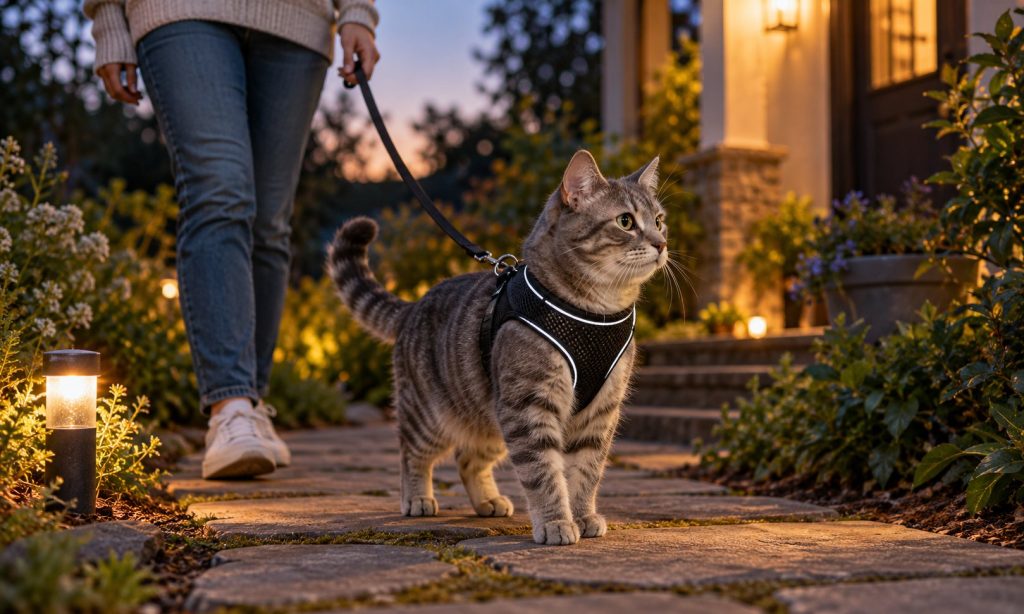
Even a well-fitted cat harness cannot guarantee that a determined cat will never slip out. Cats can back up, twist, or flatten themselves when frightened, so fit, construction, practice, and supervision all matter. When choosing an escape proof cat harness, look for adjustable coverage around the chest and torso, secure fasteners, smooth edges, and a design that fits your cat’s body shape. Measure rather than relying on breed or weight alone. This guide explains how to assess fit, test the closures, and build comfort gradually. It also covers when to stop an outing and why a harness should never replace a secure carrier during travel. Keep the first fitting in a closed, quiet room, and stop if your cat shows fear or tries repeatedly to escape.
Measure and inspect the fit
Use the maker’s size chart and measure the neck and chest at the specified points. The harness should sit snugly without restricting breathing, shoulder movement, or normal posture. Check for gaps near the shoulders and chest that could let the cat back out. Long fur, broad chests, and narrow heads can affect fit, so try the harness indoors before attaching a leash.
For additional size and coverage considerations, see the guide to harness fit for larger cats.
Check the construction and leash attachment
Look for adjustable straps or panels that stay in place, smooth seams, secure buckles, and a leash ring attached to a load-bearing area. Inspect stitching and hardware regularly. A breakaway collar is not a substitute for a harness. Never lift or suspend a cat by the harness or leash.
Our guide to cat harnesses for walking provides a broader comparison of fit and leash attachment points.
Introduce it gradually
Let the cat sniff the harness and pair it with treats or play. Start with brief contact, then fasten it for a few seconds while the cat remains indoors. Increase time only while the cat stays relaxed. Attach a lightweight leash indoors after the fit is secure, and supervise closely. The Feline Veterinary Medical Association recommends acclimation and minimizing distress during transport. Our guide to choosing a reflective cat harness covers related fit and safety points.
After the harness is accepted indoors, the guide to cat leash safety and outdoor training covers the next step for cats that tolerate controlled exploration.
Check the harness through normal movement
After fastening the harness, let your cat walk, sit, stretch, turn, and back up in a closed room. Observe whether straps migrate toward the throat or shoulders, whether the chest panel shifts, and whether the leash ring stays centered. A quick tug on the harness is not a reliable test and can frighten or injure the cat. Use the manufacturer’s fitting steps and adjust gradually.
Inspect buckles and stitching before each session. Replace a damaged harness rather than relying on a knot or improvised repair. Attach a leash only to the designated ring and keep it slack indoors. If your cat freezes, rolls, or struggles, remove the harness calmly and revisit the introduction later.
Use a repeatable escape-risk check
After adjusting the harness according to its instructions, observe the cat in a closed room. Let the cat walk, sit, stretch, turn, and back up while you watch whether the chest or neck opening shifts. Check for gaps that widen during movement, straps that slide toward the throat, or a buckle that rests under pressure. Do not pull hard on the leash or lift the cat to test security; sudden force can cause fear or injury and does not reproduce every escape movement.
Test the closures each time before use. Fasten every buckle fully, inspect stitching and adjustment sliders, and replace damaged parts instead of tying or taping them. A harness that fit last month may fit differently after weight change, coat change, or adjustment. Recheck fit periodically and after washing. Keep the leash attached only to the intended ring and supervise the cat continuously, since a secure fit does not remove the risks of snagging or entanglement.
If the cat backs out or repeatedly tries to escape, end the session in a secure indoor space. Review the measurements and the harness design; some body shapes need a different cut or more torso coverage. Do not take the cat outdoors until it remains calm and the harness stays in position through normal supervised movement. An “escape proof” label is not a guarantee, so combine a suitable fit with gradual training and a safe carrier for transport.
Frequently Asked Questions
Is any harness truly escape proof?
No harness can guarantee that a cat will not escape. Careful fit, secure closures, training, and supervision reduce risk.
How tight should the harness be?
Follow the maker’s directions. It should stay in place without restricting breathing or movement, and you should inspect for gaps and pressure points.
Can my cat wear a harness unsupervised?
No. A harness can catch on objects or cause entanglement. Supervise use and remove it after practice.
Should I attach a leash right away?
No. Let your cat become comfortable with the harness first. Introduce a lightweight leash gradually in a safe indoor area.
What if my cat backs out of the harness?
Stop the session, check the fit, and try a different adjustment or style. Do not continue outdoors until the harness stays securely positioned during supervised practice.
Final Words
Choose a harness by fit, adjustment range, closure security, and your cat’s comfort. Practice indoors, inspect the harness often, and supervise every use. For a related escape proof cat harness fit guide, review the points on adjustment and routine checks.









