
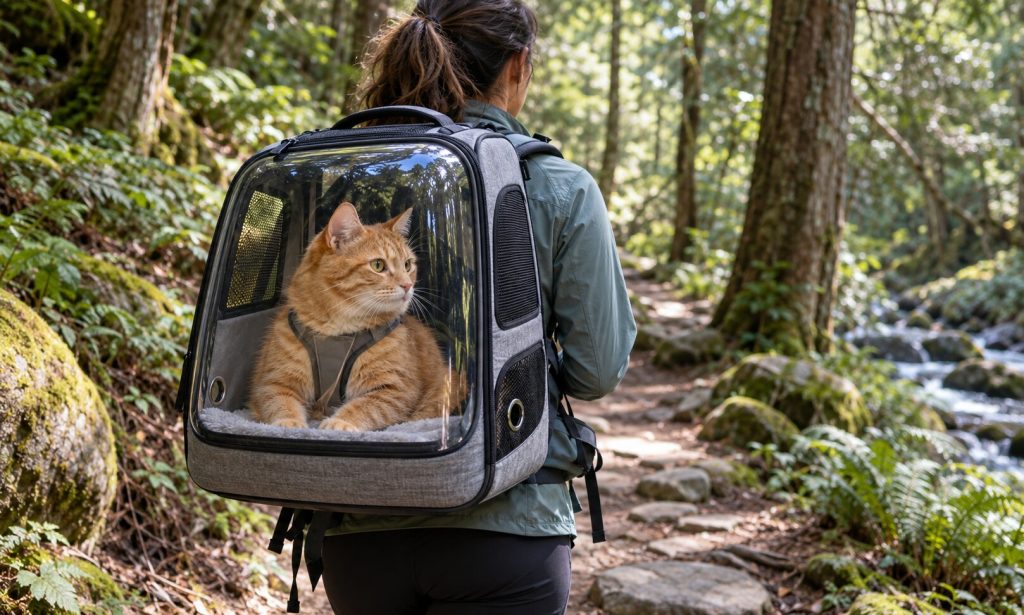
A cat backpack can help you carry a cat through places where walking on a leash is not practical, but it is not right for every cat or trail. The pack must support the cat’s body, provide airflow, and stay secure while you move. Before choosing a cat backpack for hiking, consider your cat’s size, comfort with confinement, the length and difficulty of the route, weather, and your own ability to carry the load. This guide covers fit, ventilation, stability, visibility, breaks, and signs that your cat needs to return home. Practice at home before attempting a trail, and never treat a backpack as a substitute for checking local access rules. If you need a separate overview, see our guide to cat backpack for hiking.
Check whether a backpack fits the cat and the hiker
Compare the interior floor, headroom, and stated weight limit with your cat’s size. The cat needs room to change position, while the pack must remain balanced on your back. Adjustable shoulder straps, a supportive waist belt, a padded back panel, and a stable base can help distribute weight. Try the loaded pack indoors before using it on uneven ground.
For cats that need a roomier carrying setup, compare our guide to backpacks for large cats, especially its fit and support considerations.
Prioritize airflow and secure openings
Look for ventilation that stays unobstructed when the backpack is worn. Mesh should be durable, and zippers or clips should not open when pressed from inside. Check whether the cat can scratch or chew exposed material. A tether may reduce the chance of a sudden exit, but attach it only as directed and never leave the cat suspended by it.
Plan around weather and trail demands
Direct sun, heat, cold, rain, steep grades, and crowd noise can make a hike uncomfortable or unsafe. Choose a short, quiet route with shade and an easy turnaround. Bring water and take breaks in a calm place. Watch for panting, distress, attempts to escape, or unusual stillness. Return home if your cat seems uncomfortable. Check park rules because some trails do not allow pets or carriers.
Some cats prefer a secure carrier and quiet indoor enrichment over outdoor trips. For cats that enjoy controlled exploration, our guide to cat leash use outdoors offers related safety considerations.
Practice before choosing a longer hike
Let your cat explore the backpack while it rests on the floor. Reward voluntary entry and begin with the pack stationary, then lift it briefly, and later take a few steps indoors. Check whether the cat can settle, change position, and breathe comfortably through the ventilation panels. Stop if the cat claws frantically, pants, or repeatedly tries to escape.
Before the first trail outing, review trail rules and identify a short route with shade, quiet areas, and a quick way back to the car. Avoid crowds, dogs, steep exposure, and extreme temperatures. Bring water and a secure backup carrier if your cat may need to leave the pack. Do not open the backpack outdoors unless you are in a fully enclosed, controlled space.
Use a staged fit and trail-readiness check
A hiking backpack should be evaluated with the cat inside and the pack on the person who will carry it. First check the empty pack for seams, zipper ends, mesh attachment, frame stability, and any gap around the openings. Then let the cat explore it at home before closing the panels. The cat should be able to reposition without being folded into a tight space, and the carrier should remain balanced when the wearer stands and walks.
Check ventilation while the pack is actually worn. Straps or the wearer’s back can cover airflow panels that looked open on a table. Adjust shoulder straps and any chest or waist belt so the pack does not bounce, tip, or press the carrier against the cat. Keep the cat’s weight within the maker’s limit and consider the combined load of water, supplies, and the pack itself. If the carrier becomes unstable when loaded, shorten the plan or choose another design.
Practice in short stages: open pack at home, brief closed periods, a few steps indoors, and then a quiet outdoor test near home. Stop if the cat pants, vocalizes frantically, tries to escape, or becomes unusually still. Before a real hike, confirm pet rules, weather, shade, and a quick route back. A pack is not a substitute for a secure fallback plan, and the cat should never be left unattended in it.
Frequently Asked Questions
Can every cat hike in a backpack?
No. Temperament, health, age, and comfort with confinement vary. Start with gradual indoor practice and ask your veterinarian about health concerns.
How long can a cat stay in a backpack?
There is no universal duration. Plan around your cat’s comfort, ventilation, weather, and opportunities to rest and drink.
Should a backpack have a tether?
A tether may help prevent an escape when used correctly, but it must not restrict breathing or hold the cat’s weight.
Can I take my cat on a hot day?
Heat can raise risk inside an enclosed pack. Avoid hot conditions and follow veterinary advice about temperature limits.
What if my cat hides in the backpack?
Do not force a hike. Let the cat settle at home and build confidence gradually; stop if the cat shows distress.
Final Words
Choose a backpack with enough space, reliable ventilation, secure closures, and support for both cat and wearer. Practice before the trail, keep outings short, and turn back at early signs of distress. Hiking should remain optional and comfortable for the cat. For a related overview of cat backpack for hiking, see the separate guide and verify details for your situation.









