
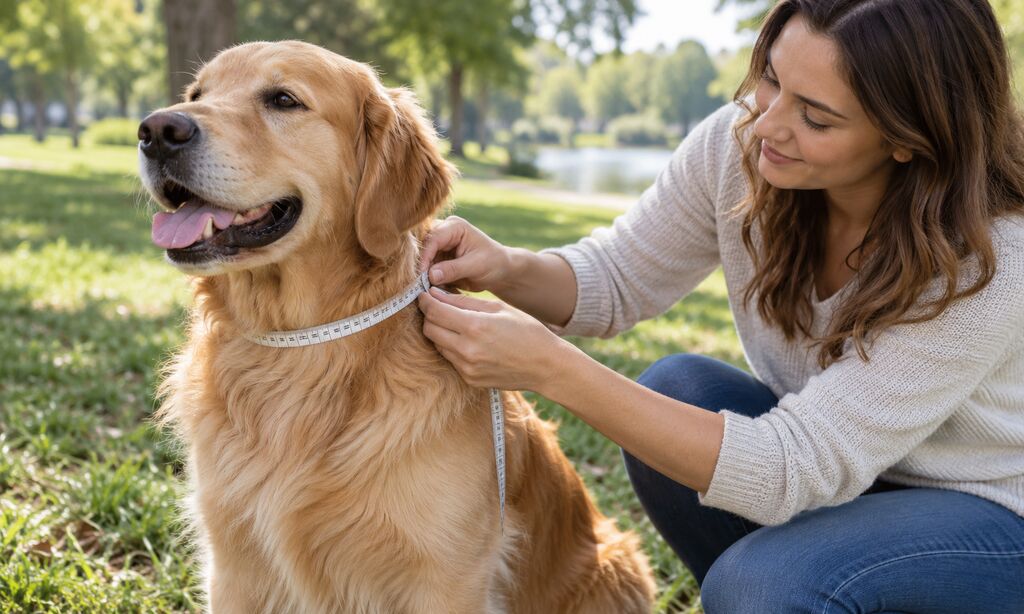
Sizing a bark collar for a large dog starts with a tape measure, but the number on the package is only one part of a safe fit. A thick neck, loose skin, a heavy coat, and the position of the sensor can all affect how the collar sits. Before choosing a device, ask what is causing the barking and whether a collar is appropriate at all. Barking can signal alarm, fear, frustration, discomfort, or a need for attention. A collar may interrupt a sound without solving its cause. If you are comparing a bark collar for a large dog, use fit and welfare as the first checks, and talk with your veterinarian or a qualified reward-based trainer when barking is persistent or linked to distress.
Measure the dog’s neck accurately
Use a flexible cloth tape rather than estimating from breed, weight, or a “large” label. Ask the dog to stand or sit calmly with the head in a natural position. Wrap the tape around the part of the neck where the manufacturer says the collar should rest. For many bark collars, that position is high on the neck, but the device’s instructions control because sensor placement differs. Keep the tape flat against the coat. It should be snug enough to stay in place without compressing the skin or fur.
Record the measurement in inches and centimeters, then check it again. If the coat is long or dense, part the fur so you are measuring the neck rather than a loose ring of hair. Do not pull the tape tightly to make the number smaller. If the dog moves, becomes uncomfortable, or guards the neck, stop and retry later or ask a groomer or veterinary team for help handling the measurement.
Use the manufacturer’s size chart, not weight alone
Compare the measured neck range with the exact model’s sizing chart. A large dog can have a narrow neck, while another dog of similar weight may have a broad, muscular neck. The collar must fit within its adjustment range without the strap sitting at its shortest or longest extreme. Check the chart for minimum neck circumference, strap width, device dimensions, and any coat-length limitations. If the dog’s measurement falls at a boundary, contact the maker for its fit guidance instead of guessing or choosing the larger size automatically.
Look at the full device, not only the strap. A bulky receiver can rotate under its own weight, shift away from the sensor’s intended position, or press unevenly against the neck. Confirm the device can sit where its instructions require while the strap remains secure. Avoid cutting or modifying a strap until you have confirmed the return or adjustment policy and the manufacturer’s directions.
Check fit while the dog is standing and moving
With the device switched off, place it as directed and fasten it without forcing the strap tight. The contact or sensor area should touch the intended area consistently, but the strap must not restrict breathing, swallowing, or normal head movement. General flat-collar rules, such as a two-finger check, are not a substitute for the bark-collar maker’s specific fit instructions. Electronic and spray designs vary, so follow the model’s instructions for spacing and positioning.
Watch the dog walk, turn the head, lower the nose, and pant. The collar should not slide around the neck, catch on the jaw, rub the throat, or interfere with tags and other equipment. Recheck the skin after a brief supervised fitting. Redness, hair breakage, pressure marks, repeated scratching, or attempts to remove the collar are reasons to take it off and reassess. Do not leave a bark-control device on continuously or unsupervised unless its directions and your veterinarian specifically support the use. Check the skin regularly and remove the device for bathing, sleep, and other situations required by its instructions.
Consider coat, neck shape, and growth
A dense double coat may prevent contact sensors from sitting as intended. Trimming a patch of fur is not a routine fix unless the manufacturer and veterinarian advise it. A loose neck fold can make a device shift even when the circumference seems correct. Dogs with very short necks, skin disease, neck pain, a history of airway trouble, or an injury need individual veterinary guidance before wearing pressure or contact equipment.
Recheck measurements if a dog is still growing, gains or loses weight, changes coat length, or develops swelling. Do not rely on the old setting after a grooming appointment or seasonal coat change. A collar that used to fit may now be too tight, too loose, or poorly positioned.
Decide whether a bark collar is appropriate
First identify when and why the barking happens. Keep a short log of the time, location, trigger, duration, and what happens immediately before and after. A dog barking at unfamiliar sounds may need distance and gradual positive exposure. A dog barking when left alone may need assessment for separation-related distress; punishment can worsen fear. Pain, cognitive changes in older dogs, or another medical issue can also change vocal behavior. Seek veterinary advice if barking begins suddenly, intensifies, occurs with other behavior changes, or accompanies signs of pain.
The Humane Society of the United States notes that bark collars do not address the underlying reason for barking, even if they reduce the behavior. Start by reducing the trigger, meeting exercise and enrichment needs, and rewarding a quieter alternative. Avoid yelling or startling the dog, which can add stress or sound like participation in the barking. If you use any training device, seek guidance from a credentialed professional who uses reward-based methods and can explain risks and alternatives.
A practical fitting checklist
- Measure the neck at the manufacturer’s specified position with a soft tape.
- Match the measurement to the exact model’s chart and contact the maker if it falls on a boundary.
- Confirm the device rests in the required position without restricting breathing, swallowing, or movement.
- Observe a short, supervised fit check and inspect the skin afterward.
- Remove the collar if it slips, rubs, causes distress, or leaves a mark.
- Address the barking trigger and involve a veterinarian or qualified trainer when needed.
Frequently Asked Questions
Should I size a bark collar by my dog’s weight?
No. Measure neck circumference and follow the exact model’s chart. Weight and breed do not predict neck shape reliably.
How tight should a bark collar be?
Use the manufacturer’s fit directions. The collar should stay in its specified position without limiting breathing, swallowing, or comfortable movement.
Can a bark collar fit over a thick coat?
Possibly, but dense fur can affect contact or sensor placement. Check model guidance and ask your veterinarian before trimming fur or changing the fit.
Can my dog wear a bark collar all day?
Do not assume continuous wear is safe. Follow the device directions, supervise use, inspect the skin, and remove it for periods specified by the maker or veterinarian.
What if barking continues even when the collar fits?
A correct fit does not resolve the reason for barking. Track triggers and ask a veterinarian or reward-based trainer to help build a behavior plan.
Final Words
For a bark collar for a large dog, measure the neck, use the model-specific chart, and check movement and skin under supervision. A fit that looks secure on a chart can still be uncomfortable on an individual dog. Treat barking as information: identify the trigger and choose a humane plan that addresses it. If the dog shows distress or a sudden behavior change, take the device off and seek professional advice.









