
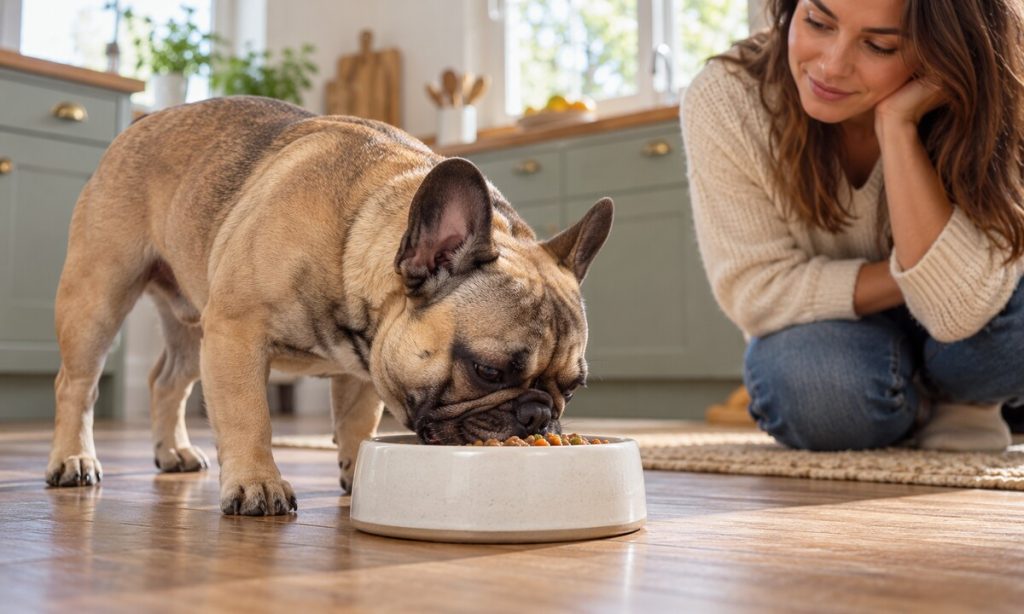
Changing what a French Bulldog eats can take more than filling a new bowl. A sudden switch may upset digestion, and a dog with food sensitivities or a medical diet may need an individualized plan. Start by checking why you want to change the food and whether your veterinarian recommends a particular formula. A gradual transition gives you a chance to notice appetite, stool, skin, and energy changes while keeping meals predictable. If you are still deciding what to feed, our guide to dog food for Frenchies discusses nutrition considerations; this article focuses on making a change carefully after you have chosen an appropriate diet. Keeping the rest of the routine steady makes it easier to tell whether any change is linked to the new food.
Before you begin the transition
Confirm that the new food is appropriate for your dog’s life stage and health needs. Check the label’s nutritional adequacy statement and follow your veterinarian’s directions if your Frenchie has a diagnosed condition, food allergy plan, or prescription diet. Breed alone does not determine one perfect food. Age, body condition, activity, reproductive status, and health history all matter. If the change is because of persistent itching, recurring ear problems, vomiting, diarrhea, or weight change, ask your veterinarian before using food as a diagnostic test. A formal elimination diet requires careful ingredient control and a defined plan.
Read the feeding guide on the new food, but treat it as a starting point rather than a precise prescription. Calorie density differs among foods, so the same cup measure may provide different calories. Ask your veterinarian how much to feed if your dog is overweight, underweight, growing, or managing a health problem. Use a measuring cup or kitchen scale consistently, and count treats and toppers as part of the daily intake.
If possible, buy enough of the current food to complete the changeover. Keep both foods in their original labeled packaging or clearly labeled airtight containers. Store them in a cool, dry place and follow the package instructions after opening. Do not blend a new food into an old bag, where oils and crumbs from the older food can remain and make freshness harder to judge.
Use a gradual schedule
Many dogs tolerate a food change better when it is spread over about a week or longer. A common starting schedule is 75% old food and 25% new food for a few days, then half and half, then 25% old and 75% new, followed by the new diet alone. The exact pace can vary. Some dogs need a slower transition, especially if they have a history of digestive sensitivity. Cornell’s canine health guidance recommends extending a transition over one to two weeks when a fast switch causes diarrhea.
Measure each portion rather than estimating by eye. If you feed twice daily, split the day’s total amount evenly unless your veterinarian has recommended another schedule. Stir the measured foods together so your Frenchie cannot eat only the familiar pieces. Avoid adding several new treats, table foods, supplements, or toppers during the same week. Changing one variable at a time makes it easier to understand what your dog tolerates.
If your dog refuses the mixed meal, do not force-feed or withhold food for a long period to make the dog give in. Offer a calm meal routine and ask your veterinarian for advice if refusal continues, particularly for a puppy, senior dog, or dog with a medical condition. A short pause at the current transition ratio may help an otherwise well dog adjust, but a clinician should guide the plan if symptoms or appetite changes appear.
Monitor your Frenchie during the change
Keep a simple daily note of the amount offered and eaten, stool consistency and frequency, vomiting, gas, itching, and energy. A one-day log can help distinguish a mild, brief adjustment from a pattern that is worsening. French Bulldogs can have individual sensitivities, but breed membership alone does not diagnose a food allergy. Do not assume every loose stool means the new food is unsuitable; stress, treats, parasites, infection, and other health issues can also affect digestion.
If mild digestive changes occur and your dog otherwise seems comfortable, slow the transition by returning to the last ratio that was tolerated. Do not keep advancing the amount of new food while signs are getting worse. Contact your veterinarian for advice if vomiting or diarrhea persists, recurs, or is accompanied by lethargy, poor appetite, pain, blood, or dehydration concerns. Seek prompt veterinary care for severe or rapidly worsening signs.
Watch weight and body condition over the following weeks. Use the same scale when possible and ask your veterinarian to assess body condition during routine visits. If weight shifts, the daily portion may need adjustment. Avoid sharply cutting food without guidance, especially for puppies or dogs with illness. Frenchies can be enthusiastic eaters, so portioning meals and limiting unmeasured extras may help maintain a healthy body condition.
Common transition mistakes to avoid
- Switching the whole meal in one day when a gradual change is possible.
- Changing food, treats, supplements, and feeding times all at once.
- Using the same cup amount even though the new food has different calories per cup.
- Assuming a breed-specific label guarantees the food is right for your individual dog.
- Continuing the transition despite worsening vomiting, diarrhea, or appetite changes.
- Starting a food allergy test without veterinary guidance or ingredient control.
When a faster change may be necessary
Sometimes a veterinarian asks an owner to change food promptly because of a medical need, a recall, a supply interruption, or another urgent reason. Follow that clinician’s plan rather than applying a general schedule. Ask whether to transition, how to handle a dog that refuses the new food, and which symptoms merit a call. If a specific therapeutic diet is involved, check before mixing it with another food because that can alter the intended nutrition plan.
If you are changing because the current food is unavailable, ask the veterinary team to help find a nutritionally appropriate alternative. Keep the package or a photo of its nutritional adequacy statement and calorie information. This helps the clinician compare the old and new diets without relying on marketing terms such as “premium,” “natural,” or “breed formula.”
Frequently Asked Questions
How long should I take to change my Frenchie’s food?
A gradual change over about seven days is a common starting point. Some dogs need one to two weeks or a veterinarian-directed schedule.
Can I mix old and new dog food together?
Yes, during a planned transition, measure both foods and mix them in the proportions for that stage. Keep them separate in storage containers.
What if my French Bulldog gets diarrhea during a food change?
Pause or slow the transition and contact your veterinarian if diarrhea persists, worsens, or appears with vomiting, blood, low energy, or poor appetite.
Should Frenchies eat a special breed-specific food?
Not necessarily. Choose a complete and balanced diet suited to the dog’s life stage and health. Ask your veterinarian about individual needs.
Can I add toppers to help my Frenchie accept the new food?
Ask your veterinarian first, especially during a medical diet or allergy evaluation. Extra ingredients can change calories and make tolerance harder to assess.
Final Words
Introduce a new diet with measured portions, a steady schedule, and close observation. Slow down if mild changes appear, and get veterinary help for persistent or severe symptoms. For background on choosing food for a French Bulldog, see our related guide, then use your veterinarian’s advice to match the choice to your dog’s needs.









