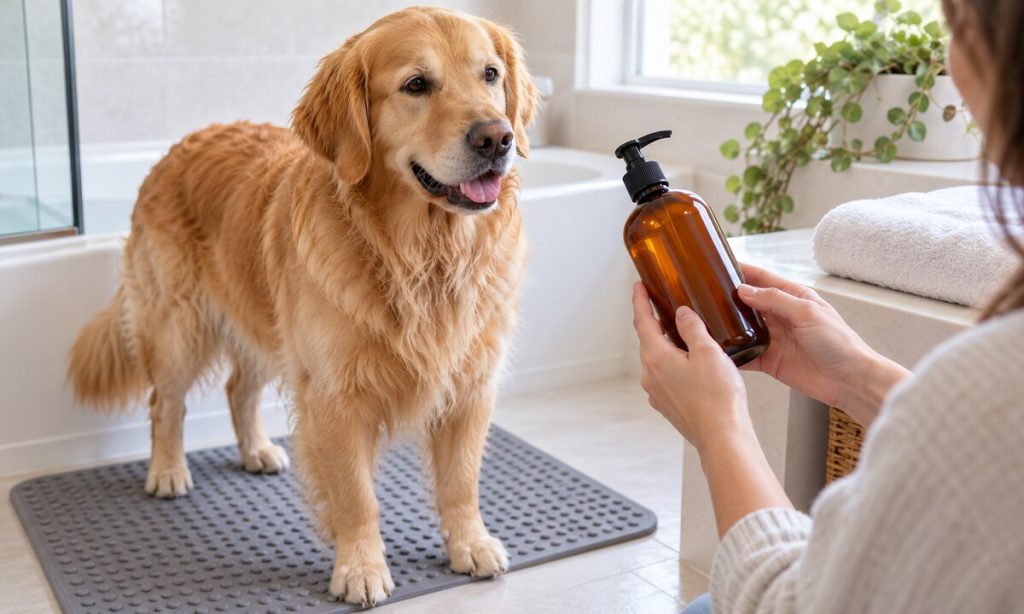
Bath time can remove dirt, but an old or poorly stored bottle may not perform as expected. If you’re wondering when to replace dog shampoo for odor, inspect the label and bottle before you wet your dog. If you use a dog shampoo for odor, it is useful to know how to judge the product’s condition before you wet your dog. There is no single shelf-life rule that applies to every formula: the label, packaging, ingredients, and storage conditions matter. A printed expiration or use-by date and any after-opening symbol should guide your decision. Changes in smell, texture, color, packaging, or cleanliness are additional reasons to stop and check with the manufacturer. This guide explains what to inspect, how to store shampoo, and when a dog’s persistent odor calls for veterinary advice instead of another bath.
Start with the label and the manufacturer’s directions
Look for an expiration date, use-by date, lot code, storage instruction, or period-after-opening symbol. A small open-container icon may show a number of months, but not all pet products use the same format. Follow the directions printed on your bottle because formulas and packaging differ. If the bottle has no clear date, use the lot code to ask the manufacturer when it was made and whether it remains within its intended shelf life.
Do not assume every shampoo lasts a fixed number of months after opening. Shelf life and after-opening guidance vary by formula and package, so follow the label for the specific bottle. When a shampoo was prescribed or recommended for a skin condition, check with your veterinarian before substituting it or using a bottle whose date is unclear. The Virginia Tech Veterinary Teaching Hospital also advises following label directions carefully, especially for medicated shampoo.
Write the date you opened the bottle on its label. Keep the outer box or a photo of the product information if the bottle’s lot code is printed there. If the label is unreadable, the bottle is unlabeled, or you cannot identify how long it has been stored, contact the maker rather than guessing.
Check for changes that make a bottle a poor choice
Before each bath, look at the product in good light. Stop using it if you notice a sour, rancid, unusually sharp, or otherwise different odor; a new color; clumps; graininess; unexpected thinning or thickening; persistent separation that does not resolve as the label says; or a swollen, cracked, sticky, or leaking container. These observations do not diagnose contamination, but they are practical warning signs that the product may have changed.
Also consider how the bottle was handled. A cap left open, a nozzle submerged in bathwater, visible dirt around the opening, or water poured into the container raises uncertainty about cleanliness and stability. Do not dilute shampoo in the original bottle unless its directions specifically allow it. Adding water can change the concentration and may introduce contamination. If a groomer uses a diluted working solution, it should be prepared and handled according to the product’s label and the groomer’s hygiene procedures.
A familiar scent alone does not prove the product is still suitable. Likewise, a bottle that looks normal is not a reason to ignore a printed expiration date. Use the manufacturer’s date and storage guidance first, and discard the shampoo if you cannot confirm its condition.
Replace shampoo after poor storage or package damage
Heat, direct sunlight, freezing, and repeated temperature swings can affect a product. Store the bottle closed, upright, and in a cool, dry place away from windows, radiators, cars, and damp shower ledges. Keep it out of reach of pets and children. Avoid leaving shampoo in a hot vehicle or outdoors where it may freeze or overheat. If the label gives a specific storage range, follow it.
Replace or ask the manufacturer about a bottle that has been frozen, overheated, left open for an unknown period, or stored in a wet area where the cap stayed contaminated. A damaged seal or cracked bottle can let water or debris enter and may mean the product is no longer clean. Do not transfer shampoo into an unlabeled container: the original package carries the product name, directions, warnings, and lot details.
When buying a large bottle, consider how often you bathe your dog and whether you can use it within the manufacturer’s stated period. A smaller container may reduce waste if bathing is occasional. Never keep a product indefinitely simply because some remains at the bottom.
Know when odor needs more than shampoo
Odor can come from a muddy coat, but a persistent or returning smell may have another cause. Ears, skin folds, paws, dental disease, anal sacs, or a skin problem can all contribute. Repeated bathing may mask a smell temporarily while irritating skin or delaying an examination. If odor persists after a normal bath, returns quickly, or is accompanied by itching, redness, greasy skin, hair loss, sores, discharge, head shaking, or discomfort, contact your veterinarian.
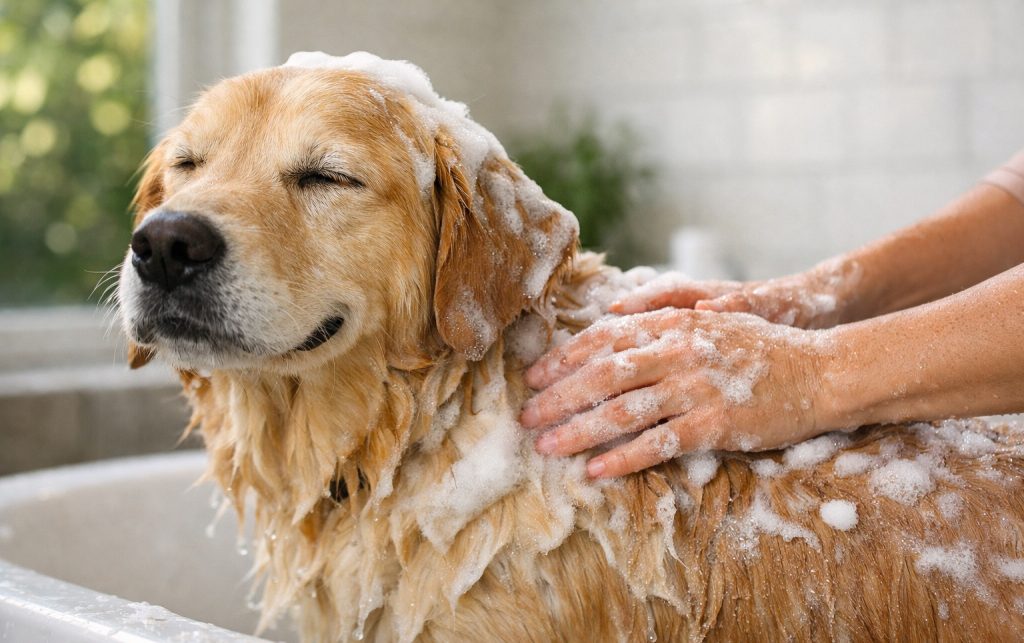
Use a medicated shampoo only as directed by a veterinarian or the product label. Do not increase bathing frequency or mix products to intensify fragrance. If your dog has sensitive skin, ask a veterinary professional which bathing routine is appropriate. During a bath, keep shampoo away from eyes and inside the ears, rinse thoroughly, and stop if your dog shows a reaction. Virginia Tech’s safe bathing guidance also emphasizes following instructions for prescribed medicated products.
A simple bottle-check routine
Use the same short check each time: confirm that the product is meant for dogs and appropriate for the intended use; read the date and storage directions; inspect the bottle and cap; note any change in smell, color, or texture; and check that the product has not been contaminated or diluted. If anything is uncertain, set it aside while you ask the manufacturer or veterinarian. Do not use a questionable product just because bath time is already underway.
After use, close the cap firmly, wipe the outside clean, and return the bottle to a dry storage spot. Record the opening date on a piece of removable label tape if the bottle’s surface is difficult to write on. When you replace a product, dispose of the old one according to its label and local household-waste guidance; do not pour concentrated shampoo into a storm drain.
Frequently Asked Questions
How long does dog shampoo last after opening?
It depends on the specific formula and manufacturer. Follow the package’s period-after-opening instruction or ask the maker using the product and lot code. Avoid applying a generic timeline to every brand.
Can I use dog shampoo if the expiration date has passed?
Do not use it past the stated date. The product may not perform as intended, and appearance alone cannot confirm its quality. Replace it or ask the manufacturer for product-specific advice.
What if my bottle has no expiration date?
Check the package for a lot code or opening symbol and contact the manufacturer. If you cannot identify the product’s age or storage history, choose a fresh, clearly labeled bottle.
Is it safe to use shampoo that has separated?
Only follow the label if it specifically says separation is expected and explains how to mix the product. If the texture has changed unexpectedly or does not return to normal, stop and contact the manufacturer.
Should I replace shampoo when my dog still smells after a bath?
Replace it if it is expired, damaged, contaminated, or changed. If odor persists despite a normal bath with an in-date product, ask your veterinarian about possible causes rather than bathing more often.
Final Words
Replace a bottle when its label says it is out of date, its condition has changed, its seal is compromised, or its storage history makes its safety uncertain. Keep a dog shampoo for odor in a cool, dry place, record when it was opened, and follow brand-specific directions instead of relying on a universal shelf-life estimate. If a smell persists or comes with skin or ear symptoms, consult your veterinarian; fragrance and frequent bathing are not substitutes for finding the cause.