
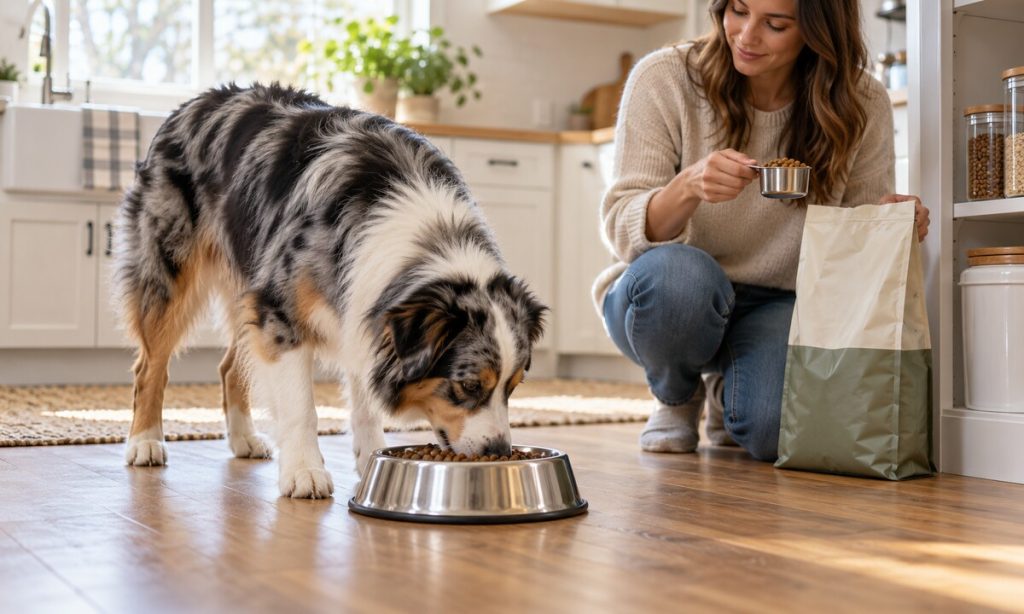
Using and caring for food for an Australian Shepherd involves more than scooping a bowl. Your dog’s age, body condition, activity, health, and the food’s calorie density all affect portions and routine. Herding-breed energy varies widely: an Aussie that works or trains daily may have different needs from one that enjoys shorter neighborhood walks. Begin with the package’s complete-and-balanced statement and feeding directions, then adjust with your veterinarian based on your individual dog. If you are still deciding among dog food for an Australian Shepherd, see the companion overview; this guide covers everyday feeding, transition, storage, and monitoring once you have selected a suitable diet. Consistent portions, clean bowls, and careful storage are practical habits that support a balanced feeding routine.
Set up a consistent feeding routine
Measure each meal rather than pouring freely into the bowl. The feeding chart is a starting estimate, not an exact prescription for every dog. Check the calorie statement because two foods can provide different energy in the same measuring cup. If your veterinarian has set a daily calorie or portion target, use that guidance. Keep a note of the amount fed, treats, training rewards, chews, and toppers so you can see the full daily picture.
Most adult dogs do well with a predictable schedule, but the right number of meals depends on age, health, household routine, and veterinary advice. Puppies generally need more frequent meals than adults. Avoid intense exercise immediately around meals if your veterinarian has recommended a particular routine. Provide fresh water and wash food and water bowls regularly with soap and water; rinse and dry them before refilling.
When more than one person feeds the dog, agree on a schedule and record each meal. A marked scoop or a written note on the food container can prevent accidental double-feeding. Store treats separately from the daily food portion so rewards do not disappear from your calorie estimate. If your Aussie trains frequently, reserve a measured portion of its regular food for rewards when practical.
Match portions to body condition and activity
A dog’s appetite is not a reliable calorie calculator. Some Aussies remain ready to eat after a full meal, while others leave food when distracted. Monitor weight over time and assess body condition: you should generally be able to feel the ribs under a light covering and see a waist from above. Ask your veterinarian to score body condition and set a goal if weight is rising or falling.
Activity changes can alter energy needs. A new training season, reduced exercise after an injury, hot weather, or aging may affect how much food is appropriate. Do not increase portions simply because the dog is active; measure first, then review weight and performance with a veterinary professional. If a working or sporting Aussie needs a specialized plan, ask a veterinarian with nutrition expertise for tailored guidance.
Treats can quietly add up during training. Set aside part of the daily ration for rewards or choose small treats and include them in the total. Avoid feeding table scraps as a routine shortcut; they can unbalance the diet and make appetite or digestive changes harder to interpret. If several family members feed the dog, use a shared checklist so meals are not accidentally doubled.
Introduce a new food gradually
When a change is not urgent, transition over several days or longer. Start with mostly the current food and a smaller portion of the new one, then gradually increase the new food as your dog tolerates it. A sensitive dog may need a slower change. Keep treats and supplements steady during the transition so you can identify what may be affecting appetite or stool.
Watch for appetite changes, loose stool, vomiting, or signs of discomfort. If symptoms persist, worsen, or appear with low energy or blood, contact your veterinarian rather than continuing to increase the new food. If the change is part of an allergy evaluation, prescription diet, or treatment plan, follow the veterinarian’s instructions closely; extras can interfere with the purpose of the plan.
Store food to protect freshness
Keep dry food in its original bag, sealed and placed inside a clean, airtight container if desired. The original package preserves the product name, lot code, expiration date, and manufacturer details, which are useful if you have a quality question or recall concern. Store food in a cool, dry place away from sunlight, moisture, pests, and household chemicals. Avoid pouring fresh kibble on top of old crumbs; empty, wash, dry, and refill the container between bags.
For canned or refrigerated food, follow the label’s storage and after-opening directions. Use clean utensils, cover opened portions, and refrigerate promptly when instructed. Discard food that has been left out beyond the product’s recommended time, has an unusual appearance or odor, or may have been contaminated. Do not use a damaged or unsealed package without checking with the seller or manufacturer.
Write the opening date on the bag or container if you tend to lose track. Use food within the manufacturer’s recommended period after opening. If your dog eats slowly or the bag is very large, ask whether a smaller package would preserve freshness better. Wash hands after handling pet food and keep feeding supplies away from areas used for preparing human food.
The FDA recommends storing dry pet food in a cool, dry place, keeping it in its original bag with the top folded down, and using the whole bag inside a separate container if you need extra protection. That approach also leaves the lot and date information available. Wash and dry the container between bags rather than topping up a bin that still has old food in the bottom.
Handle food refusal thoughtfully
A single skipped meal in an otherwise well adult dog can have many explanations, including stress, schedule changes, or recent treats. Avoid repeatedly swapping foods or adding rich toppers each time the dog hesitates. That can create a confusing routine and make it difficult to know what the dog will eat. Keep meals calm and predictable, and note whether appetite changes are brief or recurring.
Call your veterinarian if refusal lasts, appetite drops sharply, or it comes with vomiting, diarrhea, pain, unusual thirst, weight loss, or low energy. Puppies, seniors, and dogs with chronic conditions may need advice sooner. A food change should not be used to mask signs that need medical assessment.
Frequently Asked Questions
How much food should an Australian Shepherd eat?
Use the food’s directions as a starting point and adjust with your veterinarian based on calories, age, body condition, activity, and health.
Should an active Aussie get more food?
Possibly, but activity alone does not determine portions. Track weight and body condition, and ask a veterinarian to guide changes.
How should I store dry dog food?
Keep it sealed in a cool, dry place and retain the original bag for lot and date information. Clean and dry storage containers between bags.
Can I leave wet dog food out all day?
Follow the package’s after-opening and serving guidance. Refrigerate opened food when directed and discard food left out beyond the recommended period.
What if my Australian Shepherd stops eating its food?
Note how long the appetite change lasts and any other symptoms. Contact your veterinarian for persistent refusal or accompanying illness signs.
Final Words
A reliable feeding routine means measuring meals, including treats, monitoring body condition, and storing food as directed. Adjust portions as your dog’s activity or health changes, and involve a veterinarian when weight, digestion, or appetite shifts. For context on choosing food for an Australian Shepherd, use the companion guide alongside advice tailored to your dog.









