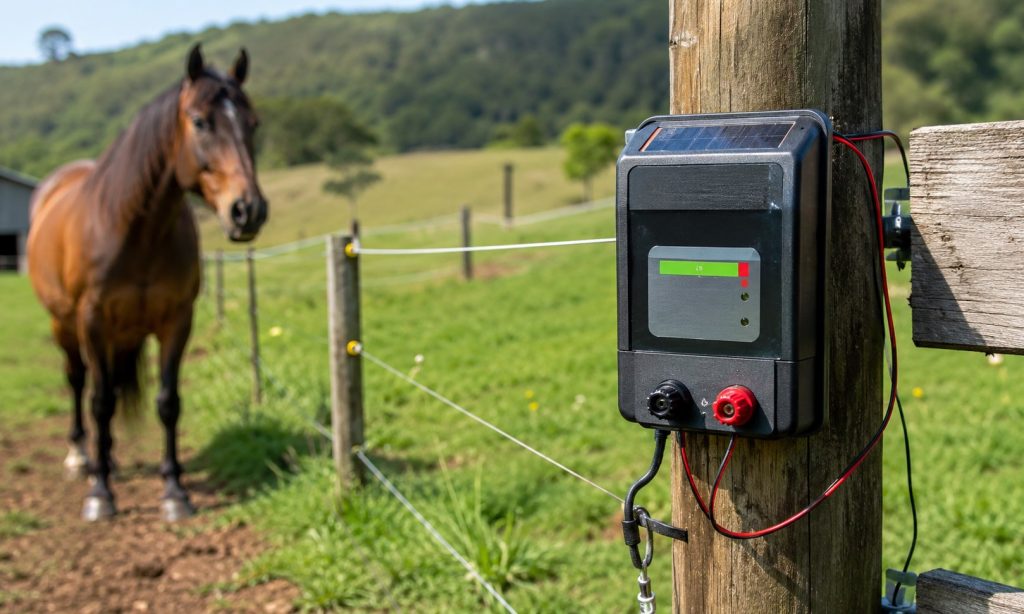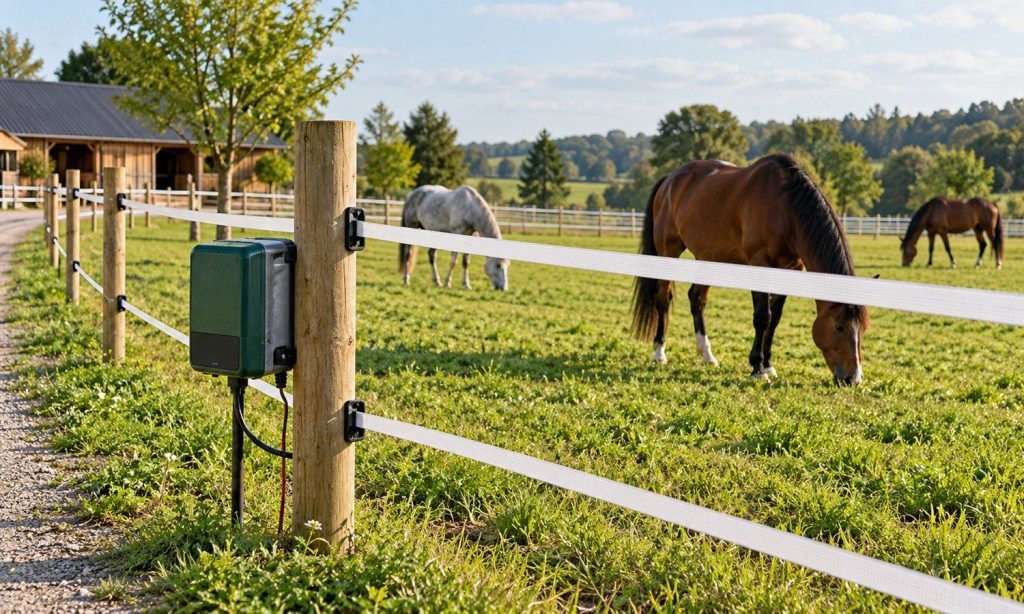
An electric fence charger, also called an energizer, sends controlled pulses through a compatible fence system to discourage horses from leaning or pushing through. Safe operation depends on matching the charger to the fence, installing it according to its manual, and keeping the fence visible and maintained. Before selecting an electric fence charger for horses, check the charger’s rating, the fence layout, vegetation, and the needs of the horses using the enclosure. A charger cannot make an unsafe fence safe, and electric fencing may not be appropriate as the only perimeter barrier in every setting. This guide covers setup, grounding, routine checks, and horse introduction. Use the manufacturer’s instructions and local electrical and fencing requirements for your exact equipment.
Choose a horse-appropriate fence system
Use a charger specifically designed for electric fencing and suitable for the fence length and conditions. Read the manual for the model’s output, power source, grounding requirements, and permitted wire types. Do not connect ordinary household current directly to a fence. Use only a purpose-built energizer and compatible components.
Horse fencing should be visible, maintained, and designed to reduce the chance of entanglement or impact. Wide tape or another visible conductor is often easier for horses to see than thin wire. Avoid barbed wire in horse enclosures. Where electric strands are used with a physical fence, place and secure them according to an equine fencing plan so horses cannot become trapped between the fence and energized conductor.
Consider the horse’s age, temperament, familiarity with electric fencing, and the setting. Penn State Extension notes that a young or inexperienced horse should be introduced to electric fencing in a controlled grazing system. Do not rely on the shock itself to contain a horse during an equipment failure; maintain an appropriate physical boundary and a backup plan.
Install the charger and grounding as directed
Mount the energizer in the location specified by its manufacturer, protected from weather if it is not designed for outdoor exposure. Keep it away from flammable materials, feed or hay storage, and places where horses can chew or strike it. Secure the unit and wiring so people, horses, and equipment will not snag or damage them. Use warning signs where required and where visitors may approach the fence.
Grounding is essential to the circuit. Install the ground rods or other grounding components in the number, spacing, and soil conditions specified in the charger manual. Poor grounding can make the fence ineffective and can lead to confusing readings. Keep grounding electrodes separated from utility grounds and buried services as required by the manufacturer and local code. If you are unsure how to install the system, use a qualified fencing or electrical professional.
Power the unit only with the source and wiring specified for that model. For mains-powered units, follow the manual for a protected, dry outlet and any required surge or lightning protection. For battery or solar units, use the recommended battery type, polarity, and charging arrangement. Never modify the charger, bypass a fuse, or splice wiring in a way the manufacturer does not approve.
Check the fence before putting horses on it
Before turnout, inspect posts, insulators, connectors, gates, and conductors for loose parts, broken strands, vegetation contact, or anything that could catch a mane, tail, halter, or leg. Keep grass, branches, and wet weeds from touching energized strands as directed; contact with vegetation can reduce performance. Look for sharp ends, sagging tape, and openings where a horse could become trapped.
Use a fence tester designed for electric fences to check voltage at several points, including the far end and near gates. Follow the tester instructions and the charger’s recommended operating range. Do not test by touching the wire. If readings are low or inconsistent, check for vegetation, damaged insulators, poor connections, grounding problems, or excessive fence length. Disconnect power before repairs, following the manual’s safety procedure.
Test the system regularly and after storms, mowing, fence work, or any report that a horse has crossed the enclosure. Keep a simple record of checks and repairs. A charger indicator light can show that the unit has power, but it does not necessarily confirm that the entire fence is operating correctly.
Introduce horses carefully
Before turning a horse into a new electric-fenced area, explain the boundary by allowing the horse to see the tape or conductor from a safe distance. Use a controlled setting with a secure backup fence and supervision, especially for a young or unfamiliar horse. Avoid presenting a narrow, poorly visible strand as the only boundary or placing it where a horse can run into it at speed.
Watch the horse’s behavior after introduction. If the horse panics, runs through the fence, becomes entangled, or repeatedly challenges it, remove the horse from the situation safely and reassess the fence design and containment plan. Do not assume that increasing the charger setting will solve a visibility or layout problem. Seek help from an equine fencing professional or Extension educator when the system is not containing horses reliably.
Maintenance and troubleshooting
Keep the charger dry and clean according to the manual. Inspect cables, terminals, ground connections, and the fence line for wear or damage. Replace cracked insulators and repair loose connections with approved materials. After lightning or a power surge, inspect the system before use. If the charger is hot, damaged, repeatedly tripping, or making unusual sounds, disconnect it as instructed and contact the manufacturer or a qualified technician.
For additional product-category context, see this overview of an electric fence charger for horses. The safest choice is one that matches the fence and is installed and maintained according to its actual manual, not simply the most powerful unit.
Frequently Asked Questions
Can I connect an electric fence directly to a wall outlet?
No. Use a purpose-built fence energizer and only the power arrangement specified in its manual. Never connect bare fence wire directly to household current.
How do I know whether the fence is working?
Use a compatible fence tester at several locations and compare readings with the charger’s instructions. Do not touch the wire to test it.
Is electric tape safer than wire for horses?
Wide tape is generally more visible than thin wire, but overall safety depends on the whole fence design, tension, placement, maintenance, and horse behavior. Follow equine fencing guidance.
What should I do if a horse goes through the fence?
Secure the horse in a safe area, check for injuries, and inspect the fence. Reassess visibility, layout, grounding, and the physical backup before returning the horse.
Can a charger indicator light prove the whole fence is working?
No. The light may show that the unit has power, but a fence tester is needed to check the fence line, including distant sections and gates.
Final Words
Safe electric fencing starts with a horse-appropriate visible barrier, a charger matched to the system, correct grounding, and regular testing with a fence tester. Follow the model-specific manual, keep the physical fence maintained, and introduce horses in a controlled setting. If you are comparing an electric fence charger for horses, check compatibility and setup requirements alongside product features. Repair problems with power disconnected as directed, and bring in a qualified professional when the charger, grounding, or containment behavior is uncertain.