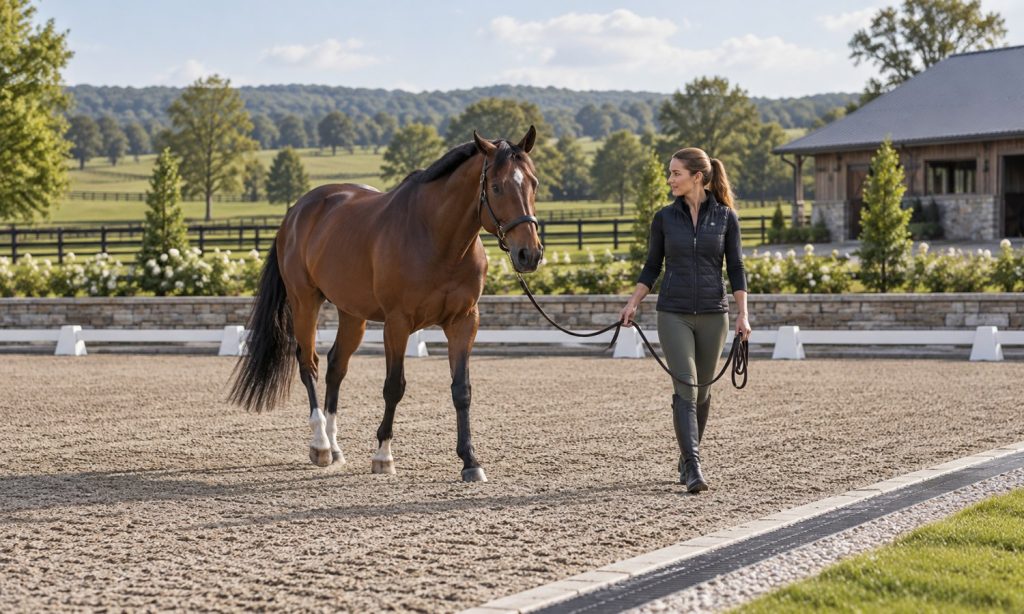
Outdoor arena footing can change with rain, sun, wind, traffic, and maintenance. A surface that felt supportive last week may become dusty, compacted, slippery, or uneven after weather and use. When evaluating footing for an outdoor horse arena, consider the arena’s base, drainage, material, depth, and how consistently it is maintained. There is no single surface recipe that fits every discipline, horse, climate, or budget. This guide explains how to check conditions before riding, recognize problems that call for a pause, and keep a surface more uniform through routine care. It does not prescribe a specific material or construction plan; major footing changes should be planned with qualified arena professionals.
What makes footing safer to use
A riding surface has layers. The loose top footing sits above a compacted base and sub-base, and the quality of the top layer depends on what lies below it. If the base is poorly drained, uneven, or exposed, adding more loose material may not solve the underlying issue. Penn State Extension notes that an arena surface is only as good as its supporting base and sub-base.
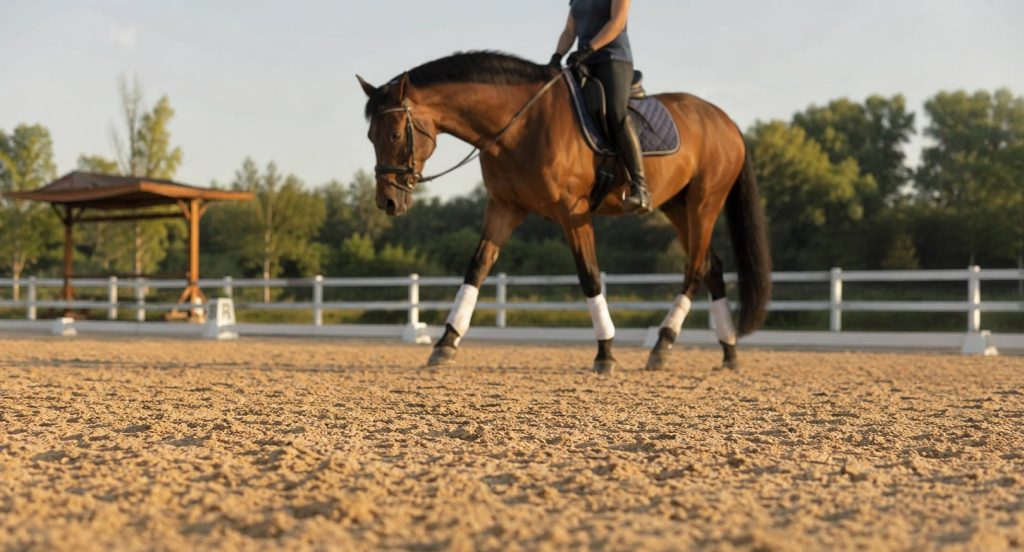
For riding, the surface should be reasonably even, stable, and appropriate to the activity. It should not be so deep or loose that the horse sinks or has to work excessively to move, nor so hard or compacted that the horse is traveling directly on the base. The desired feel differs by discipline and training plan, so ask a qualified trainer or arena specialist about your intended use.
Outdoor arenas must also handle rainfall and runoff. Water that ponds or drains slowly can create soft areas, ruts, or mud; poor drainage may also wash footing to the edge. Keep ditches and drainage paths clear and seek professional advice before changing grades or redirecting runoff, especially where local stormwater rules apply.
Inspect before each ride
Walk the arena before bringing a horse in. Look for standing water, muddy patches, hoof-deep holes, abrupt changes in depth, exposed base, rocks, branches, debris, and uneven ridges. Check the perimeter for footing piled against the fence, which can impede drainage and make the edge unpredictable. Pay special attention to gates, corners, mounting areas, and routes where horses enter and exit.
Notice how the surface responds underfoot. If it slides, shifts excessively, feels very hard, or gives way unevenly, postpone riding until you understand the cause. Do not assume that dragging will fix a saturated or structurally damaged surface. Keep horses out of areas with hidden holes or standing water that masks footing conditions.
Consider the weather and recent maintenance. Rain, freeze-thaw cycles, hot sun, and wind can alter moisture and firmness quickly. A dry top layer may create dust; heavy watering may leave slick or waterlogged zones. If conditions vary from one part of the arena to another, use a different space or adjust the session rather than asking the horse to work through unsafe footing.
Manage moisture and dust
Moisture affects traction, stability, dust, and how footing behaves. Penn State Extension recommends even moisture through the loose surface; a lightly wetted top skin may not control dust effectively, while flooding can create unstable conditions. The appropriate schedule depends on material, wind, temperature, sun exposure, and use. Check the surface rather than following a fixed watering interval.
Use a watering method that distributes water evenly and avoids pooling. Give water time to soak in before riding, following guidance for the surface and conditions. If dust remains a problem, identify whether the cause is dry footing, fine particles, or a material issue. Avoid adding salt, oils, fibers, or other amendments without confirming compatibility with the footing and drainage system.
Dust can affect both horse and rider comfort. If dust becomes persistent despite suitable moisture, limit use and seek advice from an arena professional. Water runoff should not carry sediment or additives into a waterway or neighboring property; follow local environmental requirements.
Redistribute compacted or uneven footing
Horse traffic tends to move loose footing away from high-use paths and compact other areas. The rail, corners, diagonals, jump approaches, and instructor positions may develop ruts or hard spots. Regular dragging can redistribute material and loosen compacted surface layers, but the implement and depth must suit the footing. Tines set too deep can disturb the base and create costly repairs.
Use the arena owner’s maintenance plan or ask a footing specialist to recommend a drag. Check that the equipment is in safe working order and that people and horses are clear before operating it. Dragging should not be attempted when the arena is saturated or when a machine might rut or damage the base. Inspect the result before riding, particularly where the implement turns or enters and exits.
Top up or amend footing only when you know what material is already present and why it has changed. Materials differ in particle size, angularity, dust, drainage, and how they interact with the base. An incompatible addition can create layers that shear or shift under hoof pressure. For an overview of material options, see our guide to footing for an outdoor horse arena, then consult a specialist before making structural changes.
Adjust use to conditions
Match the session to the surface. A horse returning from time off, a young horse, or a horse doing sharp turns or jumping may need especially consistent footing. Avoid hard stops, tight circles, or fast work where traction is unreliable. If the surface is questionable, choose a safer area or postpone the ride.
After storms or major maintenance, reassess the arena before normal work resumes. If the base is exposed, deep ruts have formed, drainage fails repeatedly, or the footing shifts in sheets, suspend use and seek professional help. A veterinarian should assess a horse that becomes lame or shows pain during or after work; do not assume the surface is the only possible cause.
Frequently Asked Questions
How often should an outdoor arena be dragged?
It depends on use, material, weather, and traffic patterns. Inspect regularly and use a drag that redistributes the footing without disturbing the base. Heavy-use arenas may need more frequent attention than lightly used private arenas.
Can I ride after watering the arena?
Wait until moisture has soaked in and the footing feels even and stable. The right wait depends on material and conditions; avoid riding on pooled, slick, or saturated areas.
What should I do if footing is dusty?
Check moisture throughout the loose layer and inspect for fine or degraded material. Water evenly if appropriate, and consult an arena specialist if dust persists rather than adding an unapproved amendment.
Is deep footing safer for horses?
Not necessarily. Excessively deep or loose footing can be tiring or unstable. Surface depth and firmness should suit the arena’s use and be assessed by a knowledgeable professional.
Can I add new sand or fiber to existing footing?
Do not add material without identifying the existing surface and confirming compatibility. An unsuitable layer can shift or interfere with drainage. Get professional advice for material changes.
Final Words
Inspect outdoor footing before riding, account for weather, and pause when the surface is uneven, saturated, dusty, slick, or exposing the base. Maintain drainage, moisture, and surface distribution with equipment suited to the arena, and get professional advice before changing materials or construction. If you are comparing footing for an outdoor horse arena, consider how the material will behave with your base, rainfall, discipline, and maintenance capacity. A consistent surface and a careful pre-ride walk help you make better decisions about when the arena is ready for work.