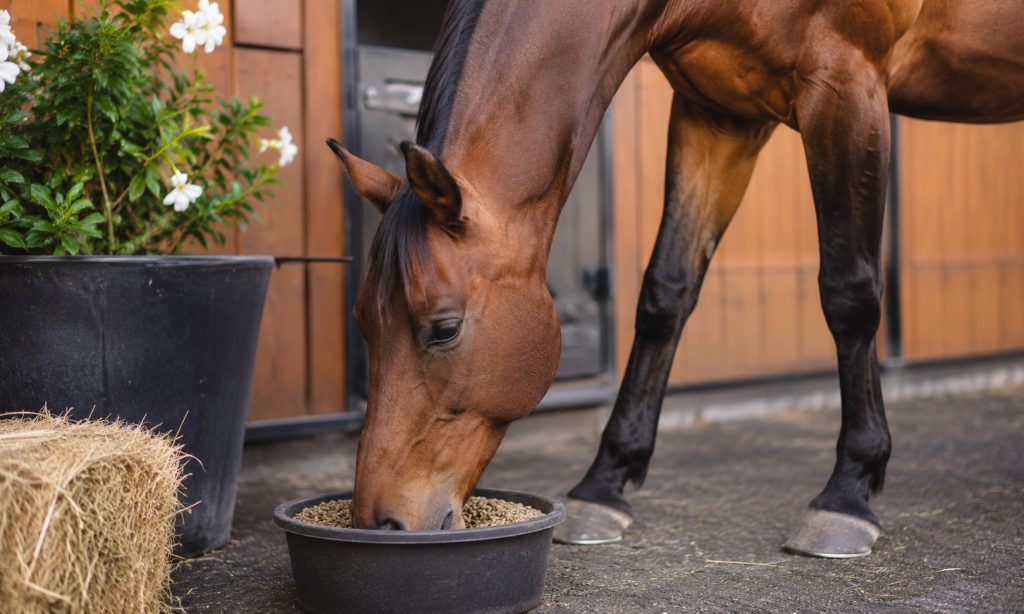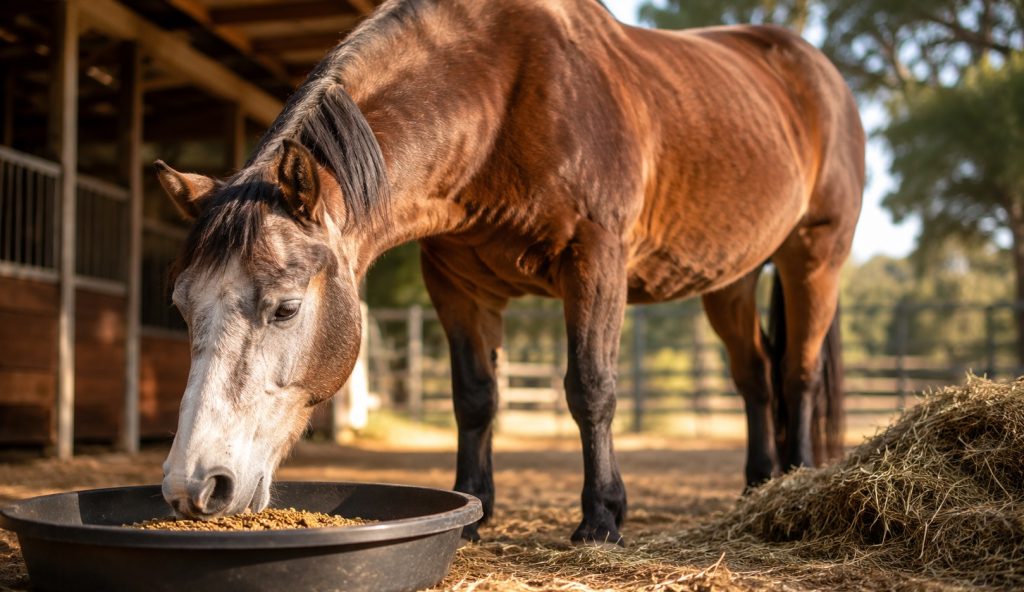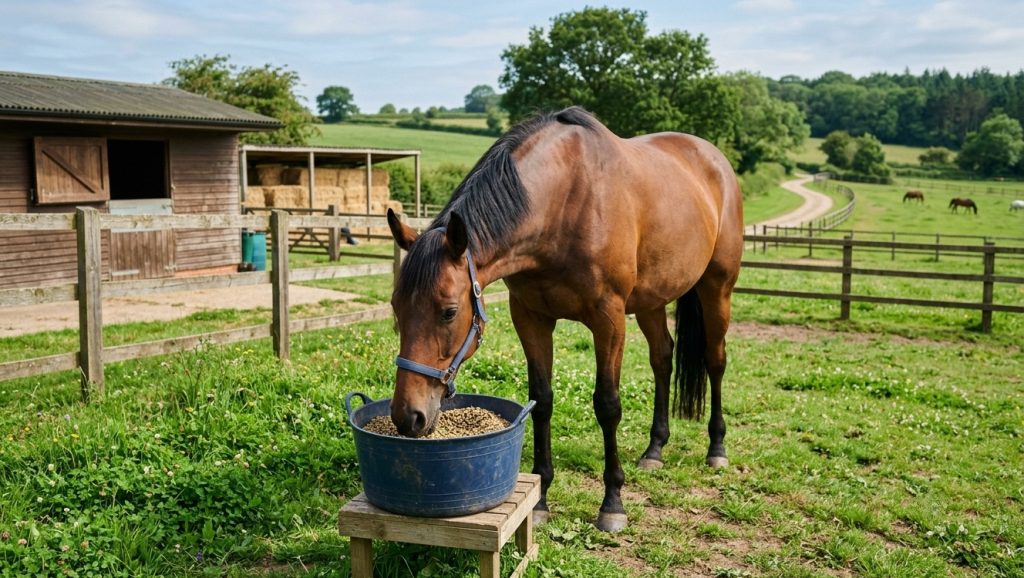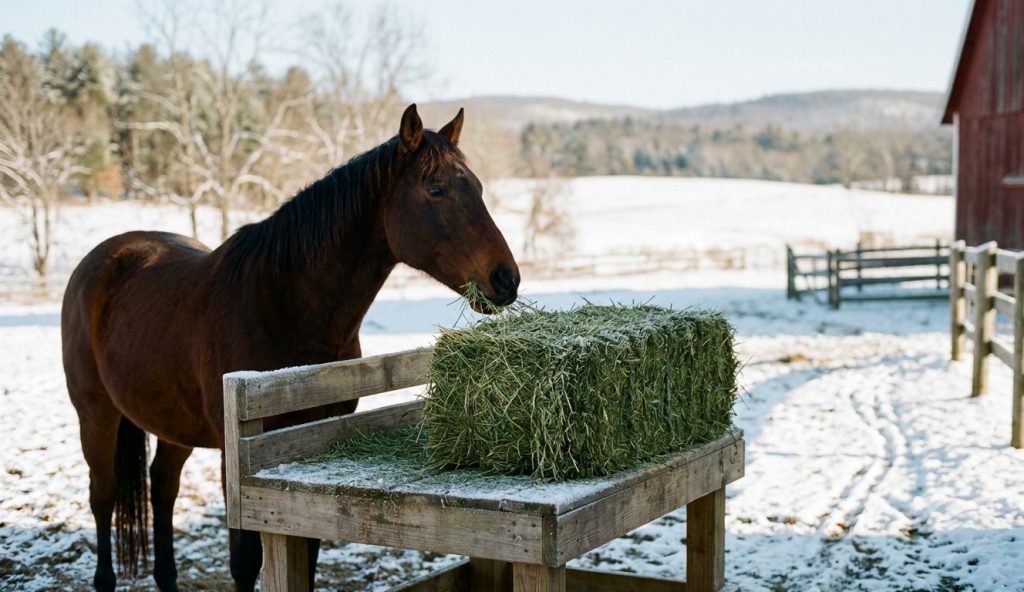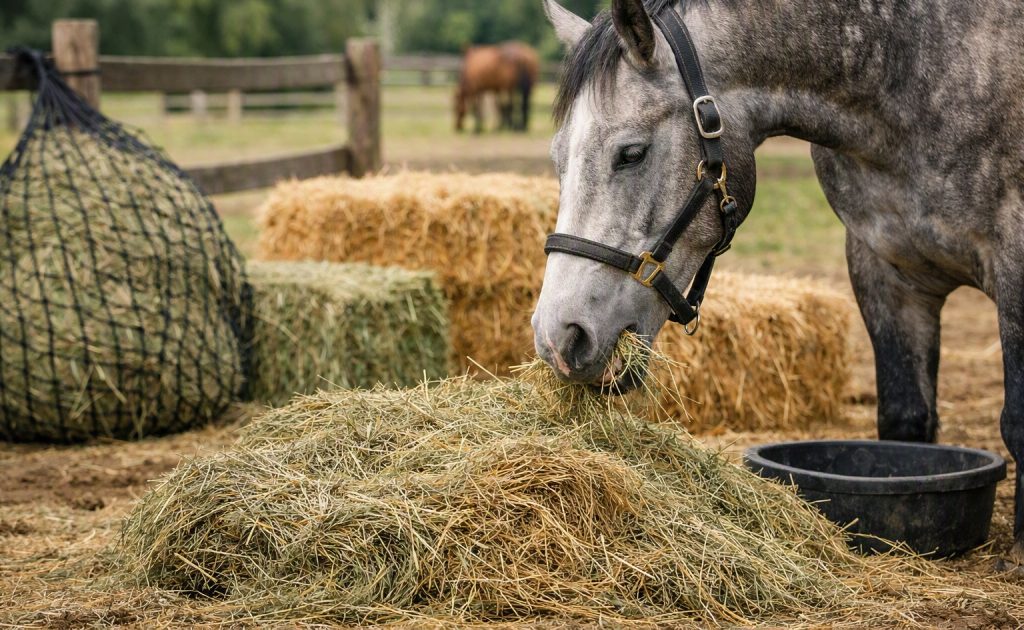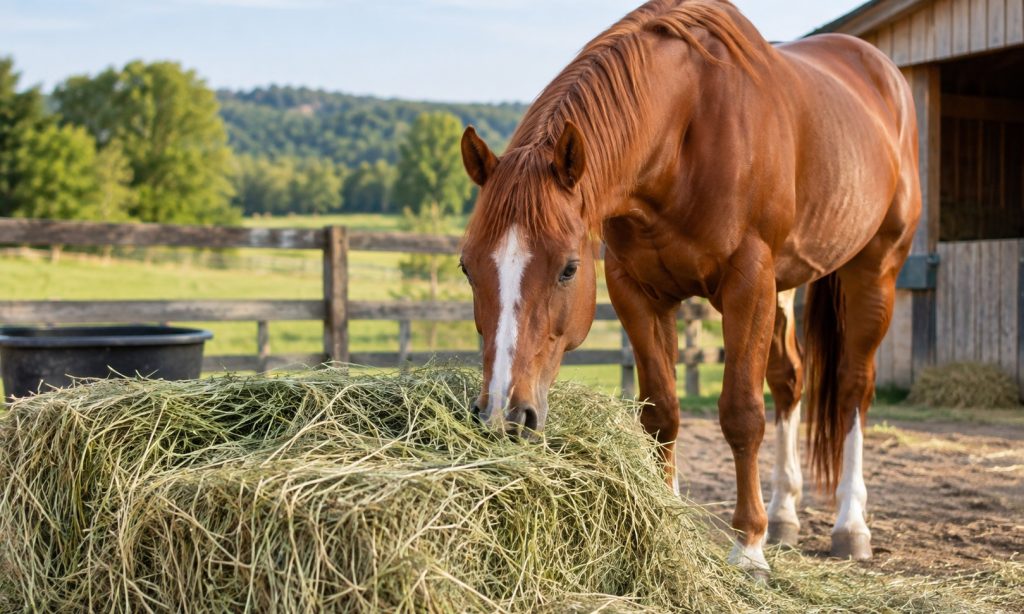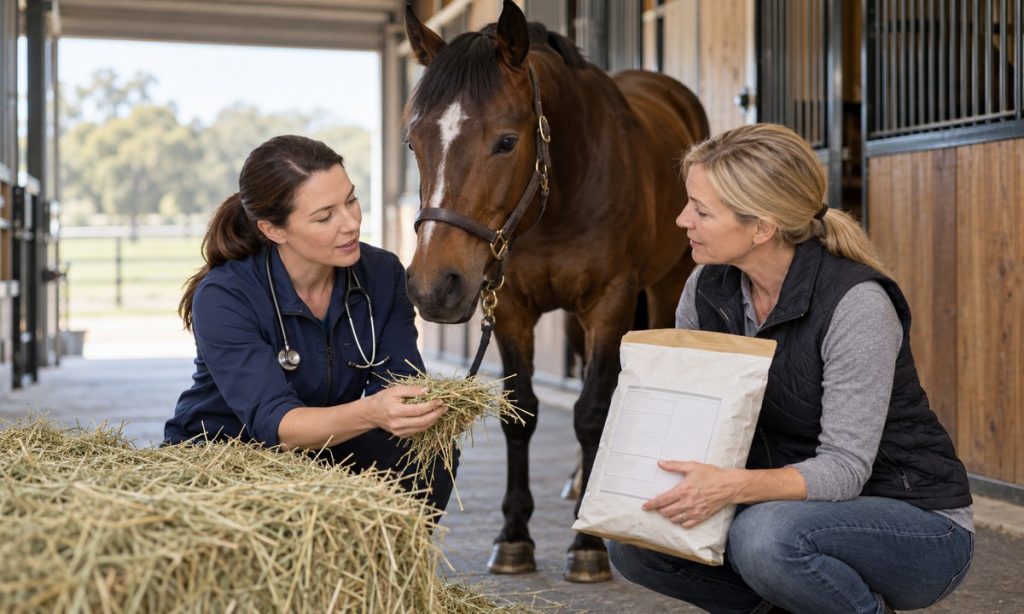
A horse diagnosed with navicular syndrome may have foot pain involving the navicular apparatus and nearby structures, but that diagnosis does not create one special diet for every horse. Feeding decisions still depend on body condition, workload, forage quality, hoof history, and other health conditions such as insulin dysregulation. Nutrition can support overall health and an appropriate body weight, while veterinary and farrier care address the painful foot. Ask your veterinarian what the diagnosis means for your horse and whether feed changes are likely to help a specific need. Bring hay or pasture information and labels for all feeds and supplements. If you are researching feed for horses with navicular, use it as a starting point for questions, not as a replacement for a lameness and nutrition plan. These questions can help keep the conversation focused on what is known, what needs assessment, and what to monitor.
Start by clarifying the diagnosis and goals
Ask the veterinarian to explain which structures are affected, how confident the diagnosis is, and what the current treatment goals are. “Navicular” is often used broadly for pain or changes around the back of the foot. It does not necessarily mean every horse has the same condition or responds to the same management.
Discuss how the horse’s foot pain, body weight, fitness, and daily activity affect the plan. A feeding change cannot replace a lameness assessment, prescribed treatment, or coordinated farrier care. Ask which parts of the plan should be reviewed together and how to avoid changes that make the horse uncomfortable.
Set a measurable goal. It might be maintaining an appropriate body condition, correcting a documented nutrient gap, supporting muscle during reduced work, or managing a concurrent metabolic condition. Ask how you will know whether the plan is helping that goal.
Questions about body weight and metabolic health
Is my horse at an appropriate body condition?
Ask the veterinarian to assess body condition rather than relying only on the scale or appearance. Excess weight can increase the load the feet carry, but aggressive calorie restriction can also harm health. If weight loss is recommended, ask for a safe target, a gradual plan, and a way to track progress.
If the horse is thin or losing muscle, ask whether pain, dental problems, age, reduced activity, or another illness could explain the change. A horse can have a rounded belly and still lose topline muscle. Body condition and muscle condition should be discussed separately.
Should we evaluate insulin or other metabolic risks?
Ask whether the horse’s history suggests insulin dysregulation, PPID, or another condition that changes feeding decisions. A history of laminitis, easy weight gain, or abnormal insulin results may call for a more specific plan. Do not assume every horse with navicular syndrome needs the same low-sugar ration.
If metabolic testing is recommended, ask how the results affect forage, pasture access, and concentrate feeding. The veterinarian can help distinguish a general weight-management goal from a diet tailored to a confirmed medical risk.
Questions about hay, pasture, and the full ration
Would a forage analysis help?
Ask whether a laboratory analysis of hay or pasture would help balance the diet. Forage is often the largest part of a horse’s ration, and its energy, protein, minerals, and sugar content can vary. Use the result to discuss whether the current forage fits the horse’s body condition and any metabolic concerns.
Bring the analysis along with the amount fed, turnout schedule, and any changes in hay source. If the horse shares pasture or hay with other animals, explain how individual portions are managed. A plan that is hard to follow at the barn may need a simpler approach.
Should I soak hay or limit pasture?
Ask whether soaking or pasture limits are appropriate for this horse’s health profile. Soaking can change water-soluble carbohydrate content, but results vary and nutrients can be lost. Wet forage also needs careful handling. Ask how to feed it safely and whether the ration needs to be rebalanced.
Pasture recommendations depend on insulin status, plant growth, season, and laminitis risk. Ask about turnout that supports movement without creating avoidable risk. Do not use a grazing muzzle or remove pasture without considering the horse’s comfort, behavior, and overall feeding needs.
Questions about supplements and hoof claims
Ask whether the current ration has a documented nutrient shortfall before adding a supplement. Review the full ingredient panel, serving size, and nutrients already supplied by forage and other feeds. Several products can contain overlapping vitamins or minerals, and excess intake may be harmful.
Be cautious with claims that a feed or supplement can treat navicular syndrome, rebuild a structure, or replace veterinary care. Ask what evidence supports the specific ingredient for the specific purpose, what outcome to monitor, and whether it can interact with medication or competition rules. Research on many equine joint and hoof supplements is limited or inconclusive.
Horse owners describe different experiences with feeding changes and supplements, but those accounts cannot establish that a product caused improvement. A change in shoeing, exercise, medication, pain, or turnout may happen at the same time. Keep notes and discuss them with the veterinary team.
Questions about feeding during treatment and reduced work
Ask whether the ration should change while the horse is resting, in rehabilitation, or returning to work. Energy needs can shift when activity changes, but the horse still needs adequate forage and balanced nutrients. The veterinarian can help adjust calories without making abrupt changes.
Share every medication and supplement, including over-the-counter products, and ask whether timing or competition rules matter. Do not use a feed change to stop prescribed treatment. If pain or lameness worsens, contact the veterinarian instead of increasing a supplement or exercising through the problem.
Ask who should coordinate the plan. The veterinarian, farrier, and nutrition professional may each contribute different information. Agree on who will track weight, hoof comfort, feed intake, and changes in exercise.
Frequently Asked Questions
Is there a special diet that cures navicular syndrome?
No single diet cures navicular syndrome. Feeding supports overall condition and any identified nutritional or metabolic needs, while veterinary and farrier care address the foot problem.
Should every horse with navicular lose weight?
No. Weight goals depend on body condition and health. A thin horse may need more energy, while an overweight horse may need gradual weight management under veterinary guidance.
Can supplements replace farrier or veterinary care?
No. A supplement cannot replace a diagnosis, treatment plan, or appropriate hoof care. Ask the veterinarian whether a nutrient gap exists before adding one.
Should I soak hay for a horse with navicular?
Only if there is a reason for it, such as a metabolic concern or a veterinarian’s recommendation. Soaking effects vary and may change nutrient content.
How do I know if a feeding change is working?
Agree on the goal and monitoring plan with the veterinarian. Track body condition, weight, appetite, hoof comfort, and any relevant test results over time.
Final Words
Before changing the diet of a horse with navicular syndrome, ask your veterinarian to clarify the diagnosis, set a body-condition goal, review metabolic risks, and assess forage and the complete ration. Discuss supplements carefully and keep veterinary treatment and farrier care central to the plan. There is no universal navicular feed, and owner reports cannot predict another horse’s response. If you are reviewing feed for horses with navicular, compare the information with your horse’s test results, workload, and current medical plan.