A boot that shifts, pinches, or traps grit can turn a trail ride into a rubbing problem. Before choosing horse boots for trail riding, identify whether you mean a hoof boot that encloses the hoof or a leg boot that protects part of the limb. Their fit checks are different, and neither should be used to push through lameness. Fit the exact pair on the horse before a long ride, follow the manufacturer’s sizing and fastening instructions, and recheck the horse after movement. This guide explains how to look for slipping, pressure, and early irritation, plus what to do if a boot does not stay in place. If the horse is lame or has a wound, ask a veterinarian or farrier before riding.
Know which type of boot you are fitting
Hoof boots cover the hoof and may be used for protection or as an alternative in specific situations. Leg boots cover areas such as the tendons, fetlock, or pastern, depending on the design. A boot intended for one purpose may not provide the protection or support needed for another. Check the product’s instructions and consult a veterinarian or farrier if you are unsure what the horse needs.
Start with the manufacturer’s size chart and any trimming or measurement directions. Hoof boots may need measurements taken after trimming, while leg boots are sized to the limb and closure layout. Measurements taken with another boot brand are not necessarily comparable. Avoid choosing a size by eye alone or assuming that a boot fitting one horse will fit another.
Prepare the horse and boot
Choose a calm, level place with good footing. Clean the hoof or leg and remove mud, grit, burrs, and bedding that could become trapped under the boot. Check for cuts, swelling, heat, rubs, or tenderness before covering the area. A boot can hide a developing problem, so begin with a clear view of the skin, hoof, and limb.
Inspect the boot for cracks, worn lining, rough edges, stretched closures, damaged stitching, grit, and debris. Check that straps, buckles, or hook-and-loop surfaces are clean and functional. If a boot is damaged or has hardened seams, it may no longer stay secure or protect the horse as intended.
Fit a hoof boot
Use the manufacturer’s hoof measurements and fitting sequence for the model. The boot should seat fully over the hoof and remain aligned as the horse takes steps. A boot that is too large may twist or rotate; one that is too small may be difficult to put on, pinch, or place excessive pressure on the hoof. Do not force a boot into place or modify the hoof or boot unless a qualified professional directs it.
After fastening, inspect the boot from the front, sides, and back. Confirm it sits evenly, the closure lies flat, and no part presses into the coronary band or surrounding skin. Walk the horse a short distance in a safe area and watch whether the boot stays centered. Stop if it rotates, loosens, catches, or changes the horse’s step.
Some hoof boots are used with pads or other components, but these can change fit and function. Use only combinations approved by the boot maker or recommended by a farrier or veterinarian. A boot that fit before adding a pad may become too tight or may not close securely afterward.
Fit a leg boot
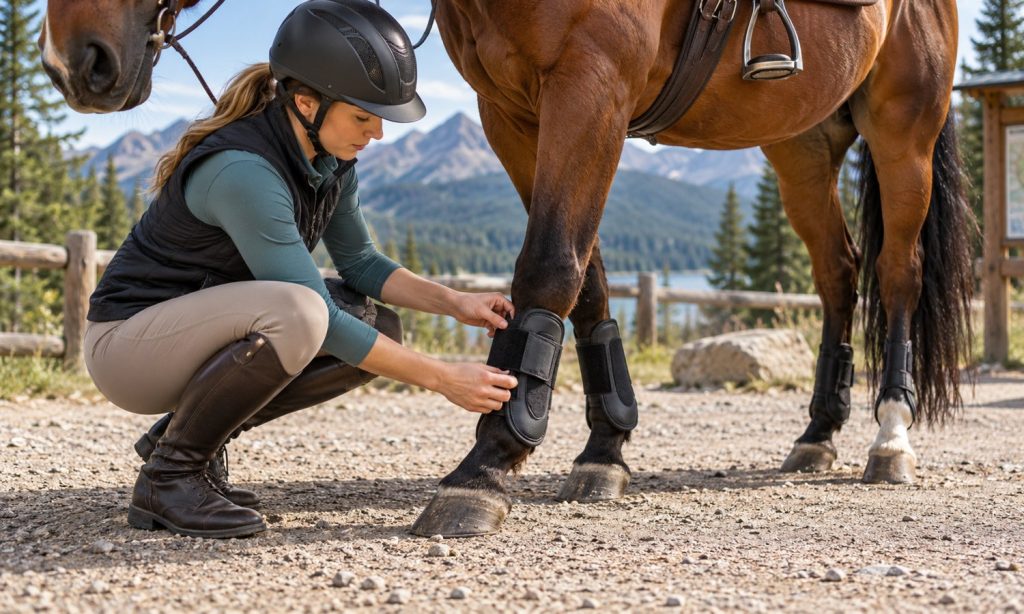
Follow the model’s instructions for placement and strap direction. The boot should sit in the correct position and close securely without excessive tension. Straps should lie flat and should not twist, overlap incorrectly, or pinch the skin. Check that the boot does not slide down when the horse walks and that the edge does not dig into the tendon, fetlock, or pastern.
Compare both legs when the same style is used on each side. Check that the closures are oriented as directed and that the boot does not interfere with normal joint movement. Do not tighten straps to compensate for a boot that is the wrong size or shape. If it shifts or rubs during a short test, try a different fit or ask the manufacturer, trainer, or veterinary professional for guidance.
Check for early rubbing and pressure
Before riding, run your hand around the boot’s edges and closures. Look for folds, gaps, trapped hair, rough seams, and dirt that can rub. After a short period of movement, stop in a safe place and remove the boot to inspect the skin and hoof. Redness, a damp patch, hair flattened in a line, tenderness, or swelling can signal friction or pressure. Recheck again after the ride, especially when trying a new pair.
Watch the horse’s movement and behavior. Shortened steps, head tossing, kicking at a boot, repeated stomping, or reluctance to continue can indicate discomfort or another problem. Stop and remove the boot safely if the horse seems distressed. Do not continue because the boot is marketed for support or protection.
Keep a small note of the boot model, size, ride conditions, and any rub location. A pattern can help determine whether the issue comes from size, strap position, moisture, grit, or the horse’s movement. Replace or repair the boot as directed; do not cover a pressure point with padding unless the manufacturer or professional confirms it is appropriate.
Build up use before a longer ride
Try a new boot for a short, low-pressure session before taking it onto a long or remote trail. Recheck fit after the horse has moved and after the boot has been exposed to dirt, water, or mud. Practice removing and refitting it so you can handle an issue safely away from the barn. Carrying a spare strap or an appropriate backup may help, but do not ride with a boot that no longer fastens securely.
For product-category comparison, see the guide to horse boots for trail riding. Product features and size charts are useful starting points, but the horse’s foot or limb shape and the specific trail conditions determine whether the fit works.
Frequently Asked Questions
How tight should a horse boot fit?
It should stay in the intended position without pinching, sliding, twisting, or restricting movement. Use the exact manufacturer’s sizing and closure instructions for that boot style.
Can I ride in a boot that rubs a little?
No. A developing rub can worsen with distance, moisture, and movement. Stop, remove the boot, inspect the skin, and correct the fit before continuing.
Should hoof boots be fitted before or after trimming?
Follow the boot manufacturer’s measurement instructions; many models specify fitting after a trim. Ask a farrier if you are unsure how hoof shape or trim affects sizing.
Can I add padding to stop a boot from rubbing?
Only if the manufacturer or a qualified professional confirms the material and placement are compatible. Padding can change pressure and may make the boot too tight.
Do boots make it safe to ride a lame horse?
No. Boots do not diagnose or resolve the cause of lameness. Have a veterinarian assess new or persistent lameness before riding.
Final Words
Clean and inspect the hoof or limb, size the specific boot according to its instructions, and check that it stays aligned without pinching or restricting movement. Test a new pair in a short session and look for early redness, pressure, or a change in gait before heading onto a trail. If the horse is lame, pause the ride and contact a veterinarian or farrier. When comparing horse boots for trail riding, use product details alongside an actual fit check on your horse.