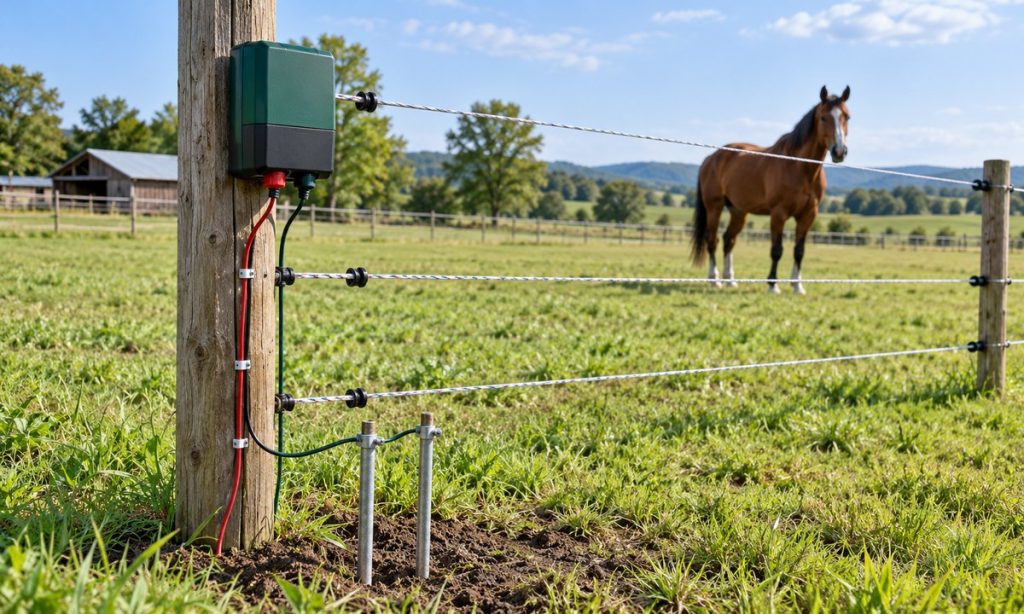
An electric fence charger can appear to work while the horse fence delivers too little voltage, stops pulsing, or drains a battery faster than expected. Many problems come from a loose connection, poor grounding, a damaged lead wire, vegetation touching the fence, or a charger that is too small for the fence system. Start with the charger’s manual and indicator lights, and keep horses away from a fence that may be unreliable. Never touch a live wire to test it by hand. A guide to an electric fence charger for horses can help you compare equipment, but setup and troubleshooting must match the model and the entire fence. These checks can help identify common issues safely.
Begin with a safe, simple check
Before inspecting anything, follow the manufacturer’s shutdown instructions. Disconnect power at the source before handling wiring, terminals, or the energizer. Keep hands dry, use insulated tools where appropriate, and do not open the charger housing. If the unit is plugged into mains power, or you see damaged insulation, burning, moisture inside the unit, or signs of electrical arcing, stop and contact a qualified electrician or the manufacturer.
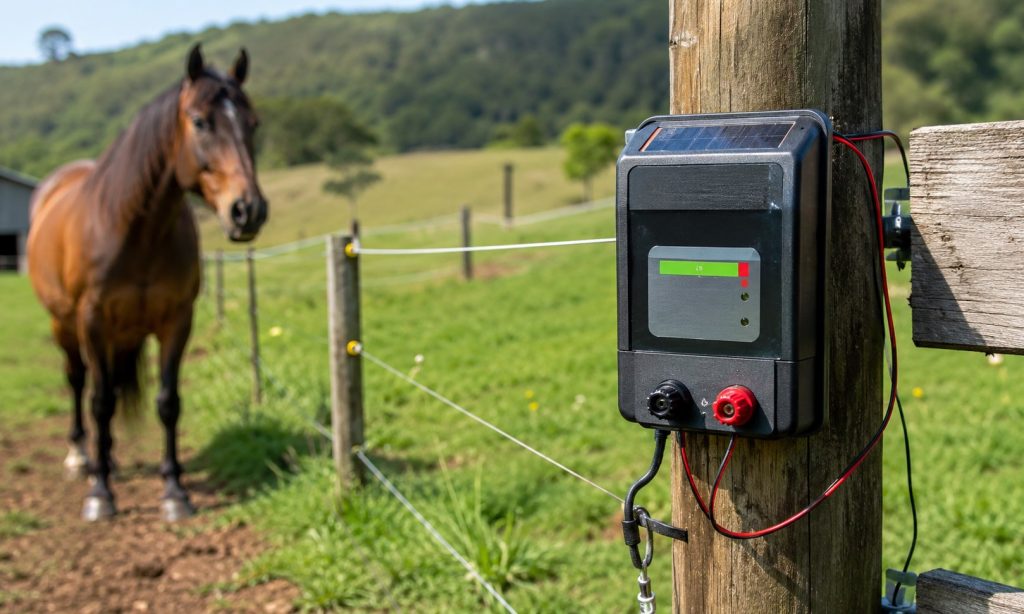
Check the indicator lights or display and compare them with the manual. Some models show battery condition, output pulses, or a fault code; others have only a status light. A light can confirm that the unit has power without proving the fence is performing well at the far end. Use a fence voltmeter designed for electric fencing to test output and the line. Do not use a household multimeter or ohmmeter on the energizer output unless the manual specifically identifies a safe, compatible method.
Charger will not power on
For a plug-in unit, check that the outlet is functioning and that the plug, adapter, or approved power supply is firmly seated. Do not use a damaged extension cord or an outdoor outlet without appropriate weather protection. If the breaker trips repeatedly, unplug the charger and have the circuit evaluated instead of repeatedly resetting it.
For a battery or solar charger, check the battery terminals for corrosion or looseness and confirm that the battery type and voltage match the manual. Make sure a solar panel is connected, clean, positioned to receive sunlight, and not shaded by a tree or building. A battery can appear charged but fail under load, so test it as directed or replace it with the correct type. Do not connect an improvised charger or battery to the energizer.
If the unit remains dark after checking its approved power source, disconnect the fence lead as instructed and check whether the status changes. If it still does not operate, the charger may need service. Do not bypass safety devices or open the case to attempt a repair.
Fence has low voltage or weak pulses
Check for shorts and leakage
Vegetation touching the live wire can draw energy away from the fence. Walk the perimeter and look for grass, branches, weeds, fallen rails, or wire resting against metal posts. Also inspect for cracked insulators, loose joints, broken conductors, and gates that allow a live wire to touch grounded metal. Turn off power before clearing or repairing anything.
Use the fence tester to compare voltage near the energizer and at several points farther away. A strong reading at the beginning and a low reading later can point to a short, poor joint, or damaged section between those locations. Follow the tester and charger instructions. If you cannot isolate the problem, a fencing professional can check the circuit systematically.
Review the grounding system
Poor grounding is a common cause of weak fence performance. Check that ground rods, clamps, and connecting wire are installed according to the charger’s manual and local electrical requirements. Corroded clamps, loose connections, dry soil, or a rod placed in unsuitable ground can reduce performance. Rod number, spacing, and length depend on the energizer and soil conditions, so do not rely on a one-size-fits-all rule.
Ground rods should be positioned and installed safely, away from utility grounding systems, buried services, and places where people or horses could contact them. Call the utility locating service before driving rods. If the fence still tests poorly after checking connections, ask the manufacturer or a qualified fence installer to evaluate grounding and measure it using the correct method.
Charger clicks, stops, or seems inconsistent
Some energizers make a regular clicking sound as they pulse. A change in sound may reflect a fault or a new electrical load, but the sound alone cannot diagnose the problem. Check the indicator and test the fence. Look for a short circuit, damaged lead-out wire, poor earth connection, or an overloaded fence. Compare the charger’s rated capacity with the fence length and type, accounting for all connected lines and likely vegetation contact.
If a fuse blows or a breaker trips, do not install a larger fuse or bypass a protection feature. Disconnect the energizer and follow the manual. Persistent faults, heat, smoke, a burning smell, or unusual buzzing require stopping use and getting qualified service.
Horse still challenges the fence
A horse may test a fence if it cannot see the wire clearly, has not learned to respect it, or can reach attractive grass beyond the boundary. Check that the fence is visible, maintained, and appropriate for horses. Smooth, nearly invisible wire can be harder for horses to see than a visible tape or braid. Ask an equine fencing professional whether the design and height suit the horses and location.
Test voltage where the horse could touch the fence, including distant corners and gates. Do not assume the charger’s indicator proves every section is working. If the fence was recently installed, review the manufacturer’s training recommendations and supervise horses while they learn the boundary. Never increase output beyond the charger’s rating or use a homemade charger to make the fence “stronger.”
Maintenance that prevents repeat problems
Keep a short inspection log with test readings, battery changes, vegetation clearing, and repairs. Check the system more often after storms, mowing, fence work, or long dry spells. Keep charger manuals and model information near the equipment, but store them where horses cannot chew or damage them.
Use only compatible components and wire types, and make connections with fittings designed for the fence. Improvised wire twists or mixed metals may corrode and fail. Keep warning signs visible where required and make sure gates do not create an unsafe gap or exposed energized end. If the fence is near a public path or shared property line, review applicable local rules.
Frequently Asked Questions
Why does my electric fence charger light come on but the fence is weak?
The light may show that the unit has power, not that the whole fence is working. Test the line with a fence voltmeter and check for vegetation, shorts, loose connections, and grounding problems.
Can I test an electric horse fence with my hand?
No. Use a proper electric fence tester and follow its instructions. Never touch a live conductor to judge whether the pulse is strong enough.
How often should I check the charger and fence?
Follow the manufacturer’s maintenance schedule and inspect regularly. Recheck after storms, repairs, vegetation growth, or a sudden change in voltage or horse behavior.
Why does a solar fence charger keep losing power?
Shading, a dirty or disconnected panel, an aging battery, or incorrect battery type can contribute. Check the manual and test the battery as directed; replace only with a compatible unit.
When should I call a professional?
Call for help if the breaker repeatedly trips, the unit overheats, wiring is damaged, voltage remains low after basic checks, or the grounding system is unclear. Electrical and buried-utility work should be handled by qualified people.
Final Words
For common electric fence charger problems, start with the manual, verify power safely, test the fence with a dedicated tester, and inspect connections, vegetation, shorts, and grounding. Keep horses away from a fence that is not reliably functioning, and stop if you find electrical damage or an unresolved fault. When comparing an electric fence charger for horses, choose one suited to your system and install it according to its instructions.