A fly trap can catch insects and still leave a horse barn uncomfortable if it is the wrong style, installed in the wrong place, or left full past its useful life. Traps work differently: sticky cards collect flies that land on them, baited containers attract particular species, and large visual traps target some biting flies outdoors. A device that catches one type may do little for another. Before choosing or adjusting a fly trap for horse barn use, identify where flies gather and keep the trap away from horses, feed, water, and routine traffic. This guide covers common setup problems, safe placement, and checks that help you decide whether a trap is contributing to a broader fly-management plan.
Start by matching the trap to the fly problem
Different flies respond to different traps. Sticky traps and some baited products can help monitor or reduce house flies and stable flies in appropriate locations. Large visual traps may be designed for horse flies or deer flies in pasture. A trap that catches many insects is not necessarily catching the species bothering your horse. Look at where the flies rest or feed, their appearance, and the time of day they are active. If identification is difficult, your local extension office or veterinarian may help.
Read the product label and instructions before installation. Check the target species, intended setting, required bait, service interval, and warnings. Do not assume an indoor device is suitable in a stall, or that a trap marketed for “flies” controls every biting fly. Traps are one part of pest management; removing breeding material and protecting horses may still be necessary.
Common setup and adjustment problems
The trap catches almost nothing
First check that the trap is assembled correctly and any included lure or bait is fresh and used in the amount specified. Make sure a sticky surface has its cover removed, the entrance is open, and the trap is not blocked by a wall, hay bale, or equipment. A light trap may not perform well in a bright location if it depends on being a visible light source after dark.
Then consider whether it is the right trap for the insects present. If the flies are mainly horse flies outdoors, a small indoor sticky card may not solve the issue. If stable flies are gathering around manure or wet bedding, moving the trap alone will not remove the breeding source. Keep notes for several days: trap location, date installed, type of fly caught, and whether flies are still landing on horses.
The trap fills quickly or stops working
Sticky surfaces can lose effectiveness when dusty, wet, or covered with insects. Replace them on the schedule in the instructions or sooner if the active surface is full. Do not place them where bedding dust, cobwebs, or spray residue will coat the adhesive. Baited traps may need to be emptied, cleaned, and refilled as directed. Wear gloves when handling used traps and seal the contents for disposal according to the label and local rules.
Do not leave baited containers where they can tip into a feed bin, trough, or bedding. Keep them upright, secure, and separated from the horse’s reach. If the trap uses an attractant with a strong odor, place it where airflow will not carry the odor directly through occupied stalls unless the product is designed for that use.
Flies seem worse near the trap
Attractant traps are meant to draw some insects toward them. If one is placed beside a stall door, feed area, or grooming spot, it may bring flies close to the horse before they enter the trap. Move it away from horse gathering points and follow the manufacturer’s recommended distance. For a perimeter or outdoor trap, place it between the likely fly source and the animals only if the instructions support that placement.
A trap should not be placed where horses can rub against it, step on it, or become entangled in its hanger. Sticky cards can catch hair, mane, tail, or skin if within reach. Mount them securely above and outside the horse’s contact area, away from fans that could blow them down. Recheck after moving the trap to see whether catch counts change.
Trap attracts the wrong insects
Some traps are not selective and can catch beneficial insects. A light or baited device may attract insects other than the target species. Review the label before use and avoid placing traps where pollinators gather or where non-target wildlife can reach them. If a trap repeatedly catches bees or other helpful insects, remove it and choose a different approach.
Use insecticides, bait, or pesticide-treated traps only as labeled. Keep products locked away from horses, children, feed, and water. Do not combine baits or add homemade ingredients unless the manufacturer allows it. If a horse chews or ingests trap material, contact a veterinarian and provide the product label.
Placement checks for a horse barn
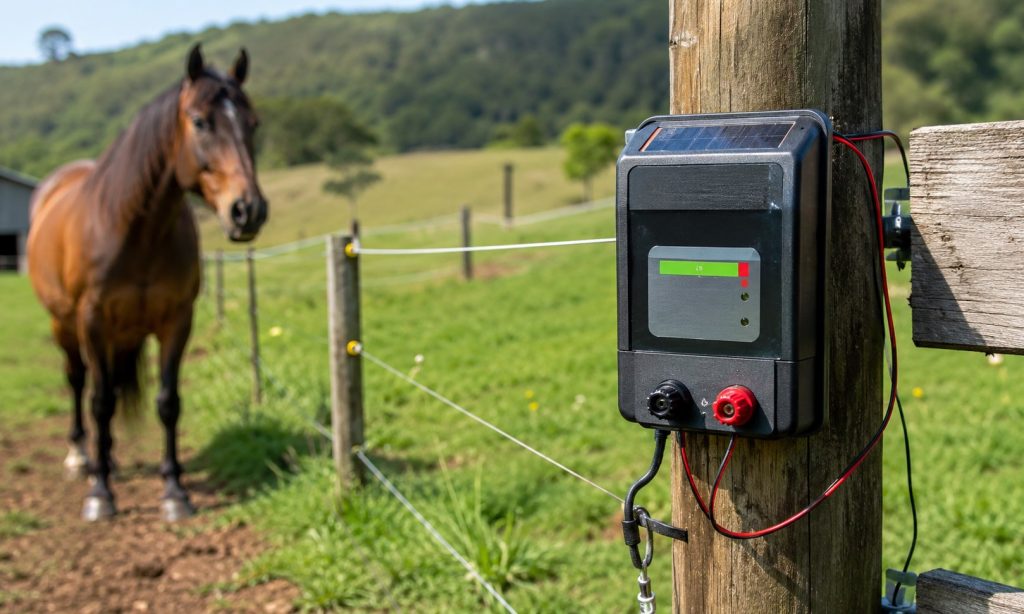
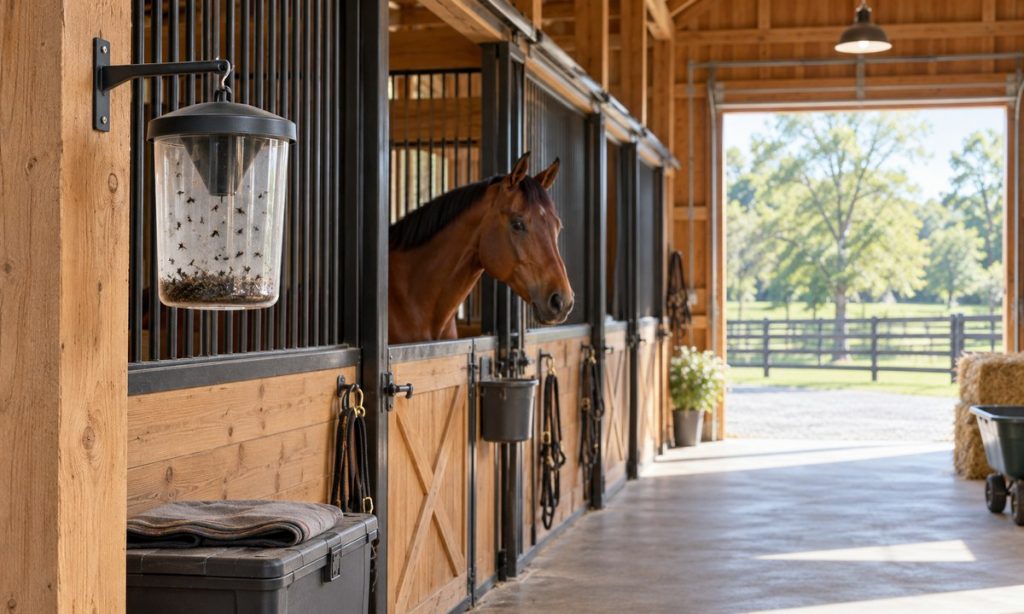
Choose a stable support point that prevents swinging, dropping, or contact with gates and equipment. Keep sticky cards and bait traps out of reach of horses, dogs, children, and other animals. Do not position traps directly above hay, grain, water, tack, or grooming supplies. If installing an electric insect device, follow its electrical and clearance instructions, protect it from moisture where required, and keep cords away from animals and walkways.
Check airflow and sunlight. A trap that depends on light, scent, or visual contrast may work differently in a shaded corner, breezy aisle, or brightly lit doorway. Keep it accessible for inspection and replacement without climbing over animals or reaching above feed. If the barn has a fan system, make sure the trap cannot fall into a fan or be blown into a stall.
When setup is not the main issue
Flies can continue breeding in manure, wet bedding, spilled feed, or damp organic debris. Remove manure regularly, fix drainage problems, and keep feed storage clean. Penn State Extension notes that manure management is an important part of reducing fly breeding on horse farms. Use a consistent schedule rather than relying on traps to compensate for unmanaged breeding sites.
Trap results are easier to interpret when you make one adjustment at a time. Record the number and type of flies caught before and after moving or replacing a trap. Also note weather, manure removal, turnout, and use of fans or repellents. If fly pressure remains high, ask an equine veterinarian or local extension educator about a combined approach suited to the fly species and barn.
Frequently Asked Questions
Where should I hang a fly trap in a horse barn?
Follow the product instructions and place it securely away from horses, feed, water, and high-traffic areas. Attractant traps often belong away from stall doors or places where horses gather.
Can sticky fly traps be placed inside a stall?
Only if the label permits it and the trap is fully out of reach. Sticky cards can catch a horse’s hair or skin, so a safer location outside the stall may be preferable.
Why does my trap catch flies but not stop them bothering horses?
The trap may target a different species, be too close to the horse, or be only one part of control. Identify the flies and address breeding sites, turnout conditions, and horse protection as needed.
How often should I replace or empty a fly trap?
Use the schedule on the product label and replace a sticky surface when dusty, wet, or full. Empty baited traps only as directed and handle them with gloves.
Do fly traps replace manure cleanup?
No. Traps can help monitor or reduce some adult flies, but removing manure and wet organic material helps limit breeding sources around the barn.
Final Words
When a fly trap is not working as expected, confirm its target species, assembly, bait or adhesive condition, and placement. Keep it secure and beyond horse reach, and combine trapping with regular manure and moisture management. If you are comparing a fly trap for horse barn use, match the design to the flies you see and the location where the trap can operate safely.