The best dog brush for Labradors should lift loose coat hair without irritating the skin or making grooming stressful. I compared seven brush styles, including undercoat tools, a slicker, a rubber curry brush, and grooming gloves. No brush stops normal shedding, and a Labrador’s comfort matters more than aggressive hair removal. Start with short, gentle sessions and stop if you see redness, discomfort, or unusual hair loss. Compare the brush head, grip, coat type, cleaning method, and instructions for frequency. Use gentle strokes and check the skin as you groom; brushing can remove loose hair but cannot stop normal shedding or explain sudden hair loss.
For more coat-care guidance, read our dog grooming basics guide, compare grooming vacuums for shedding, and see how to choose dog clippers for thick coats.
Quick Picks
| Product | Best For | Key Advantage | Buy | |
|---|---|---|---|---|
| FURminator Large Short-Hair Undercoat deShedding Tool | Large, short-haired dogs over 50 lb | Large-dog short-hair sizing | View on Amazon | Jump to Review |
| SleekEZ 5-Inch Dog Brush | Owners wanting a five-inch grooming tool | Five-inch scraper width | View on Amazon | Jump to Review |
| Hertzko Self-Cleaning Slicker Brush | Owners wanting a self-cleaning slicker | Retractable bristles for cleanup | View on Amazon | Jump to Review |
| Coastal Pet Safari Comfort Grip Curry Brush | Dogs comfortable with a rubber curry brush | Rubber curry brush for wet or dry use | View on Amazon | Jump to Review |
| Otis & Claude Pet Grooming Gloves | Owners wanting a grooming glove | Adjustable silicone grooming gloves | View on Amazon | Jump to Review |
| DOGI Double-Row Undercoat Rake | Owners comparing an undercoat rake | Double-row stainless-steel pins | View on Amazon | Jump to Review |
| MIU COLOR 4-Inch Deshedding Brush | Owners wanting a four-inch metal comb | Removable four-inch comb head | View on Amazon | Jump to Review |
1. FURminator Large Short-Hair Undercoat deShedding Tool

- Large-dog short-hair sizing
- Undercoat deShedding tool format
- Product listing covers dogs over 50 pounds
- FURminator grooming tool
- Tool use still requires gentle pressure and short sessions
FURminator Large Short-Hair Undercoat deShedding Tool is a grooming tool listed for short-haired dogs over 50 pounds, with an ergonomic handle and a button to release collected hair. Labradors have a short double coat, so owners often compare tools that lift loose undercoat hair without rough handling. This product’s design gives you a specific format to consider, but no brush stops normal shedding. Check the package for size, material, and care directions, then choose a tool you can move comfortably across the dog’s body.
If your Labrador has sensitive skin or a coat condition, ask a groomer or veterinarian which style is appropriate. The product page notes that the listing says it reaches loose undercoat hair through the topcoat when used as directed. Follow its weekly-use guidance and avoid excessive pressure. Start with a few gentle strokes in the direction of hair growth and let your dog get used to the feel of the tool. Do not press hard, scrape repeatedly, or force the brush through a tangle. A short session is easier to monitor than a long grooming attempt.
Clean collected hair from the tool between passes, and stop if you notice redness, discomfort, or unusual hair loss. This option may fit an owner looking for its listed tool style and cleanup features. Compare the head width, grip, storage, and how the tool will work around the dog’s legs, chest, and tail. Brush outdoors or on a washable surface if loose hair is a concern. Labradors still need regular skin checks and routine coat care; sudden shedding, bald patches, or itching should be discussed with a veterinarian rather than treated as a brush problem.
My Recommendation
FURminator Large Short-Hair Undercoat deShedding Tool stands out for a tool listed for short-haired dogs over 50 pounds, with an ergonomic handle and a button to release collected hair. I like that its listing describes the tool style and a specific handling or cleanup feature.
2. SleekEZ 5-Inch Dog Brush

- Five-inch tool size
- Five-inch scraper width
- SleekEZ grooming tool format
- Wide scraping-style head
- Five-inch head may be awkward on smaller areas
SleekEZ 5-Inch Dog Brush is a grooming tool with 5-inch grooming tool, listed for short, medium, and long coats, designed to collect loose hair and also remove fur from fabric. Labradors have a short double coat, so owners often compare tools that lift loose undercoat hair without rough handling. This product’s design gives you a specific format to consider, but no brush stops normal shedding. Check the package for size, material, and care directions, then choose a tool you can move comfortably across the dog’s body.
If your Labrador has sensitive skin or a coat condition, ask a groomer or veterinarian which style is appropriate. The product page notes that the listing describes teeth that gather hair at the tips. Use short passes and stop if the dog’s skin looks irritated. Start with a few gentle strokes in the direction of hair growth and let your dog get used to the feel of the tool. Do not press hard, scrape repeatedly, or force the brush through a tangle. A short session is easier to monitor than a long grooming attempt.
Clean collected hair from the tool between passes, and stop if you notice redness, discomfort, or unusual hair loss. This option may fit an owner looking for its listed tool style and cleanup features. Compare the head width, grip, storage, and how the tool will work around the dog’s legs, chest, and tail. Brush outdoors or on a washable surface if loose hair is a concern. Labradors still need regular skin checks and routine coat care; sudden shedding, bald patches, or itching should be discussed with a veterinarian rather than treated as a brush problem.
My Recommendation
SleekEZ 5-Inch Dog Brush stands out for a 5-inch grooming tool listed for short, medium, and long coats, designed to collect loose hair and also remove fur from fabric. I like that its listing describes the tool style and a specific handling or cleanup feature.
3. Hertzko Self-Cleaning Slicker Brush

- Retractable bristles
- Self-cleaning slicker brush format
- Hertzko cleanup design
- Angled-bristle grooming head
- Slicker pins need light pressure on sensitive skin
Hertzko Self-Cleaning Slicker Brush is a slicker brush with retractable bristles and a push-button cleanup feature. The listing identifies it for short and long coats. Labradors have a short double coat, so owners often compare tools that lift loose undercoat hair without rough handling. This product’s design gives you a specific format to consider, but no brush stops normal shedding. Check the package for size, material, and care directions, then choose a tool you can move comfortably across the dog’s body.
If your Labrador has sensitive skin or a coat condition, ask a groomer or veterinarian which style is appropriate. The product page notes that Fine angled bristles can catch loose hair and debris, but use light pressure on a Labrador’s coat and avoid repeated passes over one spot. Start with a few gentle strokes in the direction of hair growth and let your dog get used to the feel of the tool. Do not press hard, scrape repeatedly, or force the brush through a tangle. A short session is easier to monitor than a long grooming attempt.
Clean collected hair from the tool between passes, and stop if you notice redness, discomfort, or unusual hair loss. This option may fit an owner looking for its listed tool style and cleanup features. Compare the head width, grip, storage, and how the tool will work around the dog’s legs, chest, and tail. Brush outdoors or on a washable surface if loose hair is a concern. Labradors still need regular skin checks and routine coat care; sudden shedding, bald patches, or itching should be discussed with a veterinarian rather than treated as a brush problem.
My Recommendation
Hertzko Self-Cleaning Slicker Brush stands out for a slicker brush with retractable bristles and a push-button cleanup feature, listed for short and long coats. I like that its listing describes the tool style and a specific handling or cleanup feature. I would start with a few gentle passes and check how your Labrador’s skin responds.
4. Coastal Pet Safari Comfort Grip Curry Brush

- Rubber curry brush design
- Wet or dry grooming use
- Comfort-grip handle
- Coastal Pet Safari product line
- Rubber curry style may not collect every loose undercoat hair
Coastal Pet Safari Comfort Grip Curry Brush is a grooming tool with rubber curry brush, listed for wet or dry grooming and for use while shampooing. Labradors have a short double coat, so owners often compare tools that lift loose undercoat hair without rough handling. This product’s design gives you a specific format to consider, but no brush stops normal shedding. Check the package for size, material, and care directions, then choose a tool you can move comfortably across the dog’s body.
If your Labrador has sensitive skin or a coat condition, ask a groomer or veterinarian which style is appropriate. The product page notes that its rubber surface is designed to massage and lift loose hair during brushing or bathing. Check the grip and use gentle strokes. Start with a few gentle strokes in the direction of hair growth and let your dog get used to the feel of the tool. Do not press hard, scrape repeatedly, or force the brush through a tangle. A short session is easier to monitor than a long grooming attempt.
Clean collected hair from the tool between passes, and stop if you notice redness, discomfort, or unusual hair loss. This option may fit an owner looking for its listed tool style and cleanup features. Compare the head width, grip, storage, and how the tool will work around the dog’s legs, chest, and tail. Brush outdoors or on a washable surface if loose hair is a concern. Labradors still need regular skin checks and routine coat care; sudden shedding, bald patches, or itching should be discussed with a veterinarian rather than treated as a brush problem.
My Recommendation
Coastal Pet Safari Comfort Grip Curry Brush stands out for a rubber curry brush listed for wet or dry grooming and for use while shampooing. I like that its listing describes the tool style and a specific handling or cleanup feature. I would start with a few gentle passes and check how your Labrador’s skin responds.
5. Otis & Claude Pet Grooming Gloves
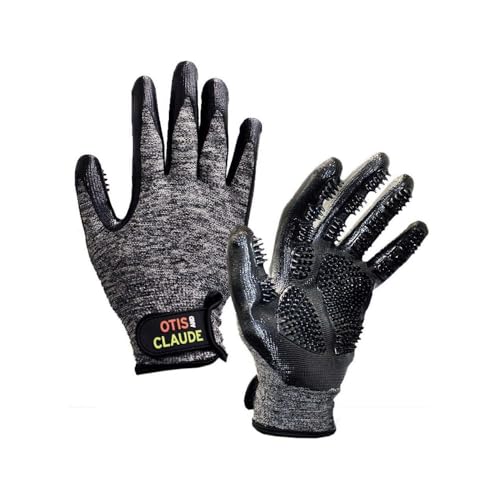
- Adjustable five-finger glove
- Flexible silicone tips
- Brushing and bathing use
- Two-glove grooming format
- Glove fit may vary by hand size
Otis & Claude Pet Grooming Gloves is a grooming tool listed for an adjustable five-finger glove with flexible silicone tips, listed for brushing, bathing, and massage. Labradors have a short double coat, so owners often compare tools that lift loose undercoat hair without rough handling. This product’s design gives you a specific format to consider, but no brush stops normal shedding. Check the package for size, material, and care directions, then choose a tool you can move comfortably across the dog’s body.
If your Labrador has sensitive skin or a coat condition, ask a groomer or veterinarian which style is appropriate. The product page notes that the glove format may feel familiar to dogs that enjoy petting, but tolerance varies. Keep nails trimmed and avoid pressing the tips into skin. Start with a few gentle strokes in the direction of hair growth and let your dog get used to the feel of the tool. Do not press hard, scrape repeatedly, or force the brush through a tangle. A short session is easier to monitor than a long grooming attempt.
Clean collected hair from the tool between passes, and stop if you notice redness, discomfort, or unusual hair loss. This option may fit an owner looking for its listed tool style and cleanup features. Compare the head width, grip, storage, and how the tool will work around the dog’s legs, chest, and tail. Brush outdoors or on a washable surface if loose hair is a concern. Labradors still need regular skin checks and routine coat care; sudden shedding, bald patches, or itching should be discussed with a veterinarian rather than treated as a brush problem.
My Recommendation
Otis & Claude Pet Grooming Gloves stands out for an adjustable five-finger glove with flexible silicone tips, listed for brushing, bathing, and massage. I like that its listing describes the tool style and a specific handling or cleanup feature. I would start with a few gentle passes and check how your Labrador’s skin responds.
6. DOGI Double-Row Undercoat Rake

- Double-row stainless-steel pins
- Undercoat rake design
- Short, medium, and long coat positioning
- DOGI grooming tool
- Pin rake can snag if used on mats
DOGI Double-Row Undercoat Rake is a grooming tool with double-row stainless-steel pin rake, listed for short, medium, and long coats and for removing loose undercoat. Labradors have a short double coat, so owners often compare tools that lift loose undercoat hair without rough handling. This product’s design gives you a specific format to consider, but no brush stops normal shedding. Check the package for size, material, and care directions, then choose a tool you can move comfortably across the dog’s body.
If your Labrador has sensitive skin or a coat condition, ask a groomer or veterinarian which style is appropriate. The product page notes that the product page makes strong shedding-reduction claims; results vary. Use light pressure and do not pull through tangles or mats. Start with a few gentle strokes in the direction of hair growth and let your dog get used to the feel of the tool. Do not press hard, scrape repeatedly, or force the brush through a tangle. A short session is easier to monitor than a long grooming attempt.
Clean collected hair from the tool between passes, and stop if you notice redness, discomfort, or unusual hair loss. This option may fit an owner looking for its listed tool style and cleanup features. Compare the head width, grip, storage, and how the tool will work around the dog’s legs, chest, and tail. Brush outdoors or on a washable surface if loose hair is a concern. Labradors still need regular skin checks and routine coat care; sudden shedding, bald patches, or itching should be discussed with a veterinarian rather than treated as a brush problem.
My Recommendation
DOGI Double-Row Undercoat Rake stands out for a double-row stainless-steel pin rake listed for short, medium, and long coats and for removing loose undercoat. I like that its listing describes the tool style and a specific handling or cleanup feature. I would start with a few gentle passes and check how your Labrador’s skin responds.
7. MIU COLOR 4-Inch Deshedding Brush

- Removable four-inch comb head
- Stainless-steel teeth
- Safety blade cover included
- MIU COLOR deshedding tool
- Metal teeth require careful handling and storage
MIU COLOR 4-Inch Deshedding Brush has a removable 4-inch stainless-steel comb head, handle, and safety blade cover. The listing identifies it for short, medium, and long hair. Labradors have a short double coat, so owners often compare tools that lift loose undercoat hair without rough handling. This product’s design gives you a specific format to consider, but no brush stops normal shedding. Check the package for size, material, and care directions, then choose a tool you can move comfortably across the dog’s body.
If your Labrador has sensitive skin or a coat condition, ask a groomer or veterinarian which style is appropriate. The product page notes that the metal teeth can collect loose undercoat hair. Work slowly and check skin between passes, especially over the hips and shoulders. Start with a few gentle strokes in the direction of hair growth and let your dog get used to the feel of the tool. Do not press hard, scrape repeatedly, or force the brush through a tangle. A short session is easier to monitor than a long grooming attempt.
Clean collected hair from the tool between passes, and stop if you notice redness, discomfort, or unusual hair loss. This option may fit an owner looking for its listed tool style and cleanup features. Compare the head width, grip, storage, and how the tool will work around the dog’s legs, chest, and tail. Brush outdoors or on a washable surface if loose hair is a concern. Labradors still need regular skin checks and routine coat care; sudden shedding, bald patches, or itching should be discussed with a veterinarian rather than treated as a brush problem.
My Recommendation
MIU COLOR 4-Inch Deshedding Brush stands out for a removable 4-inch stainless-steel comb head, handle, and safety blade cover, listed for short, medium, and long hair. I like that its listing describes the tool style and a specific handling or cleanup feature. I would start with a few gentle passes and check how your Labrador’s skin responds.
How to choose best dog brush for labradors
Labradors have a short double coat, but brush choice depends on shedding, skin comfort, and the grooming task. Compare the tool’s design, grip, cleaning method, and directions, then use gentle strokes; brushing can collect loose hair but cannot stop normal shedding.
Match the tool to the coat and grooming goal
Compare the current label and package instructions with the dog’s age, size, routine, and known sensitivities. A specific product feature is useful only when it fits those practical needs.
An undercoat tool may collect more loose hair, while a curry brush or glove offers a softer feel for some dogs. Read the product directions and choose a size that moves easily over the body. Do not assume that a tool advertised for all coat types is equally comfortable for every Labrador.
Labradors have a short double coat, so compare tools by what they are designed to do: collect loose undercoat, smooth the topcoat, massage during a bath, or lift hair from the surface.
Use gentle strokes and check the skin
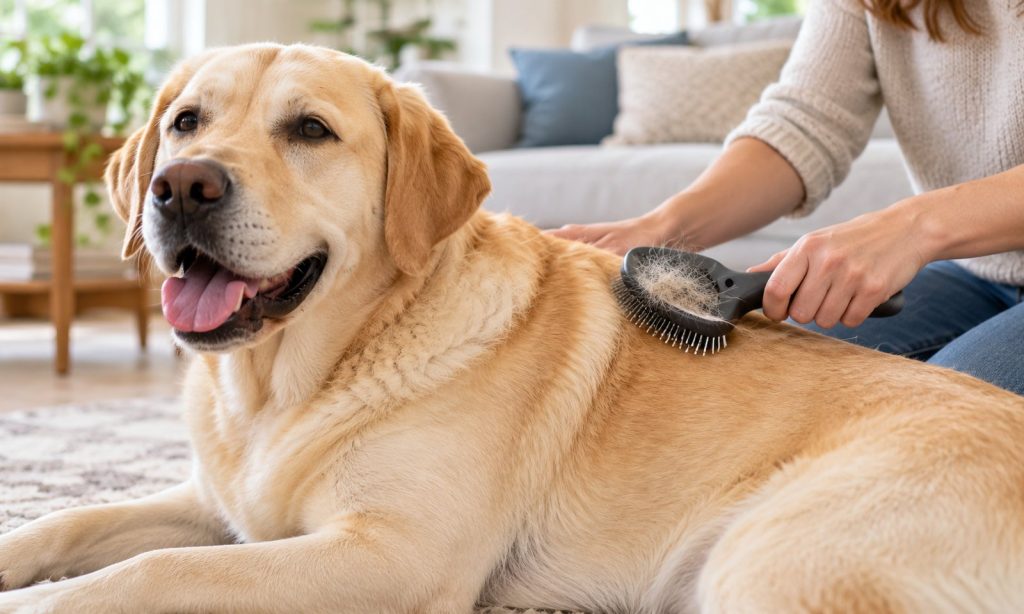
Introduce the brush when your dog is relaxed. Begin with a few light strokes in the direction of hair growth, reward calm behavior, and gradually add time. Avoid hard pressure, repeated scraping over one spot, and pulling at mats. Clean the brush often so collected fur does not drag across the coat. If your dog has sensitive skin, ask a groomer to demonstrate technique. Stop if you see redness, pain, or unusual hair loss.
Regular brushing can help collect loose hair, but it cannot prevent normal seasonal shedding. Check the skin for sores, parasites, or irritated areas while grooming. Sudden shedding, bald patches, persistent itching, or coat changes should be discussed with a veterinarian. Choose the brush that suits your dog’s tolerance and the task you want to do, then use it consistently but gently. A comfortable grooming routine is more useful than trying to remove every loose hair in one session.
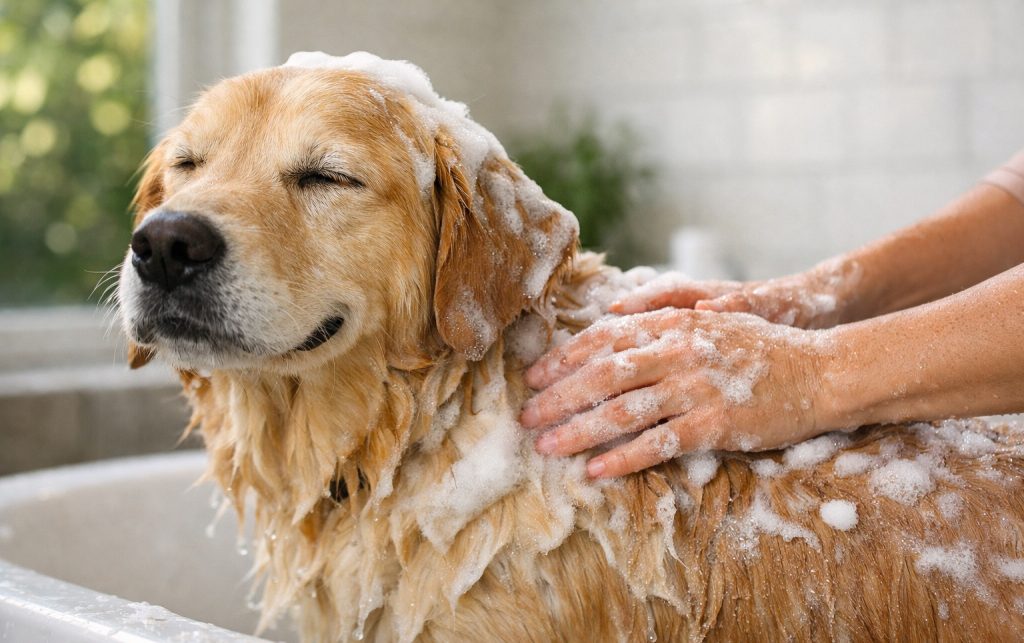
A bath brush and a dry grooming tool serve different purposes. A rubber curry brush can help distribute shampoo during a bath, while a metal undercoat tool is meant to collect loose fur from a dry coat. Check whether the selected tool is labeled for wet use before bathing with it. Keep brushes clean and dry between sessions, and store metal teeth with any protective cover. If your dog has a skin lesion, avoid brushing directly over it and ask your veterinarian whether grooming should wait.
A clean brush also helps keep loose fur contained.
Frequently Asked Questions
What type of brush works for a Labrador’s coat?
Owners often compare undercoat tools, rubber curry brushes, slickers, and grooming gloves. Choose a tool your dog tolerates and follow its directions.
How often should I brush my Labrador?
A regular schedule can help collect loose hair, but frequency depends on shedding and your dog’s skin. Ask your groomer or vet for advice.
Can brushing stop Labrador shedding?
No. Brushing can collect loose hair but cannot stop normal shedding. Sudden changes or bald spots need veterinary attention.
Are deshedding tools safe for Labradors?
Use them only as directed with light pressure. Stop if you see redness or discomfort and ask a professional about technique.
What if my Labrador dislikes brushing?
Introduce the tool gradually, reward calm behavior, and keep sessions short. A groomer can suggest a suitable brush and method.
Final Verdict
For Labradors, compare brush style, size, grip, cleanup, and your dog’s comfort. A tool that gently collects loose hair is more useful than aggressive scraping. Introduce grooming gradually and check the skin as you work. If shedding changes suddenly or irritation appears, consult your veterinarian rather than switching brushes repeatedly.
Affiliate disclosure: This article contains Amazon affiliate links. If you purchase through them, PetAdvisorPro may earn a commission. As an Amazon Associate I earn from qualifying purchases.