
Changes in a cat’s urination can be difficult to interpret because several bladder and urinary conditions cause similar signs. Watch for repeated trips to the litter box, straining, crying, blood in urine, urinating outside the box, or frequent licking around the genital area. A veterinarian may need a physical exam and urine testing to identify the cause. If you are exploring cat foods for urinary tract health, remember that food cannot diagnose an urgent problem or replace veterinary care. Repeated attempts to urinate with little or no urine can signal a blockage, especially in male cats. Treat that as an emergency and contact a veterinary clinic immediately.
What urinary health can look like at home
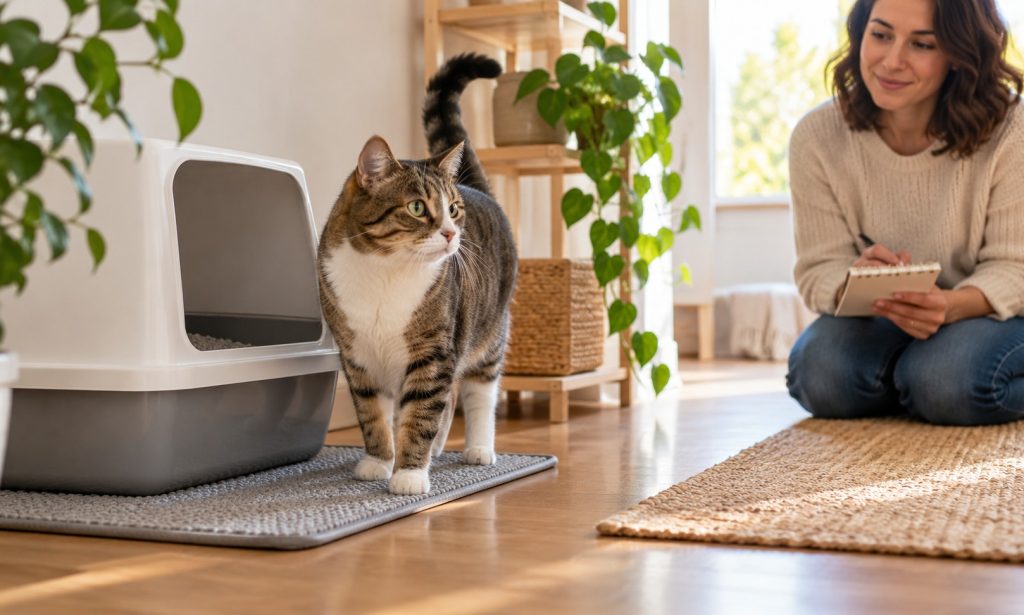
A useful baseline is your cat’s usual litter-box pattern: how often they visit, how much urine clumps or litter changes, and whether they seem comfortable. A change from your individual cat’s normal routine can be more informative than a comparison with another cat. In multi-cat homes, separate boxes or cameras may help you identify which cat is urinating, but do not delay care to collect more information.
Healthy behavior varies with diet, water intake, weather, and household routine. A veterinarian can interpret these details alongside the exam. Our guide to changes in a cat’s water drinking may help you notice hydration changes that are useful to report.
Signs that deserve veterinary attention
- Frequent trips to the litter box or repeated squatting.
- Straining, crying, or appearing uncomfortable while urinating.
- Small urine spots, blood in the urine, or urine outside the box.
- Excessive licking around the genital area.
- Changes in thirst, appetite, energy, or behavior along with urinary signs.
These signs are often grouped as lower urinary tract signs. They can occur with inflammation, stones, infection, plugs, or other problems. The same outward behavior does not reveal the cause. Avoid giving leftover antibiotics, human medicine, or a new diet as a substitute for an examination.
When urinary signs are an emergency
A cat making repeated attempts to urinate but producing little or no urine needs immediate veterinary attention. A urethral blockage can become life-threatening. Male cats, including neutered males, have a higher risk because their urethra is narrower. Do not wait overnight or assume the cat is constipated. Call an emergency veterinary clinic and describe the attempts and urine output.
Vomiting, weakness, hiding, a painful abdomen, loss of appetite, or increasing distress along with unsuccessful urination makes the situation especially urgent. Do not press on the abdomen or try to express the bladder. A veterinarian must evaluate and treat a suspected obstruction.
What a veterinarian may check
History and physical examination
The veterinarian may ask when signs started, how often they occur, whether urine is being produced, and whether there have been previous episodes. Bring details about food, water, medications, litter-box changes, and stressors such as a move or new pet. The exam may include hydration, abdominal comfort, and the bladder.
Urine testing and other diagnostics
Urinalysis can help assess concentration, blood, crystals, and other findings. Depending on the history and results, the veterinarian may recommend a urine culture, blood tests, X-rays, or ultrasound. These tests help distinguish causes that cannot be separated from signs alone. Not every cat needs every test; the plan depends on the individual case.
The 2025 iCatCare consensus guidelines emphasize that lower urinary signs can have different underlying causes and require diagnostic investigation. A bacterial urinary infection is only one possibility. A diagnosis matters because treatment for one condition may not help another.
What to record before the appointment
If your cat is stable and passing urine, note the time and frequency of litter-box visits, urine clump size, straining, vocalizing, blood, appetite, water intake, and behavior. Take a photo of unusual urine or the litter if helpful. Record the exact food and any recent changes. This information can support the history, but it does not replace an exam.
If you notice repeated unproductive attempts, stop tracking and seek emergency care. A suspected blockage is not a condition to monitor at home.
Food and urinary health discussions
Ask the veterinarian whether your cat’s diagnosis calls for a specific nutrition plan, added water, or follow-up testing. Different urinary conditions may require different strategies, and a diet appropriate for one cat may not fit another. Do not switch foods abruptly or rely on a product label that promises urinary support.
For a broader look at cat foods for urinary tract health, see our guide, then discuss your cat’s specific diagnosis with a veterinarian. You can also review our explanation of wet food, dry food, and hydration. These resources are background reading, not treatment instructions.
Frequently Asked Questions
How can I tell if my cat has a urinary tract infection?
You cannot confirm an infection from behavior alone. A veterinarian may need urine testing and sometimes a culture to identify the cause.
Is blood in a cat’s urine an emergency?
It needs prompt veterinary advice. If your cat also strains repeatedly or produces little or no urine, seek emergency care immediately.
Can a cat’s urinary problem look like constipation?
Yes. Straining in the litter box can be mistaken for constipation. If you are unsure whether urine is passing, contact a veterinarian urgently.
Do urinary signs always mean my cat needs antibiotics?
No. Several conditions can cause similar signs, and antibiotics are appropriate only when a veterinarian identifies a reason to use them.
Should I change food when urinary signs begin?
Do not use a food change to delay care. Ask the veterinarian whether a specific diet is appropriate after the cause is assessed.
Final Words
Notice changes in litter-box habits, comfort, urine amount, and behavior, then share those details with your veterinarian. A cat straining repeatedly with little or no urine needs emergency care. If you are comparing cat foods for urinary tract health, use the information to prepare questions after your cat has been assessed. A veterinary diagnosis guides the right next step because urinary signs can come from several different conditions.
Reference
- Cornell University College of Veterinary Medicine: Feline Lower Urinary Tract Disease
- Merck Veterinary Manual: Lower Urinary Tract Disease in Cats
- iCatCare: 2025 Consensus Guidelines on Lower Urinary Tract Diseases in Cats
- Cornell University College of Veterinary Medicine: Urgent Care Emergencies
- Merck Veterinary Manual: Obstructive Uropathy in Dogs and Cats









