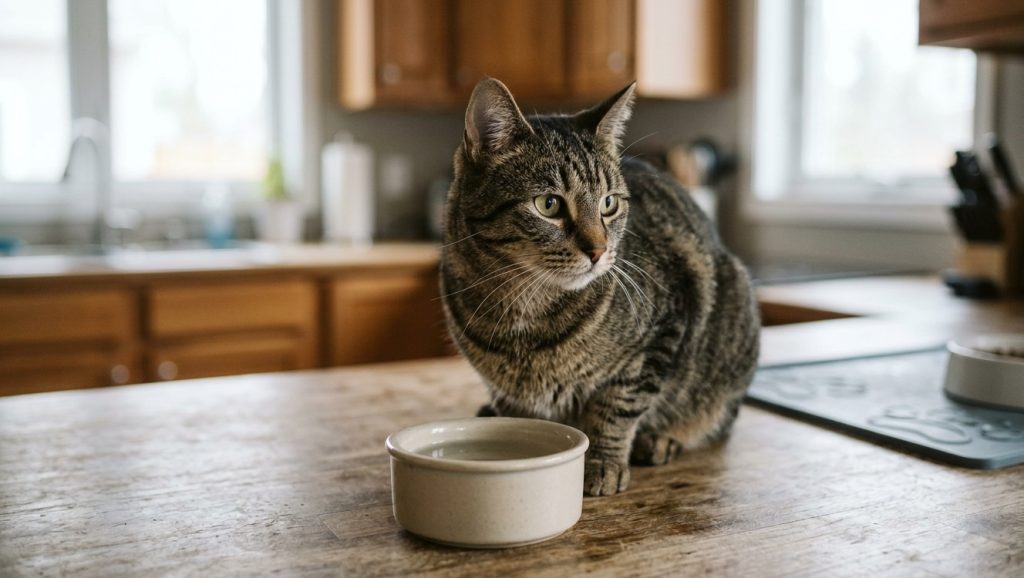
You refill your cat’s water bowl, walk away, and come back hours later only to find it looking almost untouched. Naturally, one question starts nagging at you: Why Is My Cat Not Drinking Water?
After years of caring for cats and other pets, I have learned that water bowls can be surprisingly misleading. Some cats barely seem to drink because they get much of their moisture from wet food. Others genuinely are drinking less because something is bothering them. And, because cats are famously talented at hiding discomfort, it is worth paying attention when their habits suddenly change.
Hydration supports normal kidney function, digestion, circulation, temperature regulation, and overall health. A cat that consistently refuses water or is showing other signs of illness may need veterinary care. On the other hand, a healthy cat eating moisture-rich canned food may simply have little reason to visit the water bowl very often.
So, why is my cat not drinking water? The answer depends on your cat’s diet, preferences, environment, and health. The important thing is to look at the whole picture rather than staring at the water bowl as if it owes you an explanation. Cats rarely cooperate with our investigations 🙂
Why Is My Cat Not Drinking Water?
There is no single answer to Why Is My Cat Not Drinking Water? Some reasons are completely harmless, while others can signal a medical problem.
A cat may drink very little from a bowl because:
- It eats mostly wet food and gets substantial moisture from meals.
- The water is stale, warm, or otherwise unappealing.
- The bowl is in a stressful or inconvenient location.
- The cat prefers running water.
- Stress or a change in routine has affected normal behavior.
- Dental or mouth pain makes drinking uncomfortable.
- Nausea or another illness has reduced its interest in water.
- An underlying medical condition is affecting appetite and hydration.
What matters most is whether the reduced drinking is normal for your individual cat or represents a sudden change.
If your cat has always eaten wet food and rarely drinks from the bowl but remains active, eats normally, urinates normally, and appears healthy, that situation is very different from a cat that suddenly stops drinking altogether.
How Much Water Should a Cat Drink Each Day?
There is no perfect amount that applies to every cat. Water needs vary based on body size, activity level, age, diet, environmental temperature, and health.
One of the most important things to understand when asking, “Why Is My Cat Not Drinking Water?”, is that cats receive water from more than one source.
Cats Eating Wet Food May Drink Less
Wet cat food contains a large amount of moisture. Therefore, a cat eating primarily canned or other moisture-rich food may visit its water bowl much less often than a cat eating dry kibble.
This can worry owners unnecessarily. I have seen this pattern many times with cats: the bowl seems barely touched, yet the cat is eating well and behaving normally because much of its fluid intake is arriving conveniently with dinner.
A cat eating mostly dry food generally depends more heavily on drinking water separately.
Look at Total Hydration, Not Just the Bowl
Instead of judging hydration solely by how much water disappears from the bowl, consider:
- What type of food does your cat eat?
- Has its drinking behavior changed suddenly?
- Is it eating normally?
- Is it urinating normally?
- Is it energetic and behaving like itself?
- Are there any obvious signs of illness?
These observations provide much more useful information than one suspiciously full water bowl.
Common Reasons Your Cat Is Not Drinking Water
Your Cat Eats Mostly Wet Food
This is one of the most common and least alarming explanations. If your cat consumes moisture-rich food, it may simply not feel thirsty as often.
For many owners wondering, Why Is My Cat Not Drinking Water?, the answer is sitting right there in the food dish.
That said, a wet-food diet does not mean you should stop monitoring your cat. A sudden refusal to drink accompanied by other changes is still worth investigating.
The Water Bowl or Water Is Unappealing
Cats can be remarkably picky about water. Fresh water may be perfectly acceptable to us, but your cat may disagree for reasons known only to the mysterious feline committee.
Some cats dislike:
- Water that has been sitting too long
- Water near food or a litter box
- Plastic bowls that retain odors
- Narrow bowls that touch their whiskers
- Bowls placed in noisy or busy areas
Try refreshing the water regularly and experimenting with a clean, wide bowl made from a material your cat accepts.
Stress or Environmental Changes
Cats often react to changes more strongly than we expect. A move, visitors, construction noise, a new pet, a baby, or even a major rearrangement of furniture can affect eating and drinking habits.
If your cat is drinking less after a stressful event, watch for other changes as well, including hiding, reduced appetite, litter box changes, or unusual behavior.
The Water Bowl Is in the Wrong Location
A water bowl may be technically available but still inconvenient from your cat’s perspective.
Many cats prefer quiet, accessible drinking areas. Placing several water stations around the home can help, particularly in larger houses or multi-level homes.
Keep water reasonably separated from litter boxes. Fresh drinking water beside the bathroom is probably not most humans’ dream setup either, FYI.
Your Cat Prefers Moving Water
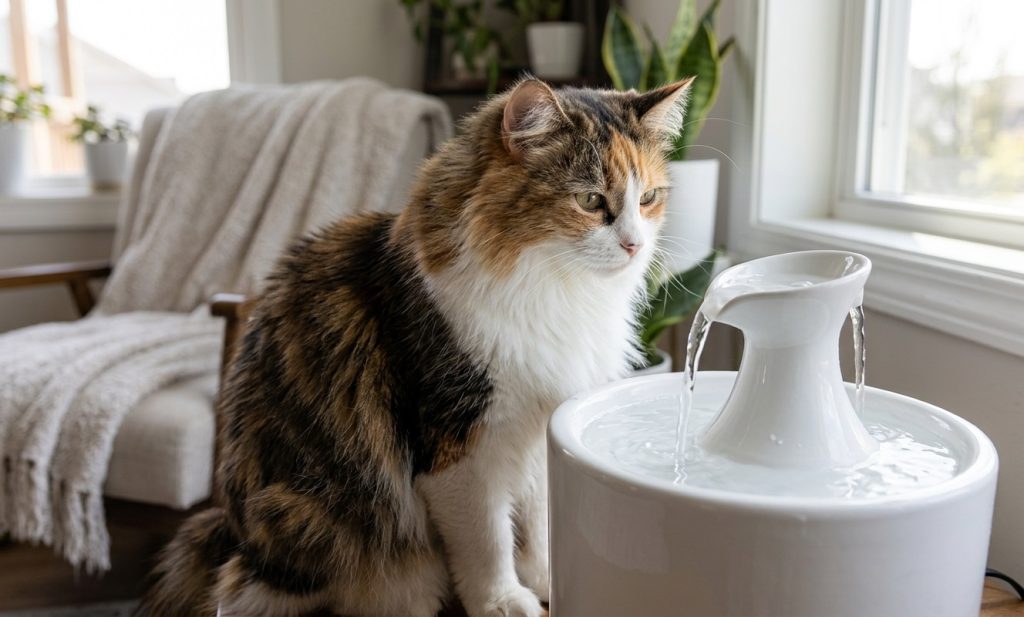
Some cats are attracted to running water and may drink more readily from a pet fountain than from a still bowl.
This preference may help explain why your cat ignores a perfectly good bowl but suddenly appears beside the sink whenever you turn on the faucet.
A fountain is not medically necessary for every cat, but it can be a useful option for a cat that genuinely prefers moving water. Keep any fountain clean according to its instructions, because a fancy water source is still just a dirty bowl with a motor if it is never maintained.
Dental Pain or Mouth Problems
Painful teeth, inflamed gums, oral injuries, or other mouth problems can make drinking uncomfortable.
Watch for additional signs such as:
- Drooling
- Bad breath
- Pawing at the mouth
- Difficulty eating
- Dropping food
- Reduced appetite
If these signs occur with reduced drinking, contact your veterinarian.
Nausea or General Illness
A cat feeling nauseated or unwell may lose interest in both food and water. Vomiting, diarrhea, fever, pain, infection, and many other conditions can affect fluid intake.
This is why the question Why Is My Cat Not Drinking Water? should never be considered separately from your cat’s overall condition.
A cat that is bright, eating normally, and simply drinking little because it eats wet food is different from a cat that refuses everything and spends the day hiding under the bed.
Kidney Disease or Other Medical Conditions
Some illnesses can affect a cat’s drinking patterns. Kidney disease, diabetes, digestive problems, infections, metabolic disorders, and other health conditions may change thirst and hydration.
It is also important to remember that some conditions may initially cause increased drinking rather than decreased drinking. Later changes in a sick cat can become more complicated.
Reduced water intake alone cannot identify a disease. A veterinarian may need a physical examination and diagnostic testing to determine the cause.
Medication or Treatment Effects
Certain medications or treatments can affect appetite, nausea, thirst, or drinking behavior.
If your cat’s water intake changed after starting a medication, do not simply stop the medication on your own. Contact the prescribing veterinarian and explain exactly what you have noticed.
Cat Dehydration Symptoms to Watch For
Recognizing possible cat dehydration symptoms is important, especially when a cat is not drinking water.
Potential signs of dehydration in cats can include:
- Dry or tacky gums
- Lethargy or unusual weakness
- Reduced appetite
- Sunken-looking eyes
- Reduced or unusual urination
- General weakness or illness
- Skin that may return more slowly after being gently lifted
The so-called skin-tent test is often discussed online, but it should not be treated as a reliable home diagnosis. Age, body condition, and other factors can affect how the skin behaves. A normal-looking result does not guarantee that a cat is properly hydrated.
Similarly, dry gums can have more than one explanation. Home checks are useful observations, not replacements for professional assessment.
If you suspect significant dehydration, particularly if your cat is weak, vomiting, has diarrhea, refuses food and water, or seems seriously unwell, contact a veterinarian promptly.
How to Encourage a Cat to Drink More Water
If your cat is otherwise healthy but could benefit from more fluid intake, there are several practical steps you can try.
Provide Multiple Clean Water Stations
Place clean bowls in several quiet locations.
Some cats drink more when water is easy to find without walking through the busiest part of the house. Multiple stations can also help households with several pets.
Try a Pet Water Fountain
For a cat that enjoys moving water, a fountain may encourage more frequent drinking.
Choose one that is easy to clean. The best hydration plan in the world becomes less impressive if cleaning the device requires an engineering degree.
Experiment With Bowl Materials and Shapes
Try a few safe options, such as wide ceramic or stainless-steel bowls. Some cats dislike narrow or deep bowls because their whiskers repeatedly touch the sides.
Small preferences can make a surprising difference.
Refresh the Water Frequently
Many cats prefer fresh, clean water. Wash bowls regularly and replace the water often.
Also consider the location. Water sitting in direct sunlight or beside a heat source may become less appealing.
Keep Water Away From Litter Boxes
Provide some separation between water and the litter area. A quiet, clean location may encourage drinking.
Consider Moisture-Rich Food
Wet food can contribute substantially to total fluid intake. If you are considering changing your cat’s diet, especially if your cat has kidney disease, diabetes, urinary issues, food allergies, or another medical condition, discuss the change with your veterinarian first.
Add Water to Food Carefully
Some cats will accept a small amount of water mixed into wet food. Start gradually so you do not make the meal unappealing.
Only leave moistened food out for an appropriate amount of time and follow food safety guidance. Spoiled food will not improve anyone’s hydration strategy :/
When Should I Take My Cat to the Vet?
Knowing when to take a cat to the vet for not drinking water is crucial.
Contact a veterinarian promptly if your cat:
- Refuses both food and water
- Shows significant or worsening cat dehydration symptoms
- Is repeatedly vomiting
- Has ongoing diarrhea
- Appears extremely lethargic or weak
- Seems confused, unusually withdrawn, or seriously unwell
- Produces very little urine
- Struggles to urinate
- Shows sudden major behavioral changes
- Is a kitten, senior cat, or medically vulnerable cat with reduced intake
Urinary difficulty can be particularly urgent, especially if a cat repeatedly enters the litter box but produces little or no urine. Do not assume this is simply a hydration problem.
If you are asking Why Is My Cat Not Drinking Water? because your cat has suddenly stopped drinking and is also refusing food, do not spend days testing new bowls and hoping for the best. Call your veterinarian for guidance.
Trust your observations. You know what is normal for your cat better than anyone reading a generic checklist online.
Prevention: Helping Your Cat Stay Properly Hydrated
Preventing dehydration begins with making hydration easy and monitoring your cat’s normal routine.
Here are practical habits to maintain:
- Keep fresh water available at all times.
- Wash water bowls regularly.
- Offer more than one water source when practical.
- Consider moisture-rich food if appropriate for your cat.
- Monitor changes in food intake and drinking habits.
- Pay attention to urination and litter box behavior.
- Schedule regular veterinary care.
- Take sudden changes seriously, especially in senior cats.
IMO, one of the most useful things a cat owner can do is learn what “normal” looks like for their own pet. There is no universal cat personality, appetite, or drinking schedule.
A cat that naturally drinks small amounts several times daily may be perfectly healthy. A normally enthusiastic drinker that suddenly refuses water may not be.
Frequently Asked Questions About Why Cats Stop Drinking Water
- How long can a cat go without drinking water?
There is no safe universal number of days to wait. A cat’s health can deteriorate when it is not taking in enough fluids, especially if it is also not eating or is losing fluids through vomiting or diarrhea. If your cat refuses water and appears unwell, contact a veterinarian promptly.
- Is it normal for a cat eating wet food to drink very little?
Yes, it can be normal. Wet food contains substantial moisture, so some cats drink very little directly from a water bowl. However, sudden changes in drinking behavior should still be monitored, especially when accompanied by illness or behavioral changes.
- What can I give my cat if it will not drink water?
Fresh water should always be available. You can try multiple clean bowls, different locations, a fountain, or appropriate moisture-rich food. Do not give random human drinks, medications, or homemade remedies. If your cat refuses fluids or seems ill, contact a veterinarian.
- Should I force my cat to drink water with a syringe?
Do not routinely force water into a cat’s mouth unless your veterinarian has specifically instructed you how and when to do so. Improper syringe-feeding can cause stress and create a risk of aspiration. If your cat cannot or will not drink enough, veterinary guidance is the safer approach.
- Why is my cat suddenly drinking less water?
A sudden change may result from a diet change, stress, environmental changes, a preference issue, nausea, pain, medication effects, or an underlying medical problem. Consider the whole picture, including appetite, energy, urination, vomiting, and other symptoms. Contact a veterinarian if the change persists or your cat appears unwell.
Final Words
So, Why Is My Cat Not Drinking Water? Sometimes the explanation is simple: your cat is eating wet food and getting plenty of moisture from meals. Other times, a stale bowl, stressful environment, dental discomfort, nausea, or an underlying illness may be involved.
The key is not to panic every time the water level looks unchanged. Instead, look at your cat as a whole. Is it eating? Urinating? Playing? Grooming? Acting normally? Or has something clearly changed?
If you are still wondering, “Why Is My Cat Not Drinking Water?”, and the reduced intake is sudden, persistent, or accompanied by cat dehydration symptoms, veterinary advice is the safest next step.
After 15 years of living with and caring for pets, one lesson has stayed consistent: small changes in an animal’s routine can sometimes mean nothing—and occasionally mean something important. Paying attention without becoming unnecessarily alarmed is a skill every good pet owner develops over time.
Keep fresh water available, understand your cat’s normal habits, and do not hesitate to ask a veterinarian when something feels wrong. Your cat may never explain its drinking preferences, of course. That would make life far too easy. But careful observation can give you the answers you need.