Early signs of yeast and fungal skin infections in dogs can look like ordinary itching, allergies, or a small scrape. Redness, odor, flakes, hair loss, and repeated licking deserve attention, especially when they spread or keep returning. The phrase early signs of yeast and fungal skin infections in dogs and when to contact a veterinarian describes two questions: what changes to watch for, and how urgently to get help. A veterinarian can distinguish yeast overgrowth, ringworm, bacterial infection, parasites, allergies, and other skin problems. Do not assume a rash is fungal or start an antifungal cream for dogs over the counter without a veterinary plan. The right response depends on the cause, body location, severity, and whether people or other pets may be exposed.
What yeast and fungal skin infections mean
Yeast is a type of fungus. Some yeasts normally live on a dog’s skin and ears. They can multiply when the skin’s normal balance changes, often alongside allergy or another inflammatory condition. Dermatophytes cause ringworm, which is also a fungal infection but differs from yeast dermatitis. Ringworm can affect hair, skin, and nails and may spread between animals and people. Other fungi can cause deeper or systemic disease, which may involve more than the skin.
These conditions do not all look alike, and appearance alone cannot confirm the cause. Early signs of yeast and fungal skin infections in dogs overlap with allergies, mites, bacterial infections, and trauma. A veterinary exam helps determine whether testing or treatment is needed.
Early changes to watch for
Itching, licking, and rubbing
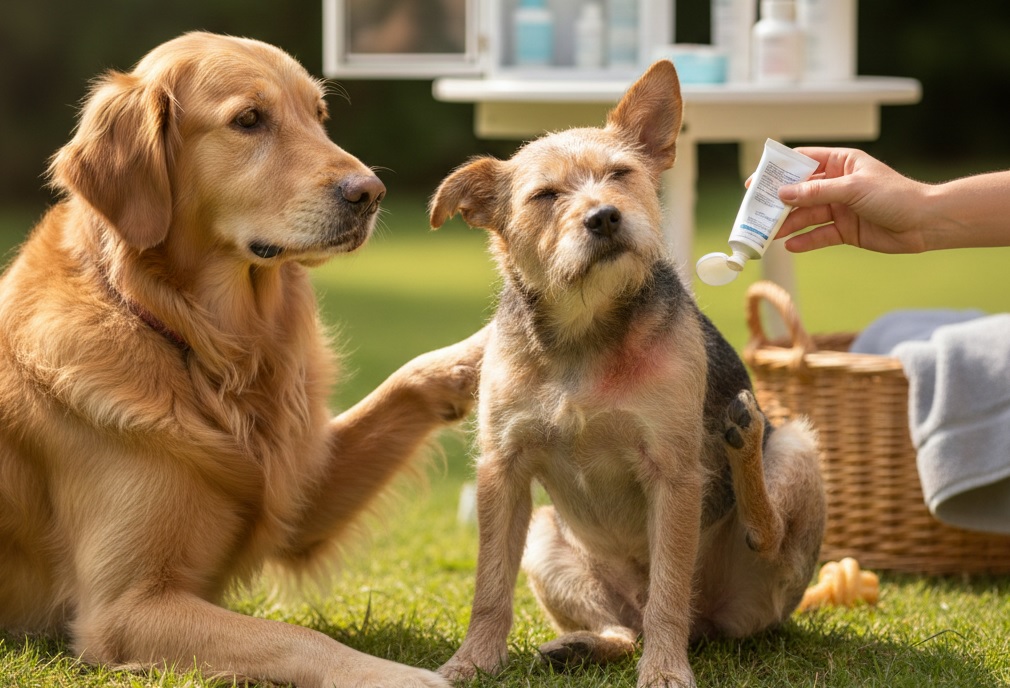
Persistent scratching, paw licking, chewing, face rubbing, or head shaking can be an early clue. Itching is a sign, not a diagnosis. A dog may focus on the feet, skin folds, ears, armpits, groin, or other irritated areas. Repeated licking can damage the skin and allow secondary infection to develop. Early signs of yeast and fungal skin infections in dogs may start subtly, so note how often the behavior occurs and whether it is worsening.
Redness, odor, flakes, and skin changes
Look for pink or red skin, greasy or flaky patches, a musty smell, small bumps, scabs, or a change in skin color. Chronic inflammation can make skin thicker or darker. Yeast overgrowth may occur in warm, moist areas and may accompany recurrent ear problems. Ringworm may produce patches of hair loss, broken hairs, scale, or crusts. The familiar circular shape is not always present. Early signs of yeast and fungal skin infections in dogs can therefore be easy to mistake for another condition.
Hair loss, sores, or nail changes
Patchy thinning, broken hairs, tender skin, open sores, or changes around the nails need attention. Ringworm can affect claws or nail beds. Deep fungal disease may cause nodules or ulcers and sometimes signs such as coughing, eye problems, poor appetite, or weight loss. Those broader symptoms should not be treated as a routine skin complaint.
When to contact a veterinarian
Arrange a veterinary appointment when itching or skin changes persist, spread, recur, smell unpleasant, or interfere with sleep and normal activity. Contact the clinic promptly if there are open or painful sores, swelling, discharge, rapid hair loss, or affected areas near the eyes. A puppy, senior dog, or dog with a weakened immune system may need earlier assessment.
Seek same-day advice for rapidly worsening lesions, marked pain, facial swelling, feverish behavior, unusual tiredness, or a dog that stops eating. Breathing difficulty, collapse, or severe facial swelling is an emergency. If ringworm is possible, tell the clinic before arrival so staff can advise how to limit exposure in the waiting area. Wash hands after handling lesions, avoid sharing grooming tools, and keep children or immunocompromised people from touching suspicious patches until a veterinarian advises you.
Keep a brief record of when the signs began, where they appeared, how they changed, and any recent grooming, boarding, medication, diet, or household changes. Photos taken in consistent light can help show progression. Mention whether another pet or person has developed a rash. Do not apply household disinfectants, essential oils, leftover medicine, or human skin products to the affected area.
Why a diagnosis matters before treatment
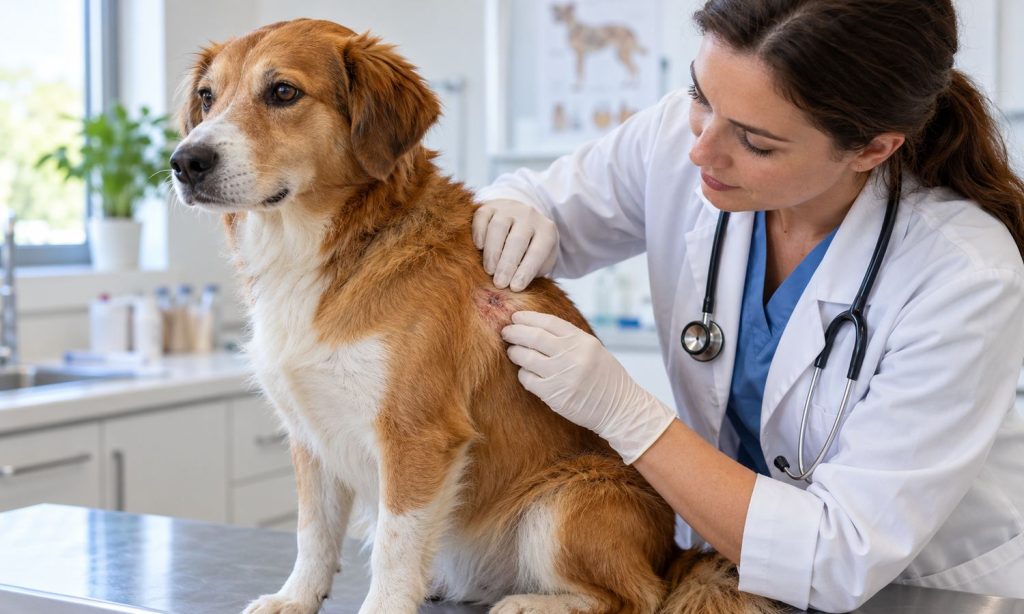
Several problems can produce similar redness and itch. A veterinarian may examine the whole skin and ears, ask about the dog’s history, and collect samples. Cytology can look for yeast, bacteria, and inflammatory cells. Skin scrapings may help check for mites. Suspected ringworm may require fungal culture, a molecular test, or other diagnostic methods. A biopsy or blood work may be considered when signs are unusual, severe, or persistent.
Treatment follows the diagnosis. Some cases need topical therapy; others need prescription medication, treatment of an underlying allergy or disease, or follow-up testing. Ringworm precautions differ from care for noncontagious yeast overgrowth. Using the wrong cream can delay diagnosis, irritate skin, or expose other animals unnecessarily. Ask the veterinarian whether the condition could spread, how to handle bedding and grooming items, and when the dog can safely resume normal contact.
Questions to ask about antifungal cream
If you are considering an antifungal cream for dogs over the counter, ask whether the lesion has been diagnosed and whether that specific product and ingredient are appropriate. Confirm where it may be applied, how often, for how long, and what to do if the dog licks it. Ask whether a cone or other barrier is needed, whether the product is safe near eyes or ears, and whether any other medications could interact. The veterinarian may recommend a different formulation or testing first. Do not use a human cream based only on a similar-looking rash.
Also ask how progress will be measured and when to recheck. A surface patch that improves briefly may return if an underlying allergy, parasite, or infection remains untreated. Complete the plan for the advised duration; do not stop early or extend treatment without guidance.
Frequently Asked Questions
Can I tell yeast dermatitis from ringworm by looking?
No. Their signs overlap with other skin conditions, and ringworm does not always form a ring. Testing may be needed.
Are fungal skin infections contagious?
Some are. Ringworm can spread between animals and people. Yeast overgrowth on a dog’s skin is generally associated with that dog’s skin imbalance and is not considered contagious in the same way.
Should I try an over-the-counter antifungal first?
Ask a veterinarian before using one. A similar-looking rash may have a different cause, and treatment choice depends on the diagnosis and location.
What should I bring to the appointment?
Bring a medication and supplement list, a timeline, photos, and details about exposure to other animals, boarding, grooming, or new household products.
Can my dog’s itching be an allergy instead?
Yes. Allergies, parasites, bacterial infection, and fungal disease can look alike or occur together. Examination and appropriate testing help sort them out.
Final Words
Early signs of yeast and fungal skin infections in dogs include persistent itch, redness, odor, scale, hair loss, and recurring ear or skin trouble. These clues cannot identify the cause on their own. Contact a veterinarian when signs persist, spread, recur, or cause discomfort, and seek urgent help for severe pain or systemic illness. Avoid self-treating with an antifungal cream for dogs over the counter until a veterinarian confirms it fits the problem. For more context, see our guide to over-the-counter antifungal cream for dogs; use any treatment only as your dog’s veterinarian directs.
Reference
- University of Illinois College of Veterinary Medicine, Malassezia Dermatitis in Dogs and Cats.
- Texas A&M University, Ringworm in Pets.
- Merck Veterinary Manual, Itching (Pruritus) in Dogs.
- Cornell University College of Veterinary Medicine, Dermatology.