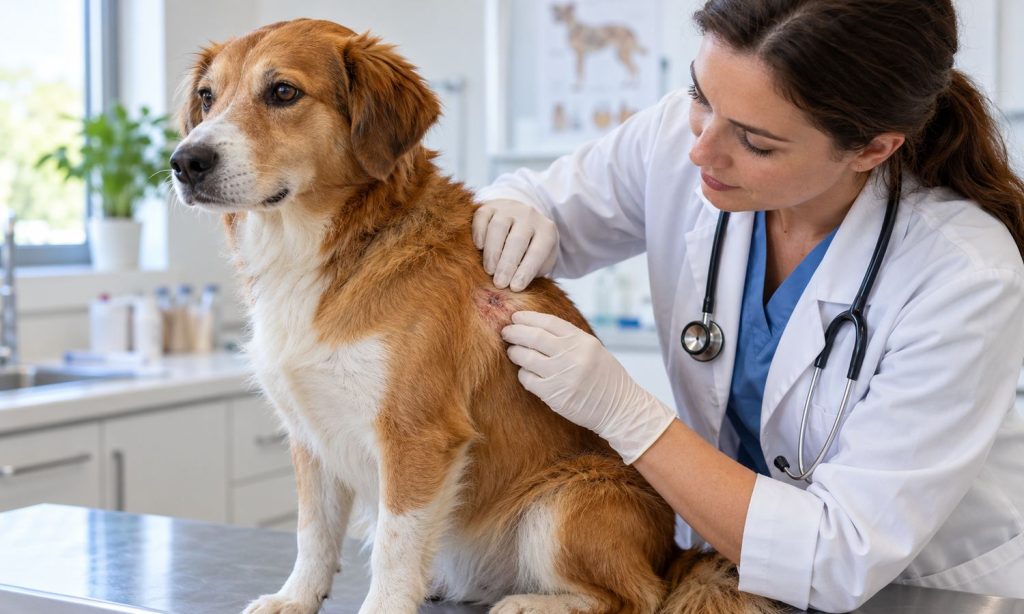
Early signs of mast cell tumors in dogs can be easy to miss because these growths may resemble common skin lumps. A spot may be small, soft, firm, raised, or hidden under the coat. Some change size, become red, or look bruised after being rubbed. The phrase early signs of mast cell tumors in dogs and when to contact a veterinarian is important because a lump’s appearance cannot tell you whether it is benign or cancerous. A prompt exam gives your veterinarian a chance to sample the mass and decide what comes next. Do not squeeze, puncture, or apply medication to a lump at home. Photograph it, note changes, and contact your veterinary clinic for guidance. antihistamine for mast cell tumors in dogs can help frame questions to discuss after a diagnosis; it is not a treatment plan.
What mast cell tumors are
Mast cells are immune cells involved in allergic and inflammatory responses. A mast cell tumor forms when these cells grow abnormally. In dogs, mast cell tumors commonly occur in or beneath the skin, but their appearance and behavior vary. Some grow slowly; others change quickly or affect nearby tissue. A lump can look like a harmless fatty mass, wart, or insect bite, so visual inspection alone is not a reliable test.
Early signs of mast cell tumors in dogs may be subtle. The tumor can wax and wane in size because mast cells release histamine and other inflammatory substances. Handling or irritation may cause temporary swelling, redness, or bruising around the mass. These changes are useful details to report, but they do not prove a tumor is present.
Early signs to notice
A new lump or a change in an old one
Check for any new bump on or under the skin, even if it is tiny or does not bother your dog. Notice whether it is growing, shrinking, changing shape, or becoming more noticeable after activity or touch. A long-standing lump that suddenly changes also deserves attention. Record its location and approximate size. A ruler beside the area in a photo can help track change without repeatedly pressing the mass.
Redness, swelling, bruising, or irritation
A lump may look red or inflamed, swell and then settle, or develop bruising. Your dog may lick, scratch, or chew at the area. Some masses ulcerate or ooze. Because many skin problems cause similar signs, do not label a lesion a mast cell tumor based on color or texture. Early signs of mast cell tumors in dogs are clues for an exam, not a home diagnosis.
Changes in comfort or general health
Some dogs show no behavior change. Others may seem uncomfortable when the spot is touched or may repeatedly lick it. More advanced disease can affect appetite, energy, or the digestive system, but these signs have many possible causes. Vomiting, black or bloody stool, weakness, collapse, or sudden severe illness needs urgent veterinary advice, particularly when a dog has a known or suspected mass.
When to contact a veterinarian
Call your veterinarian when you find a new lump, or when an existing one grows, changes color, becomes sore, bleeds, or repeatedly swells. Do not wait for it to become large. Early evaluation can help the clinic choose an appropriate diagnostic plan and discuss timing. If your dog seems well, the appointment may be scheduled routinely, but call promptly for instructions rather than monitoring indefinitely.
Seek urgent care if the lump bleeds heavily, causes significant pain, or is accompanied by repeated vomiting, black stool, severe weakness, pale gums, breathing difficulty, or collapse. If your dog has a previously diagnosed mast cell tumor and develops sudden swelling or illness, follow the oncology team’s emergency plan. Keep the dog from scratching the site if you can do so safely, but do not wrap it tightly or apply a cream unless instructed.
Before the visit, write down when you first noticed the bump and any changes. Photograph it from the same angle and lighting. Note whether it changes after rubbing, grooming, exercise, or rest. Bring a list of medications and supplements, and tell the veterinarian about appetite, vomiting, stool changes, or other lumps. These details can make the exam more useful.
How veterinarians check a suspicious lump
The veterinarian will ask about the mass and examine your dog’s skin and overall health. A fine needle aspirate is often used to collect cells from a lump. The sample is placed on a slide and examined under a microscope or sent to a laboratory. Mast cells often have recognizable features, so this test may identify a mast cell tumor without removing the whole mass.
Sometimes the sample does not provide a clear answer. The veterinarian may recommend another aspirate, a biopsy, or surgical removal followed by tissue analysis. Histopathology helps characterize the tumor and assess features that guide prognosis. The plan depends on the lump’s location, size, test results, and your dog’s health.
If a mast cell tumor is confirmed, additional testing may be discussed to assess nearby lymph nodes or other organs. Not every dog needs every test. The veterinary team will explain what each test could clarify and whether the results may change treatment. Early signs of mast cell tumors in dogs can lead to a small first step: getting the mass sampled and learning what it is.
Questions to ask at the appointment
Ask whether the lump should be sampled now, what test is recommended, when results will be available, and whether the procedure is expected to be uncomfortable. Ask what signs mean you should seek urgent help while waiting. If a tumor is diagnosed, ask about grade or other risk information, whether staging tests are advisable, and whether referral to a veterinary oncologist would be useful.
Discuss the proposed treatment options, expected benefits, possible risks, and likely follow-up schedule. Ask whether the tumor can be removed with an appropriate margin at its current location. If the plan includes surgery, clarify how the tissue will be analyzed and when the incision should be checked. You can ask for a written estimate and copies of results for your records.
It is reasonable to ask for time to understand the choices. Avoid making a decision based on an online photo or a lump’s temporary change in size. A second opinion from a veterinary oncologist can help when the diagnosis or treatment plan is complex.
Frequently Asked Questions
Can a mast cell tumor look like a harmless lump?
Yes. It can resemble several benign growths. A veterinarian may need a cell sample to identify it.
Does every dog lump need testing?
Not every lump is cancer, but a veterinarian should assess new or changing masses and decide whether sampling is appropriate.
Why does a suspected mast cell tumor change size?
Mast cells can release inflammatory substances that cause temporary swelling or redness. Size change alone cannot confirm the diagnosis.
Should I squeeze or needle a lump to see what is inside?
No. Manipulating it can cause irritation, bleeding, or pain, and it cannot provide a reliable diagnosis. Let a veterinary professional assess it.
When is a dog with a lump an emergency?
Seek urgent advice for heavy bleeding, severe pain, collapse, breathing trouble, repeated vomiting, black stool, or sudden marked weakness.
Final Words
Early signs of mast cell tumors in dogs include a new or changing lump, intermittent swelling, redness, bruising, irritation, or licking. These signs are not specific, so arrange a veterinary exam rather than guessing from appearance. Seek urgent care if severe illness or bleeding occurs. A fine needle sample often helps identify what the lump is, while further testing is tailored to the diagnosis. Early signs of mast cell tumors in dogs and when to contact a veterinarian should be treated as a prompt to get the bump checked, not as a reason to panic. If treatment is discussed, review our antihistamine for mast cell tumors in dogs guide with your veterinarian.
Reference
- Cornell University College of Veterinary Medicine, Oncology: Canine Mast Cell Tumors.