
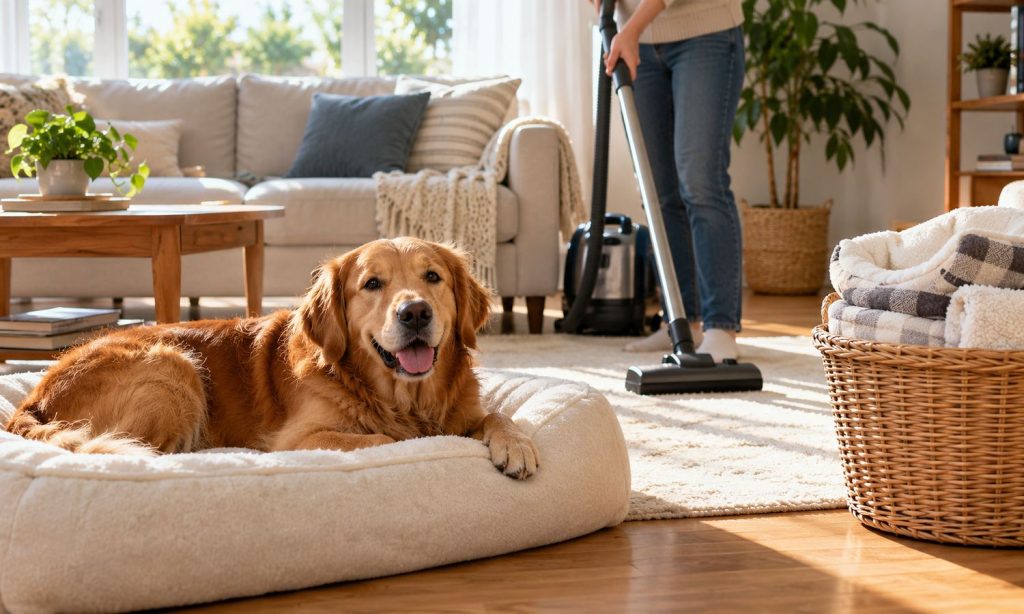
Pet hair is frustrating; urine can be worse because odor may linger after the visible spot disappears. On vinyl, careful cleanup matters because harsh chemicals, abrasive tools, and excess moisture can dull a wear layer or affect seams. This guide explains how to remove pet hair or urine from vinyl without damaging the finish, whether the floor is luxury vinyl plank, sheet vinyl, or tile. Always check the flooring care instructions first because finishes differ. For a cleaner made for dog urine on vinyl floors, see our guide to a cleaner for dog urine on vinyl floors. Use any cleaner only when its label and your floor-care guidance are compatible.
Identify the floor and the mess
Vinyl flooring usually has a protective surface layer, printed design, and backing. It can look like stone or wood, but it does not need the same care as those materials. Before cleaning, identify whether the floor is sheet vinyl, luxury vinyl plank, or tile and look for the manufacturer’s maintenance directions. Avoid assuming a product is safe because it is labeled “natural,” “pet safe,” or “all purpose.” Test it in a hidden spot if the care instructions allow.
Separate loose fur from a wet accident. Dry hair can be collected with a soft brush, microfiber dust mop, or vacuum approved for hard floors. Fresh urine should be blotted promptly so liquid does not sit in seams or edges.
How to remove pet hair from vinyl
Pick up loose hair gently
Start with a dry microfiber mop, soft broom, or vacuum with a hard-floor setting and a clean, nonabrasive head. Move in slow passes to gather fur without scraping the finish. A rubber broom can help lift hair, but test it first and avoid hard edges or stiff bristles. If hair collects along baseboards, use a soft attachment rather than digging into the seam.
Use a lightly damp wipe for clingy fur
Static can make fine hairs cling to vinyl. A barely damp microfiber cloth can collect the remaining strands. Do not soak the floor. Wring the cloth well, work in small sections, and dry any excess moisture with a clean towel. Avoid waxes or oily sprays unless the floor manufacturer specifically recommends them; they can leave a slick film or change the surface appearance.
How to remove fresh urine safely
Blot the liquid with absorbent paper towels or a washable cloth. Press down gently; rubbing can spread the urine across a larger area. Work from the outer edge toward the center. If the accident reached a seam, blot along it without forcing moisture underneath the plank or tile.
Follow the floor’s care instructions for the next cleaning step. If they allow a mild cleaner, apply it to a cloth rather than flooding the floor. Wipe the area, then use a clean damp cloth to remove residue if directed. Dry the surface completely. Do not use steam, abrasive pads, scouring powder, concentrated solvents, or strong acids unless the flooring instructions expressly allow them.
For dried urine or lingering odor, use only a product whose label states it is suitable for vinyl and for the intended type of mess. Follow dilution, dwell-time, rinsing, ventilation, and pet-reentry directions exactly. Do not mix cleaners. In particular, never combine bleach with ammonia or acids. Keep pets away until the floor is dry and the product label says the area is safe for normal use.
Protect the finish and the seams
Use the least aggressive method that removes the mess. Test a cleaner in an inconspicuous area, let it dry, and look for dullness, color change, tackiness, or a slippery residue. Stop if the surface changes. Do not scrub in circles with a rough sponge or scrape dried material with a metal blade. These can scratch the protective layer.
Moisture can seep through damaged edges, open seams, or gaps around fixtures. Use small amounts of liquid and dry the floor promptly. If urine repeatedly reaches the same seam, inspect for a lifted edge or damaged plank. A persistent odor may be trapped below the vinyl or in the subfloor; surface cleaning alone may not resolve it. A flooring professional can assess hidden damage when the smell persists after appropriate cleaning.
Why odor may return
A spot can seem clean while odor compounds remain in residue, under an edge, or in an absorbent rug nearby. A dog may return because the scent remains detectable to the animal, or because marking behavior continues. Identify the exact spot and clean a wider but still controlled area if the floor directions permit. Wash nearby washable bedding or mats according to their labels and keep the dog away while the floor dries.
If accidents repeat, consider whether the dog needs more frequent bathroom breaks or is marking. Sudden indoor urination, straining, frequent attempts, blood, or discomfort warrants a call to the veterinarian. Cleaning helps with the surface but does not explain a change in bathroom behavior.
Build a simple pet-safe routine
For routine care, remove grit and fur with a soft dry tool, then damp-mop with the cleaner approved for your floor. Clean spills quickly, use mats at entry points, and keep nails trimmed to reduce scratching. Store cleaners closed and out of reach. Read product labels, ventilate the room when directed, and keep pets out of wet areas until they are dry.
Skip homemade mixtures unless both the floor-care instructions and the product guidance support them. Mixing household products can release dangerous fumes or leave residues. A simple routine works best: blot, use a compatible cleaner sparingly, remove residue as instructed, and dry the surface. For repeated accidents, pair cleaning with changes to bathroom access, training, or veterinary care rather than relying on stronger chemicals.
Keep a small routine log if the same area is soiled more than once. Record the time, approximate amount, and whether the dog had recently gone outside. This can help you notice patterns and describe them to your veterinarian or trainer. For apartment dwellers, check whether an absorbent rug or mat sits near the accident site; fabric can hold odor even after the vinyl is clean. Wash removable items separately according to their care labels. Replace a mat only when its backing is damaged or retains odor after proper washing.
Frequently Asked Questions
Can I use vinegar on vinyl after a pet accident?
Do not assume vinegar is safe for your floor. Check its care instructions first; some surfaces can be dulled or damaged by acidic cleaners.
Can I use a steam mop to remove urine?
Use one only if the flooring manufacturer specifically permits it. Heat and moisture may affect some vinyl products or seams.
How do I remove pet hair without scratching the floor?
Use a soft microfiber mop, soft broom, or approved hard-floor vacuum. Avoid rough bristles and abrasive pads.
Why does my dog revisit the cleaned spot?
Residual odor or repeated marking can prompt a return. If urination is new or frequent, ask a veterinarian to rule out a health problem.
When can my pet walk on the floor again?
Follow the cleaner’s label. Keep pets away until the surface is dry and the stated re-entry conditions are met.
Final Words
To remove pet hair or urine from vinyl without damaging the finish, begin gently, use little moisture, and follow the flooring and cleaner labels. Blot fresh urine, avoid abrasives and unapproved chemicals, and dry seams promptly. If odor keeps returning or your dog urinates indoors repeatedly, look beyond the surface and address the underlying cause. Our guide to a cleaner for dog urine on vinyl floors covers options to evaluate, but always check compatibility with your specific floor before use.









