
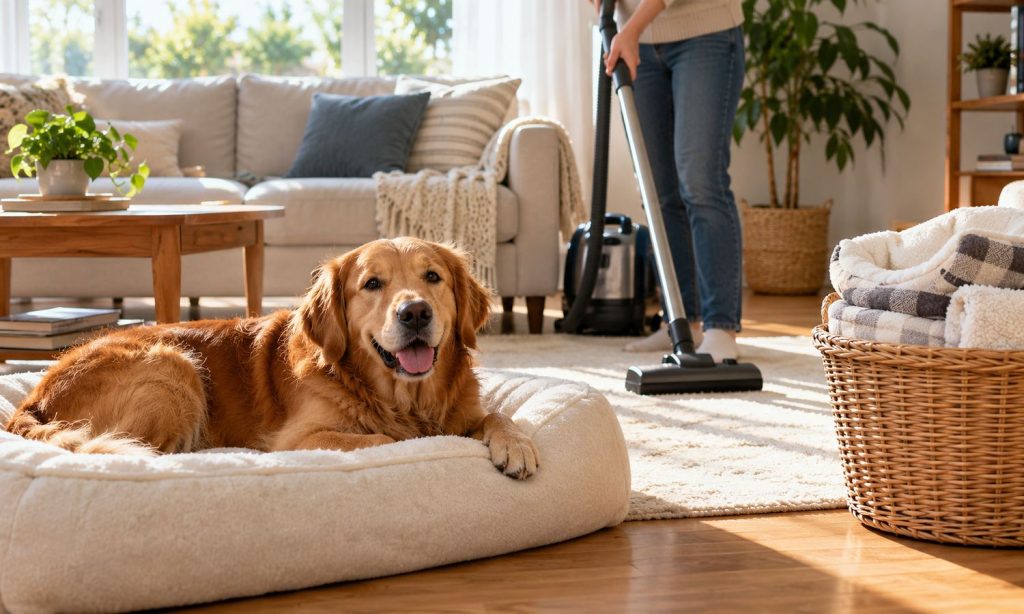
How to remove pet hair or urine from carpet without damaging the finish means protecting more than the visible fibers. Carpet dyes, pile, backing, padding, and adhesives can react differently to moisture and cleaners. Blotting and testing first can help avoid spreading a stain, fading color, or leaving a stiff, soapy patch. This guide covers dry pet hair, fresh urine, older odors, and signs that a spot needs professional help. For cleaning options designed for pet messes, our guide to Carpet Cleaner Solutions for Pets can help you compare categories; always check the product label and carpet care instructions before use.
Identify the carpet and the mess
Check any available carpet care information, especially if the carpet is wool, natural fiber, patterned, stain-treated, or attached over a sensitive backing. A cleaner that works on one carpet may discolor another. Test an approved product in an inconspicuous area and let it dry before treating a visible spot. Look for color transfer, texture change, residue, or a lighter patch.
Separate dry hair from wet soil. Pet hair can be lifted with a vacuum or soft tool before liquid is applied. For fresh urine, blot promptly. Avoid rubbing because it may push liquid deeper and spread it through more fibers.
Remove pet hair without rough scrubbing
Vacuum in slow passes
Use a vacuum suitable for the carpet type. Start with a clean brush roll and a setting that does not pull at loops or fringe. Move slowly so the vacuum can lift hair and grit. For delicate rugs, check the care instructions and use an attachment that will not snag fibers.
Use a gentle dry tool for stubborn hair
A soft-bristled carpet rake or rubber tool may gather embedded hair, but test first and use light strokes. Avoid sharp blades, stiff wire brushes, or aggressive scraping. These can fuzz the surface, pull loops, or create uneven wear. Work in the direction recommended for the carpet and stop if fibers lift or distort.
Blot fresh urine carefully
Place absorbent white towels over the wet spot and press gently. Replace them as they absorb liquid. Avoid colored cloths that may transfer dye. Work from the outside toward the center so the wet area does not spread. Continue until little moisture transfers to a clean towel.
Use a cleaner only if the label and carpet care instructions allow it. Apply the product as directed, often to a cloth rather than directly to the carpet. Test for colorfastness first. Use the labeled amount, follow any dwell time, and rinse only if instructed. Too much cleaner can leave residue that attracts soil or alters the carpet texture.
Dry the spot thoroughly. Use clean towels to absorb moisture and provide ventilation. Avoid walking on the damp area or letting pets return until it is dry and the label permits access. Do not use high heat unless the carpet guidance allows it.
Address older urine odor and stains
For an older spot, locate the full affected area. A blacklight can sometimes help identify residue, but it does not establish what caused every mark. Treat only with a product labeled for the carpet and the specific pet mess. Follow the directions; do not combine cleaners or apply repeated doses beyond the label.
If urine soaked through to the padding, a surface treatment may not reach the source. Persistent odor, recurring dampness, or a stain that returns after drying can indicate material below the carpet is still affected. A professional cleaner may be able to assess the area. Severe saturation may require attention to the pad or subfloor.
For step-by-step pet urine cleanup, see our guides to cleaning dog pee from carpet and cleaning cat pee from carpet. Use the methods only when they fit your carpet’s material and care directions.
Protect color, pile, backing, and household safety
Do not soak the carpet. Excess liquid can move into backing and padding, slow drying, or loosen adhesives. Avoid rubbing hard, scraping with metal, using bleach or harsh solvents, or applying a cleaner that has not passed a hidden test. Do not use a steam cleaner unless the carpet and product instructions allow it.
Keep pets away during cleaning. Read the entire product label, use ventilation as directed, and store containers securely. Never mix cleaners; certain combinations can release toxic fumes. Do not apply household cleaners to your pet’s fur or paws. If a pet contacts or ingests a product, consult a veterinarian or an animal poison control service.
Know when to call a professional
Get professional advice for valuable rugs, natural fibers, large areas, repeated stains, color transfer, strong lingering odor, or damage to the carpet pile. Also seek help if you are unsure which cleaner is compatible with the material. Tell the cleaner what products have already been used and whether urine reached the pad.
If urine accidents repeat, cleaning may not solve the cause. A new pattern can be related to health, stress, access, or training. Contact a veterinarian for a sudden change, straining, blood, frequent attempts, pain, or increased thirst. Avoid punishing a pet for an accident; focus on safe cleanup and understanding the pattern.
After the first blotting step, pause and assess how large the wet area is. A visible stain may be smaller than the area urine reached beneath the surface. Press clean towels around the edge and check whether moisture transfers. Avoid using a hair dryer or heater unless the carpet instructions allow it; heat can affect some dyes and fibers. Let airflow do the work and keep pets off the area until it is fully dry.
If a cleaner leaves a crunchy or sticky patch, do not add another product immediately. Residue may need to be removed according to the label, or the carpet may need professional extraction. Record the product and dilution used. For a wool or valuable rug, contact a specialist before trying a second treatment. A cautious next step is usually safer than layering unknown cleaners.
For dry hair, vacuum before any liquid treatment. If hair is embedded, use a gentle tool and check the pile frequently. Stop if loops pull or fibers fuzz. Keeping a regular vacuum schedule can reduce buildup and makes later spot cleaning easier because fewer loose hairs collect around a wet stain.
Frequently Asked Questions
Can I rub a carpet stain to remove it faster?
No. Rubbing may spread liquid, damage fibers, or push residue deeper. Blot gently with clean absorbent material.
Should I use a carpet cleaner before vacuuming pet hair?
Remove loose hair and dry debris first. Vacuuming after a wet spill may spread soil or risk equipment damage.
Can vinegar remove urine from every carpet?
No. Carpet materials and dyes differ. Check care instructions and test any permitted solution in a hidden area.
Why does urine odor return after the carpet dries?
Residue may remain in deeper fibers, padding, or subfloor. A surface treatment may not reach the source.
When can my pet return to the cleaned area?
Wait until it is fully dry and follow the cleaner label’s re-entry directions.
Final Words
To remove pet hair or urine from carpet without damaging the finish, start dry, blot fresh accidents, test approved cleaners, and avoid overwetting or scrubbing. Protect color and fibers by following the carpet’s care instructions and product label. Persistent odor may involve the padding or another cause. Our guide to Carpet Cleaner Solutions for Pets reviews product categories, but your carpet’s material and care guidance should determine what you use.









