
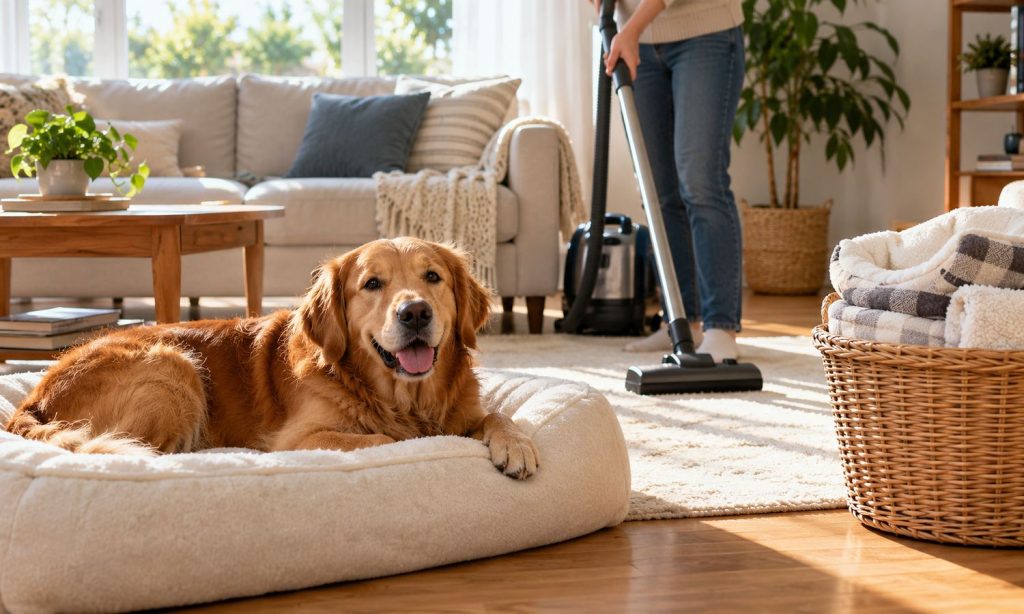
How to choose a pet-safe cleaning routine for carpet depends on the carpet material, the mess, and the product label. Wool, synthetic fibers, rugs, backing, and padding may react differently to moisture and cleaners. A careful routine uses the least aggressive method that works, keeps pets away while surfaces are wet, and avoids mixing products. For pet-focused cleaning categories, see our guide to Carpet Cleaner Solutions for Pets. Then check the label and your carpet’s care instructions before using any cleaner in your home.
Start with the carpet’s care information
Look for the carpet or rug’s care label, manufacturer guidance, or installation paperwork. Identify whether the material is wool, another natural fiber, a synthetic blend, or a delicate rug. Check for cleaning methods or chemicals that are prohibited. A product marked safe for pets is not automatically safe for every fiber or dye, and a carpet-safe cleaner is not automatically safe for a pet to contact while wet.
Before using a cleaner, test it in a hidden location if its instructions allow. Apply the directed amount, wait, blot or rinse as instructed, and let it dry completely. Check for color transfer, fading, pile changes, residue, or a stiff texture. If the test area changes, stop and ask a professional before treating a visible stain.
Match the routine to the task
Dry hair and everyday dust
Vacuum regularly with a setting suitable for the carpet. Use a clean attachment and gentle strokes on delicate rugs or looped fibers. A soft brush or rubber tool may gather hair, but test it first and avoid aggressive scraping. Remove grit near entryways so it does not grind into the pile.
Fresh urine or wet messes
Blot liquid promptly with clean, absorbent towels. Work from the outside toward the center and replace towels as they become wet. Avoid rubbing, which can spread the stain and push it deeper. Use a product labeled for the carpet and the specific mess only after checking material compatibility. Apply the amount directed and dry the area thoroughly.
Older or recurring odors
Find the full affected area and check whether liquid may have reached the backing or pad. A surface cleaner may not remove residue below the carpet. Avoid soaking the spot or repeatedly applying stronger products. If odor returns after drying or the padding is saturated, contact a professional cleaner or flooring specialist.
Read product labels carefully
Check the intended surface, type of stain, dilution instructions, dwell time, rinsing directions, ventilation advice, protective equipment, and pet re-entry guidance. Do not assume that a product is safe because it is unscented or contains familiar ingredients. Follow all directions and use only the labeled amount. Keep the product in its original container and store it securely.
Never mix cleaning products. Combining bleach with ammonia or acids can produce hazardous fumes. Do not use outdoor chemicals indoors or apply carpet cleaners to an animal’s fur or paws. If a pet contacts or ingests a cleaner, call a veterinarian or animal poison control service for advice and keep the product label nearby.
Keep pets away during and after cleaning
Move pets to another room before opening or applying a product. Prevent access to wet carpet, open containers, used towels, and cleaning equipment. Ventilate when the label recommends it. Wait until the carpet is completely dry and the label’s re-entry conditions are met. If the cleaner requires rinsing, do not skip that step.
Store products out of reach and close the container immediately after use. Do not leave a bucket of cleaning solution unattended. Wash hands after handling products and dispose of used towels according to label instructions. Consider a washable barrier or mat in high-traffic areas, but clean it regularly and ensure it does not create a trip hazard.
Prevent damage to fibers and backing
Use a white cloth to reduce dye-transfer risk. Avoid scrubbing, sharp tools, stiff brushes, concentrated bleach, and unapproved solvents. Do not apply excess water or heat. Overwetting can slow drying and affect the backing, pad, or adhesive. If the carpet is valuable, antique, handwoven, or made from a delicate fiber, consult a specialist before trying a home treatment.
After a spot treatment, blot away remaining moisture and provide airflow. Do not put furniture back until the carpet is dry. If pile has flattened, follow the carpet care guidance for gentle grooming. Do not brush aggressively to restore texture; that can cause fraying or fuzzing.
Build a routine that fits your household
Vacuum on a schedule suited to how many pets live in the home and how much traffic the room gets. Clean spills promptly, wash removable rugs according to their labels, and check favorite resting areas for hair or odors. Keep a simple note of which cleaner was used and whether the carpet changed. This can help prevent repeating a method that left residue or affected color.
If a pet repeatedly soils one area, cleaning alone may not solve the issue. Check bathroom access and routine. Contact a veterinarian for sudden or frequent accidents, straining, blood, or other health changes. For behavior patterns, a veterinarian or qualified behavior professional can help identify triggers. Avoid punishment and use safe management while you investigate.
For rooms used by pets every day, a consistent light-cleaning schedule is often easier than waiting for visible buildup. Vacuum high-traffic paths, clean spills promptly, and wash removable rugs as their labels allow. Keep a small supply of clean white cloths nearby for blotting. Do not use the same cloth on multiple rooms without washing it, because it can spread residue and odor.
After a deep cleaning, allow extra drying time and inspect the room before reopening it. Check carpet edges, furniture legs, and padding if a smell returns. If a pet has repeated accidents, pair cleaning with a veterinary or behavior check rather than repeatedly treating the same location. A cleaning routine can maintain the surface, while the reason for the accident may need separate attention.
When urine accidents are the main concern, use a cleanup method matched to the pet and spot. Our guides to cleaning dog pee from carpet and cleaning cat pee from carpet offer step-specific guidance; check each method against your carpet’s care instructions before use.
Frequently Asked Questions
What does “pet-safe” mean on a carpet cleaner?
Read the full label. Check intended uses, directions, ingredients, ventilation, and re-entry instructions instead of relying only on a front-label phrase.
Should I use more cleaner for a stubborn stain?
No. Use only the labeled amount. Too much solution may leave residue or overwet carpet and padding.
Can I mix two products to improve odor removal?
No. Never mix cleaners unless a label specifically directs it. Some combinations can release toxic fumes.
When should a professional clean the carpet?
Ask for help with delicate fibers, large or set-in stains, recurring odor, color change, or suspected contamination below the carpet.
When can my pet return to the room?
Wait until the carpet is dry and follow the product label’s re-entry directions.
Final Words
Choose a pet-safe carpet cleaning routine by checking the carpet material, matching the product to the mess, testing first, blotting rather than scrubbing, and drying thoroughly. Keep pets away during cleaning and follow label directions for ventilation and re-entry. If an odor or stain returns, consider deeper contamination or a repeated accident cause. Our guide to Carpet Cleaner Solutions for Pets can help you understand available cleaning categories, while your carpet’s care instructions should guide what you use.









