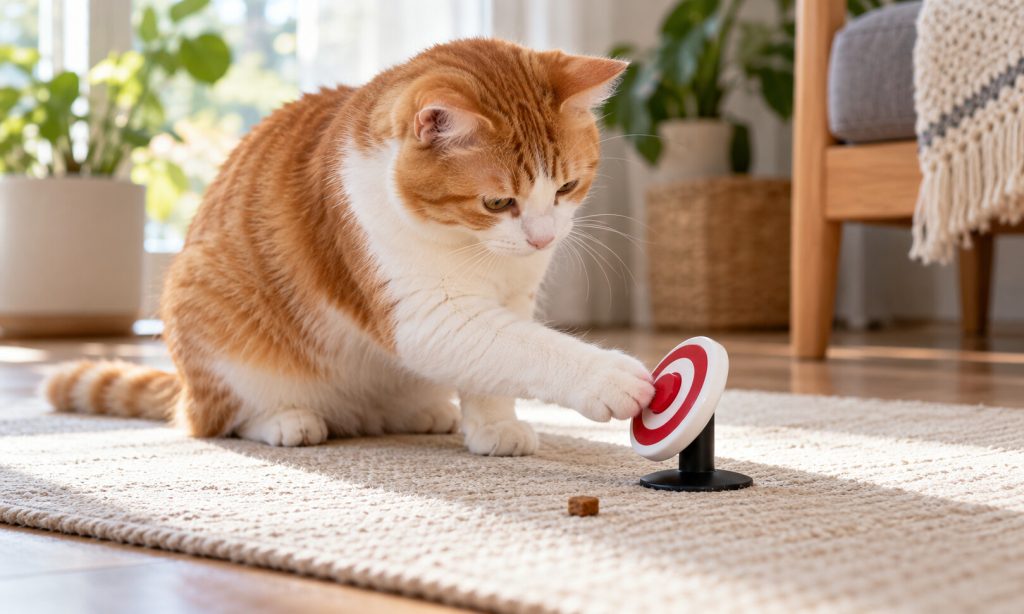
Short training sessions can teach a cat useful behaviors while giving the cat choice and control. A reward should follow the behavior you want, arrive quickly, and be small enough to keep the session moving. Treats are one option; some cats prefer kibble, play, petting, or access to a favorite perch.
Before starting, choose a quiet spot and a simple goal, such as touching a target or entering a carrier. Keep sessions brief and end while your cat is still comfortable. If your cat has a medical condition or prescription diet, ask the veterinarian what rewards are suitable. Our guide to helping a nervous cat accept a carrier offers another example of gradual, reward-based practice.
Choose a reward your cat can safely eat
Begin with a tiny portion of a food your cat already tolerates. A small piece can be enough; training rewards do not need to be large. You can set aside a portion of the cat’s usual daily food and use pieces from that allotment. This makes it easier to track intake and may avoid introducing a new ingredient.
For a cat with kidney disease, food allergy, diabetes, pancreatitis, obesity, or another condition, ordinary treats may conflict with the care plan. Ask the veterinary team whether the cat’s prescribed food can be used as a reward or whether a specific treat is appropriate. Cats with chronic kidney disease may need a therapeutic diet with controlled phosphorus, so do not rely on generic lists of “kidney-friendly” snacks. See our related feeding routines for older cats guide and confirm choices with your veterinarian.
Set up a short, clear session
- Pick one behavior and one cue, such as stepping toward a mat.
- Have several tiny rewards ready before asking for the behavior.
- Mark the moment your cat does the desired action with a consistent word or click.
- Deliver the reward immediately, then pause and let the cat choose whether to continue.
- Stop after a few successful repetitions, or sooner if the cat loses interest.
At first, reward each correct attempt so the connection is clear. As the behavior becomes reliable, you can vary rewards or use play and praise, but avoid suddenly making the task harder. Do not lure a cat into a frightening situation and then trap or restrain it. For a carrier, leave it out, add familiar bedding, and reward voluntary investigation in small steps.
Keep treats within the daily plan
Treats add calories and can displace balanced food. A commonly used guideline is that treats and extras should provide no more than about 10% of daily calories, with most calories from complete and balanced food. This is a general guideline, not an individual prescription. A veterinarian may set a lower limit or recommend using only the cat’s diet food.
Read the package for calories per piece because sizes vary. Break treats into smaller pieces when safe and appropriate. Record how many you use in a day and adjust meals only with veterinary guidance, especially for kittens, underweight cats, or cats on therapeutic diets. VCA’s advice on using food and treats for training cats also highlights calorie limits and condition-specific needs.
Read your cat’s body language
A successful session should look relaxed. A cat that turns away, flattens its ears, flicks its tail, hides, or stops taking food may need a break or more distance from the trigger. Do not force participation. If the cat growls, swats, or appears fearful, end the session calmly and make the next step easier.
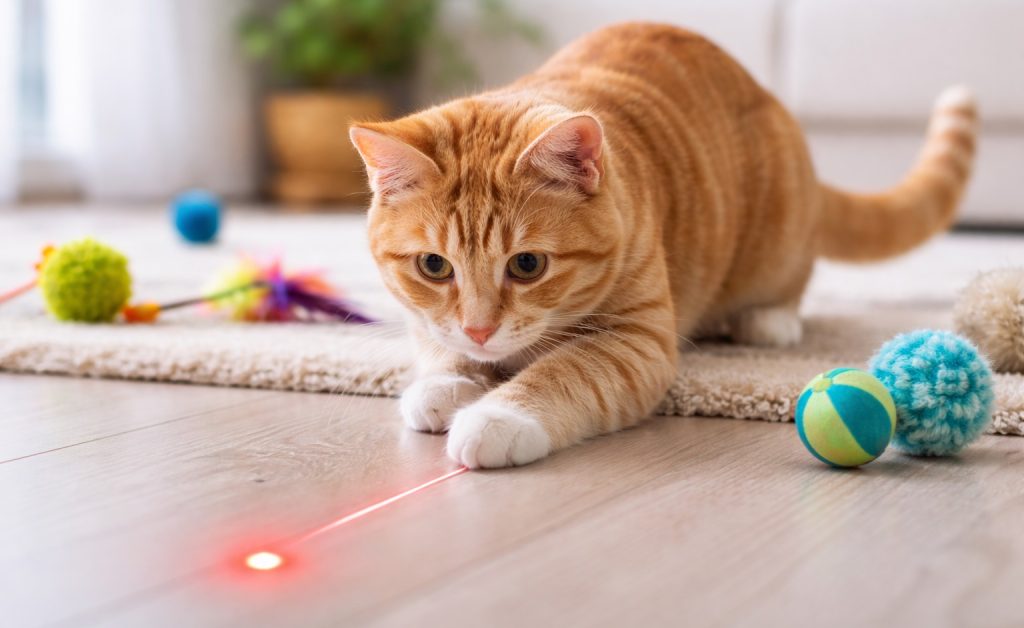
For some cats, food is not the best reward. A wand toy, brief play, a brush, or opening access to a preferred room may be more motivating. Use the reward the cat values at that moment. Keep the cue consistent and avoid repeating it many times; give the cat time to respond.
Make progress without pressure
Training should be voluntary and predictable. Keep the reward pouch or container out of sight until needed if its appearance makes the cat overexcited. If the cat grabs, bites, or becomes frustrated, pause and make the next repetition easier. A cat that walks away is communicating that it needs a break; do not follow, corner, or pick it up to continue the lesson.
For a new skill, reward small steps. To teach a mat cue, begin by rewarding a glance toward the mat, then a step closer, and later a paw on it. Use the same marker word or click each time and deliver a small reward promptly. Practice in a low-distraction room before asking for the behavior near guests or outside the home. When a behavior is established, reward intermittently while continuing to reinforce especially useful responses.
Food safety matters as much as motivation. Avoid ingredients that the cat has reacted to, and do not share foods containing onion, garlic, chocolate, alcohol, or xylitol. Keep training foods fresh and refrigerate perishable items. Wash hands and clean surfaces after handling raw ingredients. If the cat has a prescription diet, food allergy, or a history of urinary or kidney disease, ask the care team before introducing even small extras. Some cats can train with their measured daily kibble, which helps preserve the planned calorie intake.
Track what works
Keep a simple note with the date, skill practiced, reward used, and your cat’s response. A short record helps you notice whether the cat is becoming more confident or whether the setup is too difficult. If progress stalls, reduce the challenge: increase distance from the trigger, shorten the session, or reward an easier step. Progress is not always linear, so return to a successful step instead of repeating a cue more loudly.
Once a behavior is reliable at home, practice in small variations, such as another room or a different time of day. Change one detail at a time so the cat can understand the task. For medical handling, nail care, or transport, ask your veterinary team which steps are safe to practice and when to stop. Cooperative training can support care, but it should not delay treatment when your cat is ill or injured.
Store rewards in a closed container and use clean hands. If your cat has reduced appetite, vomiting, or a new food reaction, pause food-based practice and contact the veterinary team. The training goal can wait; health and comfort come first.
Some cats learn more readily when daily feeding routines are predictable. For extra context, see our articles on feeding routines and portions for older cats, gradually transitioning an older cat to new food, and treat options for picky cats. Use any feeding change with your veterinarian’s advice if a medical diet is involved.
Frequently asked questions
How long should a cat training session last?
There is no fixed ideal for every cat. A few minutes or a handful of repetitions may be enough. Stop before frustration or fatigue appears.
Can I use treats if my cat has kidney disease?
Ask your veterinarian first. The appropriate choice depends on the cat’s lab results, diet, appetite, and treatment plan. A portion of the prescribed food may be a better training reward.
Should I train before or after a meal?
Try a time when your cat is alert and interested, but not distressed or overly hungry. Use part of the normal meal if that keeps daily calories consistent.
Final Words
Use cat treats during short reward-based training sessions by choosing a safe, motivating reward, reinforcing the behavior promptly, and ending while your cat remains comfortable. Keep treats inside the daily nutrition plan and ask your veterinarian about special diets or health conditions.