
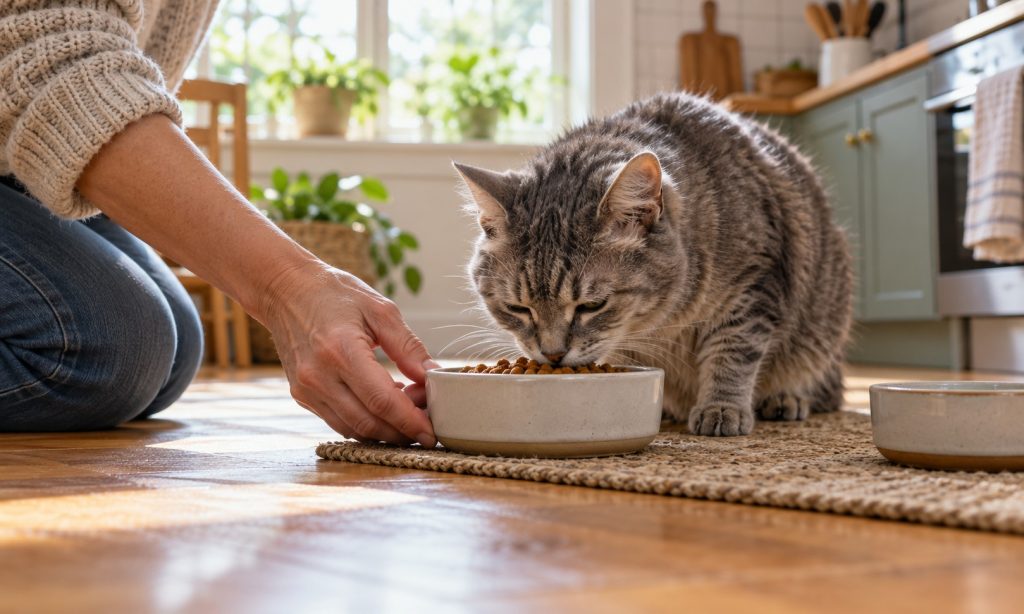
Older cats often do best with a predictable feeding routine, but there is no single portion or schedule that suits every senior cat. Age, body condition, activity, appetite, dental comfort, and medical conditions all affect daily needs. Start by measuring what your cat actually eats and tracking weight and appetite, then review the pattern with your veterinarian. If you are comparing senior cat food for older cats, remember that an “senior” label does not replace an individual nutrition plan. A stable schedule can make intake easier to monitor and may help you notice changes early. The right routine supports steady nutrition while leaving room for your veterinarian to adjust portions as your cat’s health changes.
Why senior cats may need a fresh feeding review
Cats age at different rates, and “senior” is a life-stage label rather than a diagnosis. Some older cats remain healthy on their established complete diet, while others develop changes in weight, muscle condition, appetite, thirst, digestion, teeth, or mobility. The American Association of Feline Practitioners’ senior care guidance emphasizes individualized assessment, including nutrition and weight management.
Do not assume that weight loss, increased hunger, or a new picky appetite is a normal part of aging. Health issues can affect how much a cat eats or uses nutrients. A veterinarian can check for medical causes and help determine whether the food, amount, or schedule should change.
How to estimate a routine and portion
Measure what you offer and what remains
Use a kitchen scale or a consistent measuring tool to track the amount offered. Record leftovers rather than assuming the full portion was eaten. For a cat that grazes, measure the daily amount at the beginning of the day and note how much remains at the end. Include treats and food used for medication when estimating total intake.
Food labels and feeding charts provide starting guidance, not a personalized prescription. Calorie needs vary with body size, body composition, activity, environment, and health. Ask your veterinarian for a target daily calorie range and how to convert it to the specific food you use. Avoid cutting portions sharply; cats need gradual, supervised weight changes.
Choose a schedule your household can maintain
Many cats can eat measured meals once or more often each day, depending on preference and health. Cornell’s feline health guidance notes that older cats generally can keep their usual routine unless a veterinarian recommends otherwise. If your cat eats only small amounts at a time, ask whether dividing the daily ration into more meals would help. Consistency makes it easier to notice appetite changes.
In a multi-cat home, feed cats separately if one cat steals food or another avoids the bowl. Quiet locations, low-entry dishes, and easy access may help cats with stiffness or reduced mobility. Keep food and water away from litter areas, and make the feeding spot comfortable for the individual cat.
What to track from week to week
- Body weight, measured on the same scale under similar conditions.
- Appetite, meal completion, and any changes in food preference.
- Daily food and treat amounts, including leftovers.
- Vomiting, stool changes, drinking, urination, and activity.
- Difficulty chewing, dropping food, or avoiding a bowl or location.
A weekly or monthly log can help show a gradual trend that is easy to miss day to day. If your cat loses weight without a planned veterinary program, contact the clinic. Rapid weight change, not eating, repeated vomiting, or a marked change in thirst or urination deserves prompt attention.
Hydration and meal comfort
Fresh water should be easy to reach in more than one location when practical. Some cats take in more water from wet food, but food moisture and format should fit the cat’s medical and nutritional needs. Ask the veterinarian whether adding water to food or offering a different bowl arrangement makes sense. Our guide to wet food, dry food, and cat hydration explains the basic considerations.
Arthritis, dental disease, and other discomfort can make reaching or chewing food harder. Your veterinarian can check for pain and discuss practical adjustments. Do not assume that a cat refusing a meal is merely being fussy, especially if the change lasts or occurs with other symptoms.
When to review the diet with a veterinarian
Schedule a feeding discussion if your cat’s body condition changes, appetite shifts, or a health condition is diagnosed. Bring the food label, feeding amount, treat list, weight history, and any questions about a prescription diet. A veterinary team can decide whether to keep the current food, adjust the portion, or use a diet tailored to a diagnosed condition.
If you are deciding whether senior cat food for older cats fits your cat, ask about calorie density, nutritional adequacy, texture, and any health-specific requirements. A product’s age label alone cannot tell you whether it fits a cat with kidney, urinary, thyroid, dental, or gastrointestinal concerns.
Frequently Asked Questions
How often should I feed an older cat?
Keep a schedule your cat tolerates unless a veterinarian advises a change. Some cats do well with measured meals; others need smaller, more frequent meals for practical or medical reasons.
Do senior cats always need senior food?
No. The best diet depends on the individual cat’s health, body condition, and nutrient needs. Ask your veterinarian before changing a stable diet.
How can I tell whether the portion is right?
Track body weight and body condition with your veterinarian. Use the label as a starting point and ask for an individualized calorie target.
Should I let my older cat graze all day?
It depends on the cat and household. Measuring the daily amount can help prevent overfeeding and make appetite changes easier to detect.
When should I call a veterinarian about appetite?
Call if your cat stops eating, eats much less, loses weight, vomits repeatedly, or has a marked change in thirst, urination, or behavior.
Final Words
Build an older cat’s feeding routine around measured portions, a comfortable meal location, and regular tracking of weight and appetite. Ask your veterinarian for calorie guidance and review any sudden change rather than assuming it is age-related. If you are choosing senior cat food for older cats, match the decision to your cat’s actual health needs and feeding response. A steady routine helps you notice small changes and gives your veterinary team clearer information at each visit.









