
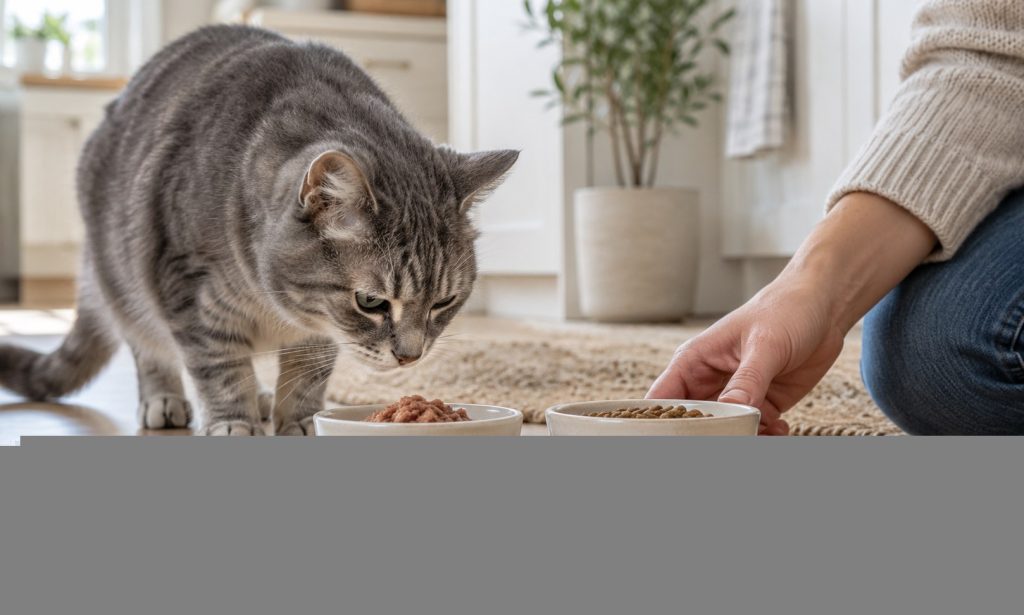
Older cats may need a new food because of changing preferences, body condition, or a veterinarian’s recommendation. A gradual transition can give a cat time to adjust to a different smell, texture, and taste. Before switching, ask whether the new food fits your cat’s health and life stage, especially if it has kidney disease, diabetes, urinary issues, dental pain, or a poor appetite. Choose a time when your cat is feeling well unless the veterinarian gives specific instructions. If you are comparing senior cat food for older cats, confirm that the choice meets the reason for the change. The main goal during transition is for your cat to continue eating enough while moving toward the recommended diet.
Before you start the transition
Ask your veterinarian why the food is changing and what outcome to watch. A senior-labeled food is not automatically the right choice for every older cat. Appetite loss or weight change may point to a medical concern, so do not assume a new formula alone will solve it.
Check that the new food is appropriate for your cat’s needs and that you understand the portion. Compare the texture and form with what your cat currently eats. If the new food is a therapeutic diet, ask whether treats, toppers, or supplements can be offered during the transition.
Introduce the new food gradually
Begin with a small amount of the new food alongside the familiar diet. If your cat eats comfortably, increase the new food little by little while reducing the old food over several days. A cautious cat may need a longer transition. Follow your veterinarian’s schedule if it differs from general guidance.
Some cats prefer the new and familiar foods served side by side rather than mixed together. Others accept a blend more readily. Offer the food in a calm location and keep the feeding routine predictable. Avoid changing several things at once, such as bowl location, food texture, and meal schedule, because that can make it harder to see what your cat accepts.
Make the meal easier to accept
- Serve the food at a comfortable temperature; slightly warming wet food may increase its aroma.
- Use a clean, familiar bowl in a quiet, accessible place.
- Offer small portions and refresh them rather than leaving a large amount to dry out.
- For a cat with mobility concerns, place the bowl where it is easy to reach.
- Keep notes on how much your cat actually eats, not just what you offer.
Do not force food into your cat’s mouth or withhold the familiar food to make the new food seem more appealing. Cats can become ill when they do not eat enough. If your cat refuses the new food, return to the last amount it ate reliably and contact the veterinarian for a revised plan.
Watch appetite, weight, and digestion
During a transition, monitor appetite, water intake, stool, vomiting, and general behavior. If practical, weigh your cat as recommended by the veterinary team. Subtle weight loss can be easy to miss, especially in a long-haired cat. Tell the veterinarian if your cat is eating less, losing weight, or showing persistent digestive changes.
If the new food is part of a medical plan, follow the veterinary team’s instructions on how strictly it must be fed and when to check progress. A food change should not delay care for a cat who is unwell, painful, or refusing meals.
When to slow down or call the veterinarian
Pause the transition and contact the veterinarian if your cat stops eating, eats substantially less, vomits repeatedly, develops persistent diarrhea, or seems lethargic. Seek advice promptly if a health condition is involved or if the food was prescribed for a specific diagnosis.
If the cat consistently rejects the food, ask about other textures, flavors, or suitable alternatives. Your veterinarian can reassess whether the diet is necessary, whether another option meets the goal, or whether a health issue is affecting appetite.
Frequently asked questions
How long should it take to change an older cat’s food?
Many cats need a gradual change over several days, while cautious cats may need longer. Follow the schedule from your veterinarian and slow down if your cat refuses the new food.
Should I mix the new food into the old food?
You can try mixing a small amount if your cat accepts it, or offer the foods side by side. Watch what your cat prefers and keep enough familiar food available while transitioning.
What if my senior cat refuses the new food?
Do not starve your cat into accepting it. Offer the familiar food and contact your veterinarian for advice, particularly if the change was recommended for a medical condition.
Can I warm canned food for my cat?
Slightly warming wet food may make its aroma more noticeable. Check the temperature before serving and avoid overheating it.
When should I call a veterinarian during a food transition?
Call if your cat stops eating, eats much less, loses weight, vomits repeatedly, develops persistent digestive changes, or seems unwell. Older cats may have medical reasons for appetite changes.
Final Words
Transition older cats to a new food in small steps, watching appetite and comfort as the new food gradually replaces the familiar one. Let your cat’s response set the pace, and ask the veterinarian for a tailored schedule when illness or a therapeutic diet is involved. If your cat refuses meals or seems unwell, contact the clinic instead of continuing to push the change. When selecting senior cat food for older cats, match the food to your cat’s health needs and keep eating enough as the priority.









