
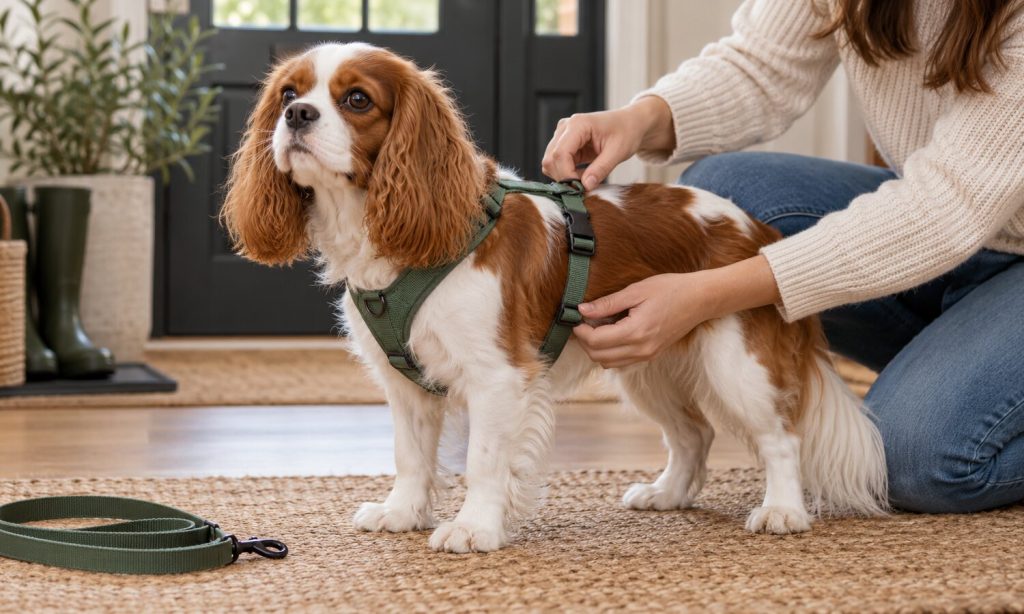
How to adjust a dog harness to prevent rubbing near the legs begins with checking where each strap sits while the dog is standing and moving. A harness that looks centered on a Cavalier King Charles Spaniel while the dog is still may shift when the dog walks, turns, or pulls. Measure the dog rather than relying on breed labels, loosen twisted straps, and make small adjustments on both sides. The strap should not press into the armpit, restrict the shoulders, or slide into the front-leg crease. If you are comparing a dog harness for Cavalier King Charles Spaniel body shapes, treat breed guidance as a starting point; each dog’s chest, coat, and build are individual. Comfort depends on fit during movement, not on strap position alone.
Find what is causing the rub
Before changing the harness, inspect the skin and coat where the straps touch. Look behind the front legs, across the chest, around the shoulders, and under any buckle. Check for damp fur, tangled hair, redness, broken skin, or a strap edge that folds or catches. Do not put a harness over an open sore without veterinary advice.
Observe the dog walking on a loose leash. A harness may shift because it is too loose, too tight, poorly positioned, or shaped in a way that does not suit the dog’s body. Pulling, a long coat, a harness that twists, and a strap placed directly behind the elbow can all contribute to rubbing. A dog may also scratch or lick the area for reasons unrelated to the harness.
If the skin is painful, swollen, bleeding, or has discharge, remove pressure from the area and contact a veterinarian. Persistent itching or hair loss also deserves attention. Harness adjustment can address a fit problem, but it cannot diagnose a skin condition.
Check the harness position
Place the harness on according to its manufacturer’s instructions. The chest strap should lie flat across the breastbone, not ride up toward the throat. The girth strap should sit behind the front legs with enough space to avoid the armpit crease. Straps should not cross directly over the shoulder joints or limit the dog’s normal stride.
Look at the dog from the side, front, and above. Check that the harness is not rotated, that buckles are not pressing into sensitive areas, and that both sides are adjusted evenly. A twist can create a narrow point of pressure even when the overall size seems correct. Smooth the coat out from beneath the straps before fastening.
Cavalier King Charles Spaniels have long, feathered hair and can vary in chest depth and body shape. Coat can become trapped under a strap or conceal a shifting fit. Part the hair where the harness rests and check the skin after the walk. Do not tighten a harness simply to flatten the coat.
Adjust tension without restricting movement
Make small changes to one strap at a time, then walk the dog a few steps and reassess. The fit should be secure enough that the harness does not rotate or slip over the head, yet loose enough for comfortable breathing and natural movement. Manufacturer sizing guidance is useful, but it cannot replace watching the dog move in the harness.
Many fit guides suggest checking whether fingers can slide under a strap, but coat thickness, strap width, and harness design affect the feel. Follow the manufacturer’s directions and check for pinching, pressure, or shifting. If you have to pull the harness tight to keep it in place, the design or size may not suit the dog.
A well-fitted body harness should not rub behind the elbows or restrict front-leg motion. If the dog takes shorter steps, splays the elbows, freezes, scratches at the harness, or tries to escape, stop and check the fit. Some dogs need gradual, reward-based practice wearing a harness in a quiet room before going on a walk.
Use a short fit check before and after walks
Before each walk, check that straps are flat, buckles are closed, and the girth strap remains behind the legs. Confirm that the harness has not loosened since the last use. After the walk, remove it and inspect the contact points. A quick check can catch a twisted strap before it causes repeated rubbing.
If the coat is wet, dirty, or matted, dry and brush it gently before putting the harness back on. Moisture and debris can increase friction. Do not leave a harness on a dog unsupervised at home; it can catch on furniture or another object. Remove it when the walk is over.
Check fit again after grooming, weight change, coat trimming, or growth. A harness that fit last month may sit differently today. Measure the chest at the widest point and the neck where the harness rests, using the brand’s measurement instructions. If measurements fall between sizes, ask the manufacturer or a qualified professional how that design is intended to fit.
When the rubbing continues
If rubbing returns after careful adjustment, try a different harness shape or strap arrangement rather than tightening further. The dog’s body may not match that design. Ask a veterinarian or a knowledgeable trainer to watch the dog move and assess the pressure points. If the dog has pain, mobility issues, or a respiratory condition, ask the veterinarian what type of walking equipment is appropriate.
Our guide to checking dog harness fit and reducing escape risk covers secure adjustment and movement. It is helpful to review fit together with comfort, since a harness should stay on safely without rubbing or limiting the dog’s stride.
Try the harness indoors before using it in a busy setting. Let the dog stand, walk, turn, sit, and take a few steps at a normal pace while you watch the straps. Reward calm cooperation and remove the harness if the dog shows distress. This short check can reveal a strap that slides toward the elbow or tightens when the dog moves. If the fit cannot be made comfortable, pause walks in that harness and ask for help selecting a different design.
Frequently Asked Questions
How tight should a dog harness be?
Follow the manufacturer’s fit directions. It should stay secure without pinching, shifting, restricting breathing, or limiting shoulder and leg movement.
Where should the girth strap sit?
It generally sits behind the front legs, clear of the armpit crease. Check the specific harness design and the dog’s movement.
Can long fur cause harness rubbing?
Fur can become trapped or conceal a shifting strap. Smooth the coat under the harness and inspect the skin after walks.
Should I keep using a harness over irritated skin?
Avoid pressure over open or painful skin and ask a veterinarian for guidance, especially if redness or irritation persists.
Why does the harness shift when my dog walks?
It may be too loose, unevenly adjusted, twisted, or poorly suited to the dog’s shape. Recheck fit in motion and consult the manufacturer if needed.
Final Words
Preventing harness rub takes more than tightening a strap. Check where the harness rests, keep it clear of the armpit and shoulder joints, and watch the dog walk before heading out. Recheck the skin and coat after each use, and stop using a design that keeps shifting or causing discomfort. A dog harness for Cavalier King Charles Spaniel proportions still needs to fit the individual dog. If irritation persists, consult a veterinarian and reassess the harness shape.









